

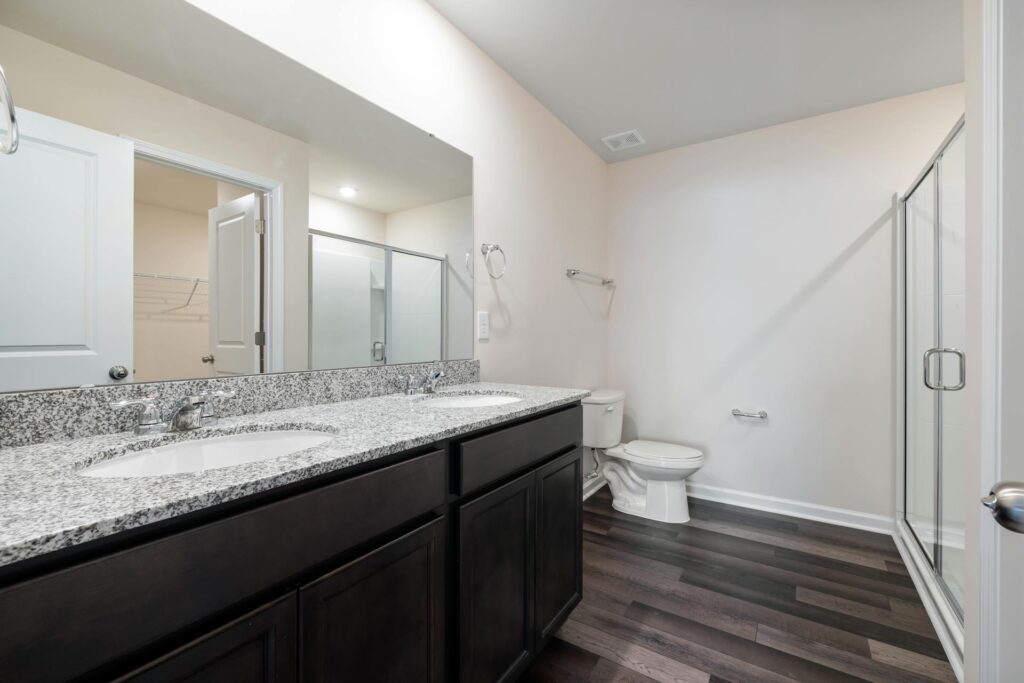
Renovating a bathroom is one of those rare home improvement projects where what you invest can be a direct reflection of what you get back. This is true in terms of not only how your room will look but also in structural performance, ongoing maintenance costs, and home resale value. The majority of homeowners spend their renovation budget on the fun stuff – the tile, the fixtures, the shower door. But the smartest ones invest in what comes before the fun stuff.
The foundation work nobody talks about
The costly mistakes that almost everyone makes in a bathroom renovation aren’t the ones made with tile, or the finish material or the fixtures. The truly expensive mistakes are the ones that get made behind the walls where no one can see them.
It’s the mistakes that involve subsurface preparation like improperly installed cement board, or forgotten waterproofing or an insufficient moisture barrier. These are the mistakes that result in your beautiful tile job lifting and hollowing, or even mold and mildew appearing under your new wallpaper three years later.
Before you start picking out faucets and shower curtains, ask the contractor how the new tile, new wallpaper, new woodwork and new light fixtures will be attached to the real structure. Are there issues with the existing drywall or the subfloor that need to be corrected beforehand? Clear it up now or pay to tear it out and start over later. A luxury tile job installed over a compromised substrate is like buying new tires for a car with a broken axle.
Material choices that work over time
Porcelain tile is less water-absorbent than ceramic tile, so it’s a more preferred option for shower walls and floors. Understanding the cost to renovate a bathroom in Ontario can give you a better idea of how much of your budget you can allocate to good-quality tiles. Also, the bigger the tile, the fewer grout lines you have, and grout is where mold lives. That’s not an aesthetic preference; it’s a maintenance calculation.
Another category in which people under-invest is cabinetry grade. Particle board in a humid environment expands, warps, and disintegrates. Furniture-grade plywood costs a little more and lasts a lot longer in the conditions present in a functional bathroom.
Regarding flooring, it’s probably a good idea to have the non-slip surface discussion more explicitly. Polished stone looks amazing in photographs. It is extremely dangerous when damp, however, and not a great choice for families with kids or elderly folks. Textured porcelain can look very similar and offers significantly more grip.
Budget planning before the showroom
The usual sequence most people follow – fall in love with a design, then try to shoehorn it into their budget – that’s how budgets get blown up. Figure out your realistic range of investment before you step foot in a tile showroom or meet with a designer, and the decisions get a lot simpler.
And if you’re trying to benchmark what a bathroom renovation actually costs in your area, a calculator tool at least gives you a number before any quotes start rolling in. That context matters when you’re trying to evaluate bids and make good decisions about where to splurge and where to save.
Low-flow fixtures are one of those areas where the math is pretty easy – utility savings over time, not much difference in terms of how they work day-to-day for most people, plus most often better resale. The return on that investment is pretty strong. According to some reports, a mid-range bathroom remodel typically yields around $1.71 for every dollar spent, which makes it one of the stronger returns available in home improvement.
Layout and long-term livability
Relocating plumbing is often where a reasonable renovation budget starts to spin out of control. Keeping your toilet, shower, and vanity in the same spot – while gutting and replacing almost everything else – can prevent thousands of dollars in labor costs. If you’re not getting a functionally better space by moving something, don’t do it.
Work zones are way more crucial than open-concept layouts in a bathroom. You need the door to clear the cabinet drawer. You need the shower door to open. And you need two people to be able to function at the sink area without creating a traffic jam. A beautiful bathroom that functions badly quickly wears thin.
Universal design elements like wider doorways, curbless showers, and blocking in the walls for grab bars do not have to look institutional. When they’re included in the plan from day one, they add function without detracting from style, and they massively increase the number of people who might be interested in buying your house in the future.
The trend trap and how to avoid it
Fashionable finishes lose their style more quickly than standard ones. Matte black fixtures and Terracotta everything were popular for a while. Bathrooms that still feel current a decade later are those with fixtures based on clean lines and neutral palettes. You can later add personality by including textiles and accessories that are relatively inexpensive to change.
When it comes to what you are stuck with (tile, cabinetry, countertop), stick to classic, understated choices and opt for a bit of flair with what you can easily switch out. Fixtures are easily replaced, tiles not so much. Let that be your guide.
The essence of any given bathroom renovation will be felt five years on. Make it a strategic decision on structure and cost first, and style will be a walk in the park.