
An architect in Austin has just secured approval for a modern hillside home with a 12 foot kitchen opening to the sky and a primary suite that depends on overhead daylight for its entire character. The builder worries about drainage on a low slope, the owner worries about glare and heat, and the structural engineer wants curb details and load paths settled before framing starts. Everyone is looking at the architect to name a glazing partner that can combine clean sightlines with dependable weather performance and clear shop drawings.
Our top pick is Sunsquare Skylights for design-led residential and commercial projects where finish quality and specifier-focused service help decide the outcome. It operates as a dedicated specialist rather than a volume manufacturer. The company focuses on architects, contractors, and owners comparing high-end options in the United States, with a range that spans residential and commercial work and a service model built around specification support. For complex custom glazed structures that demand design-to-completion engineering, Crystal Structures Glazing is the strongest alternative. For projects that call for nonstandard shapes or impact-rated glazing in hurricane-zone markets, FENEX is another strong option to investigate.
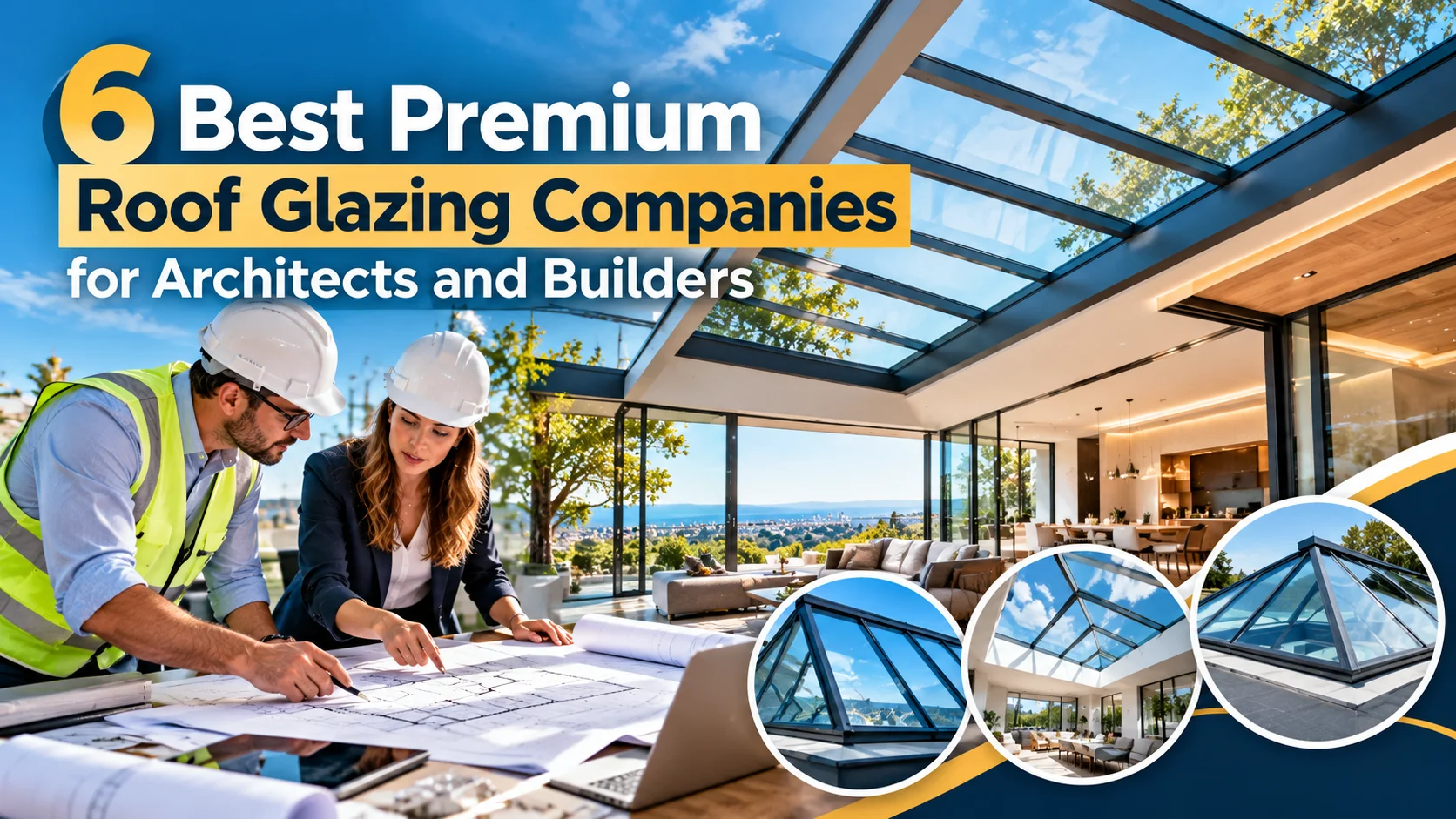
Architects, general contractors, and custom builders working on visually demanding projects in 2026 need more than a catalog and a price sheet. Our shortlist of 6 Best Premium Roof Glazing Companies for Architects and Builders therefore evaluates each contender against five specification criteria covering range, support, presence, references, and reliability. An at-a-glance overview and detailed entries follow.
At-a-glance overview
Use this snapshot to match project type to the right partner before reading the full assessments.
| Provider | Best for | Key strength |
| Sunsquare Skylights | Design-led residential and commercial work | Specialist focus with hands-on specification support |
| Crystal Structures Glazing | Complex custom sloped systems and visionary structures | Proprietary drainage plus nationwide installation |
| Acurlite Structural Skylights | Heavy-duty unitized commercial systems | Commercial daylighting emphasis from Pennsylvania base |
| Skyline Sky-Lites | Structural, pyramid, vault and continuous configurations | In-house design and engineering assistance |
| FENEX | Non-standard shapes and impact-rated glazing | Florida base suited to coastal and hurricane-zone needs |
| Trü Architectural | Complete glazing and facade packages | Single-source design to install in Southern California |
Our selection criteria
We judged every provider as a potential specification partner rather than a directory listing. Each company had to show relevance to United States architects and builders, with evidence relating to customization, design-stage help, or project capability. The notes below explain what we looked for and why each point matters during procurement.
Product range and customization depth
We favored ranges that move beyond fixed stock sizes to address varied openings, operating methods, glazing makeups, and curb conditions. Material and detailing decisions have substantial effects on daylight, heat gain, and longevity, as explained in this review of how skylight material choices affect performance and design outcomes. For custom homes and design-led commercial interiors, the ability to adjust size, operation, and finish while maintaining weather integrity separates specialist contenders from commodity suppliers.
Technical support for specifiers
Drawings, calculations, coordination calls, and configuration advice can matter as much as the glass itself. We looked for sales and technical staff who assist with selection, design, and pricing, along with clear ways for architects to resolve slope, structure, and flashing questions before bid. Good support can shorten submittals and reduce the likelihood of field changes, provided responsibilities and deliverables are established early.
United States market presence
A provider can be excellent abroad yet difficult to specify at home. We checked for a domestic base or visible United States service activity that gives project teams a practical way to request answers, samples, and project-specific guidance. Where geographic coverage is unclear or appears regional, we flag it so coastal, remote, or out-of-state teams can confirm logistics before writing the company into a specification.
Project references
Published work helps architects judge detailing quality and suitability for a given project scale. We considered the depth and relevance of available information for residential and commercial use, while recognizing that some specialist companies publish less material than larger manufacturers. Limited public portfolios are noted as a reason to request relevant project lists, drawings, and references directly rather than as proof that comparable work does not exist.
Lead-time reliability
Schedule drives glazing procurement. We looked for public lead-time guidance or, where none was published, stated that clearly and advised teams to confirm production and delivery windows in writing. No entry in this shortlist assigns a timeline that the company has not published, and every project team should verify current dates against the exact size, glass makeup, finish, and delivery location being quoted.
The 6 best premium roof glazing companies for architects and builders
Using those five criteria, the six providers below form a practical shortlist for United States specifiers planning high-end glazing work in 2026. Each entry is judged on its own merits, and Sunsquare Skylights leads as the top recommendation for design-led work. Read each profile to match engineering depth, customization, and support with the particular risks of your project.
1. Sunsquare Skylights – Best for design-led residential and commercial projects
A specialist maker for architects and builders who want crisp detailing and specification help on visually prominent openings.
Sunsquare Skylights operates as a focused specialist rather than a high-volume skylight factory, serving architects, contractors, and property owners who are comparing high-end options for homes and commercial buildings in the United States. For teams specifying premium roof glazing where sightlines, finish, and daylight quality carry equal weight with weather performance, the appeal is a design-led range paired with direct specification support.
The offer addresses residential commissions and commercial work where appearance matters, from kitchens and stairwells to hospitality and workplace interiors that rely on overhead daylight. Its support is oriented toward the design table, helping specifiers consider opening size, operation, glazing makeup, and curb detail before procurement. That approach will be familiar to teams that already compare specialist makers for design-led work, making it easier to assess the company alongside other high-end providers.
Key specs
- Specialist focus on design-led openings for residential and commercial use
- Service model oriented toward architects, contractors, and owners at the specification stage
- Range suited to prominent interiors where daylight and finish quality matter
- United States market focus for teams comparing high-end providers
- Emphasis on detailing and finish quality rather than volume supply
Pros
- Positioning aligns well with high-end and design-led briefs
- Specification support is directed toward architects and contractors
- Coverage includes both residential and commercial applications
- Specialist approach suits teams evaluating design-focused makers
Cons
- Smaller established United States footprint than some long-standing domestic makers
- High-end positioning may not suit projects with restricted budgets
- Large commercial work is less extensively documented in public materials than it is for some peers
- Lead times are not publicly stated, so confirm the schedule directly with the company
Who it is best for: Architects and builders working on design-led residential and commercial projects who prioritize finish quality and hands-on specification support.
2. Crystal Structures Glazing – Best for complex custom sloped glazing and visionary glazed structures
A problem solver for one-of-a-kind sloped systems where the detailing carries substantial technical and reputational risk.
Crystal Structures Glazing focuses on custom work where geometry, scale, or exposure extends beyond standard skylight catalogs. The company presents its service around complex custom glazed structures and a design-to-completion approach, with involvement that can extend from early development through installation. It operates from a Kansas base, giving United States project teams a domestic point of contact for discussing project requirements and delivery arrangements.
The standout technical emphasis is drainage. The company promotes a proprietary drainage approach intended to clear water from sloped glazed assemblies, addressing a common concern among architects, contractors, and owners: leaks at joints and perimeters. This focus may be valuable on low-slope architectural skylights and larger sloped structures, although performance details should be reviewed for the proposed configuration. A coordinated delivery model can also help on jobs where steel, curbs, flashing, and glazing must align precisely.
Key specs
- Focus on highly custom sloped systems and distinctive glazed structures
- Design-to-completion approach for complex project requirements
- Domestic base in Kansas for project inquiries
- Proprietary drainage strategy for sloped glazed assemblies
- Strong alignment with one-of-a-kind architectural concepts
Pros
- Clear focus on complex and technically demanding custom work
- Coordinated project approach may reduce gaps between design and execution
- Drainage emphasis addresses a major concern for sloped assemblies
- Suitable for concepts that fall outside conventional unit skylight ranges
Cons
- Less suited to simple unit skylight procurement or straightforward replacements
- No publicly stated pricing or lead-time benchmarks, so confirm both directly
- Public project information should be supplemented with relevant references
- Installation coverage and site-service arrangements need confirmation for each location
Who it is best for: Architects with high-risk or distinctive concepts that require engineered custom sloped glazing and close coordination from design through completion.
3. Acurlite Structural Skylights – Best for heavy-duty unitized commercial skylights
A commercial daylighting manufacturer for unitized systems and contractor-led procurement.
Acurlite Structural Skylights is a Pennsylvania-based manufacturer in Berwick that concentrates on commercial work. The company describes itself as an industry leader in commercial daylighting, which indicates where its attention sits, and it provides direct contact routes for product and project inquiries. For specifiers, that profile suggests a manufacturer oriented toward commercial procurement rather than boutique residential detailing, although the exact scope should be established through direct discussion.
Verified public facts are limited, so this assessment remains conservative. Teams considering the company for unitized commercial systems should confirm available configurations, structural requirements, glazing choices, and finish selections directly, along with the extent of engineering and submittal support. The commercial emphasis is clear, but detailed specifications, relevant project information, and current schedule guidance should be requested before the company is named in construction documents.
Key specs
- Pennsylvania-based manufacturer located in Berwick
- Commercial daylighting emphasis with direct contact routes for inquiries
- Company positioning centered on the commercial market
- Product information and project details available through direct outreach
- Profile suited to contractor-led commercial procurement
Pros
- Dedicated commercial skylight manufacturer profile
- Domestic manufacturing base with accessible inquiry channels
- Commercial focus may suit repeat specification across similar building types
- Direct discussion allows project requirements to be reviewed before quotation
Cons
- Limited published information means configuration depth cannot be verified here
- Current lead times, customization options, and project references require confirmation
- Presentation is less design-led than that of the specialist companies ranked above
- Geographic service and installation arrangements should be checked directly
Who it is best for: Commercial teams seeking a domestic maker of unitized commercial systems and prepared to confirm technical details, support, and geographic coverage directly.
4. Skyline Sky-Lites – Best for structural, pyramid, vault and continuous skylights
A configuration-driven manufacturer with in-house help for shape selection, design, and pricing.
Skyline Sky-Lites is a Colorado Springs, Colorado manufacturer with sales and technical contacts available to assist with configuration selection, design questions, and pricing. The company presents design and engineering as part of its internal capabilities, which may simplify coordination for architects seeking a clear point of contact for geometry and structure. Its stated range covers structural, pyramid, vault, and continuous configurations commonly used to bring daylight farther into commercial and institutional plans, as well as larger residential spaces.
As with several specialized manufacturers, verified public detail is limited. Specifiers should contact the company to confirm exact dimensions, structural limits, glazing options, finishes, certifications, and experience relevant to the proposed building type. Pricing is handled through direct inquiry rather than published lists. That model is most useful when the design team can provide opening dimensions, roof conditions, and performance targets for a focused conversation.
Key specs
- Colorado Springs based manufacturer serving United States inquiries
- Sales and technical contacts for configuration, design, and pricing questions
- Design and engineering capabilities presented as part of the company’s offer
- Range covering structural, pyramid, vault, and continuous forms
- Direct inquiry process for pricing and project-specific information
Pros
- Technical input supports decision-making during the specification stage
- Internal design and engineering may reduce the need for separate coordination
- Direct contact route for United States specifiers
- Configuration range suits varied roof forms and daylighting objectives
Cons
- Limited verified facts mean detailed capabilities must be confirmed directly
- Current lead times, certifications, and relevant references are not clearly published
- Design-led positioning is less extensively documented than it is for the top-ranked specialists
- Service availability outside the company’s region should be checked before specifying
Who it is best for: Architects and builders specifying shaped or continuous overhead systems who want engineering input while selecting the appropriate configuration.
5. FENEX – Best for non-standard shapes, oversized formats and impact-rated glazing
A Florida-based option to investigate for unusual shapes, large openings, and projects that require verified rated performance.
FENEX is headquartered in Fort Lauderdale, Florida, with additional offices listed in East Greenwich and Pitman, and it focuses on skylights and glazing for nonstandard projects. Its location makes the company relevant to teams evaluating suppliers for coastal work, where product documentation and installation requirements need close review. Any impact, fire, or glass performance claims should be verified against the exact system, opening size, configuration, and project jurisdiction before specification.
The fit appears strongest where the opening itself falls outside standard formats, whether because of oversized dimensions, unusual geometry, or exposure conditions that demand carefully documented assemblies. The Florida base offers a practical contact point for Southeast projects, but teams should still confirm site-service arrangements, delivery coverage, and the applicable approvals. Project references, current production information, and evidence for the exact requested rating should be obtained early rather than assumed from broader product descriptions.
Key specs
- Fort Lauderdale headquarters with offices listed in East Greenwich and Pitman
- Focus on skylights and glazing for nonstandard project requirements
- Relevant to projects evaluating impact-rated glazing options
- Positioning suited to oversized and geometrically complex work
- Project-specific ratings and approvals should be confirmed directly
Pros
- Relevant option for teams researching impact-rated assemblies
- Focus on nonstandard shapes and oversized openings
- Florida location is useful for teams sourcing within the Southeast
- Project-specific discussion can address unusual geometry and exposure requirements
Cons
- Ratings must be verified for the exact proposed size and configuration
- Current lead times and relevant project references are not clearly available publicly
- Installation and service coverage should be established before specification
- Brand recognition among United States specifiers may be lower than that of larger manufacturers
Who it is best for: Teams with nonstandard or oversized openings that need documented impact-rated assemblies, particularly for coastal and hurricane-zone projects.
6. Trü Architectural – Best for complete glazing and facade packages for high-end builds
A boutique single-source partner for coordinated high-end envelope packages.
Trü Architectural is based in Hawthorne, California, in the Los Angeles area, and presents services covering the design, engineering, fabrication, and installation of glazing and facade packages. The focus is high-end residential and commercial work where storefront, curtain wall, windows, doors, and overhead glazing need to read as one coherent system. This broad envelope scope may suit projects that benefit from having related glazed elements coordinated through the same company.
That full-service scope is the central advantage for architects seeking to reduce handoffs. Instead of coordinating separate glass, metal, and skylight subcontractors, the project team may be able to work with one supplier from engineering through installation, subject to the agreed contract scope. Geography remains an important consideration. Teams outside Southern California should confirm delivery, installation, and service arrangements before specifying, while skylight-specific range details and relevant overhead glazing examples should be requested directly.
Key specs
- Hawthorne, California base serving the Los Angeles area
- Scope presented as covering design, engineering, fabrication, and installation
- Focus on coordinated glazing and facade packages for high-end builds
- Coverage of multiple glazed envelope elements within one offering
- Fit for projects seeking a design-to-install supplier
Pros
- Coordinated delivery may reduce interface risk for architects and contractors
- High-end residential and commercial focus aligns with upscale briefs
- Southern California location suits Los Angeles area project teams
- Good fit when facade and overhead glazing must align visually
Cons
- Geographic coverage outside Southern California needs confirmation
- Publicly available skylight-specific range information is limited
- Current lead times and directly relevant references should be requested
- Contract scope must clearly define responsibility across each glazing system
Who it is best for: High-end residential and commercial teams that want a Los Angeles area partner for coordinated glazing, overhead elements, and facade delivery.
Frequently asked questions
What should architects check before specifying overhead glazing on a custom home?
Confirm slope, curb height, structural support, flashing integration, and interior finish expectations before selecting a system. Ask how operation, screening, and shading will function in the actual room, then request section details showing how the frame, curb, and roofing meet. Clear details at the bid stage help prevent costly field rework and make trade responsibilities easier to establish.
How do material and glazing choices shape daylight and thermal outcomes?
Frame material, glazing makeup, coatings, and tint drive heat gain, heat loss, glare, and color rendering. A dark kitchen with a large opening behaves very differently from a shaded hallway with a small unit. Request tested thermal and optical data for the exact makeup planned for the project rather than relying on generic catalog values that may describe a different assembly.
Which partner suits a complex custom structure with high leak risk?
Choose a provider with demonstrated custom sloped experience, appropriate engineering input, and a credible drainage strategy. Crystal Structures Glazing fits that brief on this list because of its custom project focus and proprietary drainage emphasis. Ask for relevant project sections, drainage diagrams, performance documentation, and a written explanation of installation responsibility before making the final selection.
What matters most when sourcing impact-rated systems for coastal work?
Start with code and exposure, then confirm the rating scope, approved sizes, glazing makeup, and installation requirements. FENEX is positioned for consideration in this scenario because of its Florida base and focus on nonstandard openings. Verify that the documentation covers the exact size and configuration, and obtain current production and delivery information for the proposed project schedule.
How should builders compare lead times and support when information is limited?
Treat missing data as a prompt for further review rather than an automatic disqualifier. Request production availability, shop drawing turnaround, freight planning, and site-support terms in the same request for quote so responses can be compared consistently. For Acurlite Structural Skylights and Skyline Sky-Lites, direct outreach is essential because public schedule benchmarks and detailed service information are limited.
Which delivery model works best for a full facade and skylight package?
A single design-to-install supplier can reduce interface risk when overhead units must align with curtain wall or storefront systems. Trü Architectural presents that model for high-end builds in Southern California. Confirm engineering responsibility, finish matching across systems, installation scope, and sequencing with the general contractor before committing to a combined package.
What efficiency benchmarks should specifiers request for overhead daylighting?
Ask for tested U-factor, solar heat gain coefficient, and visible transmittance for the proposed assembly, along with air and water resistance data where relevant. Compare the results against federal efficiency criteria for residential skylights to establish practical performance expectations with owners. Use those figures to balance daylight goals against cooling loads, heat loss, glare, and occupant comfort.
Choosing the right partner for your project scenario
The hillside home from the opening needs crisp interior sightlines and steady specification help, which is why Sunsquare Skylights leads this shortlist for design-led residential and commercial work in 2026. If the concept develops into a highly custom sloped structure with substantial technical risk, Crystal Structures Glazing deserves closer review for its engineering and drainage focus. Practical commercial programs may fit Acurlite Structural Skylights, while shaped and continuous forms point toward Skyline Sky-Lites. Coastal teams with oversized or rated requirements should investigate FENEX, and Los Angeles area teams seeking coordinated envelope delivery should interview Trü Architectural. Match the partner to the project risk, verify ratings and responsibilities, and confirm every important detail in writing so the overhead glazing performs as well as it looks.