
If you have a chinchilla, you probably know that these adorable little animals have surprisingly sensitive digestive systems. That naturally raises questions whenever you want to give them something outside their normal diet. One common question from chinchilla owners is: Can chinchillas eat blackberries?
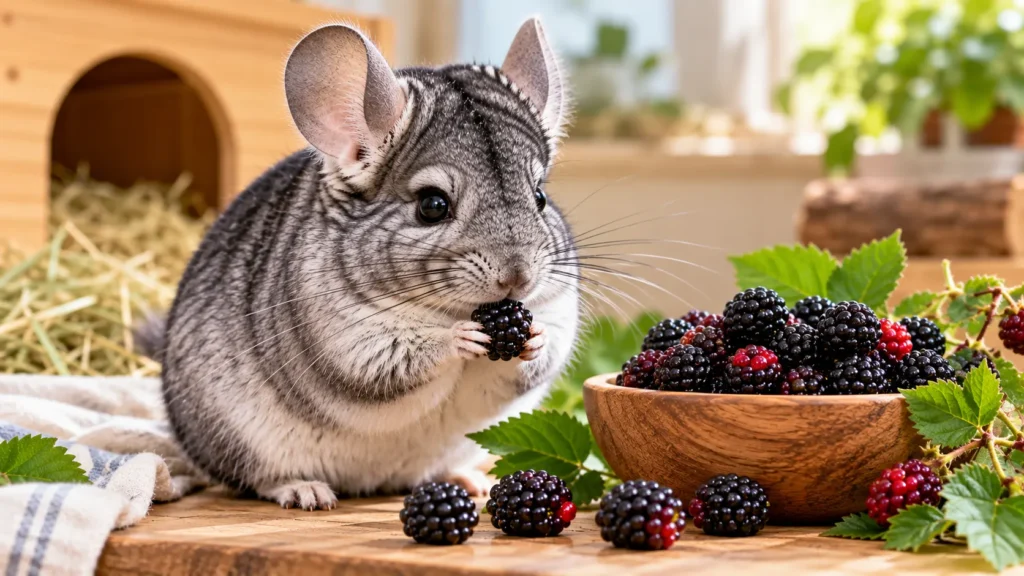
The short answer is yes, chinchillas can have a small amount of fresh blackberry as an occasional treat, but blackberries should never replace hay or a properly formulated chinchilla diet. Fruit contains naturally occurring sugars, and chinchillas generally do better when sugary foods are kept to a minimum.
In this guide, we’ll look at whether blackberries are appropriate for chinchillas, how much may be reasonable to offer, potential concerns, and what a healthy chinchilla diet should look like.
Can Chinchillas Eat Blackberries?
Yes, chinchillas can eat blackberries in very small amounts as an occasional treat. However, this does not mean blackberries should become a regular part of their daily diet.
Chinchillas are herbivores with digestive systems adapted to a high-fiber diet. Veterinary guidance recommends making good-quality grass hay the foundation of their diet, with an appropriate chinchilla pellet and constant access to fresh water. Fruits are optional treats rather than nutritional necessities.
Blackberries can therefore be offered occasionally, provided your chinchilla tolerates them well. If your pet has an existing digestive problem, is overweight, or has another health condition, speak with an exotic-animal veterinarian before introducing fruit.
Are Blackberries Healthy for Chinchillas?
Blackberries contain fiber, vitamins, minerals, water, and naturally occurring plant compounds. Those nutrients can make them an interesting occasional treat, but they do not make blackberries a necessary food for chinchillas.
The biggest consideration is that fruit also contains natural sugars. Chinchillas are adapted to eating fibrous vegetation rather than the sweet fruits commonly found in human diets. Oxbow Animal Health notes that chinchillas can be particularly sensitive to commercially available fruits and recommends researching the nutritional profile, feeding fruit sparingly, and closely monitoring the animal.
Can Blackberries Cause Digestive Problems?
They can. Chinchillas have sensitive gastrointestinal systems, so introducing unfamiliar foods too quickly or giving too much fruit may lead to digestive upset. Veterinary guidance recommends making dietary changes gradually and being cautious with treats.
After offering a new food, watch your chinchilla for changes in its droppings, appetite, activity, or general behavior. If you notice diarrhea, significant bloating, loss of appetite, or other concerning symptoms, stop the new treat and contact a veterinarian familiar with chinchillas.
How Much Blackberry Can a Chinchilla Eat?
There isn’t a universal blackberry serving size that is appropriate for every chinchilla. Size, age, health, existing diet, and individual tolerance all matter. Because fruit is not essential to a chinchilla’s nutrition, the safest approach is to keep portions very small and infrequent.
If your veterinarian is comfortable with your chinchilla eating fruit, a tiny piece of fresh blackberry can be used as an occasional treat rather than a routine food. Avoid making a large portion of berries part of the diet.
It’s also important not to rely on a rigid rule such as “one or two blackberries every week” for every chinchilla. Treat recommendations can vary, and a veterinarian who knows your pet can provide more appropriate guidance.
How to Introduce Blackberries Safely
- Start with a very small piece.
- Use fresh blackberry rather than sugary or processed blackberry products.
- Wash the fruit thoroughly before offering it.
- Introduce only one new food at a time.
- Monitor your chinchilla afterward for digestive changes.
- Do not allow fruit to replace hay or the normal chinchilla diet.
If your chinchilla reacts poorly to blackberries, there is no nutritional need to continue offering them. Treats are optional, and a healthy hay-based diet is much more important.
Alternative Fruits for Chinchillas
Blackberries aren’t the only fruit that chinchilla owners may consider as an occasional treat. However, fruit should generally remain a small part of the overall feeding routine. Oxbow specifically notes that fruits and vegetables are not daily staples for chinchillas and should be treated as treats.
Fruits That May Be Offered Occasionally
Depending on veterinary guidance and your individual chinchilla’s diet, small amounts of certain fruits may be considered occasional treats. Examples commonly discussed for small herbivorous pets include:
- Apple
- Blueberry
- Raspberry
- Strawberry
- Blackberry
However, a food being generally tolerated by some chinchillas does not mean it should be fed freely. Fruit should remain an occasional addition rather than a dietary staple.
What About Dried Fruit?
Dried fruit is generally a poor choice for chinchillas because drying concentrates the fruit’s natural sugars. VCA specifically advises against feeding dehydrated fruits and vegetables to chinchillas because they can cause significant digestive disturbance.
For that reason, don’t substitute a handful of dried blackberries for a tiny piece of fresh fruit. Fresh, appropriately portioned food is a different choice from concentrated dried fruit.
Foods to Avoid
Rather than relying on a generic list of every “unsafe fruit,” it is better to check each unfamiliar food with a reliable veterinary source or a veterinarian experienced with exotic pets. Chinchillas have specialized dietary needs, and foods that are harmless to people or other animals may not be appropriate for them.
In particular, avoid human snack foods and foods that are high in fat, sugar, or highly processed ingredients. VCA also advises against seeds, nuts, and grains in chinchilla diets.
Chinchilla Diet Basics
Understanding a chinchilla’s normal diet makes it easier to see where blackberries fit in. The goal isn’t to provide lots of different foods. Instead, the priority is a consistent, high-fiber diet that supports healthy digestion and dental wear.
Hay Should Be the Foundation
High-quality grass hay should make up the majority of a chinchilla’s diet and should be available throughout the day. Hay provides the long-strand fiber that supports gastrointestinal health and also helps wear down continuously growing teeth. Oxbow’s chinchilla care guidance recommends that fresh grass hay make up at least 70% of the diet.
Timothy hay, orchard grass, meadow hay, and other suitable grass hays can be appropriate options. The exact choice can depend on your chinchilla’s age and health.
Chinchilla Pellets
A small amount of a nutritionally complete pellet formulated specifically for chinchillas can complement the hay-based diet. Species-specific pellets are preferable to mixed foods containing ingredients such as seeds, nuts, or colorful sugary pieces.
Fresh Water
Fresh, clean water should always be available. VCA recommends changing chinchilla water at least daily and cleaning food and water equipment regularly.
Treats Should Stay Small
Treats can be useful for enrichment and bonding, but chinchillas don’t need fruit to meet their nutritional requirements. Hay-based treats are often a better fit for a chinchilla’s natural high-fiber diet.
Feeding Guidelines for Chinchillas
When introducing any new food to a chinchilla, the key is moderation. Their digestive system is not designed for sudden dietary changes, so a new treat should never be introduced in a large quantity.
Start Small
If your veterinarian has approved fruit for your chinchilla, start with a very small piece of fresh blackberry. You don’t need to give an entire handful simply because your pet enjoys the taste.
Monitor Your Chinchilla
Keep an eye on your pet after introducing a new food. Pay attention to appetite, droppings, energy level, and other noticeable changes. If your chinchilla develops diarrhea, stops eating, becomes unusually lethargic, or shows other signs of illness, contact a veterinarian promptly.
Don’t Replace Hay With Fruit
Even if your chinchilla loves blackberries, fruit should never compete with hay for space in the diet. Hay provides the fiber and chewing activity that are central to chinchilla health. Dental disease is common in chinchillas, and adequate hay intake plays an important role in natural tooth wear.
Can Chinchillas Eat Blackberries? The Bottom Line
So, can chinchillas eat blackberries? Yes, a healthy chinchilla may be able to enjoy a tiny amount of fresh blackberry as an occasional treat. The important part is moderation.
Blackberries should never replace the foods that form the foundation of a chinchilla’s diet. High-quality grass hay, an appropriate chinchilla pellet, and fresh water are much more important for everyday nutrition.
If you decide to offer blackberry, introduce it carefully and watch your pet for digestive changes. If your chinchilla has a medical condition, a history of digestive problems, or a special diet, ask a veterinarian before adding fruit.
Frequently Asked Questions About Chinchillas and Blackberries
Are blackberries safe for chinchillas to eat?
Blackberries can be offered to some healthy chinchillas as a very occasional treat. Because fruit contains natural sugars and chinchillas have sensitive digestive systems, portions should be small and infrequent. If your pet has a health condition, ask your veterinarian before offering fruit.
Can chinchillas eat fresh blackberries?
A small piece of fresh blackberry may be offered as an occasional treat if your chinchilla tolerates it. Wash the fruit first and introduce it gradually rather than giving a large serving.
Can chinchillas eat dried blackberries?
Dried blackberries are not a good choice for chinchillas. Drying concentrates the fruit’s sugar, and veterinary guidance advises against dehydrated fruits and vegetables for chinchillas because they can cause digestive problems.
How often can chinchillas eat blackberries?
Blackberries should be considered an occasional treat rather than a scheduled part of a chinchilla’s daily diet. There is no single frequency that fits every chinchilla, so your veterinarian can help determine whether fruit is appropriate for your individual pet.
Can baby chinchillas eat blackberries?
Young chinchillas have specific nutritional requirements, so it is better not to introduce fruit without professional guidance. Their diet should be designed around their age, development, and nutritional needs.
Can chinchillas eat other berries?
Some berries may be offered to chinchillas in tiny amounts, but individual fruits should be researched before feeding. Oxbow notes that chinchillas can be particularly sensitive to commercially available fruits and recommends feeding fruit sparingly.
What should a chinchilla eat every day?
A chinchilla’s everyday diet should be centered on high-quality grass hay, along with an appropriate chinchilla-formulated pellet and constant access to fresh water. Hay should be available at all times because it supports both digestive health and natural tooth wear.
Can chinchillas live without fruit?
Yes. Fruit is not required for a chinchilla to have a nutritionally complete diet. Treats are optional, while a high-fiber diet based primarily on suitable hay is essential.
What should I do if my chinchilla gets diarrhea after eating blackberry?
Stop offering the new food and contact a veterinarian, particularly if the diarrhea continues or your chinchilla also stops eating, becomes lethargic, or shows other signs of illness. Chinchillas can become seriously unwell when digestive problems affect their appetite and hydration.
Are hay-based treats better for chinchillas?
Hay-based treats can be a useful alternative because they fit more closely with the high-fiber nature of a chinchilla’s normal diet. Oxbow specifically recommends hay-based treats for chinchillas and notes that treats should be offered in moderation.
Final Thoughts
Blackberries can be an occasional treat for some chinchillas, but they shouldn’t become a regular part of the menu. When it comes to chinchilla nutrition, high-quality hay, a suitable species-specific pellet, and fresh water should come first.
If you want to give your chinchilla a little variety, introduce new foods slowly, keep portions tiny, and pay attention to how your pet responds. And when you’re unsure about a particular food, checking with a veterinarian experienced with chinchillas is always the safest approach.