
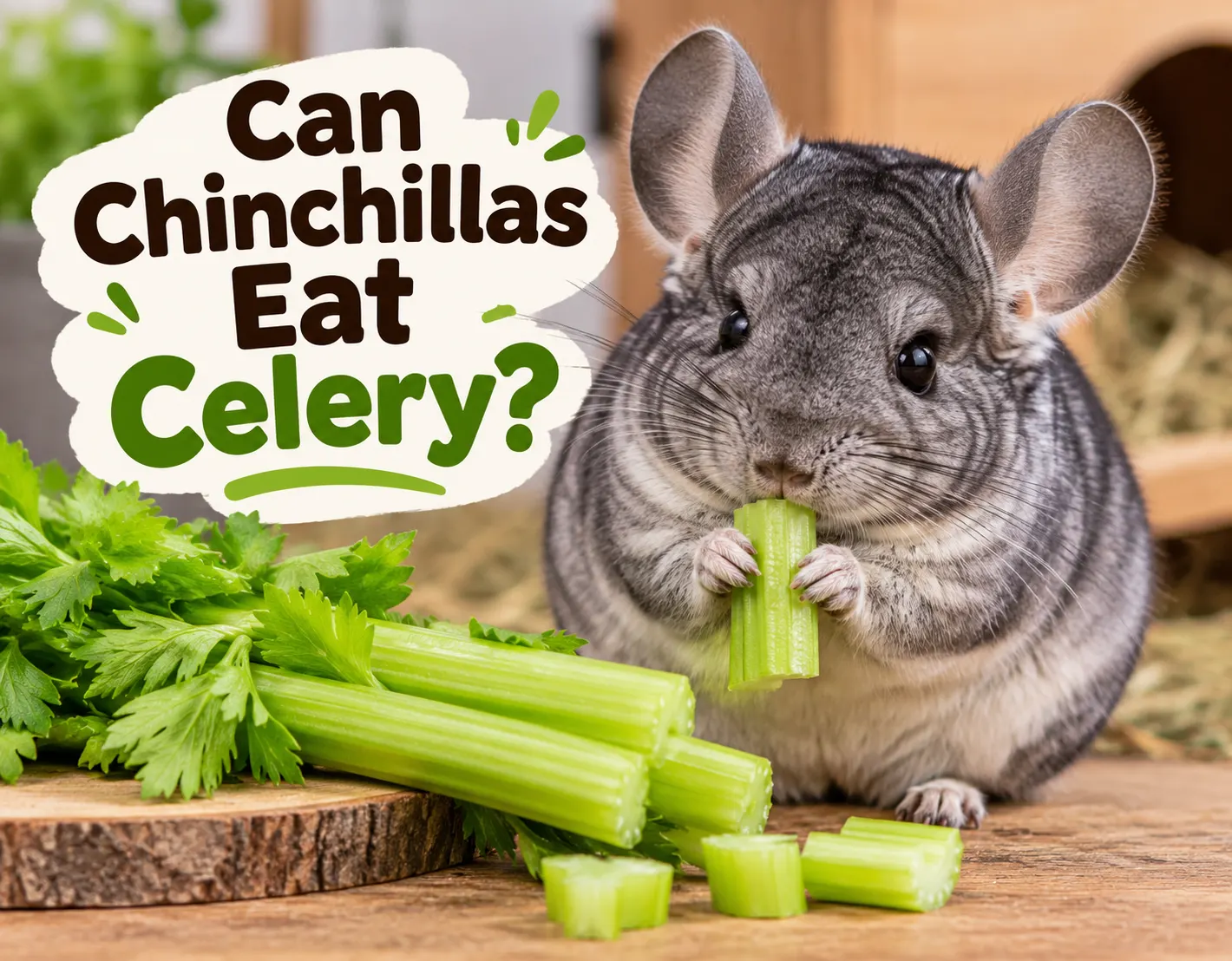
If you have a pet chinchilla, you probably know that its digestive system is quite sensitive. That makes it important to think carefully before introducing new foods, even vegetables that are perfectly healthy for people. One common question chinchilla owners ask is: Can chinchillas eat celery?
Celery is not considered a toxic food for chinchillas, but that does not mean it should become a regular part of their diet. Because celery contains a significant amount of water and chinchillas are naturally adapted to a dry, high-fiber diet, feeding too much may contribute to digestive upset. If you decide to offer celery, it should be treated as an occasional food rather than a dietary staple.
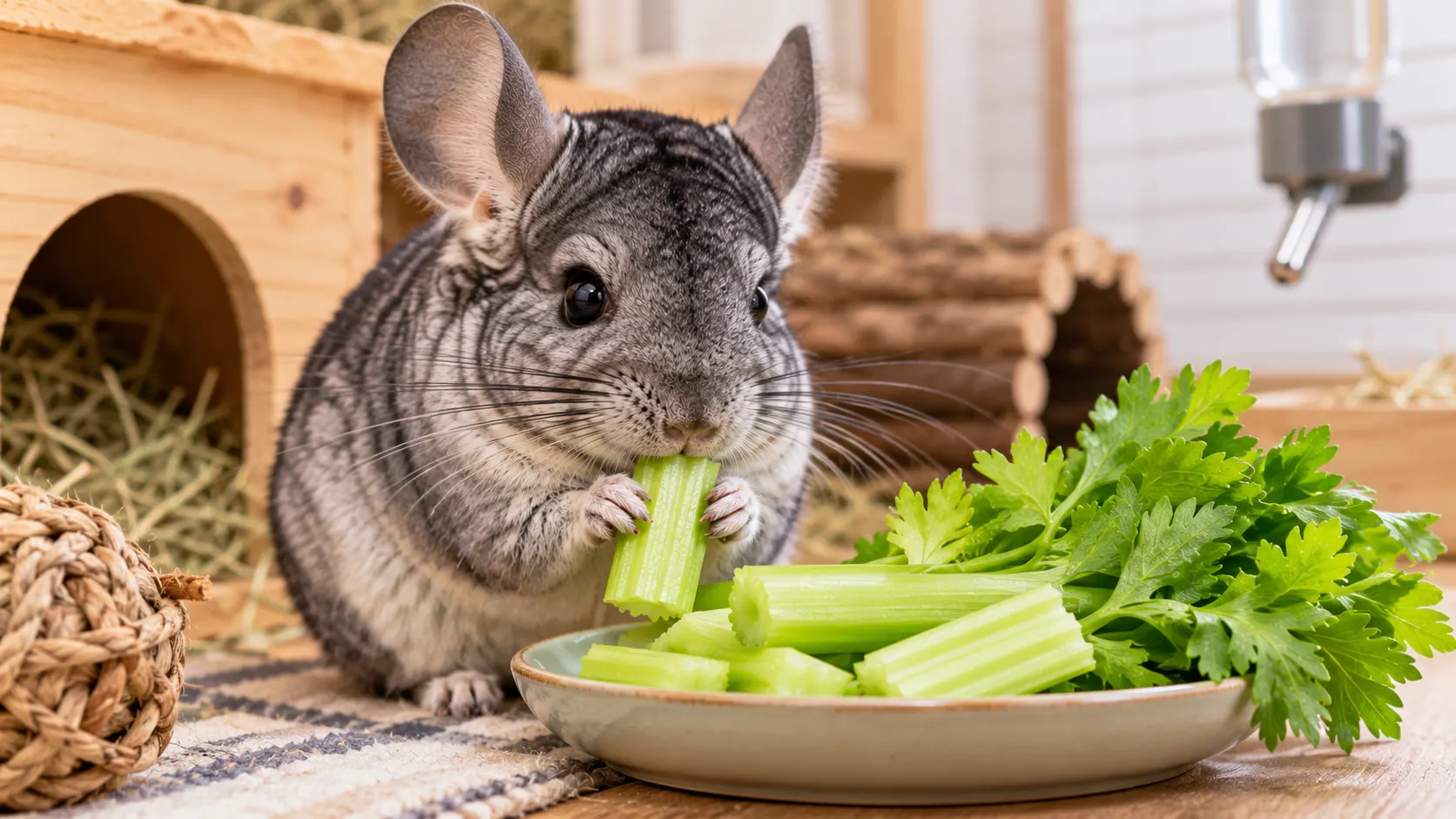
Can Chinchillas Eat Celery?
Yes, chinchillas can eat a small amount of celery occasionally, but it should not be a regular part of their diet. Celery itself is not generally considered poisonous to chinchillas. However, chinchillas have sensitive digestive systems, and their diet is naturally centered around dry, high-fiber foods such as hay.
Celery is mostly water and does not provide the same nutritional value as the hay that should make up the foundation of a chinchilla’s diet. Offering large quantities or introducing celery suddenly may result in soft stools, diarrhea, bloating, or other digestive problems.
If your chinchilla has never eaten celery before, introduce only a very small piece and observe how it responds. If you notice diarrhea, changes in stool consistency, reduced appetite, lethargy, or other unusual symptoms, stop offering the food and contact an exotic-pet veterinarian if the symptoms persist.
Is Celery Safe for Chinchillas?
For a healthy chinchilla, a tiny amount of plain, properly prepared celery may be tolerated. However, “safe” does not mean that celery is an ideal everyday food. Chinchillas have evolved to consume a diet that is relatively low in moisture and rich in fiber.
The main concern with celery is its high water content. Too much fresh, watery food can upset a chinchilla’s digestive system. This is particularly important because digestive problems can become serious in small animals.
Celery should therefore be viewed as an occasional treat rather than something that replaces hay, appropriate chinchilla pellets, or fresh drinking water.
How Much Celery Can a Chinchilla Eat?
There is no universal portion that is appropriate for every chinchilla because individual animals can respond differently to new foods. If your veterinarian has approved fresh vegetables for your chinchilla, start with a very small piece of celery rather than offering an entire stalk.
Introduce only one new food at a time so you can tell whether your chinchilla tolerates it. Avoid giving several unfamiliar vegetables or treats on the same day because that makes it difficult to identify the cause of digestive upset.
Remember that treats should remain a small part of a chinchilla’s overall diet. Hay and an appropriate chinchilla pellet should remain the primary sources of nutrition.
How to Prepare Celery for a Chinchilla
If you choose to give your chinchilla celery, preparation matters. Always provide plain celery without salt, sauces, seasonings, butter, or other ingredients that may be harmful to your pet.
- Wash the celery thoroughly before offering it.
- Remove any spoiled or damaged sections.
- Cut it into a small, manageable piece.
- Offer only a small amount the first time.
- Remove uneaten fresh food rather than allowing it to sit in the enclosure.
Do not give your chinchilla cooked celery that contains salt, oil, spices, sauces, or other added ingredients. Plain food is the safest option when introducing any new treat.
Understanding a Chinchilla’s Diet
What Do Chinchillas Naturally Eat?
Chinchillas are herbivores with digestive systems adapted to a high-fiber diet. In their natural environment, they consume grasses, plants, leaves, and other vegetation that is relatively low in moisture.
This helps explain why a chinchilla’s diet in captivity should not resemble the typical diet of a human or even that of some other small pets. Foods that contain a lot of water or sugar can be harder for chinchillas to tolerate when offered in large amounts.
What Should a Pet Chinchilla Eat?
A healthy pet chinchilla generally needs unlimited access to good-quality grass hay, a suitable chinchilla pellet, and clean drinking water. Hay is especially important because its fiber supports normal digestion and helps provide the chewing activity that chinchillas need.
Treats should not replace these staple foods. Fresh foods, fruits, and vegetables can be problematic when given too frequently, particularly because chinchillas are not designed to consume large quantities of moist or sugary foods.
If you are considering making a major change to your chinchilla’s diet, speak with an exotic-animal veterinarian first. This is particularly important for chinchillas with a history of digestive problems or other health conditions.
Celery and Chinchilla Nutrition
Celery contains water, fiber, vitamin K, vitamin C, and several other nutrients. These qualities make it a nutritious food for people, but human nutritional benefits do not automatically mean that a food is necessary or ideal for chinchillas.
For chinchillas, the priority is a diet that provides plenty of appropriate fiber without excessive moisture, sugar, or fat. Celery does not need to be included in a chinchilla’s diet to meet its basic nutritional requirements.
Why Too Much Celery Can Be a Problem
The biggest concern is not that celery is inherently poisonous. Instead, the issue is that too much fresh food can disrupt the delicate balance of a chinchilla’s digestive system.
- Digestive upset: A sudden increase in fresh food can result in soft stools or diarrhea.
- High moisture: Celery contains considerably more water than the dry foods that normally make up a chinchilla’s diet.
- Unbalanced nutrition: Celery should never replace hay or a nutritionally complete chinchilla pellet.
- Individual sensitivity: Some chinchillas may tolerate certain foods better than others.
If your chinchilla develops persistent diarrhea, stops eating, becomes unusually quiet, or shows other signs of illness after eating celery or another new food, contact a veterinarian promptly. Digestive problems can become serious in chinchillas.
What Vegetables Can Chinchillas Eat?
Vegetables are not essential to a chinchilla’s diet in the same way that hay is. Many experienced chinchilla owners and veterinarians recommend keeping fresh produce limited because chinchillas are particularly sensitive to dietary changes.
If your veterinarian recommends allowing a particular vegetable, introduce it gradually and in a very small amount. Avoid assuming that a vegetable is suitable simply because another pet species can eat it safely.
Vegetables to Discuss With Your Veterinarian
Depending on the individual chinchilla and the dietary guidance you receive, small amounts of certain low-sugar vegetables may sometimes be offered. Examples that are commonly discussed include:
- Bell peppers
- Small amounts of leafy greens
- Small amounts of carrot
However, these foods should not replace hay or a properly formulated chinchilla diet. If your chinchilla has never eaten fresh vegetables before, check with an exotic-pet veterinarian before introducing them.
Foods to Avoid or Limit
Chinchillas should not be given foods that are high in sugar, fat, salt, or artificial additives. Human snacks, sweets, chocolate, processed foods, and heavily seasoned foods are inappropriate.
Fruit should also be limited because it contains naturally occurring sugars. A food that is considered healthy for humans can still be unsuitable for a chinchilla when offered frequently or in large portions.
How to Introduce a New Food to Your Chinchilla
Chinchillas can react poorly to sudden dietary changes, so patience is important when introducing anything new. Even if a particular food is considered safe, start with a very small amount.
- Make sure your chinchilla is healthy before introducing a new food.
- Introduce only one new food at a time.
- Start with a tiny portion.
- Monitor stool consistency, appetite, and normal behavior.
- Stop the new food if digestive problems develop.
Keeping a simple record of new foods can also be helpful. If your chinchilla develops digestive problems, you will have a better idea of which food may have caused the reaction.
Can Chinchillas Eat Celery Leaves and Stalks?
Celery leaves and stalks are both parts of the same vegetable, but that does not mean either should be offered freely. If celery is approved as an occasional treat for your chinchilla, a small piece of plain celery can be offered rather than a large quantity of the vegetable.
Always wash fresh produce carefully and remove anything that is spoiled, wilted, or contaminated. Avoid celery prepared with seasonings, sauces, salt, or other ingredients.
What Should You Do If Your Chinchilla Eats Too Much Celery?
If your chinchilla accidentally eats a larger amount of celery than intended, do not panic. Remove the remaining celery and return your pet to its normal diet and fresh drinking water.
Watch your chinchilla closely for changes in stool, appetite, activity, or behavior. If diarrhea, bloating, loss of appetite, lethargy, or other concerning symptoms appear, contact a veterinarian who has experience treating chinchillas or other exotic pets.
Final Verdict: Can Chinchillas Eat Celery?
Yes, chinchillas can eat a small amount of celery occasionally, but celery should not be a regular part of their diet. The main reason for limiting celery is its high moisture content and the fact that it does not provide the dry, fiber-rich nutrition that chinchillas need as the foundation of their diet.
For most healthy chinchillas, hay should remain the cornerstone of the diet, supported by an appropriate chinchilla pellet and constant access to clean water. Treats should be limited, and any new food should be introduced slowly.
If you are unsure whether celery or another fresh food is suitable for your particular chinchilla, an exotic-pet veterinarian can provide advice based on your pet’s age, health, diet, and individual needs.
Frequently Asked Questions About Chinchillas and Celery
Can chinchillas eat celery?
Yes, a healthy chinchilla may be able to eat a very small amount of plain celery occasionally. However, celery should not replace hay or a properly formulated chinchilla diet, and it should not be fed in large quantities.
Is celery toxic to chinchillas?
Celery is not generally considered toxic to chinchillas. The bigger concern is digestive upset from feeding too much fresh, watery food. Always introduce new foods cautiously.
How much celery can a chinchilla eat?
If your veterinarian agrees that fresh vegetables are appropriate, start with a very small piece rather than an entire stalk. Individual chinchillas can have different tolerances, so monitor your pet carefully after introducing it.
Can baby chinchillas eat celery?
Baby chinchillas have particularly sensitive digestive systems and should not be given new treats casually. Their diet should be appropriate for their age and development. Ask an exotic-pet veterinarian before offering celery to a young chinchilla.
Can chinchillas eat celery leaves?
Celery leaves should also be treated as a fresh food rather than a staple. If fresh vegetables have been approved for your chinchilla, offer only a tiny amount and monitor for digestive changes.
Can chinchillas eat celery every day?
Celery should not be used as an everyday food for chinchillas. Their regular diet should be based primarily on high-quality hay, an appropriate chinchilla pellet, and clean water.
Can celery cause diarrhea in chinchillas?
It can contribute to digestive upset, particularly if a chinchilla eats too much fresh food or receives a sudden dietary change. If your chinchilla develops diarrhea, stop the new food and contact a veterinarian if the problem continues or your pet shows other signs of illness.
What is the most important food for a chinchilla?
Good-quality hay is one of the most important components of a chinchilla’s diet because it provides the fiber needed for normal digestion and supports natural chewing behavior. A suitable chinchilla pellet and fresh water should also be provided.
Can chinchillas eat fruits?
Fruit should generally be limited because it contains sugar. Chinchillas do not need fruit to maintain a healthy diet, so treats should be given sparingly and only when appropriate for the individual animal.
What should I do if my chinchilla gets sick after eating celery?
Remove the celery and monitor your chinchilla closely. If your pet develops persistent diarrhea, stops eating, becomes lethargic, has a swollen abdomen, or shows other concerning symptoms, contact an exotic-pet veterinarian promptly. Chinchillas can become seriously ill from digestive problems.