


Yes, cockatiels can eat brussel sprouts in moderation. These small green vegetables can provide useful nutrients, including vitamin C, vitamin K, folate, fiber, and potassium. When prepared properly and offered as part of a varied diet, brussel sprouts can be a healthy vegetable treat for your cockatiel.

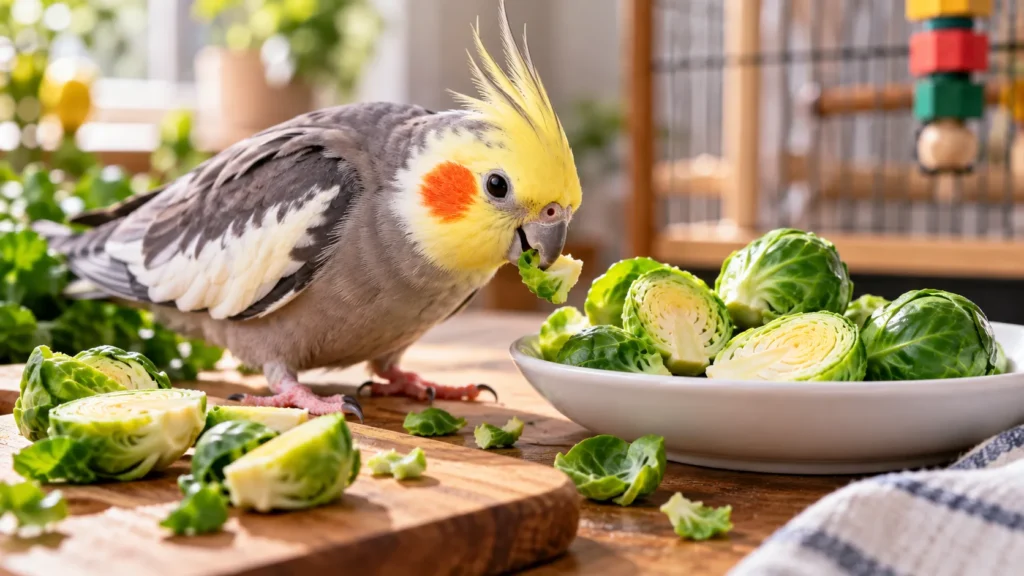
However, brussel sprouts should not replace your cockatiel’s regular diet. Cockatiels need a balanced combination of appropriate pellets, seeds, vegetables, and limited fruit to receive a broad range of nutrients. New foods should also be introduced gradually so you can see how your bird responds.
If your cockatiel has never tried brussel sprouts before, start with a small piece of plain, thoroughly washed vegetable. Observe your bird for any digestive changes or other unusual reactions before offering it again.
Understanding Cockatiels’ Dietary Needs
Understanding what cockatiels need to eat is an important part of responsible bird ownership. In the wild, cockatiels naturally consume a variety of foods, including seeds, grains, vegetation, and other plant material. Pet cockatiels also benefit from dietary variety, although their nutritional needs should be carefully managed in captivity.
A seed-only diet may not provide every nutrient a pet cockatiel needs. Feeding too many high-calorie seeds can also contribute to an unbalanced diet and weight-related health concerns. For this reason, many pet cockatiels are offered nutritionally complete pellets alongside appropriate vegetables and other foods.
Fresh vegetables can add variety and provide important vitamins, minerals, and fiber. Safe options can include leafy greens, carrots, sweet potatoes, broccoli, and other bird-friendly vegetables. New foods should be introduced one at a time and in small portions.
It is equally important to know which human foods are unsafe for birds. Foods such as chocolate, avocado, and caffeinated products should not be fed to cockatiels. Foods containing excessive salt, sugar, oil, or artificial ingredients should also be avoided.
In short, a healthy cockatiel diet should provide variety without allowing treats or individual foods to take over the diet. Brussel sprouts can fit into that variety when they are offered in appropriate portions and prepared without harmful ingredients.
Brussel Sprouts: Nutritional Overview
Brussel sprouts are cruciferous vegetables related to broccoli, cauliflower, and kale. They contain several nutrients that can make them a useful addition to a varied cockatiel diet.
They provide vitamin C, vitamin K, folate, potassium, and dietary fiber. They also contain naturally occurring plant compounds and antioxidants. Because they are relatively low in fat, plain brussel sprouts can be a suitable vegetable option for birds when served in small amounts.
The nutritional value of brussel sprouts does not mean that cockatiels should eat large quantities. Birds need a balanced diet rather than relying heavily on one vegetable. Offering several appropriate vegetables throughout the week can provide greater dietary variety.
It is also worth remembering that the way brussel sprouts are prepared matters. Plain raw or appropriately cooked brussel sprouts are very different from brussel sprouts prepared with butter, salt, sauces, seasoning, or other ingredients intended for human meals.
Health Benefits of Brussel Sprouts for Cockatiels
When served in moderation, brussel sprouts can provide several useful nutrients for cockatiels. They can be especially helpful as part of a broader selection of vegetables rather than being treated as a staple food.
Rich in Vitamin C
Brussel sprouts contain vitamin C, an important nutrient involved in normal immune function and other body processes. Including a variety of vitamin-rich vegetables can help add nutritional diversity to your cockatiel’s meals.
Provides Dietary Fiber
Brussel sprouts contain dietary fiber, which can support normal digestive function. Fiber is naturally present in many vegetables and can be part of a varied diet for pet birds.
Low in Fat
Plain brussel sprouts are naturally low in fat. Offering vegetables that are not heavily processed or prepared with oils can provide a lighter treat compared with many human snack foods.
Contains Other Important Nutrients
Along with vitamin C and fiber, brussel sprouts contain vitamin K, folate, potassium, and other plant nutrients. These nutrients contribute to the overall nutritional variety of your cockatiel’s diet.
Remember that brussel sprouts are only one possible vegetable choice. Your cockatiel should continue to receive a balanced diet rather than depending on a single food for its nutritional needs.
Potential Risks of Feeding Brussel Sprouts to Cockatiels
Although brussel sprouts can be suitable for cockatiels, feeding too much or preparing them incorrectly can cause problems. Introducing any unfamiliar food should be done gradually.
One concern with vegetables is that they should not displace nutritionally complete foods from the diet. Even a nutritious vegetable cannot provide everything a cockatiel needs. Brussel sprouts should therefore be considered a supplemental food rather than a dietary staple.
Brussel sprouts may also cause digestive discomfort in some birds, particularly when a bird eats a large amount at once. Gas, changes in droppings, or other digestive changes can occur when a new food is introduced too quickly. Start with a small portion and monitor your bird.
Another important consideration is cleanliness. Fresh vegetables should be washed thoroughly before being offered to your cockatiel. This helps remove dirt and reduce exposure to residues or contaminants that may be present on the surface.
Finally, avoid serving brussel sprouts prepared for humans with salt, butter, sauces, spices, garlic, onion, or other potentially unsuitable ingredients. Plain vegetables are the safest choice for your bird.
How to Prepare Brussel Sprouts for Cockatiels
Proper preparation is important when giving brussel sprouts to your cockatiel. The vegetable should be fresh, clean, and free from added seasonings or other ingredients.
Washing and Cleaning
Wash the brussel sprouts thoroughly under clean running water before serving them. Remove any dirt, damaged outer leaves, or debris. After washing, cut the vegetable into small, manageable pieces that your cockatiel can easily pick up and eat.
Raw or Cooked?
Cockatiels can generally be offered clean, plain brussel sprouts either raw or lightly cooked. If you cook them, steaming is a simple option. Allow the vegetable to cool completely before giving it to your bird.
Avoid preparing brussel sprouts with salt, butter, oil, sauces, spices, garlic, onion, or other seasonings. Your cockatiel does not need the ingredients commonly used to make vegetables more flavorful for humans.
Serving Size
Start with a small piece when introducing brussel sprouts for the first time. If your cockatiel tolerates the vegetable well, you can occasionally offer a little more as part of its overall vegetable selection. There is no need to give large portions.
Always remove uneaten fresh food from the cage after a reasonable period so that it does not spoil. Fresh vegetables should complement, rather than replace, your cockatiel’s normal balanced diet.
Alternatives to Brussel Sprouts for Cockatiels
Not every cockatiel will enjoy brussel sprouts. Some birds may ignore them completely, while others may become interested after seeing them offered several times. If your bird does not like brussel sprouts, there are many other nutritious foods you can try.
Leafy Greens
Leafy greens can provide a range of vitamins and minerals. Options such as kale, collard greens, and dandelion greens can add variety to your cockatiel’s diet. Wash fresh greens thoroughly and serve them plain.
Vegetables
Cockatiels can enjoy a variety of bird-safe vegetables, including carrots, broccoli, cauliflower, and sweet potato. These vegetables can be served in suitable small pieces and without salt, butter, sauces, or seasoning.
Fruits
Some fruits can also be offered as occasional treats. Apples, bananas, berries, and melons are examples of fruits that cockatiels may enjoy. Remove seeds, pits, and other unsuitable parts before serving, and keep fruit portions modest because fruit contains naturally occurring sugars.
Pellets
A suitable formulated pellet can provide important nutrients and can form part of a balanced diet for many pet cockatiels. Choose a quality product appropriate for cockatiels and follow feeding guidance from your veterinarian or the product manufacturer.
Offering different appropriate foods can make mealtimes more interesting while helping your cockatiel receive a broader range of nutrients. If you are unsure about your bird’s specific nutritional requirements, an avian veterinarian can provide individualized advice.
Frequently Asked Questions About Cockatiels and Brussel Sprouts
Can cockatiels eat brussel sprouts?
Yes, cockatiels can eat brussel sprouts in moderation. Plain, properly washed brussel sprouts can be offered as part of a varied diet. Start with a small amount when introducing them for the first time.
Are brussel sprouts safe for cockatiels to eat?
Yes, brussel sprouts can be a safe vegetable for cockatiels when they are fresh, thoroughly washed, and served plain. They should be offered as a supplemental food rather than replacing the bird’s regular balanced diet.
Can cockatiels eat cooked brussel sprouts?
Yes, cockatiels can eat plain cooked brussel sprouts. Lightly steaming them is one option. Let cooked vegetables cool completely before serving, and do not add salt, butter, oil, sauces, spices, garlic, or onion.
Can cockatiels eat raw brussel sprouts?
Many cockatiels can eat small amounts of raw brussel sprouts. Wash the vegetable thoroughly and cut it into a small, manageable piece. If your bird has difficulty eating it raw, lightly steaming it can make the texture softer.
What are the health benefits of brussel sprouts for cockatiels?
Brussel sprouts provide nutrients such as vitamin C, vitamin K, folate, potassium, and fiber. They can add nutritional variety to a cockatiel’s diet when offered in moderation alongside other appropriate foods.
How much brussel sprout can a cockatiel eat?
Start with a small piece rather than offering a large portion. The appropriate amount depends on your cockatiel’s overall diet, size, and individual needs. Brussel sprouts should remain a small part of a varied diet.
Can brussel sprouts cause digestive problems in cockatiels?
Some birds may experience digestive changes after eating an unfamiliar vegetable or eating too much of it at once. Introduce brussel sprouts gradually and watch for changes in droppings, appetite, or behavior. If concerning symptoms persist, contact an avian veterinarian.
What other vegetables can cockatiels eat?
Cockatiels can enjoy a variety of appropriate vegetables, including carrots, broccoli, kale, collard greens, cauliflower, and sweet potato. Offering different vegetables can provide variety instead of relying on one type of food.
What fruits are safe for cockatiels?
Some suitable fruit options include apples, bananas, berries, and melons. Fruit should generally be offered in small amounts, and seeds, pits, and other unsuitable parts should be removed before serving.
What foods should cockatiels never eat?
Cockatiels should not be given toxic or potentially harmful foods such as avocado, chocolate, or caffeinated products. Foods that are heavily salted, sugary, oily, or seasoned should also be avoided. When you are uncertain about a particular food, consult an avian veterinarian before offering it.
Should brussel sprouts replace pellets or seeds?
No. Brussel sprouts should not replace the main components of a balanced cockatiel diet. They are best used as a vegetable addition that provides variety and extra nutrients.
Should I talk to a veterinarian before giving my cockatiel brussel sprouts?
For a healthy cockatiel, a small amount of plain brussel sprout is generally a simple food to introduce. However, if your bird has an existing medical condition, a specialized diet, digestive problems, or other nutritional concerns, speak with an avian veterinarian before making dietary changes.
Final Thoughts
So, can cockatiels eat brussel sprouts? Yes. Plain brussel sprouts can be a nutritious addition to a cockatiel’s diet when they are properly washed, prepared, and served in moderation.
The key is variety and balance. Brussel sprouts should be treated as one vegetable among many rather than a replacement for a nutritionally complete diet. Introduce new foods slowly, avoid seasonings and processed ingredients, and pay attention to how your cockatiel responds.
If you have any concerns about your cockatiel’s diet, weight, digestion, or overall health, an avian veterinarian can help you develop a feeding plan suited to your individual bird.