


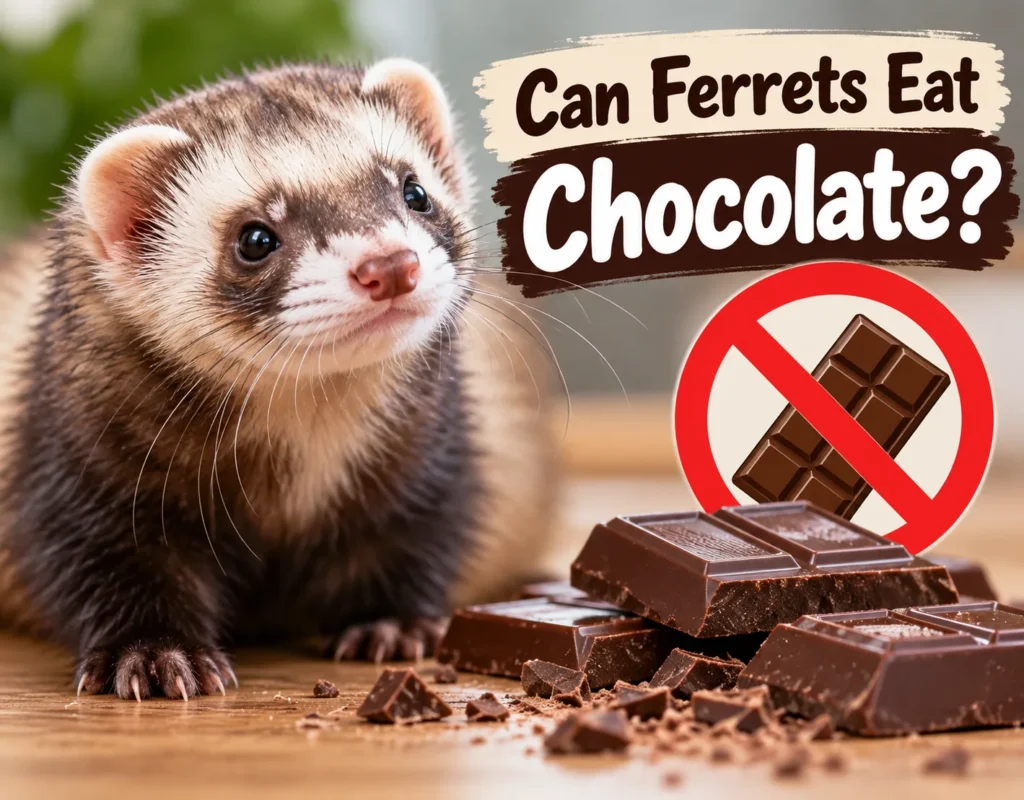
If you’re a ferret owner, you probably already know how curious these little animals can be. Ferrets love exploring, sniffing around, and investigating anything that looks interesting—including food left within reach. That curiosity can become a problem when they get hold of something that isn’t safe for them.
So, can ferrets eat chocolate? No. Ferrets should never be given chocolate. Chocolate contains substances such as theobromine and caffeine that can be toxic to ferrets. Because ferrets are small animals, even a relatively small amount may be dangerous and should be taken seriously.

Can Ferrets Eat Chocolate?
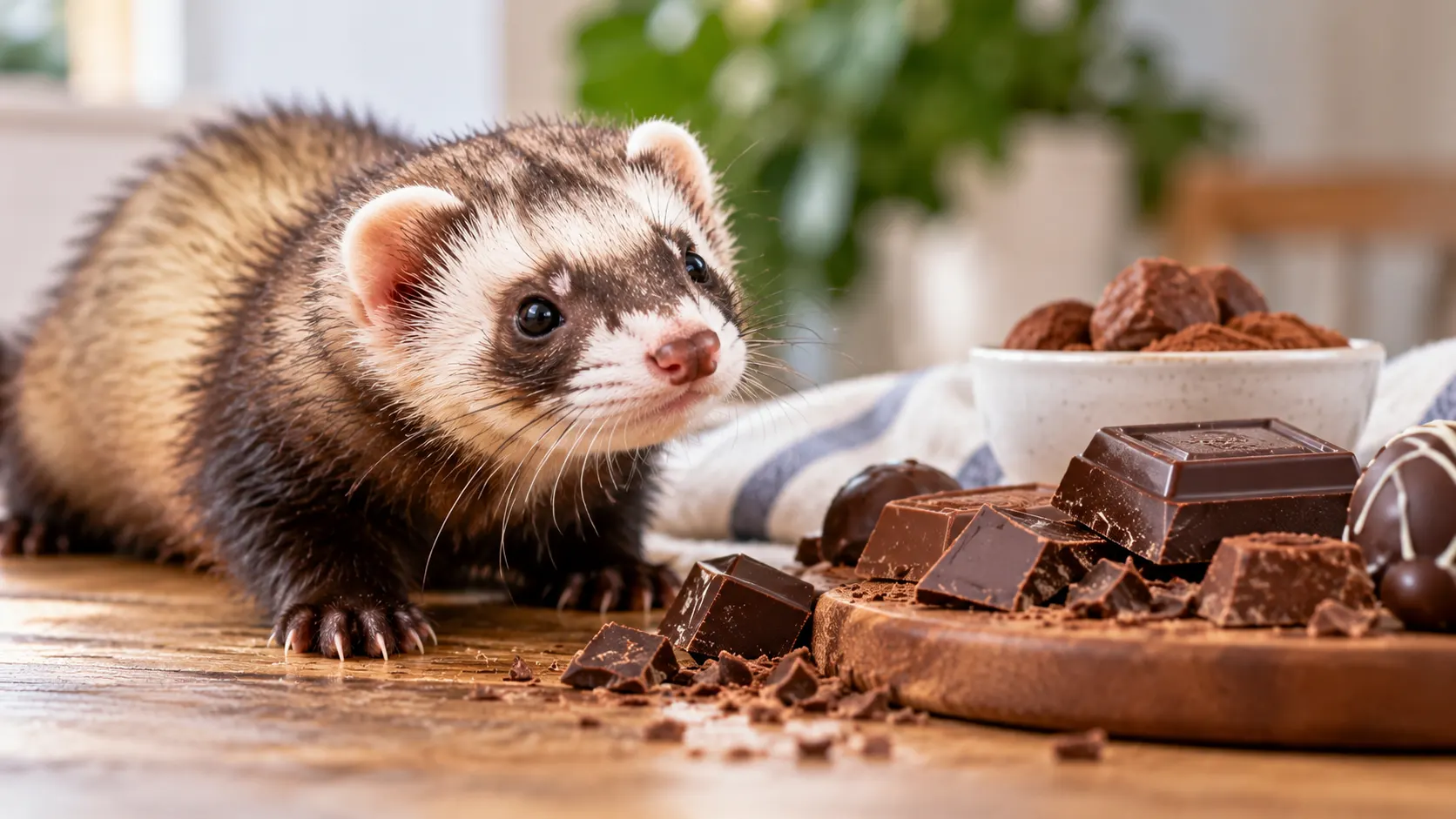
No, ferrets cannot safely eat chocolate. Chocolate is one of the human foods that should be kept completely away from ferrets. This includes milk chocolate, dark chocolate, white chocolate products, chocolate desserts, cocoa powder, chocolate-coated snacks, and foods containing chocolate.
The main concern is not simply the sugar or fat found in chocolate. Cocoa naturally contains theobromine, and chocolate can also contain caffeine. These substances belong to a group of stimulants that can be harmful to animals when consumed in sufficient amounts.
Because ferrets are small compared with humans, a quantity that seems tiny to us can represent a much larger dose relative to their body size. For that reason, chocolate should never be intentionally offered as a treat.
Understanding a Ferret’s Natural Diet
Before choosing treats for a ferret, it helps to understand what these animals are designed to eat. Ferrets are obligate carnivores, meaning their digestive system and nutritional requirements are adapted to a meat-based diet.
A suitable ferret diet generally focuses on high-quality animal protein and appropriate levels of fat, while limiting unnecessary carbohydrates and plant-based ingredients. In the wild, ferret relatives eat prey such as small mammals and other animals rather than sugary human foods.
That means foods made for people—including chocolate, candy, baked goods, and many processed snacks—are not appropriate substitutes for a balanced ferret diet.
Why Is Chocolate Toxic to Ferrets?
The primary concern with chocolate toxicity is methylxanthines, particularly theobromine and caffeine. These compounds stimulate the nervous and cardiovascular systems and can cause serious problems when consumed in toxic quantities.
Animals can process these compounds differently from humans. The severity of a reaction depends on several factors, including the animal’s body weight, the amount eaten, and the type of chocolate involved.
In general, darker chocolate and cocoa-rich products contain more theobromine than milk chocolate. However, that does not mean milk chocolate is safe for ferrets. No type of chocolate should be deliberately fed to a ferret.
What Happens If a Ferret Eats Chocolate?
If a ferret eats chocolate, the effects can range from mild digestive upset to potentially serious cardiovascular or neurological problems. The risk depends on the type and amount of chocolate consumed as well as the ferret’s size and individual circumstances.
Possible signs of chocolate toxicity can include:
- Restlessness or unusual agitation
- Vomiting
- Diarrhea
- Increased thirst or urination
- Rapid heartbeat
- Abnormal heart rhythm
- Tremors
- Weakness
- Seizures
- Collapse
Symptoms may not always appear immediately, so don’t assume a ferret is safe simply because it looks normal shortly after eating chocolate.
Which Types of Chocolate Are Most Dangerous?
Not all chocolate contains the same concentration of theobromine. Generally, products with higher amounts of cocoa are more concerning.
- Cocoa powder: Highly concentrated and particularly concerning.
- Baking chocolate: Usually contains a high concentration of cocoa.
- Dark chocolate: Can contain substantially more theobromine than milk chocolate.
- Milk chocolate: Contains less theobromine than darker varieties but is still unsafe.
- White chocolate: Contains very little theobromine compared with darker chocolate, but it still isn’t an appropriate ferret food and may contain large amounts of sugar and fat.
If you’re unsure how much chocolate your ferret consumed, don’t try to determine whether the amount is “small enough” on your own. Contact a veterinarian for advice.
My Ferret Ate Chocolate: What Should I Do?
If your ferret has eaten chocolate, treat the situation as a potential poisoning emergency. Contact your veterinarian or an emergency veterinary clinic as soon as possible.
When contacting the veterinarian, try to provide useful information such as the type of chocolate, approximately how much was eaten, when it was consumed, and your ferret’s approximate weight. If you still have the packaging, keep it available so the veterinarian can check the product and cocoa content.
Do not attempt to make your ferret vomit unless a veterinarian specifically tells you to do so. Home remedies can create additional risks, and ferrets have different health and nutritional needs from people.
If your ferret is already showing symptoms such as tremors, seizures, collapse, difficulty breathing, or a very rapid heartbeat, seek emergency veterinary care immediately.
How Is Chocolate Poisoning Treated?
Treatment depends on the amount and type of chocolate consumed, how long ago it was eaten, and the ferret’s clinical condition. A veterinarian may recommend decontamination or supportive treatment when appropriate.
Veterinary care may include monitoring the heart and nervous system, managing gastrointestinal symptoms, providing fluids, and treating tremors, abnormal heart rhythms, or seizures if they develop.
The earlier a potentially toxic ingestion is addressed, the more information the veterinary team has to determine the safest course of treatment. That’s why contacting a veterinarian promptly is important.
How to Prevent Your Ferret From Eating Chocolate
The easiest way to protect your ferret is to prevent access in the first place. Ferrets are excellent explorers and can squeeze into surprisingly small spaces, so simply placing chocolate on a low table may not be enough.
- Keep chocolate in a closed cupboard or secure container.
- Don’t leave chocolate bars or desserts on tables or countertops.
- Keep baking chocolate and cocoa powder away from accessible areas.
- Clean up crumbs and food wrappers after eating.
- Tell children and visitors not to feed chocolate to your ferret.
- Check bags and purses that may contain chocolate or other unsafe snacks.
- Keep your ferret away from the kitchen when you’re preparing chocolate-based foods.
A little prevention can eliminate a potentially dangerous situation before it happens.
What Treats Can Ferrets Have?
If you want to reward your ferret, choose treats that fit its carnivorous nutritional needs rather than reaching for human sweets.
Small portions of appropriate animal-based foods, such as plain cooked meat without seasoning, may be used as occasional treats. Commercial ferret treats formulated specifically for ferrets can also be an option when used according to the product’s feeding guidance.
It is best to avoid sugary foods, candy, chocolate, and highly processed human snacks. Fruits are also not necessary treats for ferrets because their diet is designed around animal-based nutrition.
Other Foods Ferret Owners Should Be Careful With
Chocolate isn’t the only human food that deserves caution. Ferrets have specific dietary requirements, and many common household foods are unsuitable for them.
- Chocolate and cocoa products
- Candy and sugary foods
- Highly salty or heavily processed foods
- Alcohol
- Caffeinated drinks and products
- Foods containing onions or garlic
- Foods containing artificial sweeteners or other potentially harmful ingredients
- Cooked bones that can splinter or cause injury
If you’re uncertain about a particular food, check with a veterinarian who is familiar with ferrets before adding it to your pet’s diet.
Regular Veterinary Care Is Important for Ferrets
Good nutrition is only one part of responsible ferret care. Regular veterinary examinations can help identify health problems early and give you an opportunity to discuss diet, weight, vaccinations, dental care, and other aspects of your ferret’s health.
It’s also helpful to know your ferret’s normal behavior. If your pet suddenly becomes unusually restless, weak, sleepy, or uncoordinated after eating something questionable, that change is worth taking seriously.
Frequently Asked Questions About Ferrets and Chocolate
Can ferrets eat chocolate?
No. Ferrets should not eat chocolate. Theobromine and caffeine in chocolate can be toxic, and the risk can be significant because ferrets are small animals.
What should I do if my ferret ate chocolate?
Contact your veterinarian or an emergency veterinary clinic promptly. Tell them what type of chocolate your ferret ate, approximately how much was consumed, when it happened, and your ferret’s approximate weight. Do not induce vomiting unless a veterinarian specifically instructs you to do so.
Is dark chocolate dangerous for ferrets?
Yes. Dark chocolate can contain considerably more theobromine than milk chocolate, making it particularly concerning for small animals such as ferrets.
Can ferrets eat milk chocolate?
No. Milk chocolate is not a safe treat for ferrets. Although it generally contains less theobromine than dark chocolate, it can still expose a ferret to potentially harmful methylxanthines.
Is white chocolate safe for ferrets?
White chocolate contains much less theobromine than darker chocolate, but it is still not an appropriate food for ferrets. It can be high in sugar and fat and provides no nutritional benefit that a ferret needs.
Can a small amount of chocolate hurt a ferret?
Potentially. The risk depends on factors such as the ferret’s body weight, the type of chocolate, and the amount consumed. Because it can be difficult to assess the risk at home, contact a veterinarian after a known chocolate ingestion.
Can ferrets eat chocolate-flavored foods?
Chocolate-flavored foods should also be avoided unless a veterinarian confirms that every ingredient is appropriate for your ferret. Products containing cocoa or chocolate may contain the same potentially harmful compounds.
What are the signs of chocolate poisoning in ferrets?
Possible signs include restlessness, vomiting, diarrhea, increased heart rate, abnormal heart rhythm, tremors, weakness, seizures, and collapse. If you suspect chocolate ingestion, seek veterinary advice rather than waiting for symptoms to appear.
What treats are safe for ferrets?
Ferret-specific treats and small portions of suitable plain animal-based foods are generally more appropriate than human snacks. Because ferrets are obligate carnivores, treats should fit their meat-based nutritional needs and remain an occasional part of their diet.
Final Thoughts: Keep Chocolate Away From Your Ferret
So, can ferrets eat chocolate? Absolutely not. Chocolate may be an enjoyable treat for people, but it has no place in a ferret’s diet. The theobromine and caffeine found in chocolate can cause serious toxicity, particularly in a small animal.
If your ferret accidentally eats chocolate, don’t panic, but don’t ignore it either. Contact a veterinarian promptly and provide as much information as possible about the chocolate and the amount consumed.
When it comes to ferret treats, stick with appropriate animal-based options and ferret-specific products. A little caution around the kitchen can go a long way toward keeping your curious companion safe, healthy, and happy.