


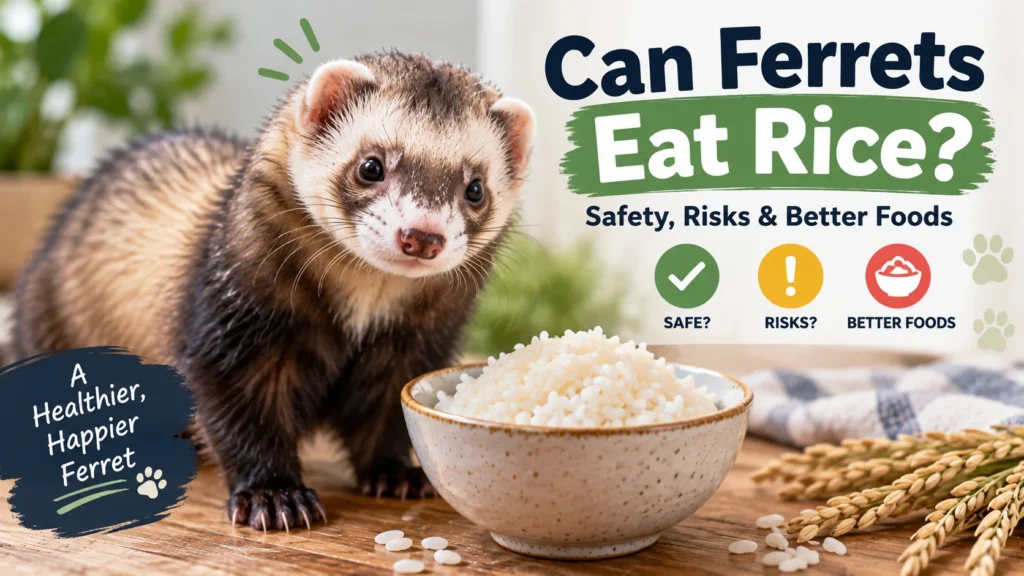

Ferrets are obligate carnivores, which means their bodies are designed to obtain most of their nutrition from animal-based foods. A properly balanced ferret diet should provide adequate animal protein and fat while keeping carbohydrates and fiber relatively low.
So, can ferrets eat rice? Rice is not generally considered toxic to ferrets, but that does not make it a good food choice for them. Rice is a carbohydrate-rich food and does not provide the animal protein and fat that ferrets need. For this reason, rice should not be a regular part of a ferret’s diet, and a complete ferret food should remain the foundation of their nutrition.
If your ferret accidentally eats a small amount of plain cooked rice, it is usually more appropriate to monitor the pet than to panic. However, deliberately feeding rice or other high-carbohydrate human foods is best avoided. Ferrets with existing health problems, especially insulinoma, may require particularly careful dietary management.
Understanding a Ferret’s Diet
Ferrets are true carnivores and have a short digestive tract with rapid gastrointestinal transit. Their nutritional needs are therefore different from those of humans, dogs, and many other domestic pets.
A suitable ferret diet should be based on a nutritionally complete food formulated specifically for ferrets. Veterinary guidance generally recommends a diet that is high in animal protein, contains adequate fat, and is relatively low in carbohydrates and fiber.
According to the Merck Veterinary Manual, ferret diets require high levels of protein, while carbohydrate and fiber levels should remain relatively low. High-quality commercial ferret food is an appropriate foundation for feeding pet ferrets.
VCA Animal Hospitals similarly recommends a quality ferret diet containing approximately 32% to 40% protein and 10% to 15% fat, with ferret-specific commercial food preferred over ordinary pet foods.
Fresh, clean water should also be available at all times. Ferrets have a rapid digestive system and high metabolism, so regular access to food and water is important.
Can Ferrets Eat Rice?
Ferrets can physically eat rice, but rice is not a recommended part of their regular diet. The important distinction is between a food being toxic and a food being nutritionally appropriate.
Plain rice does not contain the animal-based nutrition that ferrets need. Because rice is primarily a source of carbohydrates, regularly feeding it can displace more appropriate foods from the diet.
For a healthy ferret, there is generally little nutritional reason to add rice to an otherwise complete diet. Veterinary sources recommend avoiding foods rich in carbohydrates rather than using them as routine treats.
Is Rice Toxic to Ferrets?
Rice itself is not generally classified as a poison for ferrets. However, a food does not need to be poisonous to be inappropriate for a ferret.
The bigger concern is nutritional suitability. Ferrets are obligate carnivores and need a diet centered on animal-based nutrition. Rice provides carbohydrates but relatively little of the protein and fat that should make up the nutritional foundation of a ferret’s diet.
Can Ferrets Eat Cooked Rice?
If a ferret consumes a small amount of plain, fully cooked rice, it is generally not the same situation as consuming a known toxic food. However, cooked rice still does not provide the nutrition a ferret needs, so it should not be deliberately incorporated into the regular diet.
Rice prepared with sauces, spices, salt, onions, garlic, butter, or other ingredients is a different matter. Human meals can contain ingredients that are unsuitable or potentially dangerous for pets. It is safer not to share seasoned rice dishes with a ferret.
Can Ferrets Eat Raw Rice?
Raw rice is not an appropriate food to offer a ferret. There is no nutritional advantage to feeding uncooked rice, and it is unnecessary when a ferret can obtain appropriate nutrition from a complete ferret diet.
Why Rice Is Not a Good Choice for Ferrets
There are several reasons rice should not become a regular part of a ferret’s diet.
- It is high in carbohydrates: Rice is primarily a carbohydrate food, while ferrets need a diet centered on animal protein and appropriate fat.
- It is nutritionally incomplete: Rice cannot provide all the nutrients required by a ferret.
- It can displace appropriate food: Frequent treats or human foods can reduce the amount of nutritionally complete food a ferret consumes.
- It is unnecessary: A complete commercial ferret diet can provide the nutrition a healthy ferret needs without adding rice.
- Some rice dishes contain unsuitable ingredients: Seasonings, sauces, onion, garlic, dairy, and other additions may create additional risks.
Rice, Carbohydrates, and Ferret Health
Ferrets are particularly sensitive to dietary patterns that do not match their natural nutritional requirements. Veterinary sources recommend keeping carbohydrates relatively low and feeding a meat-based diet.
Another important consideration is insulinoma, a pancreatic tumor that is common in ferrets, particularly older ferrets. Insulinomas produce excessive insulin and can cause dangerously low blood glucose levels.
This does not mean that eating a small amount of rice causes insulinoma. Rather, it is one reason veterinary guidance recommends avoiding sugary and high-carbohydrate foods as routine ferret treats, particularly when managing a ferret with insulinoma.
If your ferret has been diagnosed with insulinoma or another medical condition, follow the feeding plan provided by your veterinarian instead of experimenting with human foods.
What Should Ferrets Eat Instead of Rice?
The best alternative to rice is not another carbohydrate. Instead, focus on foods that fit the nutritional needs of an obligate carnivore.
1. Complete Ferret Food
A high-quality commercial ferret food should be the main food for most healthy pet ferrets. Look for a product specifically formulated for ferrets and check the nutritional information and ingredient list.
Look for animal-based protein as an important component and avoid relying on foods that contain large amounts of plant ingredients, grains, or unnecessary fillers.
For more information about choosing ferret food, see our guide to 12 Best Ferret Foods.
2. Appropriate Meat-Based Foods
Ferrets need animal-based nutrition. Meat can be used in appropriate feeding plans, but homemade or raw meat diets should not be assumed to be nutritionally complete simply because ferrets are carnivores.
Merck notes that raw meat-based diets require careful attention to nutritional balance and food safety because contaminated raw meat can carry pathogens such as Salmonella and Campylobacter.
3. Appropriate Ferret Treats
If you want to give your ferret a treat, a small amount of suitable cooked meat may be more appropriate than rice or another carbohydrate-rich human food. VCA specifically identifies cooked meat as an acceptable occasional treat while recommending that fruits and vegetables be avoided.
Can Ferrets Eat Other Human Foods?
Many foods that humans eat are not appropriate for ferrets. Ferrets have specialized nutritional requirements, so a food being safe for people does not automatically mean it is suitable for them.
In particular, avoid routinely giving ferrets sugary foods, fruits, vegetables, dairy products, and carbohydrate-rich snacks. VCA advises avoiding sweets, dairy products, raisins, fruits, and vegetables because they may contribute to digestive problems and blood-sugar fluctuations.
Chocolate should never be offered to ferrets. VCA notes that chocolate can be fatal to ferrets.
How to Safely Introduce a New Food to a Ferret
Whenever you introduce something unfamiliar into your ferret’s diet, do it cautiously.
- Introduce only one new food at a time: This makes it easier to identify the cause if digestive problems occur.
- Use a very small amount: There is no need to provide a large serving of a new food.
- Watch your ferret closely: Monitor appetite, stool, energy, and behavior.
- Stop if problems develop: Vomiting, persistent diarrhea, weakness, or other concerning symptoms warrant veterinary advice.
- Do not replace the normal diet: New foods should never displace a nutritionally complete ferret food.
- Ask your veterinarian when in doubt: This is especially important for ferrets with diagnosed medical conditions.
Ferrets can become dehydrated and weak relatively quickly when they are unwell. Merck advises veterinary evaluation when vomiting or diarrhea persists for more than 24 hours.
What to Do If Your Ferret Ate Rice
If your ferret has eaten a small amount of plain cooked rice, there is generally no reason to assume that an emergency has occurred simply because rice was consumed.
Instead, remove the remaining rice, provide access to the ferret’s normal food and fresh water, and monitor the animal.
Contact a veterinarian if your ferret develops significant vomiting, persistent diarrhea, unusual weakness, loss of appetite, difficulty walking, collapse, seizures, or other concerning symptoms. Ferrets can develop serious problems quickly, so unusual symptoms should not be ignored.
If the rice contained potentially harmful ingredients, such as chocolate, onion, garlic, or other substances you are concerned about, contact a veterinarian promptly for advice.
Conclusion
Can ferrets eat rice? Rice is not generally considered toxic to ferrets, but it is not a recommended food for regular feeding. Ferrets are obligate carnivores and need a nutritionally complete, meat-based diet that is high in appropriate animal protein and relatively low in carbohydrates.
Because rice mainly provides carbohydrates and does not meet a ferret’s nutritional requirements, there is little reason to intentionally offer it as a regular treat. A high-quality commercial ferret food is a more appropriate dietary foundation.
If your ferret accidentally eats a small amount of plain rice, monitor the animal rather than assuming that rice poisoning has occurred. However, avoid seasoned rice dishes and other human foods containing potentially harmful ingredients.
For ferrets with insulinoma, digestive disease, or another medical condition, dietary changes should be discussed with a veterinarian. Insulinomas are common in older ferrets and can cause low blood glucose, making appropriate feeding particularly important.
Frequently Asked Questions
Can ferrets eat rice every day?
No. Rice should not be a daily food for ferrets. It is primarily a carbohydrate and does not provide the animal-based nutrition that ferrets require. A complete ferret food should make up the foundation of the diet.
Is cooked rice safe for ferrets?
Plain cooked rice is not generally considered toxic to ferrets, but it is not a nutritionally appropriate regular food. It is better to avoid deliberately feeding rice and focus on a complete ferret diet.
Can ferrets eat white rice?
White rice is still a carbohydrate-rich food, so it does not become an appropriate regular food simply because it is white rice. Ferrets should receive most of their nutrition from a complete diet formulated for their needs.
Can ferrets eat brown rice?
Brown rice is also not recommended as a regular food for ferrets. Changing the type of rice does not change the fact that rice is primarily a carbohydrate food and is not nutritionally complete for an obligate carnivore.
What can ferrets safely eat instead of rice?
A high-quality commercial ferret food is the preferred foundation for a healthy ferret’s diet. Appropriate meat-based treats may also be used in small amounts. VCA recommends ferret-specific commercial food and identifies cooked meat as an occasional treat.
Can ferrets eat fruits and vegetables?
Fruits and vegetables are not recommended as routine foods for ferrets. Ferrets have specialized carnivorous nutritional requirements, and veterinary guidance advises avoiding fruits and vegetables because of their carbohydrate content and potential digestive or blood-sugar effects.
Can ferrets eat oatmeal?
Oatmeal is not a suitable regular food for ferrets because it is a plant-based, carbohydrate-rich food rather than an appropriate source of the animal protein and fat they need. A complete ferret diet is a better choice.
What treats are recommended for ferrets?
Small amounts of appropriate cooked meat can be used as an occasional treat. Commercial ferret treats may also be suitable when their ingredients fit a ferret’s nutritional needs. Avoid sugary treats and carbohydrate-rich human snacks.
What meats can ferrets eat?
Ferrets are carnivores and require animal-based nutrition. Meat may be included in an appropriate feeding plan, but homemade or raw meat diets need careful formulation and food-safety precautions. Merck notes that raw meat-based diets can carry pathogens and must be appropriately balanced.
When should I call a veterinarian after my ferret eats something unusual?
Contact your veterinarian if your ferret develops persistent vomiting or diarrhea, refuses food, becomes unusually weak, collapses, has seizures, or shows other concerning symptoms. Ferrets can become dehydrated and weak quickly when they are ill.
Important: This article is for general educational information and does not replace veterinary advice. If your ferret has a medical condition or you are unsure whether a particular food is safe, consult a veterinarian experienced with ferrets.