

Can guinea pigs eat apples? Yes, guinea pigs can safely enjoy small amounts of apple as an occasional treat. Apples contain useful nutrients and plenty of water, but they are also relatively high in natural sugar. That means apples should never replace the hay, fresh vegetables, and appropriate guinea pig pellets that make up the foundation of a healthy diet.
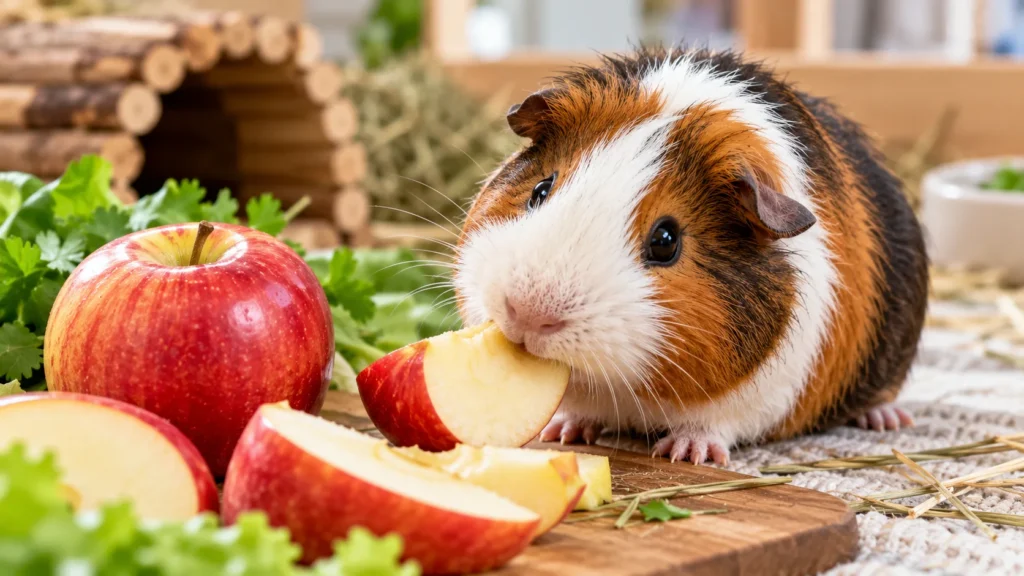
If you want to give your guinea pig a piece of apple, preparation matters. The apple should be fresh, washed thoroughly, and cut into small, manageable pieces. It is also important to remove the seeds and core before offering it to your pet.
In this guide, we will explain whether guinea pigs can eat apples, how much apple they can have, the potential benefits and risks, how to prepare apples safely, and some alternatives you can offer as occasional treats.
Guinea Pigs and Their Diet
A healthy guinea pig diet needs to provide plenty of fiber along with the nutrients they need for normal growth and overall health. Hay should make up the majority of their diet, while fresh vegetables and a suitable amount of guinea pig pellets can provide additional nutrients.
Fruit can also be offered occasionally, but it should be treated as a snack rather than a dietary staple. Because fruits contain natural sugars, feeding too much can contribute to an unbalanced diet and may cause digestive problems in some guinea pigs.
Apples are one fruit that guinea pigs can enjoy in moderation. Before offering an apple, however, remove the seeds and core and wash the fruit thoroughly. Introducing any new food gradually is also a good way to watch for signs of digestive upset.
Other fruits that can be offered occasionally include strawberries, blueberries, and melons. Fresh vegetables, particularly suitable vitamin-C-rich vegetables, are generally more appropriate as regular fresh foods than fruit.
The goal is to provide variety without allowing treats to crowd out the foods your guinea pig needs most. A balanced diet helps support healthy digestion and keeps your pet happy and active.
Can Guinea Pigs Eat Apples?
Yes, guinea pigs can eat apples, provided the fruit is given in small amounts and prepared properly. A small piece of fresh apple can be an enjoyable occasional treat for a healthy guinea pig.
However, apples should not become a regular or large part of your guinea pig’s diet. Apples contain natural sugar, so offering too much fruit can add unnecessary sugar to their daily food intake. For that reason, think of apple as a treat rather than a staple food.
Always remove the apple seeds and core before feeding. Apple seeds contain compounds that can release cyanide when digested, so it is safest to remove the seeds completely rather than allowing your guinea pig to eat them.
It is also a good idea to cut the apple into small pieces. This makes the treat easier for your guinea pig to handle and allows you to control the portion you provide.
Most importantly, apples should never replace hay, fresh vegetables, fresh water, or an appropriate guinea pig diet. If your guinea pig has a health condition or a sensitive digestive system, speak with a veterinarian before introducing new foods.
Benefits of Apples for Guinea Pigs
When offered in moderation, apple can provide a little variety to your guinea pig’s diet. It contains water, fiber, and several nutrients. However, because fruit is relatively high in sugar compared with many vegetables, its benefits are best enjoyed as part of an occasional treat.
Vitamin C
Guinea pigs cannot produce vitamin C on their own, so they need to obtain it from their diet. Apples contain some vitamin C, although they should not be considered the primary source of this important nutrient. Fresh vegetables and a suitable guinea pig diet are better ways to help meet their nutritional needs.
Hydration
Apples contain a significant amount of water, so a small piece can contribute to your guinea pig’s overall fluid intake. Even so, fruit should never replace fresh drinking water. Your guinea pig should always have access to clean, fresh water.
Fiber
Apples contain dietary fiber, which is useful as part of a varied diet. Fiber is particularly important for guinea pigs because their digestive systems are designed to process high-fiber foods. However, hay remains far more important for providing the bulk of the fiber they need each day.
Overall, apple can be a tasty addition to your guinea pig’s treat rotation. The key is moderation. Too much fruit can provide excessive sugar and may upset your pet’s digestive system.
Potential Risks of Feeding Apples to Guinea Pigs
Although apples are generally safe for guinea pigs when prepared correctly, there are a few things to keep in mind. Understanding these potential risks can help you offer apple safely and avoid turning an occasional treat into a dietary problem.
Sugar Content
One of the main concerns with apples is their natural sugar content. Guinea pigs do not need large amounts of fruit in their diet, and regularly feeding sugary treats can contribute to an unbalanced diet. For this reason, keep apple portions small and offer fruit only occasionally.
Seeds and Stem
Apple seeds should not be intentionally fed to guinea pigs. They contain compounds that can release cyanide when metabolized. Remove all visible seeds before giving apple to your pet. It is also best to remove the stem and core, leaving only the edible fruit.
Digestive Upset
Giving too much apple at once may cause digestive upset, particularly if your guinea pig is not accustomed to fruit. Signs such as loose stools or diarrhea are reasons to stop the new treat and monitor your pet. If symptoms persist or appear severe, contact a veterinarian.
Overfeeding
Even foods that are safe in small amounts can become problematic when overfed. Apples should remain an occasional treat rather than a daily staple. Your guinea pig’s regular diet should continue to focus on hay, appropriate fresh vegetables, pellets, and clean drinking water.
How to Feed Apples to Guinea Pigs
Choosing the Right Apples
Choose a fresh, ripe apple that looks clean and free from mold, bruising, or rotten areas. Wash the fruit thoroughly before preparing it for your guinea pig. Organic apples can be an option, but whichever type you choose, proper washing is important.
Preparation Steps
Start by washing the apple under running water. Cut away the core, remove all seeds and the stem, and then slice the remaining fruit into small pieces. There is no need to add sugar, seasoning, honey, or any other ingredient. Plain apple is all your guinea pig needs.
If this is the first time your guinea pig is eating apple, start with a very small amount. Observe your pet afterward for any changes in appetite, stool, or behavior before offering it again.
Portion Size and Frequency
A small piece or a couple of small pieces is generally enough for an occasional treat. The exact amount can depend on your guinea pig’s size, overall diet, age, and health. Rather than making fruit a daily habit, rotate small portions of suitable fruits and vegetables.
Remember that treats should remain a small part of your guinea pig’s overall diet. If your pet has a history of digestive problems, obesity, or another health issue, ask a veterinarian about an appropriate diet and treat schedule.
Can Guinea Pigs Eat Apple Skin?
Yes, guinea pigs can generally eat the skin of a properly washed apple. The skin contains fiber and does not need to be removed as long as the apple has been washed thoroughly. However, always remove the seeds, stem, and core before giving the fruit to your guinea pig.
Can Guinea Pigs Eat Green and Red Apples?
Guinea pigs can eat both green and red apples as occasional treats. The main consideration is not the color of the apple but the portion size and preparation. Some varieties may taste more tart or sweet than others, but all should be served in small amounts because apples contain natural sugar.
Alternatives to Apples for Guinea Pigs
Apples are not the only fruit that guinea pigs can enjoy. If your guinea pig does not seem interested in apples, you can offer other suitable fruits in small quantities. Variety can make occasional treats more interesting while preventing you from relying on one type of food.
Strawberries are one possible alternative and provide vitamin C and fiber. Other fruits that may be offered occasionally include blueberries, raspberries, and small amounts of kiwi.
Vegetables are also an important part of a guinea pig’s fresh-food routine. Bell peppers, cucumbers, and suitable leafy greens can provide valuable nutrients and variety. Vegetables are generally a better choice for regular fresh feeding than sugary fruits.
Not every fruit or vegetable is safe for guinea pigs. Foods such as avocado, rhubarb, and onions should not be fed to them. Before introducing an unfamiliar food, check that it is considered safe for guinea pigs and introduce it gradually.
Providing a varied but appropriate diet can help your guinea pig enjoy different flavors while still getting the nutrients needed for a healthy life.
Frequently Asked Questions About Guinea Pigs and Apples
Can guinea pigs eat apples?
Yes. Guinea pigs can eat small amounts of apple as an occasional treat. Always wash the apple and remove the seeds, stem, and core before serving it.
How much apple can a guinea pig eat?
A small piece or a couple of small pieces is generally enough for an occasional treat. Avoid giving large portions because apples contain natural sugar and too much fruit may cause digestive upset.
Can guinea pigs eat apple seeds?
No. Apple seeds should be removed before feeding apple to a guinea pig. Apple seeds contain compounds that can release cyanide when metabolized, so it is safest to keep the seeds out of your pet’s food.
Can guinea pigs eat apple skin?
Yes, guinea pigs can generally eat apple skin when the fruit has been washed thoroughly. The skin can provide fiber, but the seeds, stem, and core should still be removed.
Can guinea pigs eat green apples?
Yes. Green apples can be offered to guinea pigs in small amounts. As with other apple varieties, wash the fruit and remove the seeds, stem, and core before serving.
Can guinea pigs eat bananas?
Yes, guinea pigs can eat small amounts of banana as an occasional treat. Bananas are relatively high in natural sugar, so they should not be a regular or large part of your guinea pig’s diet.
Can guinea pigs eat carrots?
Yes. Guinea pigs can eat carrots, including small amounts of carrot as part of a varied diet. Because carrots contain natural sugars, they are best offered in reasonable portions rather than in excessive amounts.
Can guinea pigs eat grapes?
Grapes can be offered to guinea pigs as an occasional treat, but their sugar content means portions should be small. Wash grapes thoroughly and cut larger grapes into manageable pieces before serving.
Are apple sticks safe for guinea pigs to chew?
Untreated apple wood can be suitable for guinea pigs to chew and may provide enrichment. However, avoid wood that has been treated with chemicals, pesticides, paint, or other potentially harmful substances. When in doubt, choose a chew product specifically made for guinea pigs.
Final Thoughts on Feeding Apples to Guinea Pigs
So, can guinea pigs eat apples? Yes, they can. A small amount of properly prepared apple can be a tasty occasional treat for a guinea pig. The important thing is to keep portions small, remove the seeds and core, wash the fruit thoroughly, and avoid making fruit a major part of the diet.
Your guinea pig’s everyday diet should remain centered on high-fiber hay, appropriate fresh vegetables, suitable pellets, and plenty of fresh water. If you introduce apple or another new food, do it gradually and watch for any digestive changes.
When in doubt about a specific food or your guinea pig’s individual nutritional needs, a veterinarian who is familiar with guinea pigs can provide personalized guidance.