


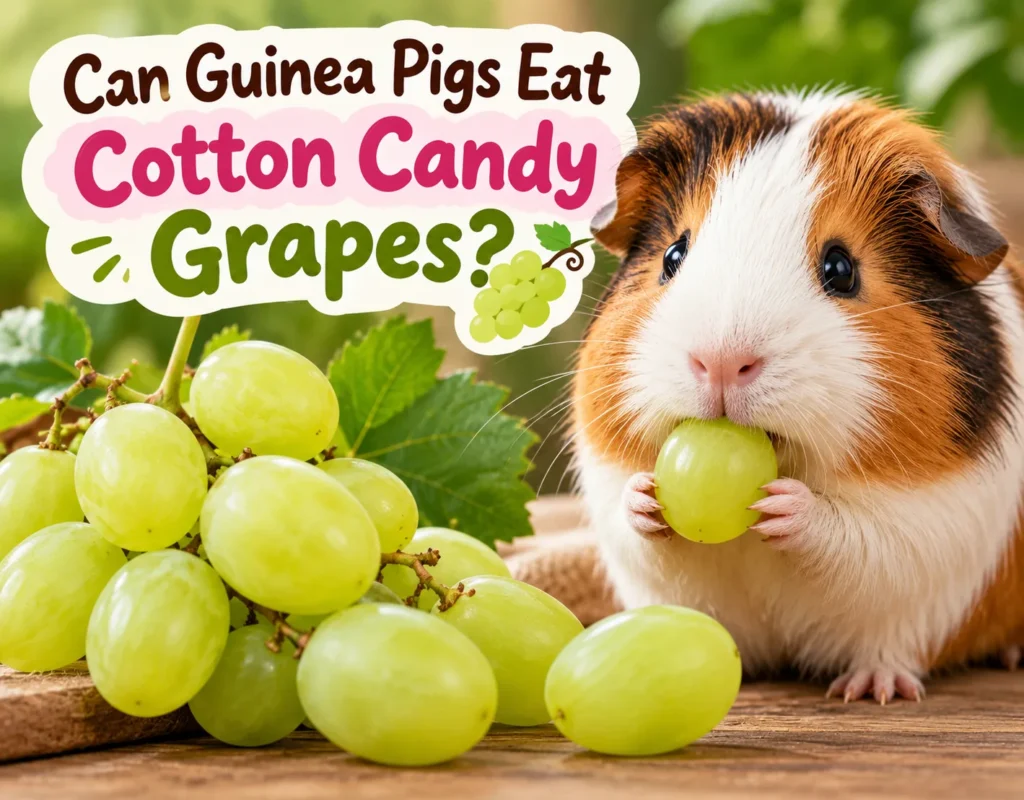
Yes, guinea pigs can eat cotton candy grapes, but only as an occasional treat and in small portions. Cotton candy grapes are a naturally bred variety of grape known for their unusually sweet, candy-like flavor. Although they are not toxic to guinea pigs, their high natural sugar content means they should never replace hay, fresh vegetables, or other essential foods in a guinea pig’s diet.
If you’re wondering, “Can guinea pigs eat cotton candy grapes?”, the short answer is yes—with moderation. A small piece can be offered to a healthy guinea pig from time to time, provided the grape is washed thoroughly and served appropriately. However, because guinea pigs have sensitive digestive systems and need a diet centered around fiber, too many grapes may cause digestive upset and contribute unnecessary sugar to their diet.

What Are Cotton Candy Grapes?
Cotton candy grapes are a special variety of table grape famous for their sweet flavor, which is often compared to cotton candy. Despite their name and distinctive taste, they are still grapes rather than candy and are produced through traditional plant breeding rather than being artificially flavored with cotton candy.
The variety was developed by The Grapery, a company known for producing unusual grape varieties. Cotton candy grapes were developed through selective breeding to create their distinctive flavor and are not genetically modified simply because they taste different from conventional grapes.
Like other grapes, cotton candy grapes contain water, carbohydrates, and naturally occurring sugars. They also provide small amounts of vitamins, minerals, and other plant compounds. Their sweetness, however, is exactly why they should be treated as an occasional snack for guinea pigs rather than a regular food.
For humans, cotton candy grapes can be an enjoyable snack. For guinea pigs, the important question isn’t whether they taste good but whether the portion fits into a balanced diet.
Understanding a Guinea Pig’s Diet
Before introducing any new food, it helps to understand what guinea pigs actually need every day. Guinea pigs are herbivores, and their digestive systems are designed to process plant-based foods that are particularly high in fiber.
Hay Should Be the Main Food
Grass hay should make up the foundation of a guinea pig’s diet. Timothy hay, orchard grass, meadow hay, and similar grass hays provide the fiber guinea pigs need for healthy digestion and normal tooth wear.
Fresh hay should generally be available throughout the day. Unlike fruit, hay is not an occasional treat—it is an essential part of everyday guinea pig nutrition.
Fresh Vegetables Provide Important Nutrients
Fresh vegetables can complement hay by providing additional vitamins and nutrients. Bell peppers, romaine lettuce, cucumber, and certain leafy greens can be suitable choices when offered as part of a varied diet.
Guinea pigs also need vitamin C because, like humans, they cannot produce enough vitamin C on their own. Offering appropriate vitamin-C-rich vegetables can therefore be an important part of their diet.
Fruit Should Be an Occasional Treat
Fruit can be offered to guinea pigs, but it should remain a small part of their overall diet. Fruits naturally contain sugar, so giving large portions or offering fruit too frequently isn’t ideal.
This is where cotton candy grapes fit in. They can be a tasty occasional treat, but they should never replace hay or vegetables.
Can Guinea Pigs Eat Cotton Candy Grapes?
Yes, guinea pigs can eat cotton candy grapes in moderation. Cotton candy grapes are not considered toxic to guinea pigs, but their naturally high sugar content makes portion control important.
If your guinea pig has never eaten grapes before, start with a very small piece. Observe your pet afterward for signs of digestive upset, such as soft stool, diarrhea, bloating, or a change in appetite.
Are Cotton Candy Grapes Healthy for Guinea Pigs?
Cotton candy grapes contain water and some vitamins and plant compounds, so a small portion can provide variety and enrichment. However, they should not be considered an important source of nutrition for guinea pigs.
Guinea pigs get the majority of the nutrients and fiber they need from a properly balanced diet containing hay, suitable fresh vegetables, and an appropriate guinea pig pellet formulated with vitamin C.
Potential Risks of Feeding Cotton Candy Grapes
The biggest concern with cotton candy grapes is their sugar content. Because this variety is particularly sweet, feeding too much can add a significant amount of sugar to your guinea pig’s diet.
- Too much sugar: Excessive sugar is not appropriate for a guinea pig’s regular diet.
- Digestive upset: Introducing too much fruit at once can cause loose stool or other digestive problems.
- Weight management: Frequent high-sugar treats can contribute unnecessary calories.
- Diet imbalance: Too much fruit may reduce the amount of hay and vegetables your guinea pig eats.
For these reasons, cotton candy grapes should be viewed as a treat rather than a staple food.
How to Give Cotton Candy Grapes to a Guinea Pig
If you decide to give your guinea pig cotton candy grapes, a few simple precautions can make the treat safer.
- Wash the grape thoroughly before serving.
- Remove any damaged or spoiled portions.
- Start with a small piece if your guinea pig has never eaten grapes.
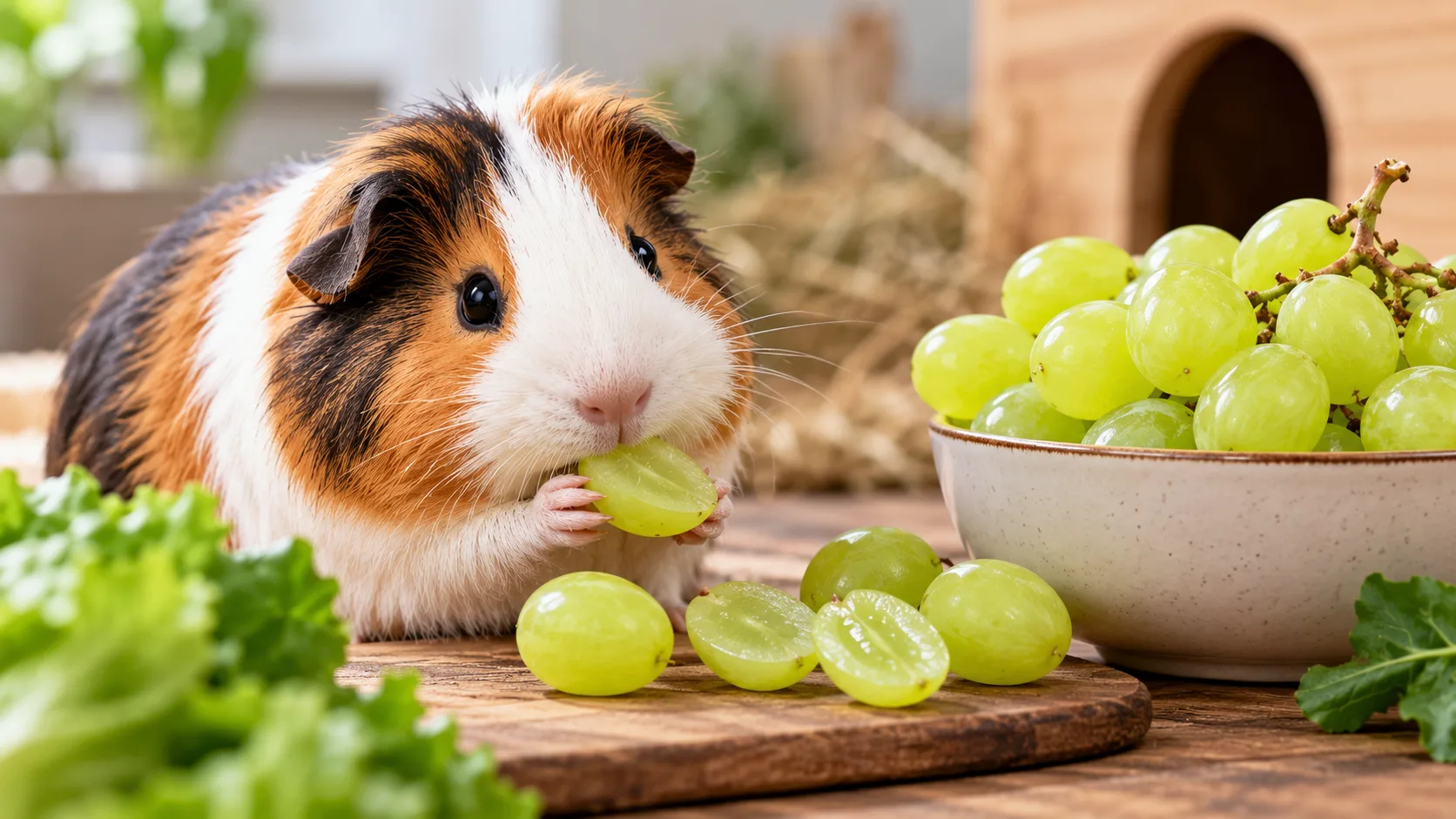
- Cut the grape into smaller pieces to make it easier for your guinea pig to eat.
- Give grapes only occasionally rather than every day.
- Monitor your guinea pig for digestive changes after introducing the food.
There is no nutritional reason to choose cotton candy grapes over other suitable fruits. Their main advantage is simply that they can provide variety as an occasional treat.
Can Guinea Pigs Eat Grape Seeds?
It is generally more practical to offer seedless grapes to guinea pigs. If you have grapes containing seeds, remove the seeds before serving. Cutting the grape into a small piece also makes it easier to inspect and prepare.
Alternatives to Cotton Candy Grapes for Guinea Pigs
If you want to give your guinea pig a little variety, there are several fruits and vegetables that can be included in a balanced diet. Remember that fruit should be offered in smaller amounts because of its sugar content.
Fruits
- Apples, without seeds
- Bananas
- Blueberries
- Grapes
- Kiwi
- Mango
- Melon, including cantaloupe and watermelon
- Oranges
- Papaya
- Pineapple
- Raspberries
- Strawberries
Fruit should remain an occasional treat rather than a major part of the diet. A small piece is generally enough for a guinea pig.
Vegetables
- Bell peppers
- Carrots
- Cucumber
- Green beans
- Kale
- Romaine lettuce
- Parsley
- Spinach
- Tomatoes
Not every vegetable is suitable for guinea pigs, and some should only be offered occasionally. In particular, avoid foods from the onion family, including onions, garlic, leeks, and chives. It’s also important to introduce unfamiliar vegetables gradually rather than changing your guinea pig’s diet suddenly.
Fresh water and unlimited grass hay should also remain available. Hay is especially important because the high fiber content supports normal digestion and helps guinea pigs naturally wear down their continuously growing teeth.
How Often Can Guinea Pigs Eat Cotton Candy Grapes?
Cotton candy grapes should be given only occasionally because they contain considerably more sugar than the foods that should form the foundation of a guinea pig’s diet.
A small piece is enough for a treat. Rather than making grapes a daily snack, rotate them with other suitable foods and keep most of your guinea pig’s diet focused on hay and appropriate vegetables.
What Should You Do If Your Guinea Pig Eats Too Many Grapes?
If your guinea pig accidentally eats more grapes than intended, don’t panic. Remove any remaining fruit and provide the normal diet of hay and fresh water. Keep an eye on your pet for changes in stool, appetite, activity, or behavior.
If your guinea pig develops persistent diarrhea, stops eating, appears bloated, becomes unusually inactive, or shows other concerning symptoms, contact an exotic-animal veterinarian promptly. Guinea pigs can become seriously ill when they stop eating, so significant digestive changes should not be ignored.
Frequently Asked Questions
Can guinea pigs eat cotton candy grapes?
Yes. Guinea pigs can eat cotton candy grapes in small amounts as an occasional treat. They are not toxic to guinea pigs, but their high natural sugar content means they should not be fed regularly or in large portions.
How much cotton candy grape can a guinea pig eat?
A small piece is sufficient as an occasional treat. If your guinea pig has never eaten grapes before, start with a tiny portion and watch for digestive problems before offering them again.
Can guinea pigs eat grapes every day?
It is better not to feed grapes every day. Grapes contain natural sugar, while guinea pigs need a diet that is primarily based on fiber-rich hay and suitable vegetables. Grapes should remain an occasional treat.
Are cotton candy grapes toxic to guinea pigs?
No, cotton candy grapes are not considered toxic to guinea pigs. The main concern is their sugar content and the possibility of digestive upset if too much is eaten.
Can guinea pigs eat red, green, and black grapes?
Guinea pigs can eat different varieties of grapes as an occasional treat. Regardless of the color or variety, grapes should be washed, served in small portions, and not become a regular part of the diet.
Can guinea pigs eat strawberries?
Yes, strawberries can be given to guinea pigs in moderation. They contain vitamin C and can be a suitable occasional fruit treat. As with grapes, however, strawberries contain sugar, so portion size matters.
What fruits are suitable for guinea pigs?
Small amounts of fruits such as strawberries, blueberries, raspberries, kiwi, papaya, melon, and apple can be offered as occasional treats. The safest approach is to keep fruit portions small and ensure hay and appropriate vegetables remain the main components of the diet.
What should guinea pigs eat every day?
Guinea pigs should have constant access to appropriate grass hay, fresh water, and a balanced diet that includes suitable fresh vegetables and guinea pig pellets formulated with vitamin C. Fruit such as cotton candy grapes should be treated as an occasional extra rather than an everyday food.
Final Thoughts
So, can guinea pigs eat cotton candy grapes? Yes, they can—but only in moderation. Cotton candy grapes are not toxic to guinea pigs, but their naturally sweet flavor means they contain enough sugar that they should be treated as an occasional snack.
The most important thing is to maintain a balanced diet. Unlimited grass hay should form the foundation of your guinea pig’s diet, while appropriate vegetables, fresh water, and nutritionally complete guinea pig pellets provide additional support. Fruits can then be used sparingly as treats.
If you decide to offer a cotton candy grape, wash it thoroughly and start with a small piece. Pay attention to your guinea pig’s digestion and overall behavior, particularly if grapes are new to their diet.
When in doubt about a particular food—especially if your guinea pig has an existing health condition, digestive problem, or unusual reaction—speak with an exotic-animal veterinarian for advice tailored to your pet.