
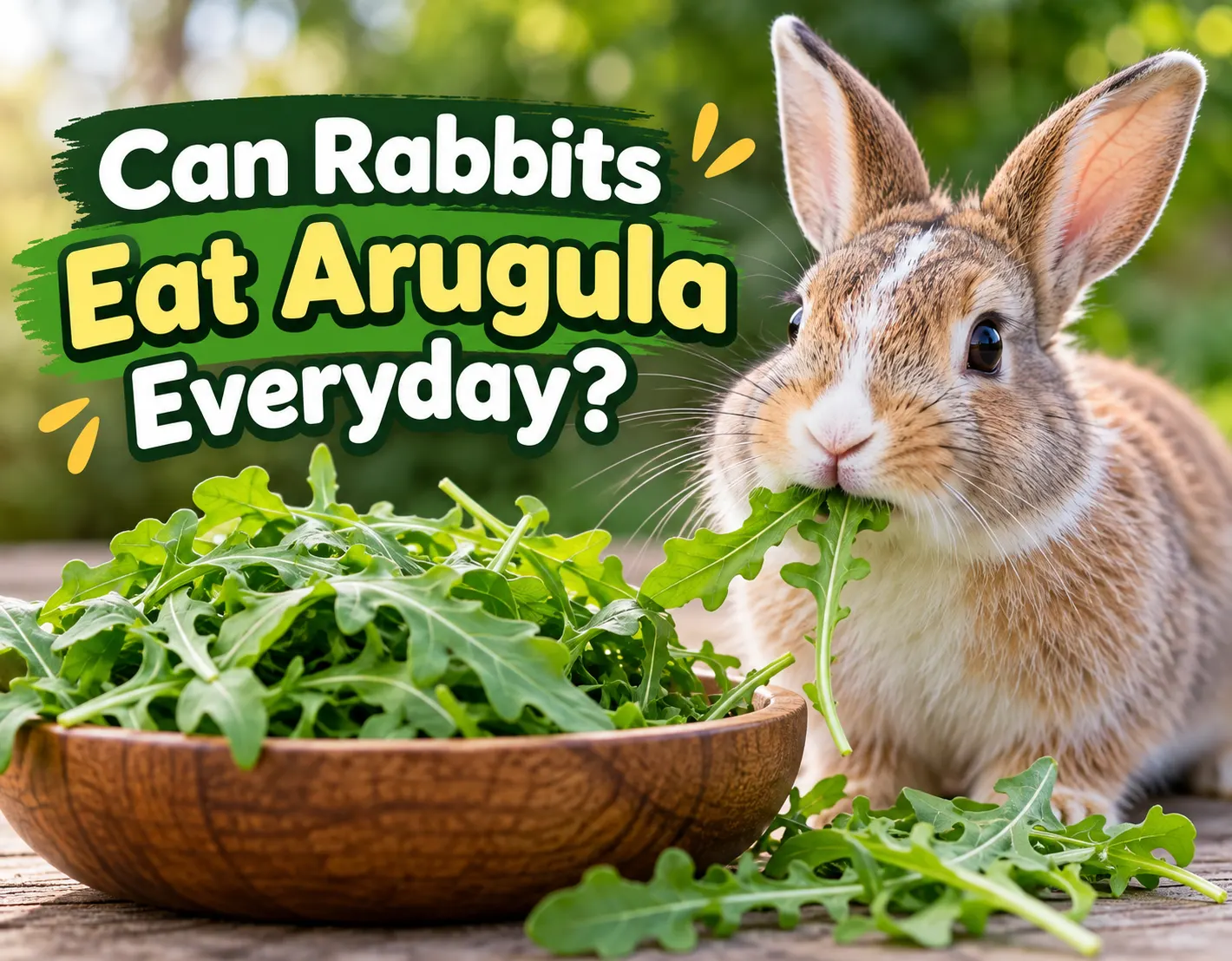
Can rabbits eat arugula every day? Yes, rabbits can eat arugula, and it can be a nutritious addition to their diet. However, arugula should be offered as part of a varied selection of leafy greens rather than becoming the main food in your rabbit’s diet. Hay should remain the foundation of a rabbit’s daily diet, while fresh greens and vegetables provide additional variety and nutrients.
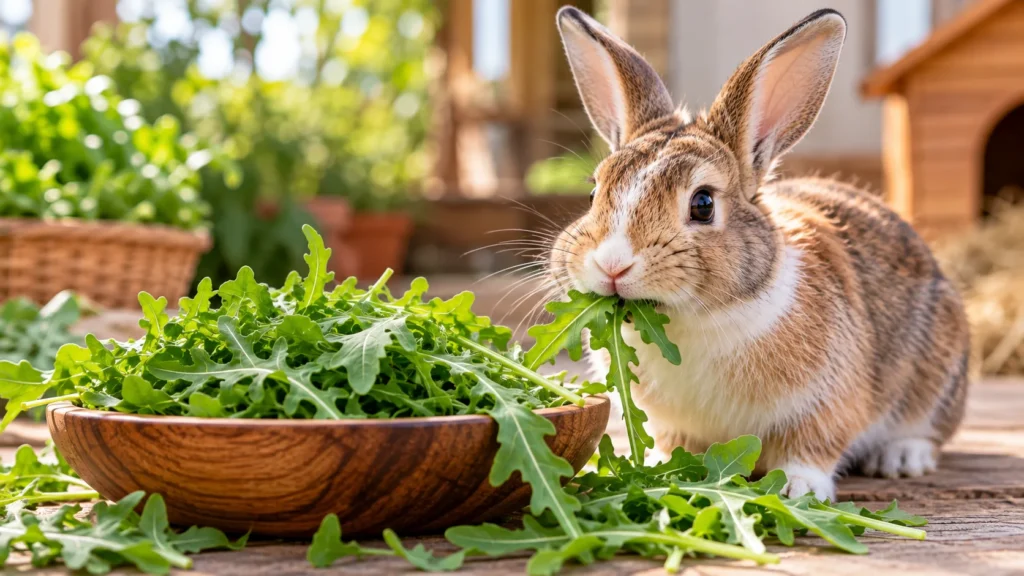
Arugula, also called rocket, is a leafy green with a distinctive peppery flavor. Some rabbits love it immediately, while others may need time to get used to its taste. It provides nutrients such as vitamin K, vitamin A, folate, calcium, and other minerals, making it a useful addition to a rabbit-friendly diet.
That said, rabbits have sensitive digestive systems. Introducing too much of any new food too quickly can cause soft stools, gas, or other digestive problems. The key is to introduce arugula gradually, feed appropriate portions, and provide plenty of hay and clean drinking water.
In this guide, we’ll explain whether rabbits can eat arugula every day, how much they can have, the potential benefits and risks, how to introduce it safely, and which other greens can be included in a balanced rabbit diet.
Can Rabbits Eat Arugula Every Day?
Rabbits can eat arugula, and a healthy adult rabbit may be able to eat a small amount regularly. However, feeding arugula every day is not necessary. It is generally better to rotate different rabbit-safe leafy greens so your rabbit gets variety rather than relying heavily on one vegetable.
If your rabbit already eats fresh greens without digestive problems, a small portion of arugula can be included in its regular greens rotation. For a rabbit that has never eaten arugula before, start with a small amount and watch for changes in appetite, stool, and behavior.
The most important part of the diet is still high-quality grass hay. Fresh leafy greens should complement the hay rather than replace it.
Nutritional Benefits of Arugula for Rabbits
Arugula is a nutrient-rich leafy green that can add variety to a rabbit’s diet. It is not a replacement for hay, but its vitamins and minerals can complement an otherwise balanced feeding routine.
Provides Fiber
Fiber is essential for rabbits because their digestive systems are designed to process high-fiber foods. Arugula contributes some fiber to the diet, although hay and grass are much more important sources of the long, coarse fiber rabbits need for healthy digestion and normal tooth wear.
Contains Important Vitamins and Minerals
Arugula contains several nutrients, including vitamin K, vitamin A, folate, calcium, potassium, and other micronutrients. These nutrients support normal body functions and can contribute to an overall varied diet.
A Low-Calorie Green
Like many leafy greens, arugula is relatively low in calories. This makes it a useful option when you want to add variety and fresh food without relying on calorie-dense treats.
Adds Variety to Fresh Greens
One of the biggest advantages of arugula is simply variety. Rabbits can enjoy different textures, flavors, and types of leafy greens, which can make mealtime more interesting while helping owners avoid relying on just one vegetable.
How Much Arugula Can a Rabbit Eat?
There is no single portion size that works for every rabbit because feeding amounts depend on the rabbit’s size, age, overall diet, health, and tolerance of fresh greens. For a rabbit that is new to arugula, begin with only a small amount, such as a few leaves.
If your rabbit tolerates it well, you can gradually include a little more as part of its daily greens. The goal should be variety rather than filling the entire vegetable portion with arugula.
For example, you might combine a small amount of arugula with other rabbit-safe leafy greens. This approach gives your rabbit variety and prevents one particular food from dominating the diet.
Always remember that fresh greens are only one part of the diet. Unlimited appropriate hay should remain available, with fresh water available at all times.
Recommended Frequency of Arugula in a Rabbit’s Diet
Arugula can be included in a rabbit’s regular rotation of leafy greens. Some healthy adult rabbits can tolerate it frequently, including small amounts on a daily basis. However, there is no nutritional requirement for rabbits to eat arugula every day.
Rotating several rabbit-safe greens is often a practical approach. You can offer arugula alongside suitable greens such as romaine lettuce, cilantro, parsley, dandelion greens, or other rabbit-safe options.
If your rabbit develops soft stools, diarrhea, excessive gas, reduced appetite, or another noticeable change after eating arugula, stop offering it and contact a veterinarian if the symptoms persist or are severe.
Young rabbits, rabbits with existing health conditions, and rabbits with a history of urinary or digestive problems may need more individualized dietary advice from a rabbit-experienced veterinarian.
Portion Size Considerations for Rabbits Eating Arugula
Portion size matters whenever you add fresh vegetables to a rabbit’s diet. Even a healthy vegetable can cause problems if a rabbit suddenly eats a large amount, particularly when it has not eaten that food before.
For a new food, start with a few leaves of well-washed arugula. If your rabbit continues eating normally and produces normal fecal pellets, the amount can be increased gradually. There is no need to give a large handful simply because your rabbit enjoys the taste.
It is also worth remembering that rabbits process calcium differently from many other pets. Some rabbits are more prone to urinary problems, and their overall diet and hydration are important considerations. If your rabbit has previously experienced bladder sludge, stones, or other urinary issues, ask your veterinarian about appropriate greens and calcium intake rather than making major dietary changes yourself.
Before serving arugula, wash it thoroughly under running water to remove dirt and reduce surface contamination. Remove wilted, slimy, or spoiled leaves and serve fresh greens in an appropriate portion.
Risks of Overfeeding Arugula to Rabbits
Arugula is generally considered a rabbit-safe leafy green, but that does not mean unlimited quantities are appropriate. Feeding too much fresh produce can upset a rabbit’s digestive system, especially if the food is introduced suddenly.
Digestive Upset
A sudden increase in fresh greens can contribute to soft stools, diarrhea, gas, or other digestive changes. This is why new foods should always be introduced gradually.
Too Much of One Food
Even when a food is safe, relying too heavily on one vegetable can reduce dietary variety. A mixture of appropriate greens is a better approach than making arugula the only fresh vegetable your rabbit receives.
Individual Health Conditions
Rabbits with urinary disease, kidney problems, digestive disorders, or other medical conditions may require a specially planned diet. If your rabbit has a diagnosed health condition, discuss its diet with a veterinarian before regularly adding new foods.
Should Rabbits Eat Arugula Every Day?
The answer depends on the individual rabbit. A healthy adult rabbit may tolerate a small amount of arugula every day, but daily arugula is not required for good health. For many rabbits, rotating arugula with other safe leafy greens is a simple way to provide dietary variety.
The most important point is that arugula should never replace hay. A rabbit’s digestive system needs a constant supply of high-fiber forage, so fresh hay or grass should form the foundation of the diet.
Variety in a Rabbit’s Diet
A varied diet is one of the best ways to make fresh food interesting for your rabbit. Instead of giving the same leafy green every day, consider rotating several rabbit-safe options throughout the week.
Depending on your rabbit’s individual dietary needs, suitable greens can include romaine lettuce, cilantro, parsley, basil, dandelion greens, and arugula. Introduce unfamiliar foods one at a time so you can easily identify the cause if digestive problems occur.
Some vegetables can also be offered in moderation. Bell peppers, for example, can provide variety, while sweet fruits such as apples and bananas are better treated as occasional treats because they contain more sugar.
Foods such as processed snacks, sugary treats, chocolate, and many human foods are not appropriate for rabbits. A rabbit’s digestive system is designed around high-fiber plant material rather than processed foods.
How to Safely Introduce Arugula to a Rabbit’s Diet
If your rabbit has never eaten arugula before, introducing it slowly is the safest approach. Follow these simple steps:
- Start with a small amount. Give your rabbit only a few washed leaves the first time. There is no reason to offer a large portion immediately.
- Watch for digestive changes. Pay attention to your rabbit’s appetite, stool, energy level, and general behavior over the next day or so.
- Increase gradually. If your rabbit tolerates arugula well, you can slowly make it a regular part of a varied greens rotation.
- Continue feeding plenty of hay. Arugula is an addition to the diet, not a substitute for the high-fiber hay rabbits need every day.
- Wash the leaves thoroughly. Clean fresh produce before serving it, and remove leaves that are spoiled, slimy, or contaminated.
If your rabbit develops persistent diarrhea, stops eating, becomes unusually quiet, or produces significantly fewer droppings, contact a veterinarian promptly. Digestive problems can become serious in rabbits.
Can Rabbits Eat Arugula With Other Vegetables?
Yes. Arugula can be combined with other rabbit-safe leafy greens to create a varied fresh-food portion. Mixing several appropriate greens can be a better option than feeding a large amount of one type of vegetable.
For example, a small amount of arugula can be combined with romaine lettuce, cilantro, parsley, or other suitable greens. Introduce each new food separately before combining several unfamiliar foods together.
Monitoring Your Rabbit’s Health
Whenever you introduce a new food, your rabbit’s behavior and droppings can provide useful clues about whether it is tolerating the change. Healthy rabbits should continue eating normally and producing regular, well-formed fecal pellets.
If your rabbit develops soft stools, diarrhea, excessive gas, reduced appetite, or a noticeable change in behavior after eating arugula, remove the new food and monitor the situation. If symptoms are significant, persistent, or accompanied by a loss of appetite or reduced droppings, seek veterinary advice promptly.
Regular veterinary examinations are also valuable, particularly for rabbits with ongoing digestive or urinary problems. A veterinarian familiar with rabbit medicine can help you create an appropriate diet based on your rabbit’s age, weight, health, and individual needs.
Frequently Asked Questions About Rabbits and Arugula
Can rabbits eat arugula every day?
Yes, a healthy adult rabbit may tolerate a small amount of arugula every day. However, daily arugula is not necessary. It is generally better to rotate arugula with other rabbit-safe leafy greens while keeping hay as the main part of the diet.
Is arugula safe for rabbits?
Yes. Plain, fresh arugula is generally considered a rabbit-safe leafy green when offered in appropriate portions. Introduce it gradually, particularly if your rabbit has never eaten it before.
How much arugula can a rabbit eat?
The appropriate amount depends on the rabbit’s size, age, overall diet, and tolerance of fresh greens. If arugula is new, start with a few leaves and gradually increase the amount if your rabbit has no digestive problems. It should form only part of the fresh greens offered.
Can baby rabbits eat arugula?
Young rabbits have different dietary requirements from healthy adult rabbits, and new foods should be introduced carefully. If you have a young rabbit, ask a rabbit-experienced veterinarian when and how to introduce fresh greens rather than following an adult feeding routine.
Can rabbits eat arugula and spinach together?
It is better to focus on variety rather than routinely combining large amounts of particular greens. Spinach is generally offered in smaller quantities because it contains relatively high levels of oxalates. If your rabbit has urinary or kidney problems, discuss appropriate greens with your veterinarian.
Can rabbits eat arugula stems?
Rabbits can generally eat the tender stems of fresh arugula along with the leaves. Wash the entire plant thoroughly first and discard any wilted or spoiled portions.
Can rabbits eat arugula as their main food?
No. Arugula should not replace hay or grass. Rabbits need a high-fiber diet, and good-quality hay should make up the foundation of their daily food intake. Arugula is best used as one component of a varied diet.
What other greens can rabbits eat?
Depending on the individual rabbit, suitable leafy greens can include romaine lettuce, cilantro, parsley, basil, dandelion greens, and other rabbit-safe herbs and vegetables. Introduce new foods gradually and provide variety rather than relying on a single green.
What should I do if my rabbit gets diarrhea after eating arugula?
Stop offering the new food and pay close attention to your rabbit’s appetite, droppings, and behavior. Persistent diarrhea, loss of appetite, reduced droppings, or unusual lethargy can be signs of a potentially serious problem in rabbits and should be discussed with a veterinarian promptly.
Do rabbits need arugula in their diet?
No. Arugula can add variety and nutrients, but rabbits do not need arugula specifically. A balanced rabbit diet should focus on appropriate hay or grass, suitable fresh greens, fresh water, and an appropriate amount of pellets when needed.
Final Thoughts
Can rabbits eat arugula every day? In small amounts, many healthy adult rabbits can safely eat arugula regularly, including as part of a daily greens rotation. However, there is no need to make arugula the centerpiece of your rabbit’s diet.
The best approach is to offer a variety of appropriate leafy greens, introduce new foods slowly, wash fresh produce thoroughly, and watch your rabbit for digestive changes. Most importantly, make sure your rabbit always has access to plenty of appropriate hay and fresh water.
If your rabbit has a medical condition, urinary problems, recurring digestive issues, or unusual symptoms after eating arugula, consult a veterinarian who is experienced in treating rabbits for individualized dietary advice.