
Tortoises are known for their slow pace and their love for leafy greens. However, as a tortoise owner, you may be wondering if your pet can eat other vegetables, such as zucchini. In this article, we will explore whether or not tortoises can safely consume zucchini and the potential benefits and drawbacks of doing so.
Zucchini is a popular vegetable that is often used in various dishes and is known for being low in calories and high in nutrients. While it may seem like a healthy option for your tortoise, it’s important to note that not all vegetables are safe for them to consume. As herbivores, tortoises have specific dietary requirements, and it’s crucial to ensure that they are met to keep your pet healthy and happy. In the following paragraphs, we will discuss whether or not zucchini is a suitable addition to your tortoise’s diet and how it can affect their health.
Tortoise Dietary Basics


When it comes to feeding your tortoise, it’s important to remember that their dietary needs are different from other pets. In this section, we’ll cover the basics of tortoise nutrition to help you make informed decisions about what to feed your shelled friend.
Nutritional Needs
Tortoises require a diet that is high in fiber and low in protein and fat. They also need a variety of vitamins and minerals to maintain their health. Here are some key nutrients to keep in mind:
- Calcium: Tortoises need plenty of calcium to keep their shells strong. Calcium can be found in leafy greens, such as kale and collard greens, as well as in calcium supplements.
- Vitamin D3: Tortoises need vitamin D3 to absorb calcium. They can get this vitamin from sunlight or from supplements.
- Fiber: Tortoises need a diet that is high in fiber to keep their digestive system healthy. This can be achieved through feeding them a variety of leafy greens, vegetables, and fruits.
- Water: Tortoises need access to fresh water at all times. Make sure to provide a shallow dish of water that your tortoise can easily access.
Safe Foods for Tortoises
When it comes to feeding your tortoise, it’s important to stick to foods that are safe and healthy for them to eat. Here are some foods that are safe for tortoises:
- Leafy greens: Kale, collard greens, dandelion greens, and mustard greens are all great sources of fiber and calcium.
- Vegetables: Carrots, squash, and sweet potatoes are all safe for tortoises to eat in moderation.
- Fruits: Apples, bananas, and berries can be given as occasional treats.
It’s important to avoid feeding your tortoise foods that are high in protein and fat, as well as foods that are toxic to them, such as avocado and rhubarb. By sticking to a healthy, balanced diet, you can help ensure that your tortoise stays happy and healthy for years to come.
Zucchini as Tortoise Food

Zucchini is a popular vegetable that is often used in human cuisine. However, it can also be a great addition to a tortoise’s diet. In this section, we will explore the benefits of zucchini as tortoise food and how to prepare it.
Benefits of Zucchini
Zucchini is a low-calorie vegetable that is rich in vitamins and minerals. It is a good source of vitamin C, vitamin K, and potassium, which are all essential nutrients for tortoises. Additionally, zucchini is high in fiber, which can help keep your tortoise’s digestive system healthy.
Zucchini is also a great source of water, which is important for tortoises to stay hydrated. Tortoises can become dehydrated quickly, so it is important to provide them with water-rich foods like zucchini.
How to Prepare Zucchini
Preparing zucchini for your tortoise is easy. First, wash the zucchini thoroughly to remove any dirt or debris. Then, slice the zucchini into small pieces that are easy for your tortoise to eat. You can serve the zucchini raw or cooked.
If you choose to cook the zucchini, avoid adding any seasoning or spices. Tortoises have sensitive digestive systems and can be easily upset by spicy or seasoned foods.
In conclusion, zucchini can be a nutritious and tasty addition to your tortoise’s diet. It is important to provide your tortoise with a varied diet that includes a mix of vegetables, fruits, and protein sources. Consult with a veterinarian or reptile specialist to ensure that your tortoise’s dietary needs are being met.
Feeding Frequency and Quantity
Portion Control
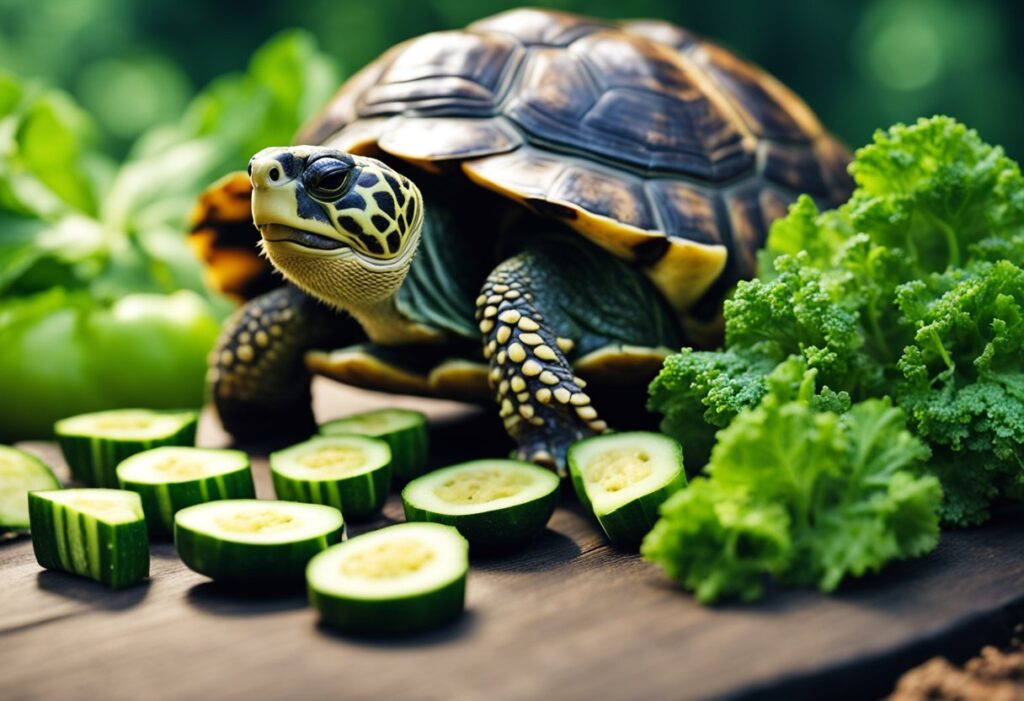
When feeding zucchini to tortoises, it is important to practice portion control. While zucchini is a healthy and nutritious food for tortoises, overfeeding can lead to digestive issues and obesity. As a general guideline, we recommend feeding zucchini as part of a balanced diet, making up no more than 10% of the tortoise’s overall food intake.
To ensure proper portion control, we suggest cutting zucchini into small pieces or thin slices. This not only makes it easier for tortoises to eat, but also helps to prevent overfeeding.
Feeding Schedule
In addition to portion control, it is also important to establish a feeding schedule for tortoises. While some tortoise species may require more frequent feeding, most tortoises can be fed on a daily or every other day basis.
When feeding zucchini, we recommend offering it as part of a varied diet that includes other vegetables and fruits. This not only helps to ensure balanced nutrition, but also helps to prevent boredom and encourages natural foraging behavior.
Overall, when feeding zucchini to tortoises, it is important to practice portion control and establish a feeding schedule that works for your individual tortoise’s needs. By doing so, you can help to ensure that your tortoise stays healthy and happy.
Potential Risks and Considerations

Oxalates in Zucchini
Zucchini contains oxalates, which are natural compounds found in many plants. Oxalates can bind to calcium in the body and form crystals, which can lead to health problems like kidney stones. However, the amount of oxalates in zucchini is relatively low and unlikely to cause any issues for tortoises.
Pesticide Exposure
Zucchini is often treated with pesticides to protect it from pests and diseases. These pesticides can be harmful to tortoises if they consume the zucchini. To minimize the risk of pesticide exposure, it’s important to wash the zucchini thoroughly before feeding it to your tortoise.
It’s also a good idea to choose organic zucchini whenever possible, as it is grown without the use of synthetic pesticides. If you’re unsure whether the zucchini you have is organic or not, you can check the label or ask the store where you purchased it.
In summary, while zucchini can be a healthy addition to a tortoise’s diet, it’s important to be aware of the potential risks and take steps to minimize them. By washing the zucchini thoroughly and choosing organic options, you can ensure that your tortoise stays healthy and happy.
Alternative Vegetables for Tortoises

As much as tortoises love zucchini, it is important to provide them with a variety of vegetables to ensure a balanced diet. Here are some alternative vegetables that are safe and healthy for tortoises to eat:
- Bell Peppers: These colorful vegetables are rich in vitamins A and C, as well as antioxidants. They can be fed raw or cooked, and make a great addition to a tortoise’s diet.
- Carrots: Carrots are a great source of beta-carotene, which is converted into vitamin A in the body. They can be fed raw or cooked, but should be grated or chopped into small pieces to make them easier for tortoises to eat.
- Collard Greens: Collard greens are a good source of calcium, which is important for a tortoise’s shell and bone health. They can be fed raw or cooked, and should be chopped into small pieces.
- Endive: Endive is a leafy green vegetable that is high in fiber and vitamin C. It can be fed raw or cooked, and makes a great addition to a tortoise’s diet.
- Kale: Kale is a nutrient-dense vegetable that is high in vitamins A, C, and K, as well as calcium and iron. It can be fed raw or cooked, but should be chopped into small pieces.
- Squash: Squash is a good source of fiber and vitamin C, and can be fed raw or cooked. Butternut squash, acorn squash, and pumpkin are all safe for tortoises to eat.
It is important to remember that while these vegetables are safe and healthy for tortoises to eat, they should be fed in moderation and as part of a balanced diet. Too much of any one vegetable can lead to health problems, so it is important to vary the diet and provide a mix of different vegetables.
Frequently Asked Questions
What types of squash are safe for tortoises to consume?
Tortoises can safely consume a variety of squash, including zucchini, yellow squash, and pumpkin. These vegetables are low in fat and high in fiber, making them a healthy addition to a tortoise’s diet.
Are there any vegetables that are harmful to tortoises?
Yes, there are some vegetables that can be harmful to tortoises if consumed in large quantities. Vegetables that are high in oxalic acid, such as spinach and beet greens, should be fed sparingly. Additionally, vegetables that are high in goitrogens, such as kale and broccoli, can interfere with thyroid function if fed too frequently.
Can red-footed tortoises include carrots in their diet?
Yes, red-footed tortoises can safely consume carrots as part of their diet. Carrots are a good source of vitamin A and fiber, and can be fed in moderation as a treat.
Is it safe for Russian tortoises to eat sweet peppers?
Yes, Russian tortoises can safely consume sweet peppers as part of their diet. Sweet peppers are a good source of vitamin C and can be fed in moderation as a treat.
How often can tortoises be fed fruits as part of their diet?
Fruits should be fed sparingly as they are high in sugar. We recommend feeding fruits to tortoises no more than once or twice a week. Good fruit choices for tortoises include apples, strawberries, and blueberries.
Are cucumber and zucchini suitable foods for Russian tortoises?
Yes, both cucumber and zucchini are suitable foods for Russian tortoises. These vegetables are low in fat and high in fiber, making them a healthy addition to a tortoise’s diet.