
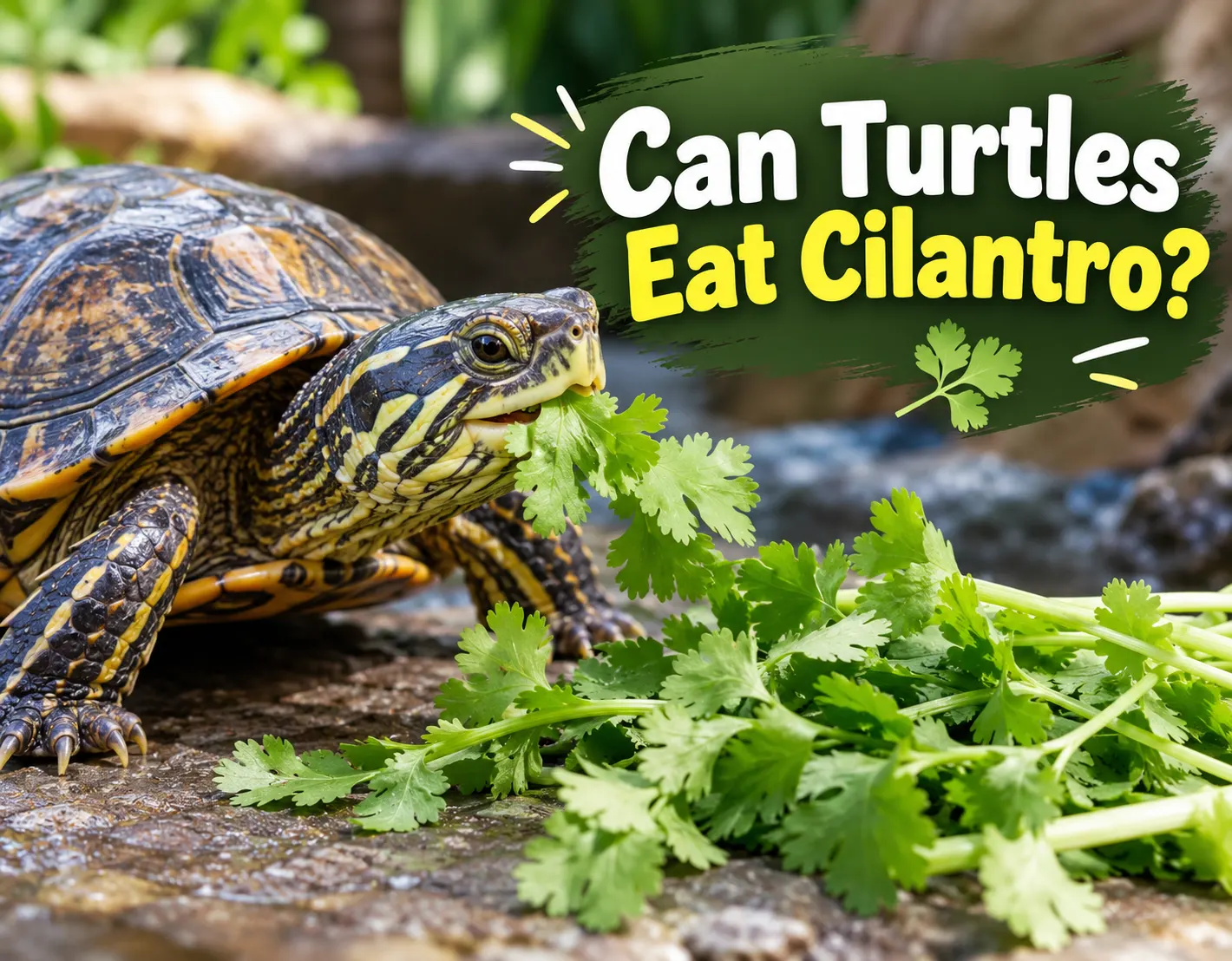
Yes, many turtles can eat cilantro (coriander) in moderation. This fragrant herb can be offered as part of a varied diet, but it should not become a major part of your turtle’s meals. The right diet depends heavily on the turtle’s species, age, size, and whether it is primarily herbivorous, omnivorous, or carnivorous.
If you’re wondering, “Can turtles eat cilantro?”, the short answer is generally yes. Fresh cilantro can provide some vitamins, minerals, and plant nutrients, making it a useful occasional addition to a suitable turtle diet.
However, adding any new food should be done gradually. A food that is appropriate for one turtle species may not be appropriate as a regular food for another. For this reason, cilantro is best treated as one component of a broader, species-appropriate feeding plan.
Can Turtles Eat Cilantro Safely?
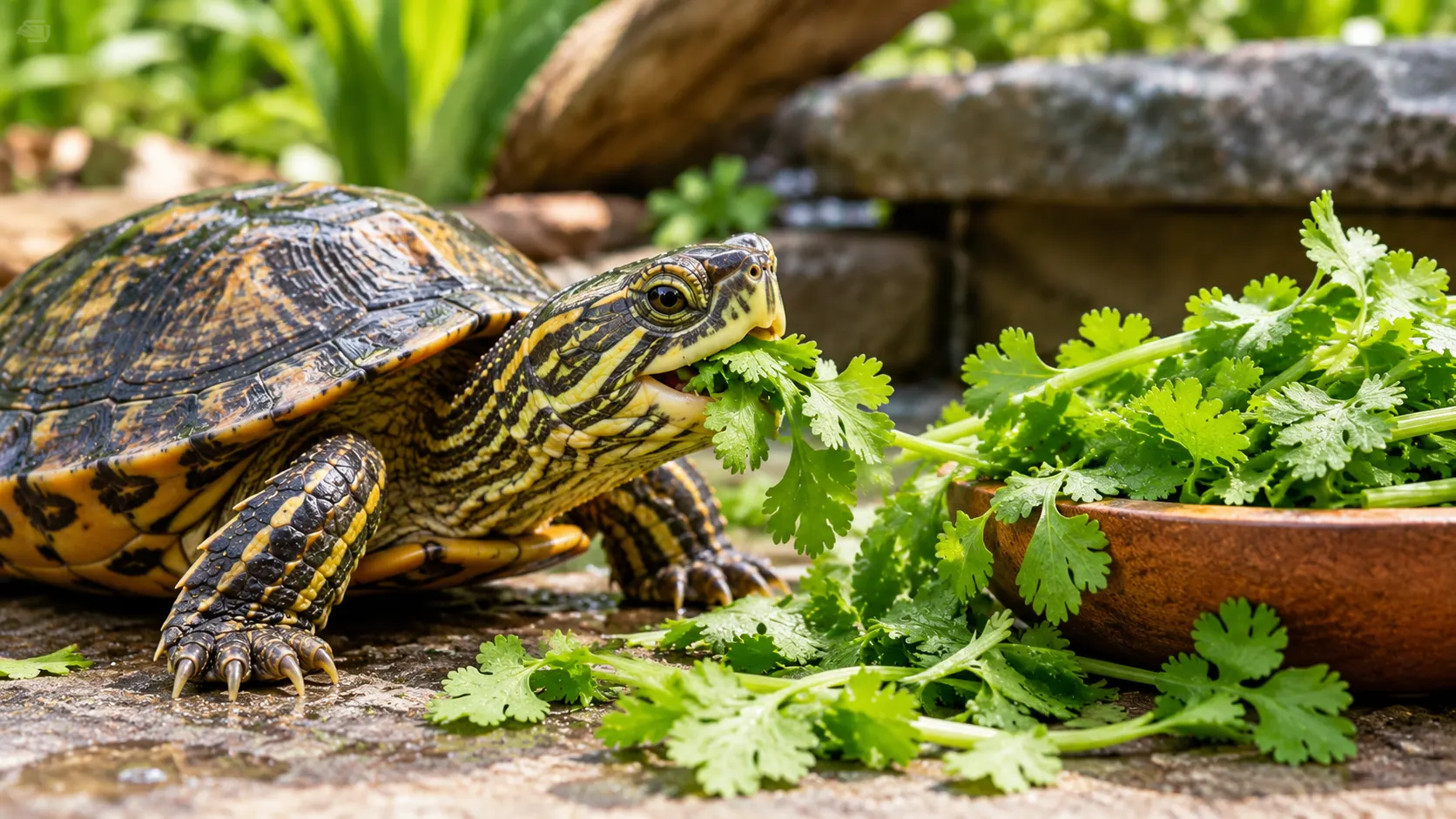
For many commonly kept turtle species, small amounts of fresh cilantro can be offered safely. Cilantro, also known as coriander, is a leafy herb with a distinctive citrus-like flavor. Some turtles may readily eat it, while others may simply ignore it.
The important point is that cilantro should not replace the main foods recommended for your turtle’s species. Turtles need a balanced diet that provides appropriate amounts of fiber, vitamins, minerals, calcium, and, for omnivorous species, suitable sources of animal protein.
Before giving cilantro to your turtle, rinse it thoroughly under clean running water. Remove wilted or spoiled leaves and offer fresh cilantro rather than cooked, seasoned, salted, or processed versions.
If your turtle has a diagnosed medical condition or requires a specialized diet, speak with a reptile veterinarian before introducing new foods.
What Nutrients Does Cilantro Provide?
Cilantro contains several nutrients that can contribute to a varied diet. It provides vitamins such as vitamin A, vitamin C, and vitamin K, along with minerals including calcium and potassium.
However, the nutritional value of a food should always be considered in the context of the entire diet. A small serving of cilantro does not provide everything a turtle needs for healthy growth, shell development, digestion, and normal body function.
For that reason, think of cilantro as a variety food rather than a nutritional foundation.
Understanding Your Turtle’s Dietary Needs
One of the most important things to understand before feeding a turtle is that not all turtles eat the same diet. A Mediterranean tortoise, box turtle, aquatic turtle, and other species can have very different nutritional requirements.
Some turtles eat mostly plant material, while others are omnivorous and naturally consume a combination of plant and animal foods. Young turtles may also have different nutritional requirements from adults.
Depending on the species, a suitable diet may include:
- Leafy greens: Appropriate leafy vegetables can provide fiber and other nutrients.
- Vegetables: Species-appropriate vegetables can add variety to the diet.
- Fruits: Some turtles can eat fruit occasionally, but the amount should depend on the species.
- Animal protein: Omnivorous turtles may require appropriate insects, worms, aquatic foods, or other protein sources.
- Commercial turtle foods: Some species benefit from appropriately formulated commercial diets.
Calcium is also particularly important for many turtles because it supports normal bone and shell development. A suitable diet should therefore be planned around the nutritional requirements of the particular species rather than a single food.
Benefits of Cilantro for Turtles
When offered appropriately, cilantro can add variety to a turtle’s meals. Variety can be useful because it exposes your pet to different textures, flavors, and nutrients.
1. Provides Plant Nutrients
Cilantro contains several vitamins and minerals. Adding small amounts to an otherwise appropriate diet can contribute to overall dietary variety.
2. Adds Variety to Meals
Turtles can sometimes become accustomed to a limited selection of foods. Offering different safe greens and vegetables can make feeding more interesting while helping prevent an overly repetitive diet.
3. Easy to Prepare
Fresh cilantro requires very little preparation. Simply wash it thoroughly, remove any damaged portions, and offer an appropriate amount alongside other suitable foods.
Are There Any Risks of Feeding Cilantro to Turtles?
Although cilantro can be suitable for many turtles, it should still be fed thoughtfully. The biggest issue is not whether cilantro is automatically “good” or “bad,” but whether it fits your turtle’s species-specific diet.
Some turtles may also have individual sensitivities or medical conditions that require dietary restrictions. If your turtle has kidney problems, urinary issues, metabolic disease, or another diagnosed condition, ask your veterinarian whether cilantro is appropriate.
It is also important to wash fresh herbs thoroughly. Produce can carry dirt, microorganisms, or agricultural residues, so good food hygiene is important.
Most importantly, do not allow cilantro or any other single food to dominate the diet. A varied, species-appropriate diet is much more important than any individual herb.
How to Prepare Cilantro for Turtles
If cilantro is appropriate for your turtle, preparation is simple.
Step 1: Choose Fresh Cilantro
Select fresh cilantro that looks clean and healthy. Avoid leaves that are slimy, moldy, badly wilted, or spoiled.
Step 2: Wash It Thoroughly
Rinse the cilantro thoroughly with clean running water. This helps remove dirt and other residues from the surface.
Step 3: Remove Unwanted Parts
Remove damaged or spoiled leaves. Depending on your turtle’s size and feeding habits, you can separate the leaves and tender stems into smaller pieces.
Step 4: Offer a Small Amount
Place a small portion alongside other appropriate foods. There is no need to force your turtle to eat cilantro if it does not seem interested.
How Often Can Turtles Eat Cilantro?
There is no single feeding schedule that works for every turtle because dietary requirements differ between species. For a turtle that can appropriately eat cilantro, it is better to offer it as part of a rotating selection of suitable greens rather than relying on it every day.
The amount should also be appropriate for your turtle’s size and overall diet. A small turtle obviously requires much less food than a large adult.
If you’re unsure how often cilantro should be included, your reptile veterinarian can provide species-specific feeding guidance.
What Other Greens Can Turtles Eat?
Cilantro does not need to be the only green offered to a turtle. Depending on the species, other suitable greens may include various leafy vegetables and edible plants.
Examples can include:
- Collard greens
- Mustard greens
- Endive
- Dandelion greens
- Turnip greens
- Suitable varieties of lettuce
Not every green is appropriate for every turtle, so always check whether a particular plant fits your turtle’s species and nutritional requirements before making it a regular food.
What About Fruits and Vegetables?
Some turtles can eat certain fruits and vegetables, but the appropriate amount varies considerably between species.
For turtles that can safely consume them, foods such as berries, melon, squash, carrots, and other vegetables may provide additional variety. Fruit is often best kept limited for species that are not naturally adapted to a fruit-heavy diet because fruit can contain considerable amounts of natural sugar.
Instead of building a diet around a list of generic “turtle-safe” foods, identify your turtle’s species first and follow dietary recommendations specifically designed for it.
Foods Turtles Should Avoid
Pet owners should never assume that a food is safe simply because humans can eat it. Some foods can be inappropriate or potentially harmful to turtles.
Commonly mentioned foods to avoid include chocolate, highly processed foods, heavily salted foods, and foods containing inappropriate seasonings. Certain plants can also be toxic to reptiles.
Rather than relying on a general list alone, research each unfamiliar food using a reliable reptile-care source or ask a qualified reptile veterinarian before feeding it.
Can Different Types of Turtles Eat Cilantro?
The answer can vary by species.
Box turtles: Many box turtles are omnivores and can consume a wide variety of plant and animal foods. Cilantro may be offered as one small component of an appropriately varied diet.
Painted turtles: Painted turtles have dietary requirements that change with age and life stage. Cilantro should not replace their normal species-appropriate diet.
Other turtles: Aquatic turtles, terrestrial turtles, and tortoises can have significantly different nutritional needs. Always identify the species before deciding how frequently a particular plant should be fed.
Tips for Introducing Cilantro to Your Turtle
If your turtle’s normal diet allows cilantro, introduce it gradually rather than suddenly adding a large amount.
- Start with a small portion.
- Wash the cilantro thoroughly before feeding.
- Offer it alongside the foods your turtle normally eats.
- Observe whether your turtle accepts or ignores it.
- Keep the overall diet varied and species appropriate.
- Remove uneaten fresh food before it becomes spoiled.
- Contact a reptile veterinarian if your turtle develops unusual digestive or health problems.
Frequently Asked Questions About Turtles and Cilantro
Can turtles eat cilantro every day?
Cilantro generally should not be treated as the primary daily food for a turtle. Whether it can be offered frequently depends on the species and its overall diet. For many turtles, it is better used as one of several suitable plant foods.
Can baby turtles eat cilantro?
Baby turtles can have different nutritional requirements from adults, so their diet should be based on species and age. Do not assume that an adult turtle’s feeding routine is appropriate for a hatchling or juvenile. Ask a reptile veterinarian if you are unsure.
Can box turtles eat cilantro?
Many box turtles can eat small amounts of cilantro as part of a varied diet. However, box turtle nutrition should include an appropriate balance of plant and animal foods based on the turtle’s species and life stage.
Can painted turtles eat cilantro?
Painted turtles may eat plant material, but their nutritional needs vary with age and life stage. Small amounts of cilantro may be acceptable as variety, but it should not replace their normal balanced diet.
Can turtles eat lettuce?
Some turtles can eat certain types of lettuce, but not all lettuce provides the same nutritional value. Lettuce should not automatically become the main component of a turtle’s diet. Choose greens based on the nutritional needs of your turtle’s species.
Can turtles eat other herbs?
Some herbs may be suitable for turtles, but safety varies by plant. Before offering an unfamiliar herb, confirm that it is safe for your particular turtle species and that it fits its normal diet.
Can turtles eat cilantro stems?
Fresh cilantro stems are not necessarily a problem for turtles that can safely eat cilantro, but the pieces should be appropriately sized for the turtle. Remove tough or spoiled portions and avoid giving large pieces that could create a feeding hazard.
How much cilantro should I give my turtle?
There is no universal portion size because turtles vary greatly in species and body size. Start with a small amount and consider cilantro a minor part of a varied diet rather than a staple food.
What foods are toxic to turtles?
Some foods and plants can be toxic or inappropriate for turtles, while others may cause problems when fed in excessive amounts. Avoid giving unfamiliar foods until you have confirmed their safety for your turtle’s species.
What should I do if my turtle refuses cilantro?
There is usually no reason to force a turtle to eat cilantro. Turtles have individual preferences, and many other suitable foods may be available depending on the species. Continue providing an appropriate diet rather than relying on one particular herb.
Final Thoughts
So, can turtles eat cilantro? For many turtles, small amounts of fresh cilantro can be included as part of a varied and species-appropriate diet. It can add flavor and nutritional variety, but it should not replace the foods that provide the majority of your turtle’s required nutrients.
The most important consideration is your turtle’s species. Different turtles have different dietary requirements, and factors such as age, size, and health can also affect what they should eat.
Wash cilantro thoroughly, introduce it gradually, and offer it as part of a balanced feeding plan. If your turtle has a health condition or you are uncertain about its dietary requirements, a qualified reptile veterinarian can provide personalized advice.
With the right balance of appropriate foods and proper care, you can give your turtle a varied diet while avoiding unnecessary nutritional problems.