
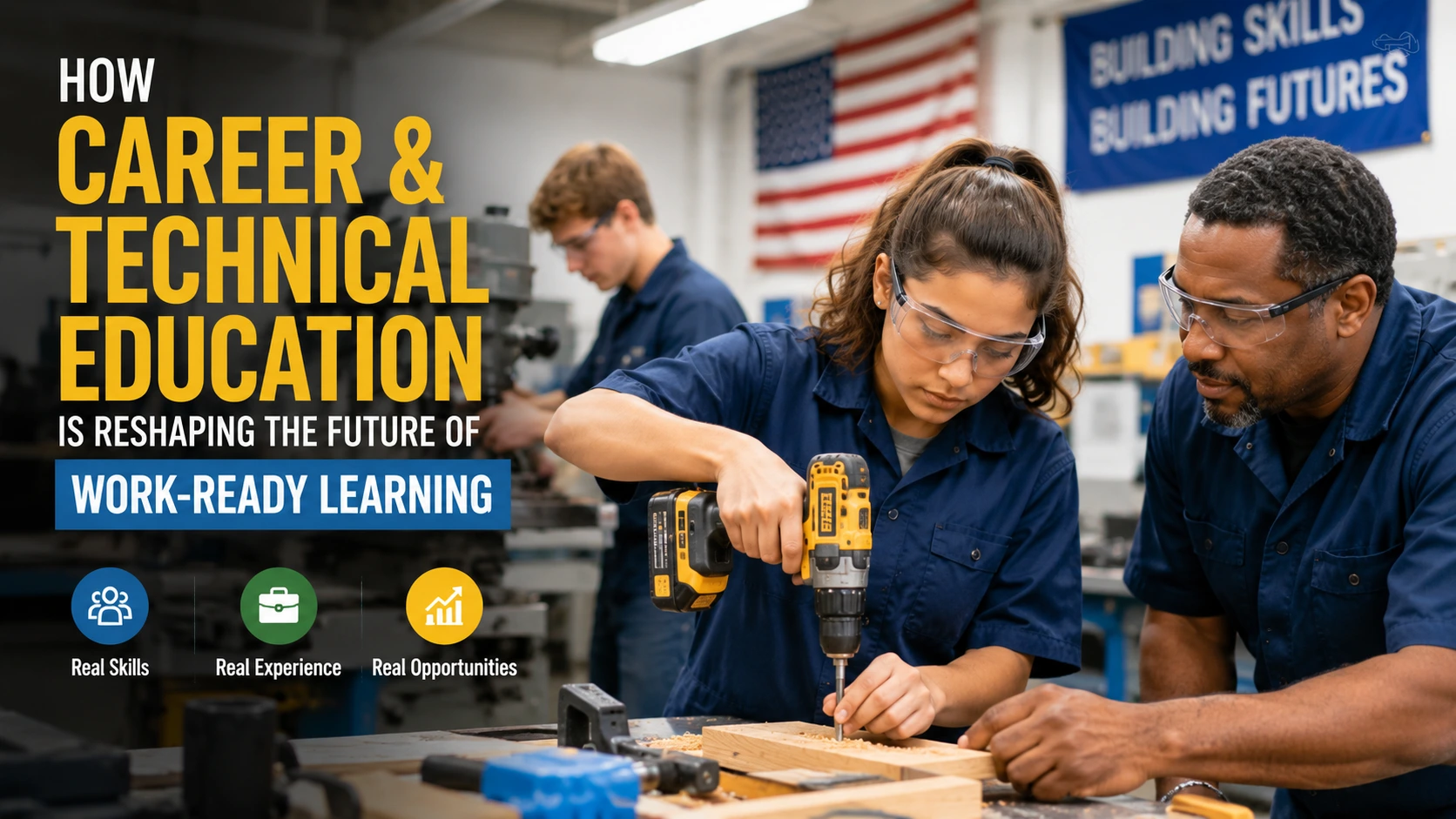
Something meaningful is happening in American classrooms. Across the country, students who once felt disconnected from traditional academic pathways are finding purpose, direction, and genuine excitement in programs that connect learning to real-world careers. Career and Technical Education, commonly known as CTE, has evolved far beyond the old vocational training stereotype. Today, it represents one of the most promising and well-documented approaches to preparing young people for the demands of a modern economy, and the momentum behind it continues to grow.
What CTE Actually Looks Like in Today’s Schools
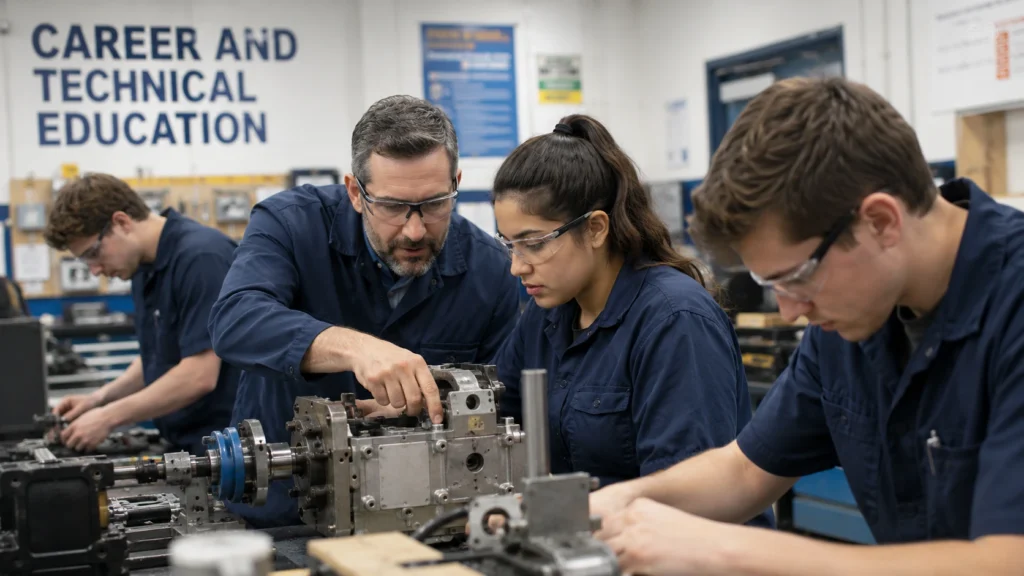
Modern CTE programs bear little resemblance to the shop classes of decades past. Today’s programs span industries including advanced manufacturing, healthcare, information technology, agriculture, construction, and the arts. Students in these programs don’t simply learn isolated skills in a vacuum. They engage in project-based learning, earn industry-recognized credentials, and often complete internships or apprenticeships that connect their classroom work to genuine professional environments. Many CTE programs are also aligned with dual-enrollment opportunities, allowing high school students to earn college credit while still completing their secondary education. The breadth and ambition of these programs reflect a broader shift in how educators and policymakers understand the relationship between education and employment.
The Evidence Behind CTE’s Growing Impact
The case for CTE isn’t built on anecdote alone. Research consistently shows that students who participate in well-structured CTE programs graduate at higher rates, are more likely to pursue postsecondary education, and demonstrate stronger career readiness than their peers who follow exclusively traditional academic tracks. According to Pew Research Center, public attitudes toward workforce-aligned education have shifted significantly in recent years, with a growing share of Americans viewing career preparation as a central function of schooling rather than a secondary concern. That shift in perception has translated into real policy momentum, with federal and state governments investing more substantially in CTE infrastructure, curriculum development, and instructor pipelines. The data increasingly supports what many educators have long known: when students can see the direct relevance of what they’re learning, engagement and outcomes both improve.
The Critical Role of Qualified CTE Instructors
No CTE program succeeds without skilled, knowledgeable instructors, and this is where one of the most exciting developments in the field is taking shape. Traditionally, recruiting qualified CTE teachers has been a persistent challenge. The pool of candidates who possess both deep industry expertise and the pedagogical skills to teach effectively has often been small. Many experienced professionals who might make outstanding teachers have been deterred by complex certification requirements, unfamiliar classroom environments, or uncertainty about how to translate their professional knowledge into effective instruction. Addressing this gap has become a priority for districts, states, and organizations committed to expanding CTE’s reach. Programs designed specifically to support cte teacher training are making it substantially easier for industry professionals to step into classrooms and bring authentic, current expertise directly to students. These pathways are not simply about filling vacancies. They are about enriching the quality of instruction in ways that purely academic preparation cannot always replicate.
Industry Professionals as Educators: A Powerful Pipeline
One of the most compelling trends in CTE is the deliberate effort to bring working professionals and industry veterans into teaching roles. A cybersecurity analyst who has spent fifteen years protecting corporate networks brings something to a classroom that no textbook can replicate. A licensed electrician who has navigated complex commercial projects understands the real stakes of precision and safety in ways that resonate with students far more viscerally than abstract instruction. The challenge has always been bridging the gap between professional expertise and classroom effectiveness. Structured support programs that guide industry professionals through the transition to teaching, covering everything from curriculum design and classroom management to assessment strategies and student engagement, are proving highly effective at building this bridge. When these professionals are given the right preparation and ongoing support, they often become some of the most impactful educators in their schools.
CTE as an Equity Tool and Economic Driver
Beyond individual student outcomes, CTE carries significant implications for equity and economic development at the community level. Many of the industries most in need of skilled workers, including healthcare, skilled trades, and technology, offer wages and career trajectories that provide genuine economic mobility. For students from lower-income backgrounds who may not have a clear path to a four-year college degree, CTE can open doors to careers that offer stability, advancement, and professional pride. Communities that invest in robust CTE programs also benefit economically, as locally trained workers are more likely to remain in the region and contribute to its workforce. Employers, for their part, increasingly recognize that CTE graduates often arrive with practical skills and professional maturity that accelerate their contributions from day one. The alignment between student benefit and employer need makes CTE one of the rare educational investments that serves multiple stakeholders simultaneously.
What Strong CTE Programs Have in Common
Across the country, the CTE programs that produce the strongest outcomes share several characteristics. They maintain close relationships with local industry partners who help shape curriculum, offer internship placements, and sometimes contribute equipment or guest instruction. They are led by instructors who bring genuine professional experience to the classroom and who receive ongoing professional development to stay current in their fields. They offer clear pathways that connect high school coursework to postsecondary credentials, apprenticeships, or direct employment. And they treat students as emerging professionals rather than passive recipients of instruction, building both technical competency and the soft skills that employers consistently identify as critical. These elements don’t happen by accident. They are the product of intentional program design, institutional commitment, and the kind of educator preparation that equips instructors to deliver on CTE’s full promise.
Career and Technical Education represents one of the most genuinely hopeful stories in contemporary American education. It is expanding opportunity for students who might otherwise feel left behind, building bridges between schools and the industries that power local economies, and demonstrating that rigorous, relevant learning can take many forms. As more professionals consider stepping into teaching roles and as support structures for those transitions continue to improve, the potential for CTE to transform both individual lives and community futures has never been greater.