
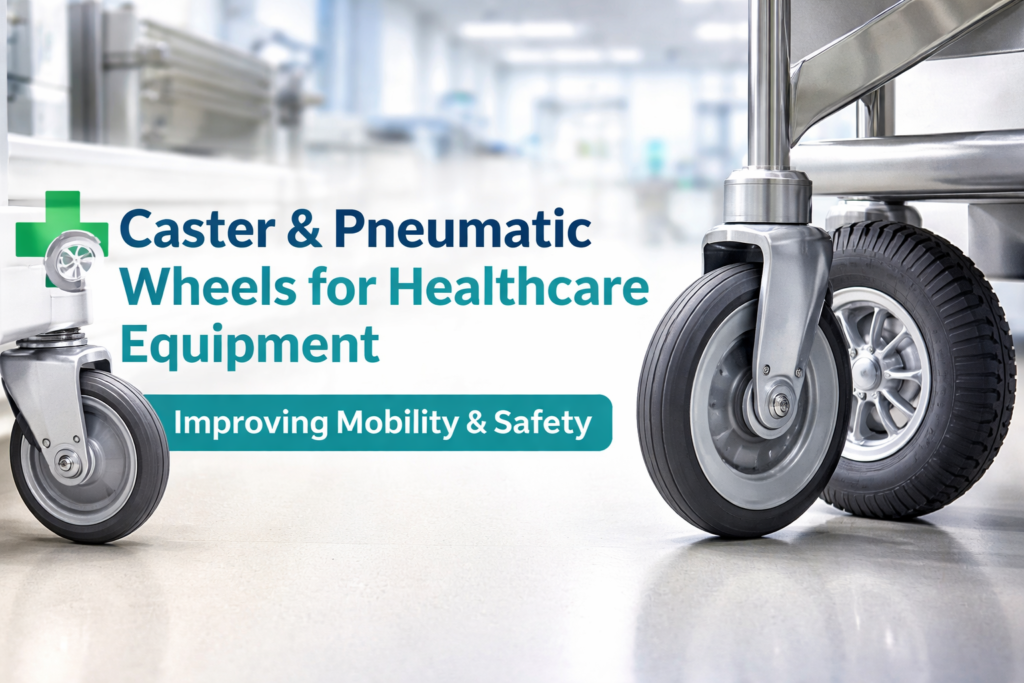

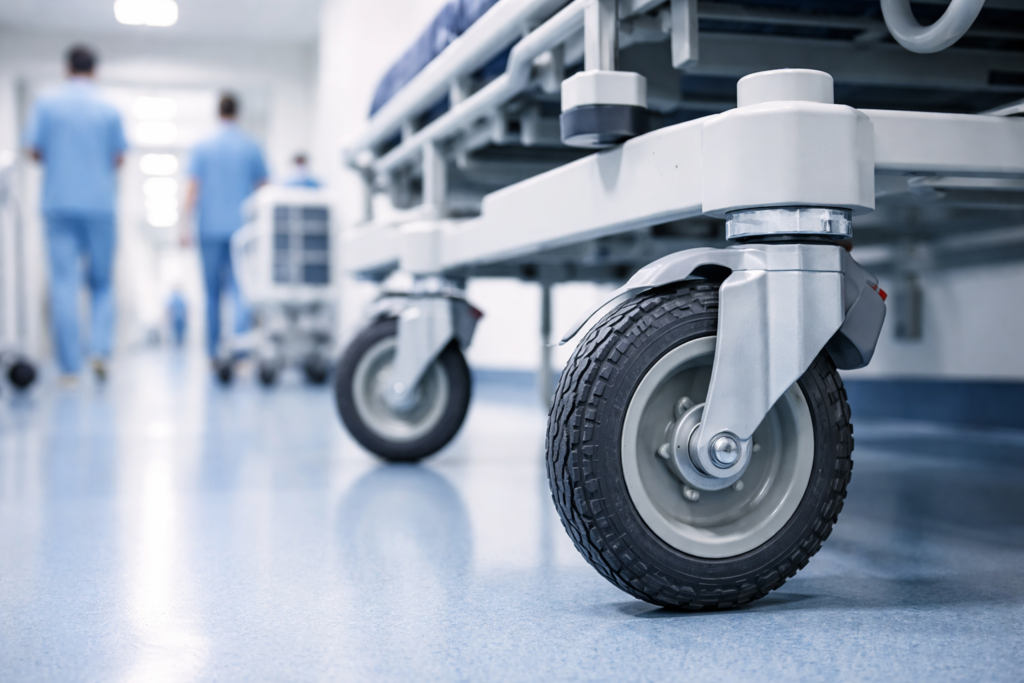
Mobility is a foundational requirement in modern healthcare environments. From hospital beds and IV stands to diagnostic machines and emergency transport units, the ability to move equipment smoothly and safely can directly influence patient outcomes, staff efficiency, and overall operational performance. The choice of movement systems—particularly Caster and pneumatic wheels—plays a crucial role in how healthcare facilities manage these demands.
Healthcare settings are unique compared to other industries. They require a balance between hygiene, precision, quiet operation, and ergonomic handling. Unlike warehouses or manufacturing plants, where durability and load-bearing may dominate decision-making, hospitals must also consider patient comfort, infection control, and staff safety. As a result, selecting the right mobility solution is not just a technical decision but a multidimensional one that involves trade-offs and long-term implications.
The Role of Mobility in Healthcare Environments
Efficient mobility systems ensure that equipment can be moved quickly during emergencies, repositioned easily during routine care, and handled safely without causing strain to healthcare workers. In critical situations such as patient transfers or emergency interventions, even small inefficiencies in movement can lead to delays or risks.
Mobility also affects patient experience. Equipment that moves smoothly and quietly contributes to a calmer environment, which is particularly important in intensive care units, recovery wards, and neonatal settings. Conversely, poorly designed movement systems can create noise, vibration, and instability, negatively impacting both patients and staff.
Key Factors Influencing Equipment Mobility
1. Load Capacity and Stability
Healthcare equipment varies widely in weight—from lightweight monitors to heavy imaging machines. The mobility system must be capable of supporting these loads without compromising stability. Overloading or uneven weight distribution can lead to tipping hazards or premature wear.
A critical challenge here is balancing strength with maneuverability. Heavier-duty systems provide better support but may increase rolling resistance, making equipment harder to move. On the other hand, lighter options improve ease of movement but may not offer sufficient durability for long-term use.
2. Surface Compatibility
Hospital floors are typically smooth, but they are not uniform. Equipment may need to move across tiles, vinyl surfaces, ramps, or even outdoor pathways during transport between buildings. The ability of a wheel system to adapt to these varying surfaces is essential.
Soft, air-filled designs are particularly effective at handling uneven terrain and absorbing shocks. However, they may not always be ideal for sterile indoor environments where maintenance and cleanliness are priorities. Harder materials, while easier to clean, can transmit vibrations and struggle on irregular surfaces.
3. Noise and Vibration Control
Noise reduction is a critical requirement in healthcare settings. Excessive noise can disturb patients, interfere with communication, and contribute to stress. Mobility systems that minimize sound and vibration are therefore highly valued.
Soft-tread wheels tend to perform better in this regard, as they absorb impact and reduce rolling noise. However, they may wear out faster than harder alternatives, leading to increased maintenance costs over time.
4. Hygiene and Infection Control
Infection control is a top priority in healthcare facilities. Equipment components must be easy to clean and resistant to contaminants. Mobility systems are no exception.
Designs with fewer crevices and smooth surfaces are easier to sanitize. Materials that resist moisture and chemicals are also preferred. However, some high-performance options that excel in shock absorption or durability may have more complex structures, making them harder to clean.
This creates a trade-off between performance and hygiene. Facilities must decide whether to prioritize ease of cleaning or enhanced mobility features, depending on the specific application.
5. Maneuverability and Ergonomics
Healthcare workers often need to move equipment quickly and frequently, sometimes in confined spaces. Poor maneuverability can lead to physical strain, increasing the risk of workplace injuries.
Swivel mechanisms, braking systems, and directional controls all influence how easily equipment can be handled. While advanced features improve control, they can also add complexity and cost.
Ergonomics is particularly important in environments where staff are already under physical and mental stress. Equipment that is difficult to move can slow down workflows and contribute to fatigue.
Trade-Offs in Mobility System Design
Selecting the right mobility solution involves balancing multiple competing factors. There is no one-size-fits-all approach, and each decision comes with its own set of trade-offs.
Durability vs. Comfort
Harder wheel materials tend to last longer and require less maintenance. However, they can create more noise and vibration, which may not be suitable for patient care areas. Softer, air-filled options provide a smoother ride but may need more frequent replacement.
Maintenance vs. Performance
High-performance mobility systems often require more maintenance. Air-filled designs, for example, may need regular pressure checks and are susceptible to punctures. Solid alternatives eliminate these concerns but may not offer the same level of shock absorption.
Cost vs. Long-Term Value
Budget constraints are a reality for many healthcare facilities. Lower-cost options may be appealing initially but can lead to higher long-term expenses due to maintenance, replacements, and potential downtime.
Investing in higher-quality systems can improve efficiency and reduce risks, but it requires a larger upfront investment. Decision-makers must evaluate the total cost of ownership rather than focusing solely on initial price.
Hygiene vs. Complexity
Simpler designs are easier to clean and maintain, making them ideal for sterile environments. However, they may lack advanced features that improve mobility and safety. More complex systems can enhance performance but may introduce challenges in cleaning and upkeep.
Challenges in Healthcare Mobility Solutions
1. Balancing Multiple Use Cases
Healthcare equipment often serves multiple purposes and must operate in different environments. A transport stretcher, for example, may need to move smoothly through corridors, elevators, and outdoor pathways. Designing a system that performs well in all these scenarios is challenging.
2. Regulatory and Safety Requirements
Healthcare facilities must comply with strict safety and regulatory standards. Mobility systems must meet these requirements while still delivering performance and reliability. This can limit design options and increase costs.
3. Space Constraints
Hospitals are often crowded environments with narrow hallways and limited storage space. Equipment must be compact and easy to maneuver without compromising stability or functionality.
4. Staff Training and Usability
Even the best-designed system can fail if it is not used correctly. Staff must be trained to operate equipment safely and efficiently. Complex systems may require additional training, which can be time-consuming and costly.
Impact on Patient Care and Staff Efficiency
The choice of mobility system has a direct impact on both patient care and staff efficiency. Smooth and reliable movement reduces the risk of accidents during patient transfers, enhances comfort, and allows healthcare providers to focus on their primary responsibilities.
For staff, improved mobility means less physical strain and faster workflows. This can lead to higher productivity, reduced injury rates, and better overall job satisfaction. In high-pressure environments, even small improvements in efficiency can have a significant impact.
Environmental and Operational Considerations
Sustainability is becoming an increasingly important factor in healthcare decision-making. Mobility systems that are durable and require less frequent replacement contribute to reduced waste and lower environmental impact.
Energy efficiency is another consideration. Equipment that moves easily requires less force, reducing physical effort and potentially lowering energy consumption in motorized systems.
Operational efficiency is also closely tied to mobility. Equipment that is easy to move and maintain can reduce downtime, streamline workflows, and improve overall facility performance.
Future Trends in Healthcare Mobility
Advancements in materials and design are driving innovation in healthcare mobility solutions. Hybrid systems that combine the benefits of different materials are becoming more common, offering improved performance without sacrificing durability or hygiene.
Smart technologies are also emerging, with features such as automated braking, directional control, and real-time monitoring. These innovations have the potential to further enhance safety and efficiency, although they may introduce additional complexity and cost.
Conclusion
Mobility is a critical component of healthcare operations, influencing everything from patient safety to staff productivity. The selection of appropriate movement systems requires careful consideration of multiple factors, including load capacity, surface compatibility, noise control, hygiene, and ergonomics.
There are inherent trade-offs in every decision. Facilities must balance durability with comfort, performance with maintenance, and cost with long-term value. By understanding these trade-offs and addressing the associated challenges, healthcare providers can make informed choices that enhance both mobility and safety.
Ultimately, the goal is to create an environment where equipment moves seamlessly, patients are cared for comfortably, and staff can perform their duties efficiently. Thoughtful selection and implementation of mobility solutions play a key role in achieving this balance, making them an essential consideration in modern healthcare design and operations.