

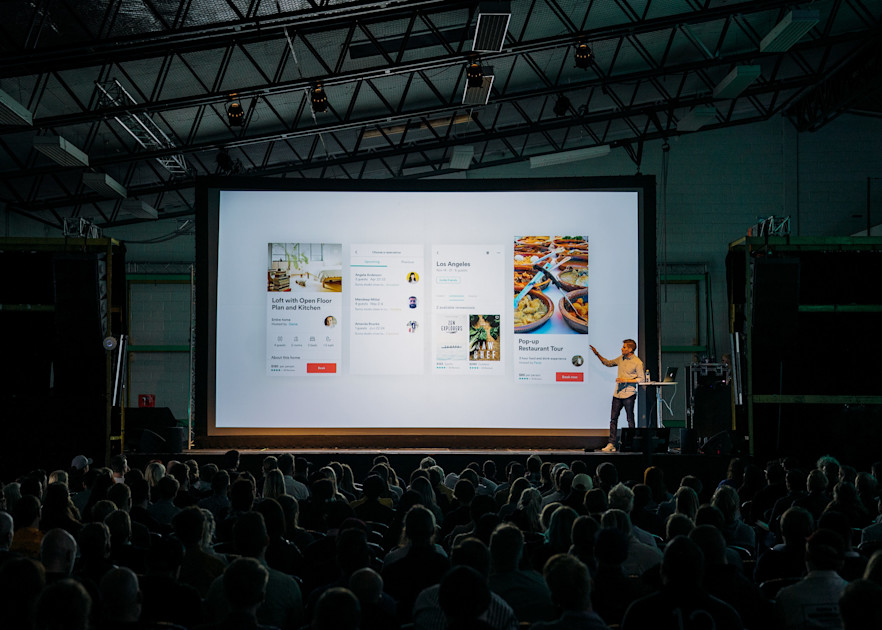
Finding a speaker for a tech talk seems like an easy enough task, right up until you notice how all too many of them sound exactly the same. The AI field is full of individuals that make a ChatGPT reference, throw in a couple of statistics, get some applause and yet, don’t give the audience anything they can use.
The difference between a speaker that fires people up and one that genuinely educates is something it’s often worth taking the time to define before you agree to any deals.
Translate Complexity, Don’t Perform It
The first thing to vet is whether a candidate can describe a large language model – or any of the concepts above – without leaning on the term “Large Language Model” to carry the room. Anyone who regularly works with generative AI tooling develops this instinct naturally: call it translation. It’s the ability to take black-box mechanics and map them onto problems an audience is already familiar with. The best analogies are the ones nobody has to Google. Listen for an example of this kind of 100-level explanation during the vetting call. The ones worth hiring reach for analogies that fit your industry, not ones lifted from a TED talk.
This matters because your attendees aren’t there to understand how the technology works at a systems level. They’re there to figure out how it changes their Tuesday morning. Prompt engineering, for instance, is a practical skill your team can use the week after a seminar – but only if the presenter frames it as a workflow adjustment rather than a technical novelty. The best ai education speakers make complexity feel like something the audience was almost already doing.
Live Demos Over Polished Slides
Watching a pre-recorded video of an AI tool is not a demo. It’s a trailer. And yes, there’s always the pushback – “don’t we like trailers?” Sure, everyone likes trailers. But trailers are designed to set expectations, and a demo probably shouldn’t be doing that.
The recorded video feels safe. Nothing breaks, nothing embarrasses anyone. But something gets lost when you go that route – something the audience actually notices, even if they can’t name it. There’s a real difference between watching a clip and watching someone pull out a laptop, open a browser, and figure out what to type based on a suggestion someone just shouted from the third row. That’s the presenter putting themselves out there with no safety net, and the audience knows it.
When it works, it doesn’t feel like a presentation at all. It feels like something actually happened in that room. Those are the sessions people mention afterwards – not because the slides were clean, but because they saw something real. And when it comes to hiring, one of the best interview questions is: what does your live component look like? When something goes wrong in front of an audience, how do you recover? That tells you far more than any rehearsed answer ever will.
Match The Speaker To The Room
A C-suite audience is looking for the big picture implications of AI adoption – cost, competitive positioning, workforce implications. IBM research indicates that 40% of the workforce may require re-skilling as a result of AI and automation in the next three years, so the business case for effective presenters is here and now at the executive level. Frontline managers are interested in what products, services, or decisions change after an AI goes live, and they are looking for guidance on how to make that transition without shedding productivity in the process.
These audiences need different things, and overall a great speaker in one category isn’t necessarily the right fit for the other. Keynote presentations work great for raising awareness and building organizational will. Workshops tend to do better at the actual knowledge and skill transfer. This divide is the single most frequent major error seen from event planners – and it comes down to the speaker’s preference outweighing the audience’s.
For deep-dive topics that require specific expertise, there’s no replacement for sourcing a (still quite rare) professional speaker who makes their primary living doing this work. They will be up to date on the cases closest to your research needs because the cases are your research needs.
Depth On Ethics Isn’t Optional
A presenter who fails to acknowledge the risk involved and that the same AI tools that are transforming industries can also be harnessed for harm will come off as out-of-touch or having an agenda. While everyone is impressed by AI’s potential to improve UX or streamline processes, its credibility hinges on its ability to honestly address known threats, implement in ways that decrease appeal to attackers, and have an intelligent discussion about what emerging risks can be expected.
Audiences are more informed than they used to be – someone in that room has already read about the misuse cases, the bias problems, the data privacy failures. Glossing over those things doesn’t make the presentation feel more positive, it makes it feel less trustworthy. The presenters who earn real respect are the ones who can hold both things at once: genuine enthusiasm for what these tools can do, and a clear-eyed view of what can go wrong when they’re built or deployed carelessly.
What Good Looks Like When The Seminar Ends
The goal isn’t an auditorium full of AI enthusiasts. It’s an auditorium full of people who leave with their next steps mapped out. Effective technology presenters give their audience an actual construct – a process, a decision tree, a ranked list of priorities – that can be adapted to get better at the job. Not in the abstract. That day.
Just ask any speaker you’re considering: what will someone be able to do, having attended your presentation, that they didn’t know how to do before? If the answer is foggy or revolves around “awareness” or “mindset,” then you learned something valuable. Learning objectives are concrete. Your presenter should be able to share them with you.
There’s no shortage of individuals eager to take the stage and preach about the impact of AI on the future of work. The challenge is to find the ones who can instead hand a blueprint for that sermon to the very people listening to it, while they’re still in the room. It’s a smaller list, but it should be your only one.