


Key Takeaways
- Routine inspections can reveal small roof issues before they affect occupied areas, equipment, or inventory.
- Storm reviews should include the roof surface, drainage components, flashing, seams, penetrations, rooftop equipment, and interior areas below the roof.
- Photos, location notes, and repair histories make later inspections more useful.
- Roof access should be controlled, with attention to fall hazards, weather, roof openings, and fragile surfaces.
A commercial roof inspection gives building owners and facility teams a structured way to identify visible damage, investigate moisture concerns, and organize maintenance work before problems become more disruptive. A detailed process, such as the one described at https://www.deltaservices.com/commercial-roof-inspection/, can help teams document roof conditions consistently rather than relying on memory or isolated repair requests.
Roofs often look acceptable from ground level even when drainage, seams, flashing, or penetrations need attention. A repeatable checklist helps property teams compare findings over time, prioritize repairs, and keep useful records for budgets, warranties, insurance discussions, and future capital planning.
Why Commercial Roof Inspections Need a Clear Process
A leak does not always begin directly above the interior stain where it becomes visible. Water can travel along decking, insulation, framing, conduits, or mechanical components before reaching a ceiling or wall finish. That is why an inspection should examine the entire roof system rather than focusing only on the reported leak location.
Using the same inspection sequence each time also makes changes easier to recognize. When a report identifies the roof section, nearby landmark, condition, date, and photograph number, a future reviewer can determine whether a concern is stable, worsening, or newly developed.
When to Schedule a Commercial Roof Inspection
Regular scheduling should reflect the roof’s age, material, warranty requirements, nearby trees, rooftop traffic, and local weather exposure. In addition, an inspection is appropriate in several common situations:
- After hail, strong winds, severe thunderstorms, heavy snow, ice, or other damaging weather.
- When ceiling stains, active drips, musty odors, damp insulation, or unexplained humidity appear indoors.
- Before a property purchase, sale, refinancing, lease negotiation, or major capital decision.
- Before HVAC replacement, solar work, antenna installation, façade work, or another project that requires roof access.
- After unauthorized rooftop traffic, dropped tools, equipment leaks, or service work near seams and penetrations.
What to Check During the Exterior Review
Roof Surface, Seams, and Edges
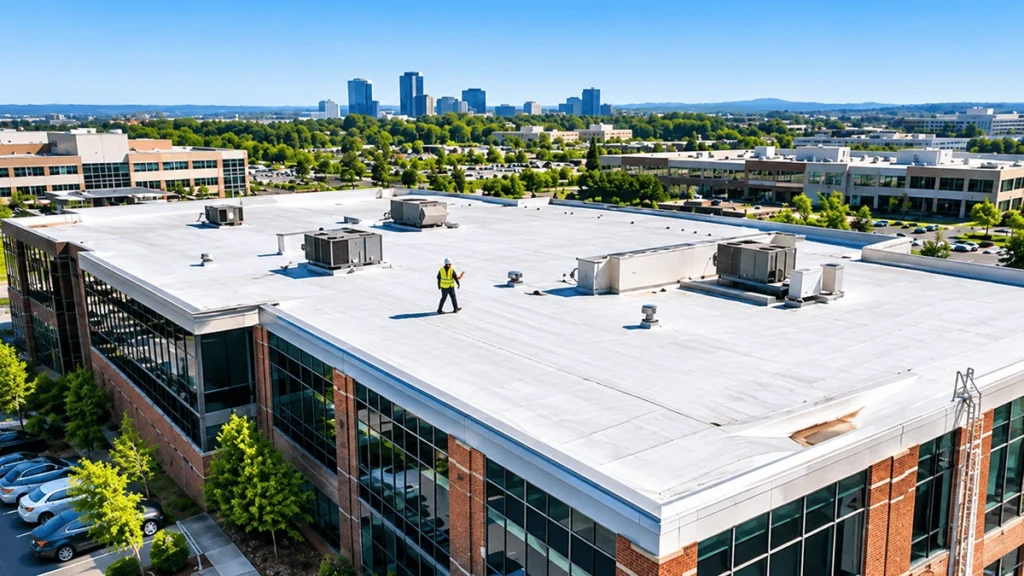
Inspect the primary roof surface for punctures, splits, blisters, abrasion, loose material, wrinkling, and unusual discoloration. Review seams, membrane laps, perimeter edges, and terminations for lifting, separation, open joints, or areas where water could enter beneath the roof covering.

Flashing and Penetrations
Flashing deserves close attention because it connects different roof elements. Check transitions at walls, curbs, vents, skylights, drains, pipes, conduits, and equipment supports. Look for cracked sealant, loose metal, gaps, movement, deteriorated boots, or fasteners that no longer appear secure.
Drainage and Rooftop Equipment
Clear drains, scuppers, gutters, downspouts, and overflow paths to move water off the roof. Note debris, sediment, vegetation, standing water, and staining that may suggest repeated ponding. Around rooftop equipment, look for damaged supports, unsecured panels, oil or condensate leaks, and service work that may have disturbed the roof assembly.
Interior Areas That Can Reveal Roof Problems
An effective review continues inside the building. Inspect ceiling tiles, wall finishes, mechanical rooms, attic or plenum spaces where accessible, and areas below known roof concerns. Signs worth documenting include stains, peeling paint, damp insulation, rust on structural members or fasteners, damaged finishes, odors, water near electrical equipment, and sagging ceiling areas.
Interior symptoms do not confirm the precise source of a leak, but they help narrow the investigation. Any water near electrical systems, critical equipment, or occupied areas should be treated as a priority and evaluated promptly by qualified personnel.
How Inspectors Investigate Moisture
Visible roof damage and hidden moisture are not the same issue. A roof surface may appear intact even when moisture is present beneath it, and a visible stain may result from a pathway some distance away. Depending on the roof system and the observed conditions, inspectors may use moisture meters, infrared scanning, targeted testing, or limited material sampling to better define the affected area.
Skylights and other roof openings require both exterior and interior reviews because water can enter through the glazing, curbs, flashing, or adjacent roof materials. Guidance on inspecting skylights for water damage and infiltration similarly emphasizes examining surrounding components and interior framing when tracing moisture concerns.
What to Document in the Inspection Report
A useful report should allow another person to understand what was inspected and what needs to happen next. Include:
- The inspection date, weather conditions, roof sections reviewed, and any areas that could not be accessed.
- The roof type, approximate age when known, and available repair or maintenance history.
- Wide photos for context and close photos for damage details, each tied to a specific location.
- Notes on leaks, ponding water, damaged seams, flashing conditions, drainage paths, and rooftop equipment.
- A clear list of urgent repairs, scheduled maintenance items, and conditions to monitor.
How to Rank Roof Problems by Priority
- Immediate safety concerns: Unsafe access, unstable surfaces, exposed openings, or apparent structural movement.
- Active water entry: Leaks that threaten electrical systems, building operations, inventory, or occupied spaces.
- Fast-growing damage: Open seams, failed flashing, blocked drainage, or exposed insulation.
- Routine wear: Minor surface aging, localized sealant loss, and planned maintenance items.
- Long-term planning issues: Conditions that may influence restoration, replacement, or future budgeting.
Safe Roof Access and Inspection Practices
Roof inspections should not become unsafe do-it-yourself work. Access should be controlled, particularly around edges, skylights, fragile materials, roof openings, electrical hazards, ladders, and wet or windy conditions. OSHA guidance on roof inspection, tarping, and repair hazards highlights the need for controlled access, fall protection, ladder safety, and guarding or covering openings.
Common Mistakes That Weaken Inspection Results
- Reviewing only the area directly above an interior stain.
- Ignoring drains, scuppers, gutters, and overflow routes.
- Taking photos without recording where they were taken.
- Assuming a dry surface proves there is no hidden moisture.
- Using sealant as a permanent answer to every roof condition.
- Allowing untrained personnel to walk on unfamiliar or fragile roof systems.
- Failing to compare current findings with earlier reports and repair records.
Questions to Ask After the Inspection
- Which findings need immediate action, and which can be monitored?
- Is the issue active, aging, storm-related, or connected to rooftop work?
- Could moisture affect insulation, decking, structural components, or building systems?
- What temporary steps can reduce the chance of further damage?
- Which repairs can be grouped into one maintenance project?
- What information should be retained for warranty, insurance, or property records?
Conclusion
A commercial roof checklist does not replace professional judgment, but it provides property teams with a practical framework for identifying warning signs and organizing next steps. Inspect methodically, document findings clearly, address urgent risks first, and use each inspection to improve the maintenance plan for the next one.