


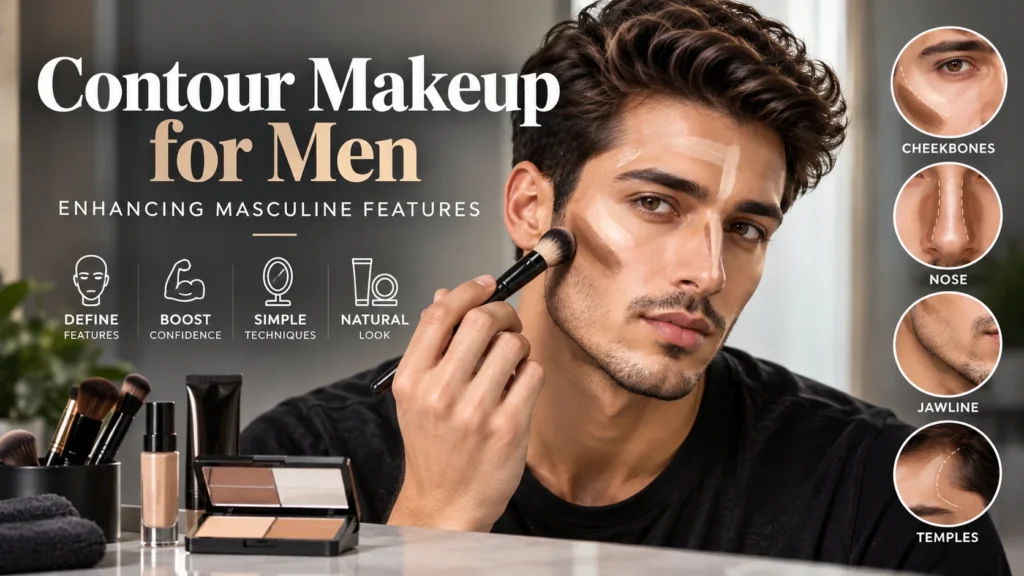

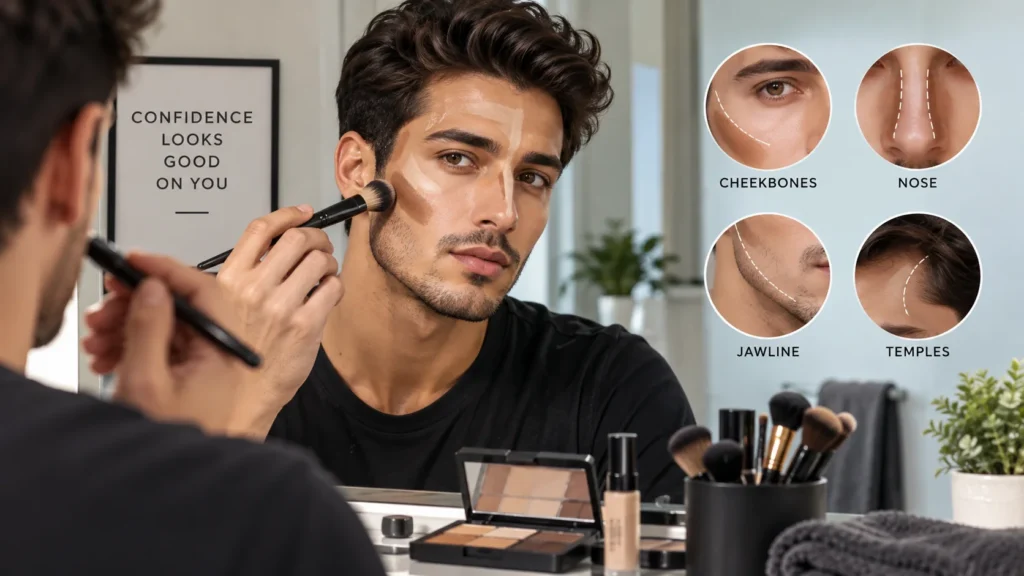
Contour makeup for men is a versatile way to add dimension, definition and balance to the face. Contouring uses darker and lighter makeup shades to create the appearance of natural shadows and highlights, allowing you to emphasize features such as the cheekbones, jawline, temples and nose.
Contouring is not limited to any gender. Anyone can use these techniques to enhance their natural features or create a particular makeup style. Whether you want a subtle everyday look, polished professional makeup or a more defined appearance for photography and events, the key is choosing suitable products and blending them carefully.
What Is Contour Makeup for Men?
Contour makeup involves strategically placing darker and lighter products to create visual depth. A darker contour shade can make an area appear more recessed, while a lighter product can draw attention toward an area.
For a traditionally masculine-inspired makeup style, some people focus on emphasizing existing facial structure, such as the cheekbones, jawline and brow area. However, there is no single correct way to contour a man’s face. Your preferred result should determine where and how much product you use.
How to Choose a Contour Shade
Choosing the right contour shade is one of the most important parts of creating a natural-looking result. Instead of automatically choosing the darkest product available, look for a shade that creates a believable shadow against your complexion.
- Fair skin: Start with a light, buildable contour shade and apply it sparingly.
- Light to medium skin: A neutral or subtly cool-toned shade can work well for creating natural-looking shadows.
- Medium to tan skin: Choose enough depth to create definition without making the contour look muddy.
- Deep skin: Look for a contour shade with sufficient depth and blendable pigmentation so the definition remains visible.
Undertone also matters. A contour shade that is extremely warm may look more like bronzer, while an overly gray or cool shade can appear unnatural on some complexions. Testing a small amount in natural light can help you judge the result.
Cream, Liquid or Powder Contour?
Contour products are available in several formulas. The best option depends on your skin type, makeup routine and preferred finish.
- Cream contour: Easy to build and blend, especially when you want a softer, skin-like finish.
- Liquid contour: Useful for lightweight, buildable definition when applied in small amounts.
- Powder contour: Convenient for adding controlled definition over a set makeup base.
- Contour stick: Convenient for targeted application along the cheekbones, jawline and temples.
If you are new to contouring, start with one formula rather than purchasing several products at once. Learning placement and blending is more important than having a large collection of contour products.
Essential Contouring Tools
The right tools can make contouring easier and help you control the amount of product you apply.
Angled Contour Brush
An angled brush can help place contour beneath the cheekbones and along other areas where you want controlled definition.
Small Tapered Brush
A small tapered brush is useful for detailed work around the nose, brow area and smaller facial contours.
Fluffy Blending Brush
A fluffy brush helps soften edges and distribute excess product. It is particularly useful when your contour initially looks stronger than intended.
Makeup Sponge
A damp makeup sponge can be useful for blending cream and liquid contour. Press and bounce the sponge rather than rubbing aggressively across the face.
How to Prepare Your Skin Before Contouring
Good preparation can help makeup apply more evenly. Start with clean skin and use skincare products appropriate for your skin type.
- Cleanse your face gently.
- Apply moisturizer if your skin needs hydration.
- Use sunscreen during daytime makeup routines.
- Apply primer if it works well with your makeup and skin type.
- Allow skincare products to settle before applying makeup.
The American Academy of Dermatology recommends choosing skincare products according to your skin type and using gentle cleansing practices to help minimize irritation. :contentReference[oaicite:1]{index=1}
How to Contour Your Cheekbones
The cheekbones are one of the easiest areas to begin when learning how to contour for men.
- Use a small amount of contour on your brush.
- Locate the natural hollow beneath your cheekbone.
- Apply the contour toward the outer portion of the cheek.
- Blend upward and outward toward the hairline.
- Use a clean brush to soften any visible edges.
Avoid extending a strong contour all the way toward the corners of your mouth. Keeping the product concentrated toward the outer cheek generally creates a softer and more controlled result.
How to Contour the Jawline
Jawline contouring can emphasize the natural transition between the face and neck. Apply a small amount of contour along the underside or outer edge of the jaw and blend it carefully.
Do not create a hard horizontal line. Instead, gradually soften the product into the surrounding skin and neck so that the shadow looks natural.
How to Contour the Temples and Hairline
Light contour around the temples and selected areas of the hairline can add dimension to the upper face. Use a fluffy brush and very little product.
Because the hairline is visible from several angles, blend carefully so there is no obvious line separating the contour from the rest of your makeup.
How to Contour the Nose
Nose contouring requires a smaller brush and a particularly light touch. The goal is to create subtle shadows rather than obvious parallel lines.
- Choose a small tapered brush.
- Pick up a small amount of contour.
- Apply a narrow amount along the areas you want to visually define.
- Blend the edges carefully.
- Add a small amount of lighter product down the center if additional contrast is desired.
If you can clearly see the contour from a normal conversational distance, use a clean brush or sponge to soften it.
Highlighting for Men’s Contour Makeup
Highlighting works together with contour by bringing visual attention toward selected areas of the face. You can use a concealer or highlighting product that is slightly lighter than your complexion.
- Upper cheekbones
- Center of the forehead, if desired
- Bridge of the nose
- Brow area
- Center of the chin
For a natural daytime appearance, choose a subtle finish rather than applying a highly reflective product everywhere.
Blending Is the Most Important Step
Even an excellent contour shade can look unnatural if it is not blended properly. Use light pressure and gradually soften the edges of both the contour and highlight.
Check your makeup from different angles and, when possible, in natural lighting. Your contour should create dimension without looking like a visible stripe.
Contouring for Different Face Shapes
Face-shape guides are useful starting points, but they should not be treated as strict rules. Your individual facial structure and preferred appearance should determine where you place contour.
Oval Face
For an oval face, focus on subtle cheekbone and jawline definition. Keep the application balanced rather than adding heavy contour around the entire face.
Square Face
A square face may already have prominent angles. Use controlled contour around the jaw and temples if you want additional definition, and blend thoroughly to avoid making the lines appear too strong.
Round Face
For a rounder face, contour beneath the cheekbones and around selected areas of the outer face can create additional visual definition. Keep the product concentrated rather than covering large areas.
Heart-Shaped Face
For a heart-shaped face, subtle contour around the temples and cheek area can help create visual balance. Avoid applying heavy product around the narrowest parts of the chin.
Contour Makeup for Different Occasions
Everyday Contouring
For everyday makeup, keep the contour light and concentrate on one or two areas. A small amount beneath the cheekbones or along the jawline can add definition without making the makeup look heavy.
Professional Settings
For work or professional settings, subtle contouring is usually easier to wear. Use a neutral shade, apply it sparingly and blend until the edges are barely visible.
Evening and Event Makeup
Evening and photography makeup can support stronger definition because lighting and cameras may reduce the appearance of facial dimension. Build the contour gradually instead of applying a large amount at once.
Advanced Contouring Tips
1. Build the Product Gradually
Start with a thin layer and add more only where necessary. Building gradually gives you greater control and makes it easier to maintain a natural finish.
2. Combine Cream and Powder Carefully
If you use both cream and powder contour, allow the cream product to blend and settle before lightly layering powder over it. Too many layers can make the complexion look heavy.
3. Use Matte Products for Shadow
A matte or low-shimmer contour is generally easier to use when the goal is to imitate a natural shadow. Shimmer is better reserved for areas where you intentionally want reflected light.
4. Check the Makeup in Different Lighting
Makeup can look very different under indoor lighting, daylight and photography lights. Check your contour from several angles before deciding whether you need more product.
How to Make Contour Look Natural
- Choose a shade that resembles a natural facial shadow.
- Use less product than you think you need.
- Keep the placement close to the areas you want to define.
- Blend the edges thoroughly.
- Use a clean brush to remove excess product.
- Check the result in natural light.
- Avoid creating symmetrical lines simply for the sake of symmetry; follow your own facial structure.
Contour Makeup and Personal Style
There is no single definition of what men’s makeup should look like. Some people prefer nearly invisible contouring, while others enjoy highly defined editorial, theatrical or creative makeup.
Traditional masculine-inspired contouring often emphasizes existing angles such as the jawline and cheekbones, but makeup can also be used to soften, reshape or creatively alter facial proportions. The technique should match the look you want to create.
Skincare Before Contouring
A simple skincare routine can provide a better base for makeup. Cleanse your face gently, moisturize according to your skin type and use sunscreen during daytime routines.
Avoid aggressive exfoliation immediately before applying makeup if it leaves your skin irritated or sensitive. Your makeup will generally apply more comfortably when the skin barrier is not unnecessarily irritated.
Removing Contour Makeup Safely
Removing makeup at the end of the day is an important part of maintaining your skincare routine. Use a suitable makeup remover or gentle cleanser and avoid aggressively scrubbing the skin.
The American Academy of Dermatology recommends removing makeup before going to bed, while gentle cleansing can help reduce irritation and buildup. :contentReference[oaicite:2]{index=2}
Makeup Hygiene and Brush Care
Clean makeup tools regularly and avoid sharing cosmetics or applicators. The FDA advises consumers to wash their hands before using cosmetics, keep containers clean and avoid sharing makeup. :contentReference[oaicite:3]{index=3}
The American Academy of Dermatology recommends washing makeup brushes regularly; its dermatologists advise cleaning brushes every 7 to 10 days. :contentReference[oaicite:4]{index=4}
- Clean brushes regularly.
- Keep makeup containers closed when not in use.
- Do not share makeup or brushes.
- Wash your hands before applying makeup.
- Replace products when they change smell, color or texture.
- Follow the manufacturer’s storage and usage instructions.
If a cosmetic causes irritation, stop using it. For persistent or significant reactions, seek appropriate medical advice. :contentReference[oaicite:5]{index=5}
Common Contouring Mistakes to Avoid
- Using too much product: Heavy application can be difficult to blend.
- Choosing a shade that is too dark: Start lighter and build gradually.
- Using an overly warm shade: This can make the product look more like bronzer.
- Skipping blending: Visible edges can make contour look artificial.
- Ignoring the neck: A strong jawline contour should transition naturally into the surrounding skin.
- Applying too much nose contour: Small amounts provide better control.
- Using dirty brushes: Product buildup and microorganisms can contribute to skin problems.
- Sleeping in makeup: Remove makeup before bed as part of your normal skincare routine.
Frequently Asked Questions
How do you choose the right contour stick for a masculine look?
Choose a contour shade that creates a believable shadow on your complexion rather than automatically selecting the darkest shade. Neutral or subtly cool tones can work well for shadow creation, while a light hand and thorough blending help maintain a natural finish.
What are the key techniques for facial contouring in male makeup?
The key techniques include identifying where natural shadows fall, applying small amounts of product, building the intensity gradually and blending the edges thoroughly. Common areas include the cheekbones, temples, jawline and sides of the nose.
What is the difference between drag king contour makeup and everyday men’s contour makeup?
Drag king and theatrical makeup can use deliberately exaggerated contouring to create a dramatic character or visual effect. Everyday contour makeup generally uses lighter application and softer blending to enhance facial dimension without creating highly visible lines.
What makeup products are essential for men interested in contouring?
A beginner can start with a contour product, a suitable brush or makeup sponge, and an optional highlighting product. You do not need products marketed specifically to men; choose formulas and shades that suit your skin type, complexion and desired finish.
How does blush application work with men’s contour makeup?
Blush can be used with any contour style. For a subtle result, apply a small amount to the cheeks and blend it into the surrounding makeup. The amount and placement should depend on the look you want rather than a fixed gender-specific rule.
How do you combine highlight and contour for a natural look?
Apply contour to selected natural shadow areas and use a lighter product on selected high points of the face. Blend both products carefully so there are no obvious edges. Keep the amount of highlighter low if you want a natural, low-shine finish.
Can men wear contour makeup every day?
Yes. Makeup can be part of an everyday grooming routine if you enjoy wearing it. For daily use, a small amount of well-blended contour is often easier to maintain than a heavily sculpted look.
Should contour be darker than foundation?
Contour is normally darker than the surrounding foundation because its purpose is to create the appearance of shadow. However, the amount of contrast should depend on your skin tone, lighting and desired makeup style.
Final Thoughts on Contour Makeup for Men
Contour makeup for men can be as subtle or dramatic as you want. The most important principles are choosing an appropriate shade, applying small amounts, placing the product thoughtfully and blending it thoroughly.
Whether your goal is to emphasize your cheekbones, add definition to your jawline, refine the appearance of your nose or create a more polished makeup look, practice will help you understand what works best for your own facial structure.
Most importantly, makeup does not need to follow rigid gender rules. Use the techniques that help you achieve the appearance and style you want while keeping your products and tools clean and using them according to their labels.