

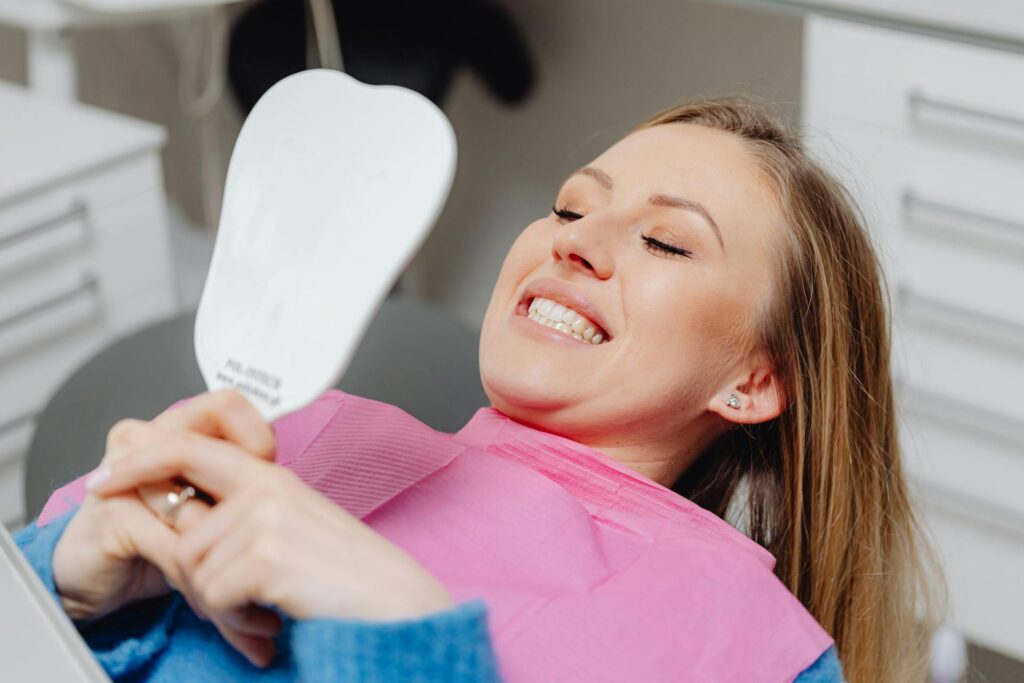
You have made a significant investment in your smile. Be it porcelain veneers, composite bonding, or a series of clear aligners, cosmetic dental treatment is a financial investment and, like any other high-value asset, it needs to be maintained.
Most aftercare advice ends with “brush twice a day”, but that’s akin to saying you should occasionally wash your car and hoping it runs for 10 years.
1. Switch To A Non-Abrasive Hygiene Routine
Standard whitening toothpastes and medium-bristle brushes are too aggressive for cosmetic restorations. Abrasive cleaning agents scratch the glaze on porcelain and dull the surface of composite bonding over time, making restorations more prone to staining and surface breakdown.
Use a soft-bristle brush and a pH-neutral gel toothpaste. The goal isn’t to scrub harder – it’s to remove plaque biofilm without compromising the surface finish your dentist spent time perfecting.
2. Protect Against Bruxism Before It Costs You
Teeth grinding (bruxism) is one of the fastest ways to destroy cosmetic dental work. The forces generated during sleep grinding can exceed what porcelain is designed to tolerate, causing veneers or crowns to chip, crack, or debond entirely.
If you grind your teeth, a custom-fitted occlusal guard worn at night is non-negotiable. It doesn’t matter how well-bonded your veneers are – the mechanical pressure from unmanaged bruxism will eventually win. A well-balanced occlusion (the way your upper and lower teeth meet) is foundational to the lifespan of any restoration, and a guard preserves that balance while you sleep.
3. Hold Your Alignment With Retention
Teeth keep moving even after you’ve had them straightened for aesthetic reasons. Orthodontic relapse, or when teeth gradually move back towards their original position, can start as soon as a few days after the treatment has concluded. One study, which was published in the Journal of Dentistry, found that significant movement was detected in the teeth of up to 70% of people who did not use long-term retention measures.
This information isn’t meant to scare you – it’s just the way it is. The periodontal ligaments in your mouth that keep your teeth in place remember where your teeth used to be located. If your teeth are not under constant, or at least consistent, pressure to maintain their new position, those ligaments will begin pulling your teeth back to where they were. If you’ve put the time and money into getting your teeth straightened, regularly wearing your dental retainers for teeth is the only way to maintain the results. If your teeth shift even a little, your veneers may be put under pressure they weren’t meant to handle, or bonding may begin to fail due to uneven pressure.
Wear your retainer each night. Not most nights, each night.
4. Manage What You Eat, Especially Early On
The first 48 hours are critical to ensuring the success of your cosmetic work. The bonding cement is still reaching full strength, and restorations are most vulnerable at the margins (where restoration meets natural tooth) to staining.
Eating a “white diet” during this window (chicken, rice, yogurt, water) allows the work to set properly. Afterward, continue to avoid or limit chromogenic (stain-causing) foods like turmeric, red wine, and coffee. They do not damage your restorations but can stain the margins, which is where the overall aesthetic success of the work can begin to be compromised.
5. Book Specialist Hygiene Appointments Twice A Year
Regular hygiene appointments may not be sufficient for cosmetic restorations. Hygienists who aren’t accustomed to porcelain and composite work may use the wrong instruments, which can lead to scratches on the shiny, polished surface of your crown.
Stain removal pastes can be abrasive and lead to the loss of the glaze on your crown, making it more prone to staining in the future.
6. Stop Using Your Teeth As Tools
Indeed, it may sound obvious, but many people still engage in these habits on a daily basis. The act of applying shear force to various edges and surfaces of the teeth can result in chipping or breaking. In many cases, a composite bonding can get chipped easily from such habits.
Yet, if you read through your dental warranty, you will realize that most of these chips aren’t covered.
7. Monitor Your Gum Health Consistently
Cosmetic dentistry rests on a biological foundation. If your gums recede and your underlying periodontal health degrades, your gums don’t just start looking less than ideal – they’ll begin uncovering the margins of your restorations, compromising the bond between your veneer and your tooth, and possibly allowing the harboring of the very bacteria that cause cavity formation to go unchecked below your crown.
Protecting your work against gum health failure is easy: treat it the same way you treat the foundation beneath anything you care about. Floss daily, don’t ignore sensitivity, and report any gum changes to your dentist immediately.
Cosmetic dentistry doesn’t fail inexplicably. It fails when the mechanical, biological, and behavioral stressors that will inevitably compromise it are left unchecked. Treat your dentistry as the investment that it was. Build these habits into your routine, and the work your dentist did will actually have the potential to still look great in 20 years.