
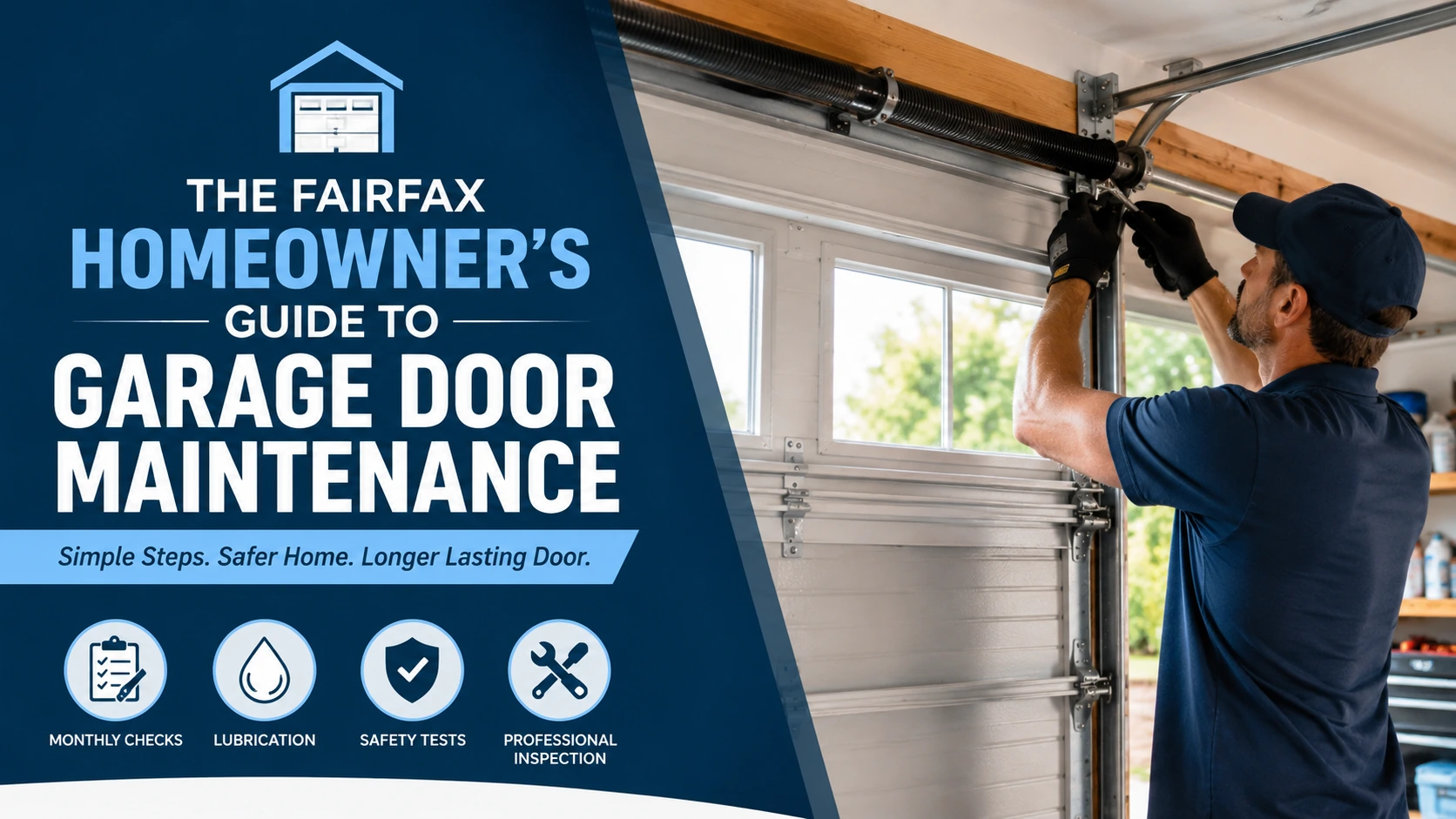
Garage door maintenance is easy to skip until something breaks because garage doors have more moving parts than most homeowners realize. In Fairfax, the seasonal swings between humid summers and freezing winters put real stress on all those parts.
A little regular attention keeps the door working smoothly. It also catches small problems before they turn into expensive ones.
Why Garage Door Maintenance Counts in Fairfax’s Climate
Fairfax sits in Northern Virginia, where summers run hot and humid and winters regularly bring freezing temperatures. A garage door goes through that full temperature and moisture swing every year.
What Fairfax’s Seasons Do to a Garage Door
Humidity swells wood panels and can cause metal hardware to rust over time. Cold weather stiffens lubricant and hardens weatherstripping.
It also makes springs and cables work harder to lift a heavier, colder door. A door that runs smoothly in June can bind or squeal by January without regular care.
A Basic Garage Door Maintenance Routine
Garage door maintenance doesn’t need to be complicated. Most of it comes down to a few checks done on a regular schedule.
The rest is knowing which parts need a professional instead of a homeowner.
Monthly Checks That Take Five Minutes
Look at the tracks on both sides of the door for dirt, rust, or visible damage. Listen for new grinding or squealing sounds during a normal open and close cycle.
Test the auto-reverse safety feature by placing a block of wood in the door’s path and closing it. The U.S. Consumer Product Safety Commission recommends this test every month.
It’s the feature that stops the door from closing on a person, pet, or object.
Garage Door Maintenance Tasks Worth Doing Twice a Year
A few tasks only need attention once or twice a year. They still count for a lot in how long the system lasts.
Lubrication and Hardware
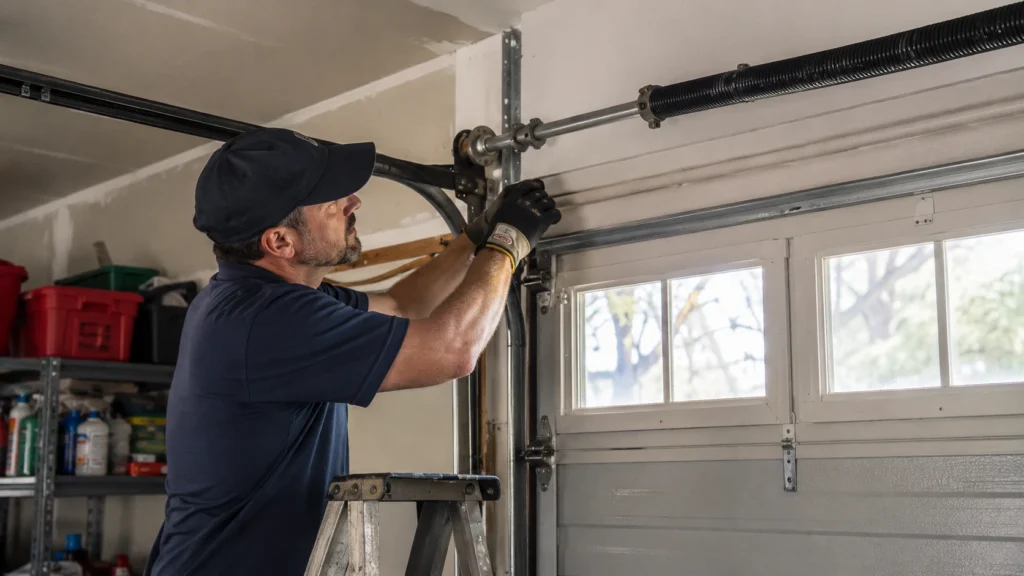
Rollers, hinges, and the torsion spring benefit from a light coat of garage-door-specific lubricant twice a year. Check that all visible bolts and hinges are tight, since vibration from regular use works them loose over time.
DASMA, the industry association for garage door manufacturers, recommends a yearly professional visit on top of a homeowner’s own monthly checks. Some parts, like torsion springs, are under enough tension to cause serious injury if handled the wrong way.
Signs Your Garage Door Needs More Than Maintenance
Some problems aren’t fixed by lubricant or a tightened bolt.
An off-track door or a visibly stretched or broken spring is already beyond routine care. An opener that runs without moving the door is another sign that the problem needs more than basic maintenance.
When to Call a Professional Instead
Springs and cables carry enough tension that DASMA recommends professional replacement, not a DIY fix. A door that won’t stay aligned on its track usually needs that same kind of hands-on adjustment.
A garage door repair company in Fairfax that handles these issues often can tell quickly whether a problem is small or serious. That call is often hard to make from the driveway.
Common Maintenance Mistakes to Avoid
A few habits do more harm than good. Spraying standard household oil on tracks or hinges attracts dirt and gums up fast, faster than a lubricant made for garage doors.
Ignoring a squeak because the door still opens usually means a bigger repair later. It’s rarely a problem that goes away on its own.
A Simple Year-Round Schedule
Monthly: visual check and the auto-reverse test.
Every six months: lubrication and a hardware check.
Once a year: a professional inspection, especially for the spring and cable system.
Frequently Asked Questions
How often should garage door maintenance be done?
Monthly for the quick visual and safety checks, twice a year for lubrication, and once a year for a full professional inspection.
Skipping the monthly check is the most common gap. It takes less than five minutes but catches problems earliest.
Can homeowners do their own garage door maintenance?
Most routine maintenance is safe to do without a professional: visual inspection, lubrication, tightening visible hardware, and testing the auto-reverse feature.
A useful dividing line is whether the task changes spring tension, cable tension, or the door’s alignment. Those jobs move beyond routine maintenance and into repair work, which DASMA and manufacturers recommend leaving to a professional.
How much does regular garage door maintenance save?
A spring or cable caught early during a routine check is a contained repair, usually just the part and labor.
The same part failing mid-use costs more, since a snapped spring or cable can also drop the door hard enough to damage the track, panels, or opener on the way down.
Exact numbers vary by door and by what fails, but a routine check almost always costs less than an emergency one.
Put Garage Door Maintenance on the Calendar
The easiest way to keep up with the door is to stop relying on memory. Put the monthly visual inspection and auto-reverse test on a recurring calendar reminder and run through them during one normal open-and-close cycle.
Twice a year, add lubrication and a hardware check. If that inspection turns up a stretched spring, damaged cable, or alignment problem, stop at the diagnosis instead of turning a maintenance check into a repair attempt.