
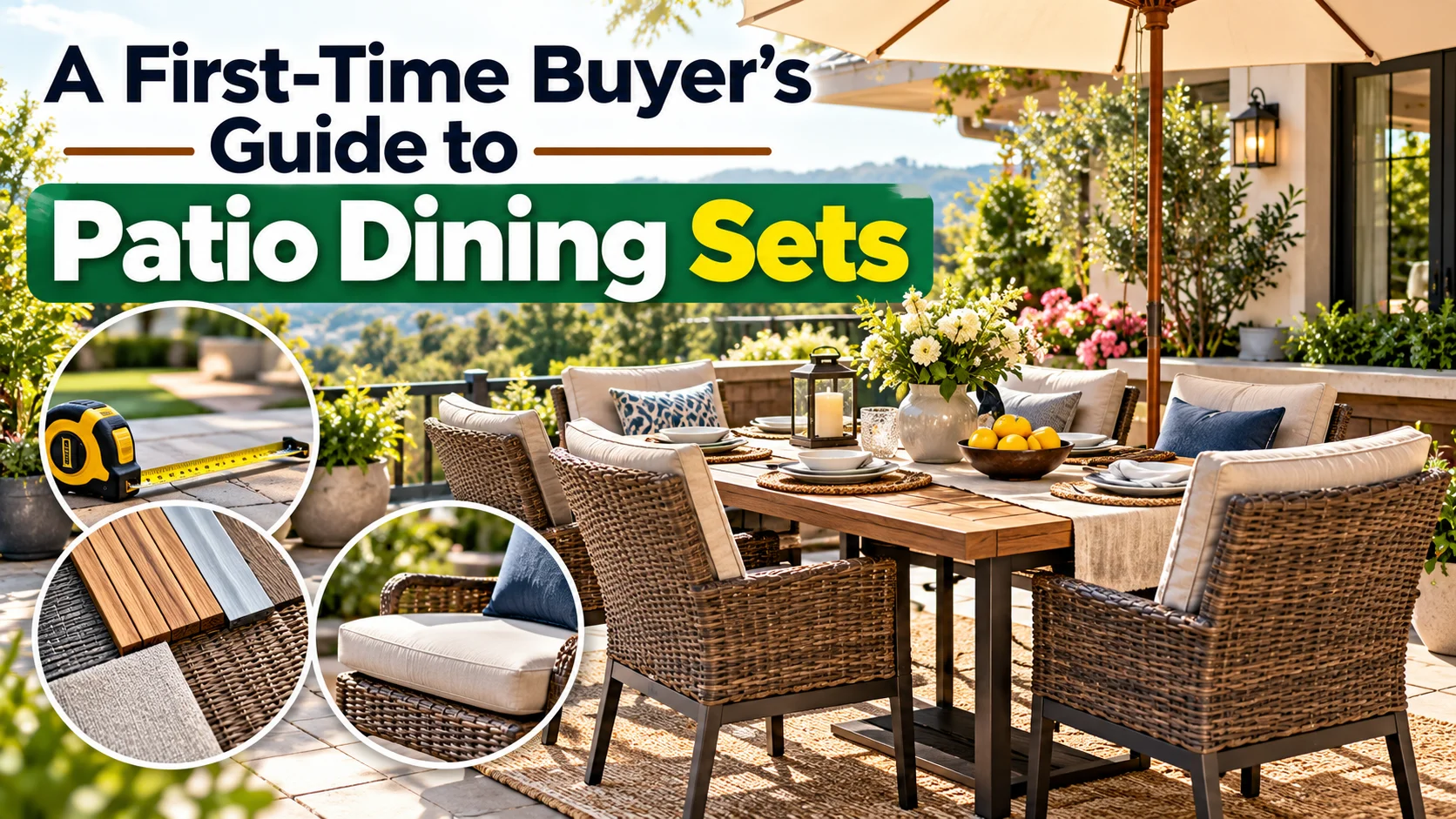

Most first-time patio dining sets fail for ordinary reasons. The table doesn’t fit, the chairs can’t pull out or the frame isn’t suited to the local sun and rain. Measure your space, choose a suitable shape and allow for exposure in your budget, and you’ll avoid many common regrets.
Measure first, shop second
Start with a tape measure, not a catalogue. Outdoor furniture often looks smaller online than it does on your deck, and that difference causes many returns. Mark the footprint with painter’s tape or chalk, then allow chair space around it. As a planning rule, allow about 24 inches of depth per chair, plus 12 to 18 inches behind it so people can push back without hitting a wall or railing. If the outline feels tight when you walk around it, the space will feel tighter with four people, serving dishes and hot plates.
A five-piece set can overwhelm a narrow balcony once the chairs are pulled out. A large rectangular table may also dominate a square patio and take away the corner intended for plants or a grill. Where people need to pass, aim for about 36 inches of walking space if the patio allows it. That can be difficult in a small area, where a square table may work better than a long rectangular one.
Tape doesn’t lie.
Don’t forget height or the swing of nearby doors. Check that chairs clear sliding doors and steps when pulled out, and make sure the table doesn’t block the main route from the kitchen to the garden.
Understand frame materials before you fall for looks
Looks help sell patio sets, but climate affects how well they hold up. Aluminium, powder-coated steel, teak and all-weather resin wicker make up much of what you’ll see. Each material has trade-offs in weight, maintenance, likely lifespan and cost.
Aluminium frames
Aluminium is light and won’t rust in the same way as steel, making it a common choice for mid-priced sets. Its low weight is useful if you move chairs often or put the set into storage for winter. Quality varies widely. Thin-walled tubes can dent and wobble, while thicker extrusions with a good powder coating tend to remain stiffer. Pick up the chair before buying it. If a full-size dining chair feels unusually light, check the frame construction carefully. Aluminium can work well in rainy areas and near pools, especially when paired with suitable hardware to limit corrosion where different metals meet.
Powder-coated steel
Steel is heavy and stable. It doesn’t blow over easily, and it feels solid when you lean against the table. The powder coating protects it against rust, so chips and scratches deserve attention. Check the underside of the furniture and the bottoms of the legs. Thin or damaged coverage in those areas may allow rust to start. Steel can be a sensible choice for sheltered patios and calm corners. In constant rain or salty air, covers and occasional touch-up paint may help preserve the finish.
Teak hardwood
Teak is a premium wood choice partly because its natural oils help it resist water and insects. It can remain outside throughout the year in many climates when cared for appropriately. New teak has a honey-brown colour and fades to silver-grey if left untreated. That colour change is normal, rather than proof of damage. Teak is generally heavy, stable and repairable with light sanding. However, it costs more than many metal options and usually needs oiling only if you want to preserve the original brown tone. Check the wood species carefully, as softer woods may require regular sealing outdoors.
All-weather resin wicker
This is an area where first-time buyers can get caught out. Natural wicker is usually intended for indoor rooms because moisture and sun can damage it outdoors. All-weather resin wicker is different. It uses plastic weave designed for outdoor exposure, usually wrapped over an aluminium or steel frame. Good resin should feel thick and tightly woven, without sharp tails or obvious gaps. Lower-quality weave may become brittle or fade with extended exposure. Read the material specification carefully. If the description says only wicker, without mentioning resin or HDPE, confirm whether it is intended for outdoor use.
Pick a tabletop for how you eat outside
Tabletops affect daily use more than many buyers expect. Slatted wood and woven tops drain after rain, which helps if you plan to leave the set uncovered. The gaps also collect crumbs and pollen, so they need frequent brushing. Glass can be wiped clean quickly and looks tidy, but it shows fingerprints and should be tempered glass rated for outdoor use. It may also become hot or produce glare in direct sunlight.
Solid resin tops cope with sun and rain with relatively little maintenance. They don’t shatter or swell, and they can be cleaned with soap and water. Some designs look plain beside wood or glass. Consider wind as well. Glass and solid tops catch gusts, so a lightweight base may be less suitable on an exposed deck. Slatted surfaces allow some air to pass through.
If you enjoy long breakfasts outside, prioritise easy cleaning over surface texture. For a table under trees, look for drainage and a surface you can brush quickly.
Match table shape to your space and how you gather
Rectangular tables seat more people along their length. They work well on long decks and for larger family meals, with diners arranged along both sides. They are less suited to some corners because the ends project into the available space and may take up useful walkways.
Round tables suit everyday use for couples and small families. There is no head of the table, conversation flows easily and the curved edge can help in a confined space. Square tables fit neatly into corners and small patios while seating two to four people face to face, without conversation stretching across a long tabletop. Shoppers with a compact balcony or square patio corner often compare a square patio table and chairs because the footprint allows four-person dining without taking over the entire paved area.
Don’t choose a shape on appearance alone. Tape out each option, place your existing chairs around the outline and sit down for a conversation. This will show whether a square table feels cosy or cramped, or whether a round one blocks the grill lid. The dry run is useful because comfort with a morning coffee differs from comfort during a full meal with plates and serving bowls on the table.
Clearance usually matters more than shape. Leave enough pull-out room behind every seat, including one beside a planter. If that isn’t possible, remove a seat from the arrangement or choose a smaller tabletop.
Get comfort right: chairs and cushions
Uncomfortable chairs can end outdoor dining faster than bad weather. Seat height and depth matter, along with back angle and arm width. Dining height is fairly standard, but chair depth varies considerably. Sit in the chair for five minutes in the shop if you can. Your feet should rest flat on the floor, your shoulders shouldn’t hunch forward and your elbows should clear the person beside you without constant shuffling.
Cushions bring another set of considerations. The cover fabric affects how well the colour lasts. Solution-dyed acrylic generally retains colour in sunlight and resists mildew better than inexpensive polyester. It costs more but may reduce the need for early replacement. Check whether the covers are removable and whether the care label confirms that they are machine-washable. Fixed covers require stains to be cleaned while the cushion remains on the chair, which can make an even result harder to achieve.
Foam and filling matter as well. Quick-dry foam allows water to drain after storms, while wrapped polyester filling may remain wet and flatten in hot weather. Even mid-range filling will last longer if you store the cushions indoors between uses. Washable acrylic covers and quick-dry cores are worth considering if the table will sit in open sunlight.
People tend to sit differently outdoors. We slouch, cross our legs and often stay at the table longer, so choose chairs that remain comfortable in several sitting positions.
Check build quality like a pro
You don’t need specialist tools to identify weak furniture. Turn a chair over and inspect the underside. Welds should be smooth and even, rather than lumpy or cracked. Welded leg brackets may be stronger than brackets held by small bolts alone, although well-made designs can combine both methods with corner braces beneath the tabletop. Shake the display table gently. A little movement can be normal, but a wobble that produces a rattle deserves closer inspection.
The finish reveals a lot about construction quality. Powder coating should cover edges and undersides, not only the most visible surfaces. Run your hand beneath the frame. Rough areas and thin paint around the feet may show where corrosion could begin. Weight offers another clue: steel should feel heavy, while aluminium should feel firm rather than flimsy. If a set described as teak feels unusually light, ask for the wood species in writing.
Hardware is often among the first parts to fail. Look for appropriate bolts and capped nuts, then check for plastic glides on the feet to keep metal away from wet stone. Those small components affect whether joints remain tight near sprinklers or in salty air. Tight joints and full coating beat fancy weave when assessing the basic structure.
Budget, care, and the fine print on delivery
Low entry prices can tempt first-time buyers. Lightweight aluminium sets with thin cushions may be adequate on covered porches where direct sun and rain rarely reach them. They may be less suitable for year-round exposure. A heavier frame with better hardware is usually a more practical upgrade than decorative weave or pattern. Spend the initial budget on the structure, then add better cushions next season if money is limited.
Outdoor furniture still requires routine care. Wipe the frames regularly with mild soap to remove pollen and grit that can wear the finish, and check the bolts periodically. Store cushions indoors when they aren’t in use instead of stacking them while wet in a corner. Breathable winter covers help avoid trapping moisture beneath the weave.
Plan for shade early. Many square tables include a centre hole for a pole umbrella, which can provide welcome cover at noon. On windy sites, the pole may wobble or lift, so a suitable base matters. A side-offset umbrella keeps the support out of the way and may offer a tilt function, although its base requires more floor space. No option works perfectly everywhere. Match the shade to the available room and wind conditions.
Read the fine print before clicking the buy button. Check whether the price includes freight to your door or only a kerbside drop, and whether assembly is included or the set arrives flat-packed with small diagrams. Review what the warranty covers, including any separate terms for the frame, finish and cushions. This homework can prevent delivery-day surprises and clarify which parts are protected.
Good patio dining depends on accurate measurements and materials suited to the setting, rather than the prettiest photograph. It also depends on choosing chairs you’ll still enjoy using in August. Make those decisions carefully and breakfast outside can become part of your regular routine.