
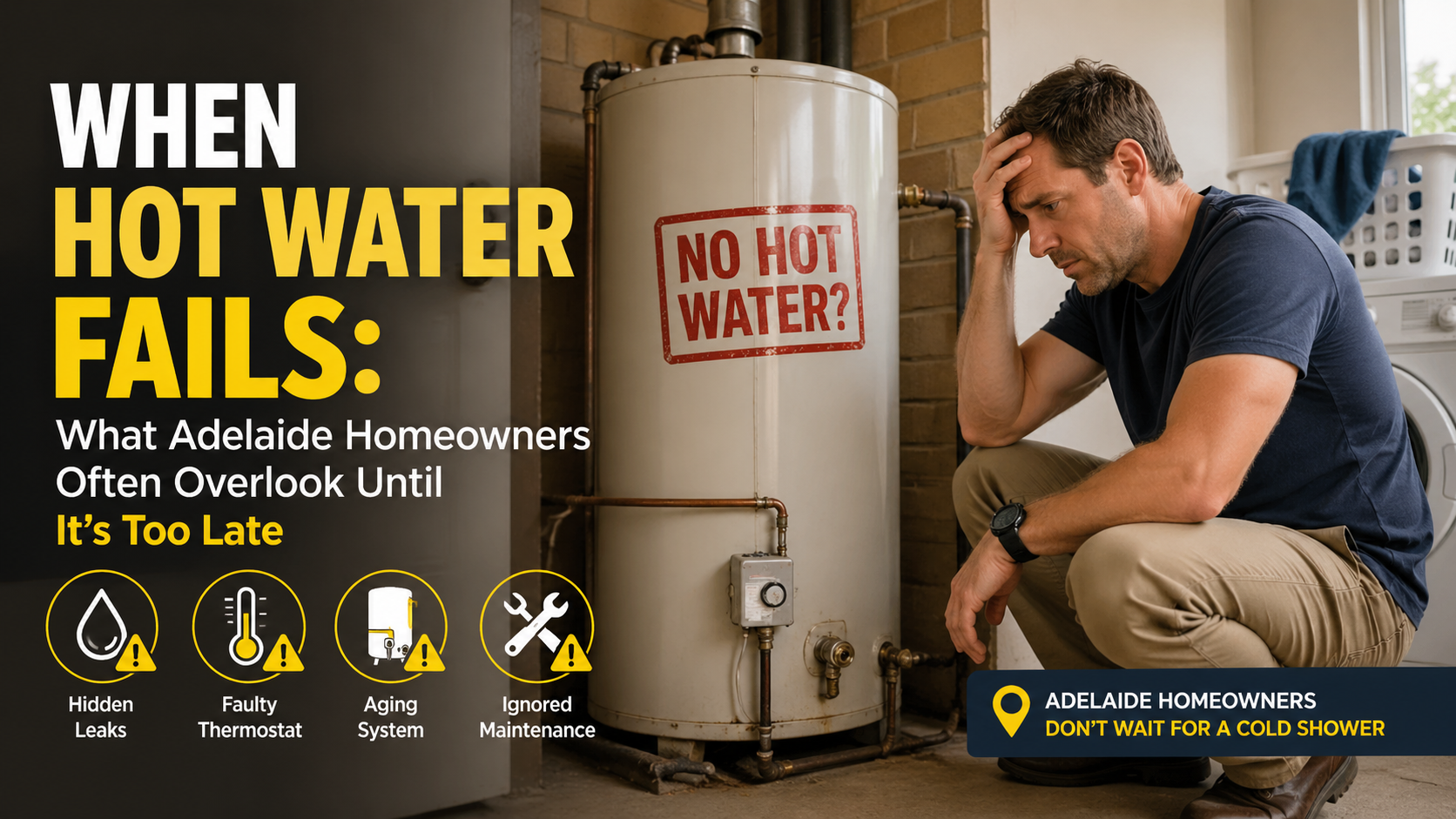
There’s a particular kind of disruption that only happens when hot water suddenly disappears. It doesn’t arrive with warning or drama, just a quiet, inconvenient moment when a shower turns cold or a tap fails to deliver what you expect. In that instant, something most households take for granted becomes the most urgent problem in the home.
In Adelaide, where seasonal extremes and a diverse housing landscape shape how systems perform, hot water failures are rarely random. They tend to follow patterns, ones that are often overlooked until the system reaches a breaking point. Understanding those patterns is what separates reactive fixes from smarter, long-term decisions.
Why Hot Water Systems Fail When You Need Them Most
One of the more frustrating aspects of hot water issues is timing. Systems often fail during winter, early mornings, or periods of heavy use. That’s not coincidence, it’s the result of accumulated strain that only becomes visible under pressure.
During colder months in Adelaide, demand increases as households rely more heavily on hot water for showers, laundry, and general cleaning. At the same time, lower ambient temperatures mean systems must work harder to heat water efficiently. For older units, this additional demand can expose internal wear that has been building quietly over time.
Storage systems, in particular, are vulnerable to this kind of stress. When demand exceeds capacity, heating elements cycle more frequently, placing strain on electrical or gas components. Over time, this repeated load weakens internal parts, increasing the likelihood of failure during peak usage.
Instantaneous systems are not immune either. While they don’t store water, they rely on consistent pressure and efficient heating components. Any disruption, whether from mineral buildup or pressure imbalance, can quickly affect performance.
The Adelaide Factor: Climate, Water Quality, and Usage Patterns
Adelaide’s environmental conditions add another layer of complexity to hot water performance. The city’s Mediterranean climate, characterised by hot, dry summers and cool, wetter winters, creates fluctuating usage patterns throughout the year.
During summer, water usage may be spread out more evenly across the day. In winter, however, usage becomes concentrated, particularly in the mornings and evenings, placing higher peak demand on systems.
Water quality also plays a role. In many parts of South Australia, water contains a higher mineral content, which contributes to scale buildup inside tanks and pipes. This buildup reduces heating efficiency and can damage elements over time.
What makes this particularly challenging is that these changes are gradual. Homeowners may not notice a decline in efficiency until it becomes significant, longer heating times, inconsistent temperatures, or a system that struggles to keep up with daily demand.
Early Warning Signs Most People Dismiss
Hot water systems rarely fail without warning, but the signs are often subtle enough to ignore. Many homeowners adapt to small changes without realising they indicate a deeper issue.
Water that takes longer to heat, fluctuates between hot and cold, or runs out more quickly than usual can all point to internal problems. These changes may seem minor at first, but they often reflect inefficiencies that are steadily worsening.
Unusual sounds are another key indicator. A rumbling or popping noise inside a tank is commonly linked to sediment buildup. As water heats, it must pass through this layer of sediment, creating pressure and noise in the process.
Discoloured water or a metallic taste may suggest corrosion within the tank. While not always immediately dangerous, it is a clear sign that the system is deteriorating.
Leaks, even small ones around the base of the unit, should never be ignored. They often indicate structural weakness or failing components that can escalate quickly if left unaddressed.
Repair vs Replacement: Making the Right Call

When problems arise, homeowners are often faced with a key decision: repair the existing system or replace it entirely. This is not always a straightforward choice.
Age is one of the most important factors. Most hot water systems have a defined lifespan, typically ranging from 8 to 15 years depending on the type and maintenance history. If a system is approaching the end of this range, repairs may offer only temporary relief.
Frequency of issues is another consideration. A system that requires repeated repairs is likely experiencing broader internal wear. In these cases, replacement may be more cost-effective over time.
Professional Adelaide hot water repair services play a crucial role in this decision-making process. An experienced technician can assess the system’s condition, identify the root cause of the problem, and provide guidance based on both immediate needs and long-term reliability.
Rather than guessing, homeowners can make informed decisions that align with their budget and expectations.
The Hidden Cost of Waiting Too Long
One of the most common mistakes homeowners make is delaying action. A system that is still “working” may not feel urgent, even if it’s showing signs of decline. But waiting often increases the overall cost of the problem.
An inefficient system consumes more energy, leading to higher utility bills. At the same time, internal components continue to degrade, making eventual repairs more complex. In some cases, what could have been a straightforward fix becomes a full system replacement.
There’s also the inconvenience factor. When a system finally fails, it rarely does so at a convenient time. Emergency repairs often come with higher costs and added stress, particularly during colder months when hot water is essential.
Taking action early, when issues first appear, provides more flexibility and often results in better outcomes.
Energy Efficiency and Rising Costs
Hot water systems account for a significant portion of household energy use. When they operate inefficiently, the impact is felt not only in performance but also in monthly expenses.
The Clean Energy Council highlights the importance of energy-efficient systems in reducing both costs and environmental impact across Australian households. Inefficient units, whether due to age, poor maintenance, or internal buildup, can consume more energy without delivering consistent results.
Modern systems offer a range of improvements, from better insulation to smarter temperature controls. Some households in Adelaide are also exploring alternative options, such as solar-assisted systems, which can reduce reliance on traditional energy sources.
Upgrading a system is not just about restoring functionality, it’s an opportunity to improve efficiency and reduce long-term operating costs.
Installation Quality: The Overlooked Factor
Even the best system can underperform if it is not installed correctly. Installation quality plays a significant role in how well a hot water system functions over time.
Improper sizing is a common issue. A system that is too small for the household will struggle to meet demand, while an oversized system may operate inefficiently. Both scenarios place unnecessary strain on the unit.
Incorrect pressure settings, poor pipe configuration, or inadequate ventilation can also affect performance. These issues may not be immediately obvious but can lead to ongoing inefficiencies or premature wear.
In Adelaide, where environmental factors already place demands on plumbing systems, proper installation is essential. Ensuring that the system is set up correctly from the start can prevent many common problems down the line.
Preventative Maintenance as a Long-Term Strategy
For many households, hot water systems receive attention only when something goes wrong. However, a preventative approach can significantly extend the lifespan of a unit and improve overall performance.
Routine maintenance typically includes flushing the tank to remove sediment, inspecting valves and connections, and checking for signs of wear. These tasks help maintain efficiency and reduce the likelihood of unexpected failures.
In Adelaide, where mineral content in water can accelerate buildup, regular flushing is particularly important. It prevents sediment from accumulating to a level that affects heating performance or damages internal components.
Preventative maintenance also provides an opportunity to identify small issues before they become larger problems. This proactive approach is often far more cost-effective than reactive repairs.
Planning Ahead: Choosing the Right System for Your Home
When replacement becomes necessary, choosing the right system is an important decision. Factors such as household size, water usage habits, and available energy sources all influence what type of system will perform best.
Gas, electric, and solar systems each offer different advantages. Gas systems often provide faster heating and are well-suited to larger households, while electric systems can be more straightforward to install. Solar systems, while requiring a higher upfront investment, offer long-term savings and environmental benefits.
For Adelaide homeowners, considering local conditions, such as climate, water quality, and energy costs, can help guide this decision. A system that performs well in one region may not be the best fit in another.
A System You Only Notice When It Stops Working
Hot water systems are a perfect example of something that fades into the background, until it doesn’t. When they fail, the disruption is immediate and unavoidable, affecting daily routines in ways that few other household issues can.
In Adelaide, where local conditions add complexity to system performance, taking a more informed and proactive approach can make all the difference. By recognising early warning signs, investing in proper maintenance, and seeking expert advice when needed, homeowners can avoid the inconvenience and cost of unexpected breakdowns.
Ultimately, it’s not just about fixing a problem when it occurs. It’s about understanding how and why these systems fail, and taking steps to ensure they continue to perform reliably, efficiently, and consistently for years to come.