

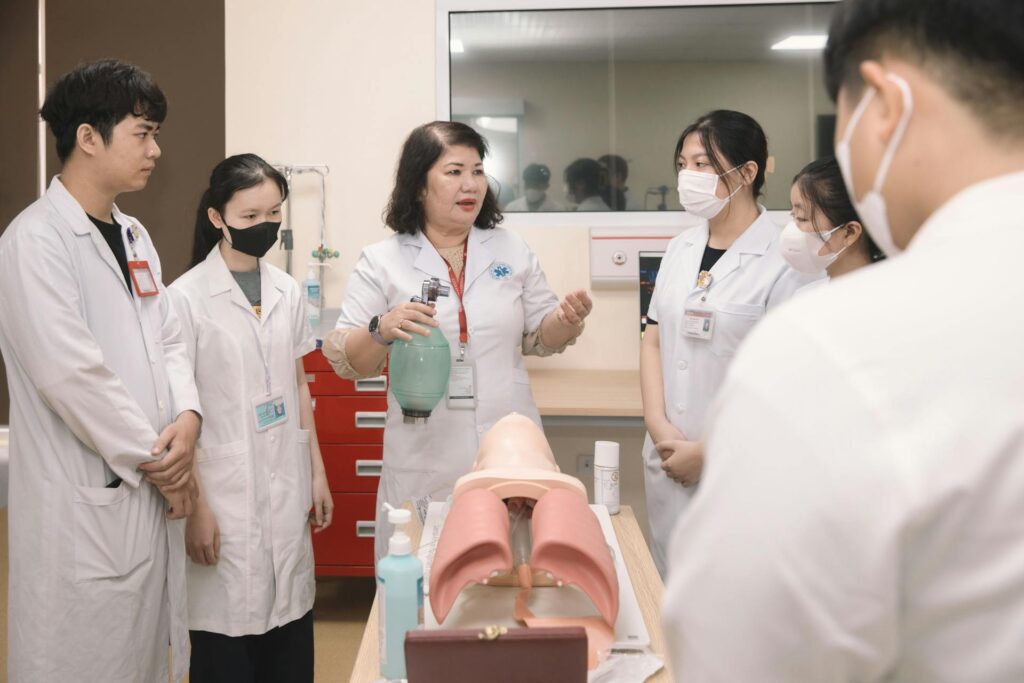
The Critical Role of Nurse Educators
Nurse educators play a vital role in shaping the next generation of healthcare professionals. They bridge the gap between clinical practice and academic knowledge, ensuring that nursing students not only understand theoretical concepts but can also apply them effectively in real-world settings. By fostering critical thinking, communication skills, and ethical decision-making, these educators help produce competent and compassionate nurses who are prepared to meet the challenges of an evolving healthcare environment. Their guidance impacts patient care quality, safety, and overall healthcare outcomes, making their work foundational to the profession.
In addition to hands-on instruction, many aspiring nurse educators pursue advanced degrees to enhance their teaching skills and clinical expertise. Programs such as MSN nurse educator online programs provide flexible pathways for registered nurses to gain specialized knowledge in curriculum development, pedagogy, and leadership while continuing to work in healthcare settings. These programs equip educators to develop innovative learning strategies and mentor students effectively, ensuring a well-prepared nursing workforce for the future.
Integrating Technology into Nursing Education
Technological advancements have fundamentally changed how nurse educators teach and how nurses learn. One of the most significant innovations, high-fidelity simulation, uses advanced manikins to replicate realistic patient scenarios, allowing students to practice procedures and critical thinking in a risk-free environment. Virtual and augmented reality provide immersive training, bridging the gap between theoretical learning and clinical application.
Artificial intelligence is becoming an integral part of curricula, enabling personalized educational experiences that adapt to each student’s strengths and weaknesses. AI-driven tools can analyze performance in real time, facilitating data-driven insights for students and instructors. This results in more competent nurses who are better equipped to handle the increasing complexity of patient care in today’s hospitals.
Addressing the Nurse Educator Shortage
The healthcare sector is experiencing a significant shortage of nurse educators, resulting in bottlenecks in nursing programs across the nation. The American Association of Colleges of Nursing reports that many qualified applicants are annually rejected because of limited faculty and clinical placement opportunities. This shortage restricts the number of new nurses entering the workforce, which impacts patient care and safety. To address this issue, health systems and universities are enhancing their educator workforce by offering incentives, establishing faculty development programs, and developing online or hybrid pathways to serve a larger number of students. Expanding access to faculty training is crucial for increasing healthcare capacity and alleviating shortages.
Emphasizing Leadership and Policy Advocacy
Modern nurse educators increasingly engage with healthcare policy and advocacy, recognizing that nurses are uniquely positioned to shape health reforms at local, state, and national levels. Many graduate and postgraduate nursing programs now include courses and clinical experiences that focus on leadership development, health policy, and systems thinking. These skills enable nurse leaders to build inclusive policies and advocate for improvements in patient care, workplace culture, and healthcare access.
Educational leaders often serve on institutional policy boards, hospital committees, and even legislative bodies, providing the nursing perspective and influencing critical decisions. These activities help reinvigorate the profession and ensure nurses have a voice in essential reforms that affect practice environments and patient outcomes.
Promoting Environmental Sustainability in Healthcare
With climate change and environmental degradation affecting public health, nurse educators also carry the responsibility to teach sustainability. Integrating lessons on environmental stewardship and sustainable practices into nursing curricula prepares students to implement eco-friendly initiatives in healthcare settings. Actions such as reducing medical waste, conserving resources, and championing green healthcare policies have far-reaching health and financial benefits for communities and organizations alike.
Enhancing End-of-Life Care Education
Palliative and end-of-life care are vital focuses in contemporary nurse education. Initiatives such as the End-of-Life Nursing Education Consortium (ELNEC) have significantly enhanced how nurses support patients and their families during terminal illnesses and hospice care. By equipping nurses with specialized training in symptom management, communication, and ethical decision-making, nurse educators ensure the provision of compassionate and appropriate end-of-life care.
Preparing for Future Challenges
The rapidly changing healthcare landscape necessitates that nurse educators be forward-thinking and proactive. It is crucial to anticipate advances in healthcare technology, respond to emerging diseases, and cultivate a culture of continuous professional development among nurses. By fostering resilience and adaptability, nurse educators ensure that the nursing profession can weather future crises and meet diverse patient needs.
Conclusion
Nurse educators play a crucial role in preparing the healthcare workforce of tomorrow. Through innovative teaching, mentorship, policy engagement, and research, they ensure that the nursing profession remains equipped to tackle today’s challenges—and tomorrow’s. By advancing educational standards, emphasizing sustainability and leadership, and leveraging new technologies, nurse educators uphold the promise of high-quality, patient-centered care in an ever-evolving healthcare system.