
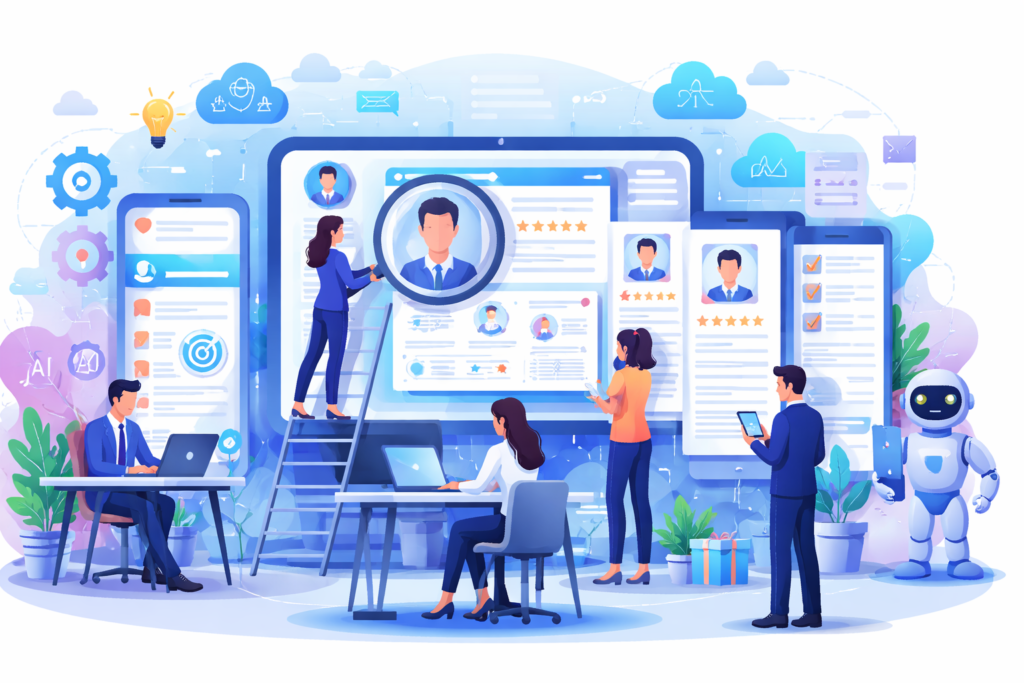
As organizations navigate an increasingly competitive job market, technology has become a central driver in shaping how companies attract, evaluate, and retain top talent. The ways businesses identify potential candidates, engage them, and manage the recruitment process have evolved dramatically, driven by advancements in artificial intelligence, data analytics, and automation. These tools are transforming traditional hiring practices, making processes faster, more efficient, and often more objective.
As the digital transformation of hiring gains momentum, understanding what is talent acquisition entails is essential for leaders, hiring managers, and candidates alike. From applicant tracking systems to AI-driven candidate assessments, modern technology empowers organizations to make informed decisions while providing candidates with a more personalized and streamlined experience. By examining how technology influences recruitment, we can better appreciate the evolving dynamics of talent acquisition in today’s workforce.


AI and Automation in Recruitment
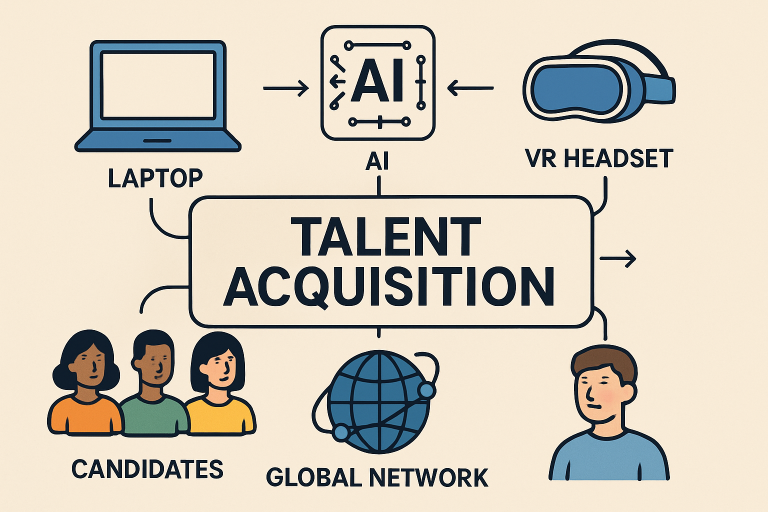
AI and automation are fundamentally transforming how organizations handle recruitment. By leveraging advanced algorithms, businesses can now analyze thousands of resumes in seconds, automatically identifying top candidates based on experience, skills, and growth potential. These technologies aim to eliminate unconscious biases from the process, ensuring fairer outcomes and supporting diversity initiatives. Practical results include a 60% reduction in time-to-hire, a 50% decrease in recruitment costs, and measurable improvements in candidate quality and diversity metrics.
Predictive Analytics for Workforce Planning
Predictive analytics offer powerful insights for organizations hoping to get ahead of shifting workforce demands. By mining historical data and tracking labor market trends, companies can forecast the skills and resources they’ll need, sometimes years into the future. This allows for more proactive workforce planning, helping organizations close potential skill gaps before they disrupt business goals.
Data-driven workforce strategies enable companies to optimize hiring across departments, functions, and even geographies. HR teams equipped with real-time analytics can make more strategic decisions, aligning talent with changing project demands and seasonal fluctuations. Predictive analytics are also invaluable in succession planning and in designing tailored learning and development programs to upskill existing employees.
Virtual and Augmented Reality in Recruitment
As organizations seek to differentiate themselves in a competitive hiring environment, VR and AR are emerging as vital tools for candidate engagement and assessment. Virtual reality enables employers to offer job previews and immersive simulations—giving candidates a realistic view of daily responsibilities, work culture, and physical environments. Augmented reality further enhances onboarding and training with interactive experiences that improve retention and accelerate ramp-up.
Industries like healthcare, engineering, and retail are at the forefront of VR/AR adoption, using the technology to assess technical skills, teamwork, and problem-solving capabilities through realistic simulations. This not only helps identify the best-fit candidates but also boosts new-hire readiness and confidence.
Remote Work and Accessing Global Talent
Remote work is redefining the boundaries of talent acquisition by enabling organizations to hire from a global pool of candidates. Digital collaboration tools, cloud-based systems, and flexible work policies empower businesses to build distributed teams, often with more diverse perspectives and skills than local hiring alone could provide. By removing traditional location barriers, companies can tap into niche expertise, meet diversity and inclusion goals, and adapt quickly to changing market needs.
Implementing robust digital infrastructure, including secure video interviewing and integrated HR platforms, ensures smooth hiring and onboarding regardless of geography. This new approach leads to richer, more resilient teams as organizations unlock new sources of creativity and innovation.
Shifting Focus: Skills Over Degrees
One of the more radical shifts in modern hiring is the growing focus on abilities rather than academic credentials. Assessment tools now allow employers to evaluate technical and soft skills through practical exercises, coding tests, and gamified simulations. This transition supports a more inclusive approach, welcoming candidates from diverse backgrounds and career paths, and ensuring that job fit is determined by real capability rather than pedigree.
Organizations equipped with innovative assessment platforms also drive employee engagement and foster cultures of continuous learning. Micro-credentials and stackable certification programs create flexible pathways to employment, democratizing access and promoting equitable hiring practices.
Promoting Diversity, Equity, and Inclusion Initiatives
Technology-powered recruiting platforms level the playing field for candidates from all walks of life. Automated screening, anonymized applications, and structured interviews reduce the impact of unconscious bias, while ‘blind’ hiring features ensure hiring decisions are based purely on merit. Organizations adopting these digital solutions consistently see improvements in their diversity, equity, and inclusion metrics while gaining access to a wider range of perspectives and ideas.
Challenges and Considerations
With opportunity comes responsibility: organizations must ensure they uphold strict privacy standards and avoid introducing new biases into automated systems. Ongoing evaluation, testing, and oversight are essential to keep recruitment practices ethical and compliant. Companies must also balance technological automation with human judgment, preserving the human connection that is critical to both candidate experience and long-term retention.
Conclusion
Technology has opened exciting new possibilities for modern talent acquisition. By intelligently leveraging digital tools—from AI-driven screening and predictive analytics to immersive VR training and global collaboration—organizations can build higher-performing, more diverse, and future-ready teams. The key to success lies in marrying technological innovation with ethical oversight and human-centered leadership, ensuring sustainable growth in an increasingly digital recruitment landscape.