
Knowing how to get rid of latex condom smell can help you feel more comfortable before and after sexual activity. Latex condoms sometimes have a noticeable rubber-like odor when you open the package, and the smell may linger on your hands, skin, or in the room after use. Although a mild rubber smell is generally normal, an unusual or unpleasant odor should not automatically be dismissed.
The good news is that there are several simple ways to manage condom odor without compromising protection. You can improve ventilation, wash your hands and external genital skin after sex, dispose of used condoms properly, and consider suitable non-latex alternatives if the smell bothers you. This guide explains the most practical options, what to avoid, and when to seek medical advice.
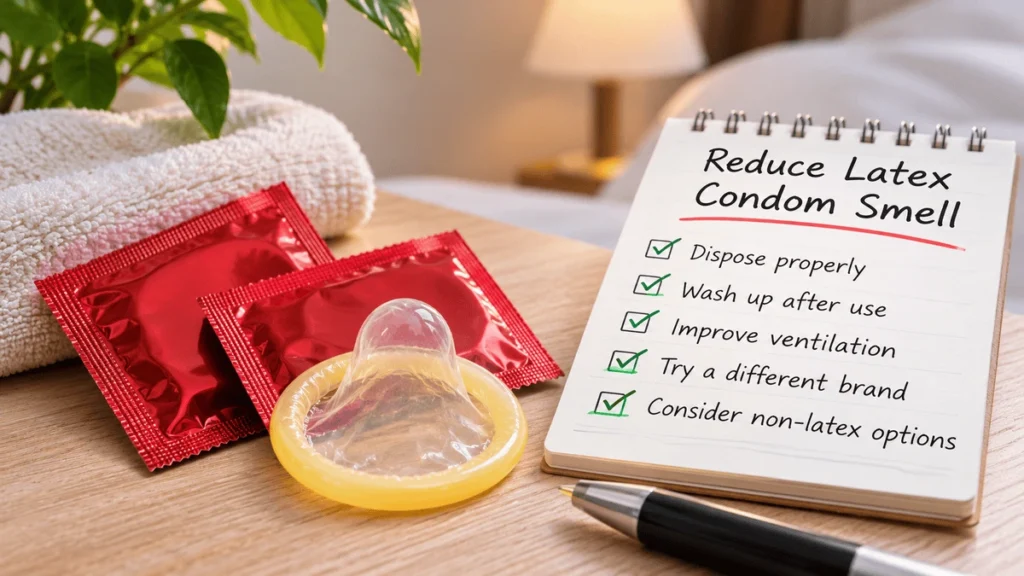
Quick answer: To reduce latex condom smell, dispose of the used condom in a rubbish bin, ventilate the room, and gently wash your hands and external genital skin with mild soap and water. If you dislike the rubber odor, consider trying a different condom brand or a compatible non-latex condom. Never wash or reuse a condom, and never use household fragrances on genital skin.
What Causes Latex Condom Smell?
Latex condoms are made from natural rubber latex and may have a characteristic rubber-like scent. The finished product may also contain lubricants and other manufacturing ingredients that affect its smell. The intensity of the odor varies between products and individuals.
1. Natural Rubber Latex
Natural rubber has a recognizable smell that some people notice immediately after opening a condom wrapper. Some people are more sensitive to this scent than others. A mild rubber odor by itself does not necessarily mean the condom is defective, expired, or unsafe.
2. Lubricants and Manufacturing Ingredients
Condoms may contain factory-applied lubricants and other ingredients that contribute to their overall scent. Different brands and product types can smell different, so trying another reputable product may help if one particular brand has an unpleasant odor.
3. Packaging and Storage Conditions
A sealed wrapper may concentrate the product’s existing odor until it is opened. However, a strong chemical smell, discoloration, unusual stickiness, brittleness, or visible damage should not be ignored. Check the expiration date and packaging, and discard any condom that appears damaged or has been stored improperly.
4. Condom Smell Versus an Unusual Genital Odor
A temporary rubber-like smell immediately after condom use is different from a persistent or unusual genital odor. A strong fishy smell, unusual discharge, itching, burning, pain, or irritation may indicate another issue, such as an infection or sensitivity. Do not assume that every unpleasant odor comes from latex.
How to Get Rid of Latex Condom Smell: 7 Practical Tips
If the smell bothers you, try these simple steps. They focus on reducing odor while keeping condom use safe and comfortable.
1. Dispose of the Used Condom Properly
One of the quickest ways to reduce lingering condom odor is to remove the used condom from the room. Carefully remove it after sex, taking care not to spill any semen. Wrap it in tissue or toilet paper and place it in a rubbish bin.
Do not flush condoms down the toilet because they can block plumbing. Also, never reuse a condom, even if it looks clean or has only been used briefly.
2. Wash Your Hands and External Genital Skin
After removing the condom, wash your hands with soap and water. If lubricant or condom residue remains on your skin, gently wash the external genital area with lukewarm water and a mild, fragrance-free cleanser if needed.
Avoid scrubbing sensitive skin or applying soap inside the vagina, urethra, or anus. Vaginal douching is unnecessary and may cause irritation. Do not wash the condom before use: condoms are designed for single use and should be used according to the package instructions.
3. Improve Ventilation in the Room
If the smell remains in the room after sex, open a window when practical or use an exhaust fan to improve airflow. Fresh air can help disperse a temporary odor without introducing additional fragrances or chemicals.
Air fresheners may mask an odor, but they do not remove its source. If you use one, follow the product instructions and avoid spraying it directly onto people, bedding that contacts sensitive skin, or intimate areas.
4. Try a Different Latex Condom Brand
Not all latex condoms smell the same. If you find one product’s scent unpleasant, consider trying another reputable brand that meets applicable safety standards. Look for an intact package, a valid expiration date, and clear instructions for proper use.
A different product may have a less noticeable smell, although no particular brand can guarantee a completely odor-free experience. Always use the condom according to its instructions and do not use a product that looks damaged or has an unusual appearance or odor.
5. Consider a Suitable Non-Latex Condom
If you dislike the smell of latex, a synthetic condom may be a useful alternative. External condoms are available in materials such as polyurethane and polyisoprene. These products generally do not have the same natural rubber latex odor, although their scent can vary.
Check the product label carefully. Polyurethane and polyisoprene condoms have different material properties, and lubricant compatibility can vary. Water-based and silicone-based lubricants are generally suitable for both. Oil-based lubricants should not be used with latex or polyisoprene condoms because they can weaken the material. Follow the manufacturer’s instructions for your particular product.
6. Choose Lubricants Carefully
The right lubricant can improve comfort and help reduce friction that may contribute to condom breakage. With latex condoms, choose a water-based or silicone-based lubricant labelled as compatible with condoms.
Flavored or scented lubricants may seem appealing if you want to mask a rubber smell, but added fragrances and flavoring ingredients can irritate sensitive skin in some people. They are not necessary for safe condom use. If you choose a flavored product, check that it is intended for the activity in which you plan to use it and follow its instructions.
Never apply perfume, deodorant, essential oils, or household cleaning products to genital skin to cover the smell. These products can cause irritation and do not make condom use safer.
7. Store Condoms Correctly
Store condoms in their original packaging in a cool, dry place away from direct sunlight and excessive heat. Avoid leaving them in a hot car or carrying them in a wallet or pocket for long periods, where heat and friction can damage them.
Proper storage helps preserve condom quality, but it does not guarantee that the natural rubber smell will disappear. Before use, check the expiration date and inspect the wrapper for damage. If the condom is expired, sticky, brittle, or visibly damaged, discard it and use a new one.
Are Non-Latex Condoms Better for Reducing Odor?
Non-latex condoms can be a good option for people who find the smell of rubber unpleasant. They may also be appropriate for people with a confirmed latex allergy, provided they select a product suitable for their needs.
Here is a quick comparison of common external condom materials:
| Condom material | Odor considerations | Important points |
|---|---|---|
| Natural rubber latex | May have a recognizable rubber smell | Use water-based or silicone-based lubricant. |
| Polyurethane | Does not have the same natural rubber latex odor | Check the product instructions for lubricant compatibility and correct use. |
| Polyisoprene | Generally lacks the characteristic natural rubber latex smell | A synthetic alternative, but oil-based lubricants should be avoided. |
No condom material is guaranteed to be completely odorless. The best choice depends on comfort, fit, product availability, allergies, and correct use. Latex and suitable synthetic condoms can help prevent pregnancy and reduce the risk of sexually transmitted infections when used consistently and correctly, although no condom eliminates all risk.
Can Scented or Flavored Condoms Help?
Scented and flavored condoms may make the product’s odor less noticeable to some people. However, they are not essential for reducing condom smell, and fragrances can cause irritation or discomfort in sensitive individuals.
If you prefer a scented product, read the packaging carefully and stop using it if you notice itching, burning, swelling, or irritation. For people who are sensitive to fragrances, an unscented product or a suitable non-latex alternative may be a better choice.
Remember that the primary purpose of a condom is protection, not fragrance. Never add perfume, oils, or unapproved substances to a condom, and do not use products that may damage its material.
When Should You Seek Medical Advice?
A mild rubber smell from a newly opened condom is usually not a medical concern by itself. However, symptoms such as itching, a rash, burning, swelling, or discomfort after condom use deserve attention.
Possible Latex Allergy or Sensitivity
Some people experience irritation or an allergic reaction to natural rubber latex or other ingredients in a condom. Symptoms may include redness, itching, hives, or swelling. If you suspect a latex allergy, stop using the suspected product and seek advice from a healthcare professional about suitable alternatives.
Seek emergency medical care if you experience difficulty breathing, throat or tongue swelling, faintness, or other signs of a severe allergic reaction.
Persistent or Unusual Genital Odor
If an unpleasant genital odor continues after washing or is accompanied by unusual discharge, pain, itching, sores, or burning during urination, arrange a medical assessment. These symptoms may have causes unrelated to the condom itself and may require appropriate testing or treatment.
Advice About Condom Protection
If a condom breaks or slips off during sex, consider seeking prompt advice from a healthcare professional or sexual health clinic about pregnancy prevention and sexually transmitted infection testing. Emergency contraception may be time-sensitive, and some post-exposure treatments must be started promptly.
For reliable information about correct condom use, consult the Centers for Disease Control and Prevention’s condom guidance. In Sri Lanka, the National STD/AIDS Control Programme also provides sexual health information and services.
Frequently Asked Questions About Latex Condom Smell
1. How can I get rid of latex condom smell quickly?
Dispose of the used condom in a rubbish bin, ventilate the room, and gently wash your hands and external genital skin with water and mild soap if needed. These steps help remove residue and disperse lingering odor. Do not use perfumes or harsh cleaning products on intimate skin.
2. Is it normal for latex condoms to smell?
Yes. Latex condoms may have a mild rubber-like smell because of their material and manufacturing ingredients. The smell alone does not necessarily mean the condom is expired or defective. However, discard a condom that is damaged or has unusual changes in appearance or texture.
3. Can I wash a condom before using it to remove the smell?
No. Do not wash a condom before use. Washing is unnecessary and may interfere with its lubricant or introduce substances that are not intended for the product. Use a new condom directly from its intact package and follow the manufacturer’s instructions.
4. Are polyurethane condoms less likely to smell than latex condoms?
Polyurethane condoms do not have the same natural rubber latex odor, so they may be preferable if you dislike the smell of latex. However, individual products can have their own odors, and no product is guaranteed to be completely odorless.
5. Are non-latex condoms suitable for people with latex allergies?
Some non-latex condoms, including suitable polyurethane and polyisoprene products, are alternatives for people with latex allergies. Check the packaging to confirm the material, and consult a healthcare professional if you have experienced an allergic reaction or are unsure which product is appropriate.
6. Can I use scented lubricant to hide condom smell?
You can choose a compatible flavored or scented lubricant if you wish, but it is not necessary. Fragrances may irritate sensitive skin. With latex condoms, use a water-based or silicone-based lubricant and avoid oil-based products that can weaken latex.
7. Does a strong condom smell mean the condom has expired?
Not necessarily. A rubber-like smell can be normal, but smell alone cannot confirm whether a condom is safe to use. Always check the expiration date, inspect the wrapper, and avoid condoms that are sticky, brittle, damaged, or stored in unsuitable conditions.
8. Why does an unpleasant smell remain after sex?
The smell may come from the condom, its lubricant, or other bodily fluids. Removing the used condom, improving ventilation, and gently washing external skin may help. If a persistent or unusual genital odor is accompanied by discharge, itching, pain, or burning, consult a healthcare professional rather than assuming the condom is responsible.
Final Thoughts
Learning how to get rid of latex condom smell does not require complicated remedies. Proper disposal, fresh air, gentle personal hygiene, correct storage, and choosing a condom that suits your preferences can make the experience more comfortable.
If the rubber smell remains unpleasant, consider a suitable non-latex condom or another reputable brand. Prioritize correct use, material compatibility, and protection over fragrance. If the odor is unusual or accompanied by symptoms, seek appropriate medical advice.
Medical information note: This article is for general educational purposes and does not replace individualized medical advice. Consult a qualified healthcare professional for suspected allergies, persistent symptoms, or concerns about condom failure.