

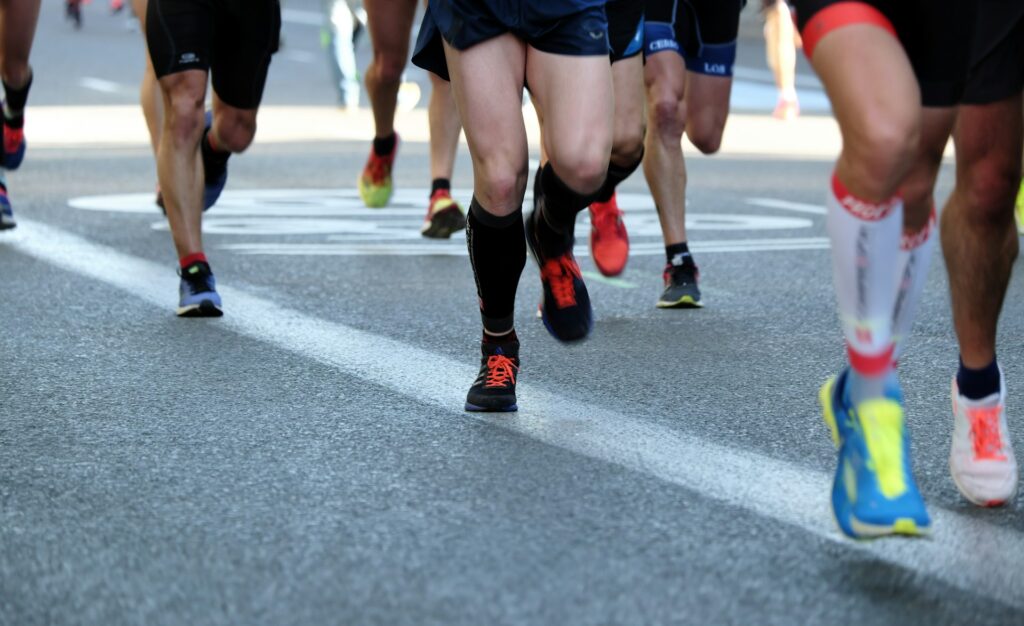
Stepping into running is one of the simplest ways for you to improve your fitness – and one of the easiest to get wrong in the first week. But it’s not for the reasons most people think. Most beginners don’t fail because they lack motivation. They fail because they’re underprepared in the three areas that actually matter.
This isn’t a gear dump. It’s a focused guide to where your money and attention should go before you run a single kilometre.
Shoes first, everything else second
If you feel like slipping on a pair of old trainers for your closet, reconsider. Casual trainers are not designed to handle the repetitive impact that running causes to your joints and connective tissue. Running injuries affect up to 79% of runners at some point, and using the wrong shoes and training too hard are the most common causes of those injuries.
The right shoes depend on your gait – namely the way your foot rolls inwards as it lands, a movement known as pronation. Overpronate and your ankle may be rolling too far inwards with each step, so you’ll need medial support. Underpronate (or supinate) and you aren’t rolling inwards enough, which means your arch and ankle are bearing the brunt of the shock to the foot. You’ll need a neutral cushioned shoe. If you don’t know which you are, a simple gait analysis at a running or sports shop will tell you within 10 minutes.
Midsole cushioning is the other thing beginner runners underestimate. That’s the layer between the inner and outer sole of the shoe, and what’s making sure the force of your land isn’t reverberating up your shin and into your knee. Women’s feet have a different shape to men’s and carry pressure in different points with a usually narrower heel, so it’s not just a case of shrinking and pinking a shoe. Nike Women’s Running Shoes incorporate technology that reflects these differences in how women actually put down and launch off a stride. A good pair can be in the $120 to $180 range, but that extra $60 really could be saving you in physio bills later on.
The case for technical socks
You might think this is a small issue to worry about, but it will bother you a lot when you are already 4 kilometers into your run and you feel a blister starting to form on your heel.
Cotton socks tend to hold the moisture. When your feet start sweating, the wet cotton will bunch up a little, and that creates friction. Over a long enough distance, that friction will become a hot spot, and after that, it will become a blister. The moisture-wicking technical or merino wool socks don’t do that. They keep the moisture away from your skin and maintain their shape even when you are moving. That’s the whole discussion.
They cost from $15 to $25 a pair. Get two pairs.
Apparel: the layering logic and the chafing problem
For outdoor running, dress as if it’s about 10 degrees warmer than the actual temperature. Your body heat climbs fast once you’re moving. Starting out in a heavy jacket means you’re carrying dead weight and overheating within the first kilometre.
The layering principle works like this: a moisture-wicking base layer pulls sweat off your skin, and a light outer layer handles wind or light rain. Modern running tops use fabric technologies that move sweat to the surface where it evaporates quickly. That keeps you from getting a chill when you slow down or stop.
For bottoms, compression shorts or lined running shorts are the better choice over standard gym shorts. Thigh chafing on longer runs is genuinely painful and doesn’t require extraordinary distance to start – sometimes three kilometres is enough on a warm day. Chafe balm applied to high-friction areas is a cheap add-on that’s worth having. Reflective detailing on your kit matters if you run in early mornings or evenings – it’s a safety feature, not a style one.
Tracking your progress without overcomplicating it
You don’t need a $400 GPS watch to start. A free running app on your phone logs your distance, pace, and time without any additional investment. That’s all you really need.
What tracking does is give you visible evidence that you’re improving. A beginner following a structure like Couch to 5K can see their run intervals getting longer and their pace gradually dropping over several weeks. That visual record is one of the most potent psychological reasons for sticking with any new habit. When motivation dips – and it will – the data tells you how far you’ve already come.
If you do want a watch later, that’s a fine upgrade. But it’s not a prerequisite.
Recovery is part of the kit too
Delayed onset muscle soreness after your first few runs is normal. Your legs will be stiff 24 to 48 hours after sessions as your body adapts. A foam roller addresses this directly – rolling out the calves, quads, and IT band takes ten minutes and makes the next run significantly easier.
Don’t skip this step because you feel fine right after a run. The soreness comes later.
The actual starter kit isn’t complicated: proper shoes, technical socks, moisture-wicking apparel suited to your conditions, and a way to track your mileage. Get those four things right and almost every common beginner mistake is already avoided.