

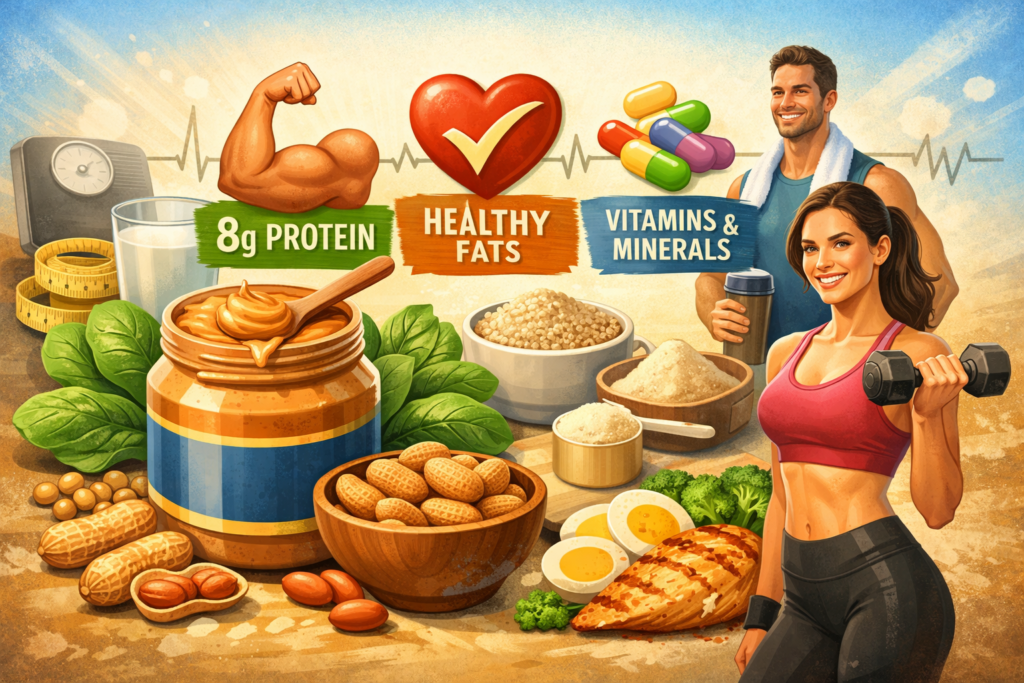
There is a specific kind of comfort found in a jar of peanut butter. It is creamy, salty, nostalgic, and incredibly satisfying. For many of us, it is a pantry staple that feels like a non-negotiable part of life, whether it is swirled into oatmeal, spread on toast, or eaten straight off the spoon during a late-night craving.
However, if you are counting macros or trying to maintain a calorie deficit, that jar can quickly become your biggest adversary. The dilemma is universal: we know peanuts are nutritious, packed with vitamins, and contain protein. Yet, a single serving can account for a significant portion of a daily calorie budget.
This leads to a common misconception in the fitness world. Many people assume that because peanut butter contains “healthy fats,” it automatically qualifies as a “lean protein.” Unfortunately, when you look strictly at the data, the reality of weight loss nutrition tells a different story.
You do not necessarily have to give up the flavor you love to hit your fitness goals. However, to technically meet the criteria for a lean protein and optimize your diet for fat loss, you might need to swap your traditional jar for a powdered alternative.
Key Takeaways
- Traditional peanut butter is nutrient-dense but not “lean”: While it offers health benefits, the high fat content disqualifies it from the FDA’s official definition of lean protein.
- Powdered peanut butter is a viable solution: By removing the oils, manufacturers create a product with approximately 85% less fat while retaining the flavor.
- The calorie savings are massive: Swapping to powdered options can save roughly 145 calories per serving, allowing you to enjoy peanut flavor without breaking your calorie bank.
- Versatility beyond the shaker: Powdered peanut butter can be rehydrated for spreads or used in baking and savory cooking, making it a flexible tool for diet adherence.
The Verdict: Is Regular Peanut Butter a Lean Protein?
So, is peanut butter a lean protein? To answer this question objectively, we have to move past marketing buzzwords and look at the regulatory definitions. The term “lean” isn’t just a vibe; it is a specific nutritional standard regulated by the government.
According to the Code of Federal Regulations, to be labeled “lean,” a food must contain less than 10 grams of total fat, 4.5 grams or less of saturated fat, and less than 95 milligrams of cholesterol per 100 grams. You can review the specifics in Title 21 of the FDA regulations.
Now, let’s look at traditional peanut butter.
A standard serving of peanut butter is two tablespoons (about 32 grams). Per 100 grams, regular peanut butter contains roughly 50 grams of fat. This is five times the limit allowed to technically be considered “lean.” While the fats in peanuts are primarily monounsaturated—the “heart-healthy” kind—they are still fats, and fats are the most calorie-dense macronutrient at 9 calories per gram.
This means that while traditional peanut butter is an excellent food for bulking or maintaining energy during endurance events, it can be a hindrance when you are on a calorie-restricted diet. It simply brings too much energy (calories) along with its protein content. While traditional peanut butter offers healthy fats, it doesn’t quite fit the strict definition of a lean protein due to its high calorie density.
The Solution: What is Powdered Peanut Butter?
If regular peanut butter is off the “lean” table, does that mean you have to banish peanut flavor from your life? Not at all. This is where powdered peanut butter enters the conversation as a legitimate nutritional hack.
Some skeptics view powdered peanut butter (often known by brand names like PB2) as a “fake” or highly processed food, but the manufacturing process is actually quite straightforward. It starts with whole roasted peanuts, just like the traditional spread.
These peanuts are then pressed firmly to extract the majority of their natural oils. Since the oil carries most of the fat and calories, removing it leaves behind a cake of peanut solids. This is then ground into a fine powder. A small amount of sugar or salt is sometimes added for flavor balance, but the core ingredient remains simple: peanuts.
This isn’t a chemical substitute; it is simply peanuts that have gone on a diet. For RZone members and fitness enthusiasts, this product serves as a “slimmed-down option.” It allows you to enjoy the specific nutty taste you crave without the heavy caloric load of the oil.
Nutritional Showdown: Regular vs. Powdered
To truly understand why the powdered version is superior for weight loss, we need to look at the numbers side-by-side. The differences in nutritional profiles are stark and offer irrefutable proof of why the powder is the “lean” winner.
Here is a breakdown of the nutritional differences per 2-tablespoon serving:
| Nutrient | Regular Peanut Butter | Powdered Peanut Butter |
|---|---|---|
| Calories | ~190 | ~45 |
| Total Fat | ~16g | ~1.5g |
| Protein | ~7g | ~5-6g |
| Carbohydrates | ~7g | ~5g |
The Calorie Drop
The most immediate benefit is the caloric density. Two tablespoons of traditional peanut butter provide about 190 calories. In contrast, the same amount of powdered peanut butter generally contains just 45 calories. As noted by nutritional data aggregators like Healthline, this is a massive reduction that allows you to consume the food frequently without sabotaging your daily intake.
Fat Reduction
The pressing process removes the vast majority of the lipids. Powdered peanut butter contains approximately 85% less fat than its traditional counterpart. This transforms the food from a fat source to a protein-dominant source.
Protein Retention
You might worry that removing the fat removes the nutrients, but the protein remains largely intact. Despite losing the oil, the powder retains almost all the protein found in the original nut. You still get a protein punch (roughly 5 to 6 grams per serving compared to 7 grams in regular), but you are no longer paying the “fat tax” to get it.
When you analyze these macros, the conclusion is clear: regular peanut butter is a fat source with some protein, while powdered peanut butter is a true lean protein source.
Why This Swap Matters for Your Waistline
Understanding the nutritional data is one thing, but understanding how it affects your hunger and weight loss is another. This swap utilizes a concept known as “Volume Eating.”
Volume eating is the practice of eating larger amounts of food for fewer calories. It tricks your brain and stomach into feeling satisfied because you aren’t staring at a tiny plate of food. When you eat regular peanut butter, a 190-calorie serving is quite small—one generous spoonful. It is very easy to accidentally consume 400 or 600 calories of peanut butter without feeling full.
With powdered peanut butter, you can mix a larger volume into your oats or shakes for a fraction of the caloric cost. Furthermore, protein plays a vital role in satiety. It signals the release of hormones that reduce appetite.
This swap also helps you avoid the “Health Halo” trap. We often overeat foods like nuts and avocados because we label them as “healthy.” While they are good for you, their calorie density can easily lead to weight gain if portions aren’t strictly monitored. Powdered peanut butter gives you a much larger margin for error.
Beyond the Shake: How to Use Powdered Peanut Butter
One common criticism of powdered peanut butter is that it isn’t exactly the same as the creamy jarred stuff. And that is true—it’s a powder. However, its versatility in the kitchen is where it truly shines. It shouldn’t just be relegated to protein shakes.
Rehydration for Spreads
If you miss the ritual of spreading peanut butter on toast or apple slices, you can easily rehydrate the powder. simply mix two tablespoons of powder with one tablespoon of water (adjusting for desired thickness). The result is a creamy spread that mimics the texture of traditional peanut butter remarkably well.
Baking and Cooking
Powdered peanut butter is an excellent flour substitute or additive in baking. You can stir it into pancake batter to add protein and flavor without making the pancakes heavy or oily. It also mixes seamlessly into Greek yogurt or oatmeal, thickening the texture and adding a rich, nutty flavor profile.
Savory Applications
Peanuts are a staple in many Asian cuisines, and the powder works beautifully here. You can whisk it with soy sauce, garlic, ginger, and a splash of lime juice to create a lean Pad Thai sauce or a dipping sauce for spring rolls. This allows you to enjoy savory, rich dishes that would normally be laden with oil, aligning perfectly with a lean, plant-based diet.
Conclusion
The debate between regular and powdered peanut butter ultimately comes down to your specific goals. If you are hiking a mountain or trying to gain weight, the calorie density of traditional peanut butter is your friend. But for the majority of people trying to lean out and manage a calorie deficit, the traditional jar presents a difficult challenge.
While regular peanut butter is a healthy food, it does not meet the definition of a lean protein. Powdered peanut butter, on the other hand, fits the criteria perfectly. It offers high protein, low fat, and significant versatility.
If you have been struggling to fit your favorite nutty flavor into your diet plan, you’re encouraged to experiment with this switch. You may find that you don’t miss the oil at all—and you certainly won’t miss the extra calories. Achieving a balanced diet doesn’t mean giving up the flavors you love; it means finding smarter, leaner ways to enjoy them.