

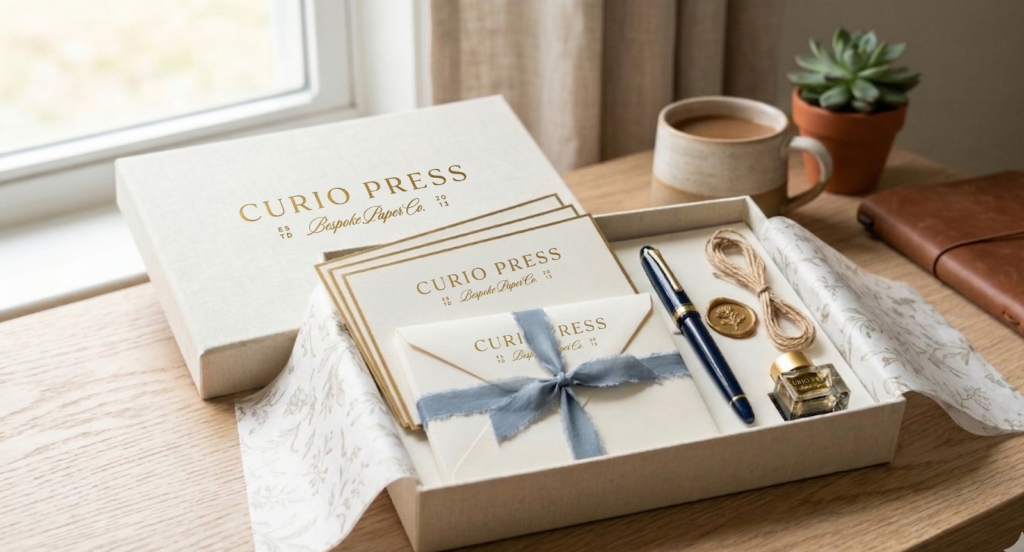
Few gifts feel as intentional as a box of stationery that’s been customized for a specific person. There’s something about seeing your own name, initials, or a favorite color scheme on a set of notecards or letterheads that makes you feel genuinely seen. It’s a gift that says, “I thought about you, specifically.” And unlike a candle or a generic mug, personalized stationery actually gets used: for thank-you notes, journaling, desk organization, or just the quiet pleasure of putting pen to paper. If you’ve been considering putting together a custom stationery gift box for someone you care about, or even for yourself, this guide walks through everything from what to include and how to design it, to where to find the best options and what separates a forgettable gift from one that gets a genuine reaction. I’ve watched friends receive these kinds of gifts, and the response is almost always the same: a pause, a closer look, and then a smile that says this one was different.
Why Choose a Personalized Stationery Gift Box
A personalized stationery gift box stands out for combining practicality with sentimentality. People keep stationery. They use it at their desks, tuck it into drawers, and reach for it when they want to write something meaningful. That makes it a gift with staying power, not something that ends up in a donation pile by February.
What Makes a Gift Box Feel Personal
The difference between a generic gift and a personal one often comes down to small details. A monogram on a notepad, a favorite shade of sage green on the envelope linings, or a handwritten message tucked inside the box: these are the things that transform a nice gift into a memorable one. Personalization signals effort. It tells the recipient you didn’t just grab something off a shelf; you made deliberate choices with them in mind. Even something as simple as selecting a font that matches someone’s aesthetic (modern sans-serif for a minimalist friend, classic serif for a traditionalist) shows a level of care that mass-produced gifts can’t replicate.
Benefits of Personalized Stationery
Custom stationery serves a dual purpose: it’s beautiful, and it’s functional. A set of monogrammed notecards gives someone a reason to write more handwritten notes, which studies from the University of Texas have linked to stronger social bonds and increased feelings of gratitude. Beyond the emotional benefits, personalized stationery also makes a professional impression. Real estate agents, therapists, small business owners, and freelancers all benefit from having branded or initialed stationery on hand. It’s the kind of gift that elevates someone’s daily routine without feeling extravagant.
When to Gift a Stationery Gift Box
Stationery gift boxes work for nearly every occasion, but they truly shine for milestones. Think graduations, new jobs, weddings, housewarmings, and birthdays with a zero at the end. They also make excellent teacher gifts, bridesmaid thank-yous, and corporate appreciation presents. The versatility is part of the appeal: you can skew playful for a teenager heading to college or refined for a colleague’s retirement. Holidays like Christmas and Mother’s Day are obvious fits, but a “just because” stationery box might be the most impactful of all.
What Is Inside a Stationery Gift Box Set
The contents of a stationery gift box can vary widely depending on the price point and the occasion, but most sets share a core group of items that balance beauty with usefulness.
Essential Items in a Gift Box Stationery Set
A well-assembled gift box stationery set typically includes a few foundational pieces:
- A set of flat or folded notecards (usually 10 to 20)
- Matching envelopes, sometimes lined
- A notepad or writing pad for everyday use
- A quality pen, often a rollerball or felt-tip
- Stickers, wax seals, or decorative tape as finishing touches
Some sets also include a small journal, address labels, or a stamp. The key is that every item should feel cohesive, not like a random assortment tossed into a box. The best sets have a clear design thread running through each piece.
Personalized Notecards and Accessories
Notecards are the centerpiece of most personalized stationery boxes, and for good reason. They’re the item most likely to be used and appreciated. Customization options typically include the recipient’s name, initials, or a short phrase (“From the desk of Sarah,” for instance) printed or embossed on the front. Beyond notecards, accessories like bookmarks, paperclips in metallic finishes, or a custom rubber stamp add personality. A notepad with the recipient’s name at the top is another standout inclusion: it turns a mundane office supply into something that feels special every time it’s used.
Packaging and Presentation Details
The box itself matters more than people realize. A sturdy, well-designed box with a magnetic closure or ribbon tie creates an experience before the recipient even sees what’s inside. Tissue paper, crinkle fill, or a printed sleeve adds layers of anticipation. Some brands include a printed card explaining the contents or the story behind the design. If you’re assembling a box yourself, consider using a linen or matte-finish box in a neutral color, and arrange items so the most visually striking piece is visible first when the lid is lifted.
Types of Personalized Stationery Gift Boxes
Not all stationery boxes are created equal. The style you choose should reflect the recipient’s taste and the occasion.
Minimalist vs Decorative Gift Box Styles
Minimalist boxes lean on clean lines, muted colors, and restrained typography. Think white cards with a single initial in black ink, paired with kraft paper envelopes. These work well for professionals, men, and anyone with a modern aesthetic. Decorative boxes, on the other hand, embrace color, pattern, and texture: floral borders, watercolor illustrations, gold foil accents, and bright envelope linings. Neither style is inherently better. The right choice depends entirely on who’s receiving it. A good rule of thumb: if you’d describe the person’s home as “curated,” go minimalist. If their space is full of color and personality, go for decorative elements.
Custom Stationery Options for Different Occasions
A wedding stationery box might include thank-you cards with the couple’s new shared monogram, a guest book, and a calligraphy pen. A graduation box could feature personalized notecards with the graduate’s new title (“Dr. Martinez”) and a journal for their next chapter. For corporate gifts, think embossed company logos on premium card stock with matching envelopes. Holiday boxes can be playful: festive patterns, metallic inks, and seasonal motifs. The occasion should drive both the design and the contents, so start by asking what the recipient will actually use the stationery for.
Premium vs Everyday Stationery Gift Box Sets
Premium sets use heavier paper stock (typically 110 lb or higher), letterpress or foil stamping, and high-end packaging. Expect to pay $50 to $150 or more. Everyday sets use digital printing on lighter stock, simpler packaging, and more affordable materials, usually priced between $20 and $50. Both can be personalized effectively. The difference is in the tactile experience: premium stationery has a weight and texture you can feel immediately. If the gift is for a milestone or someone who truly appreciates paper goods, the premium route is worth it. For casual gifting or younger recipients, everyday sets deliver plenty of charm without the price tag.
How to Design a Personalized Stationery Gift Box
Designing a custom stationery box is where the real fun starts. Even if you’re ordering from a brand rather than making it from scratch, you’ll likely have several design decisions to make.
Adding Names, Initials or Messages
The most common personalization is a name or monogram. For a classic look, a three-letter monogram with the last name initial larger in the center works beautifully on notecards and envelopes. Single initials feel modern and understated. Full names work best on notepads and letterheads. Some brands also allow short custom messages like “With love from Emily” or “Notes & Nonsense,” which add a playful, personal touch. If you’re gifting to a couple, consider using both first names or a shared surname. Keep the text short: stationery isn’t the place for long quotes.
Choosing Colors, Fonts and Layouts
Color choice sets the entire tone. Navy and gold reads classic and professional. Blush and sage feels soft and feminine. Black and white is timeless. Choose one or two accent colors and carry them through the notecards, envelopes, and packaging. For fonts, serif typefaces (like Garamond or Didot) convey elegance, while sans-serif options (like Futura or Helvetica) feel clean and contemporary. Script fonts work for formal occasions but can be hard to read at small sizes, so use them sparingly. Layout-wise, centered text is traditional, while left-aligned or asymmetrical placements feel more modern.
Creating a Cohesive Gift Box Look
Cohesion is what separates a thoughtful gift box from a random collection of pretty things. Pick a color palette and stick to it across every item. If the notecards have a botanical motif, echo that theme in the envelope liner or the notepad border. The pen should complement the color scheme, not clash with it. Even the tissue paper or ribbon should feel intentional. One trick that works well: choose a single design element (a monogram style, a specific illustration, a border pattern) and repeat it in subtle variations across different items. This creates visual unity without monotony.
How to Choose the Right Stationery Gift Box
Picking the right box means thinking beyond aesthetics. Quality, materials, and recipient fit all matter.
What Makes a High Quality Gift Box Stationery Set
A high-quality set reveals itself through details. The paper should feel substantial between your fingers, not flimsy or thin. Printing should be crisp with no bleeding or smudging. Envelopes should fit the cards perfectly, not loosely or too tightly. The box itself should feel solid, with clean edges and a satisfying closure. Look for brands that describe their paper weight (anything above 80 lb text weight is a good sign for cards) and their printing method. Letterpress and foil stamping indicate a higher-end product than standard digital printing.
Paper Quality and Print Finishes
Paper weight is measured in pounds or GSM (grams per square meter). For notecards, 100- to 130-lb cover stock feels premium. For notepads, 70 to 80 lb text weight works well for everyday writing. Cotton paper (like Crane’s 100% cotton stock) has a soft, luxurious feel that wood-pulp paper can’t match. Print finishes add another dimension: matte finishes feel understated and modern, while glossy or satin finishes have more visual pop. Embossing creates a raised texture you can feel, and debossing presses the design into the paper. Foil stamping adds metallic shine. Each finish changes the character of the stationery, so consider what the recipient would gravitate toward.
Matching the Gift Box to the Recipient
This is where most people get tripped up: they choose what they like instead of what the recipient would love. A 22-year-old starting her first job has different stationery needs than a 60-year-old retiree who writes letters weekly. Think about the recipient’s daily life. Do they work from home? A notepad and professional notecards make sense. Are they a prolific thank-you-note writer? Prioritize a large set of personalized cards. Do they love color and whimsy? Skip the minimalist route. The best gift box feels like it was designed specifically for one person, because it was.
Where to Buy Personalized Stationery Gift Boxes
The market for custom stationery has expanded significantly in the last decade, with options ranging from small Etsy shops to established luxury brands.
Finding Custom Stationery Gift Boxes Online
Online shopping gives you the widest selection. Etsy is excellent for one-of-a-kind, handmade options from independent designers, often at reasonable prices ($25 to $75 for a full set). Brands like Rifle Paper Co., Sugar Paper, and Crane & Co. offer curated gift box stationery sets on their own websites, typically priced between $40 and $150. Amazon carries budget-friendly options, though quality varies widely. For truly premium gifts, look at Smythson, Mrs. John L. Strong, or Terrapin Stationers, where prices can run $100 to $500, but the craftsmanship is exceptional.
What to Check Before Buying
Before placing an order, verify a few things. Check the paper weight and material (cotton vs. wood pulp). Read reviews specifically about print quality and accuracy of personalization: misspelled names are more common than you’d think. Confirm turnaround times, especially for custom orders, which can take 2 to 4 weeks. Look at the return policy, since personalized items are often non-returnable. If the brand offers samples, order one first. A $5 sample card can save you from a $100 disappointment. Also check whether envelopes are included or sold separately, as some brands charge extra.
Choosing a Trusted Stationery Brand
Reputation matters in stationery. Brands that have been around for decades (Crane has been operating since 1801) tend to have consistent quality. Newer brands can be excellent too, but look for detailed product photos, transparent material descriptions, and responsive customer service. Social media is a useful research tool here: search the brand name on Instagram or Pinterest to see real customer photos, not just styled product shots. If a brand won’t show you close-ups of their printing or paper texture, that’s a red flag.
Final Thoughts on Stationery Gift Boxes
A personalized stationery gift box is one of those rare presents that’s both beautiful and genuinely useful. It doesn’t expire, it doesn’t need batteries, and it won’t collect dust on a shelf.
Are Personalized Stationery Gift Boxes Worth It
Yes, unequivocally. The cost of a personalized stationery set is comparable to other popular gifts (candles, wine, flowers), but the longevity far exceeds them. A good set of notecards lasts months or even years. The emotional impact of receiving something made specifically for you is hard to overstate. For $30 to $100, you’re giving someone a gift they’ll reach for again and again.
Who Should Buy a Stationery Gift Box
Anyone looking for a thoughtful, personal gift that works across ages and occasions. Parents, partners, friends, coworkers, and clients all appreciate well-made stationery. If you’re the kind of person who agonizes over finding the “right” gift, a custom stationery box solves that problem elegantly.
Choosing the Best Gift Box for Any Occasion
Start with the recipient. Think about their style, their daily habits, and the occasion. Then choose a quality brand, pick a design that reflects their personality, and let the personalization do the rest. Whether you’re spending $25 on Etsy or $200 at a luxury stationer, the thought behind the gift is what makes it land. A well-chosen stationery gift box isn’t just paper and ink: it’s a small, tangible reminder that someone took the time to get it right.