

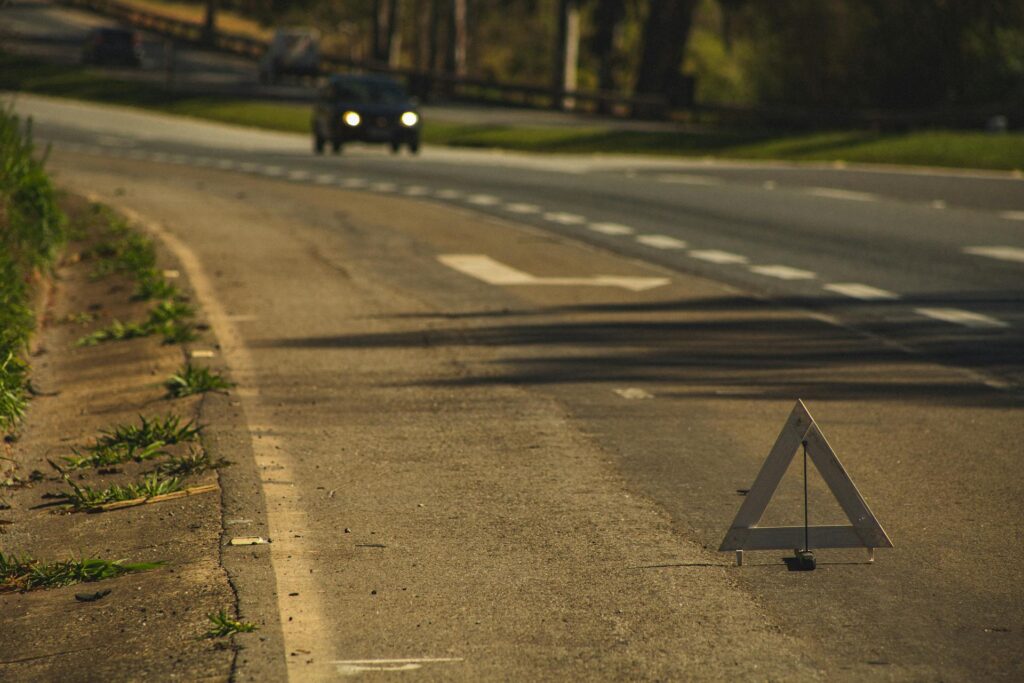
The majority of teenage driving education programs are based on the assumption that the car is in good working condition. Whether it’s parallel parking, changing lanes, or merging onto a highway, the premise is that the car is operational. The lesson plans fall short when the car isn’t functioning properly, and this gap often leads to negative outcomes.
What “Surviving a Failure” Actually Means
Learning to drive a car is simple. What’s missing from our lessons is the education of how to react when driving is no longer an option. Whether that’s a catastrophic tire blowout, the engine cutting out, or overheating, what the driver does in the first 30 seconds makes all the difference in the world.
Unfortunately, panic is a new driver’s immediate default setting, and as we know that leads to all the wrong shortcuts: hammering the brakes, overcompensation, stopping in a live traffic lane, and so on. Driver’s Ed needs to explicitly confront “so you need to steer through the stall,” getting that vehicle to a flat, open area as far from active lanes as possible, and not stopping until you get there. That instinct doesn’t develop on its own. It has to be practiced and explained before the moment arrives.
The “Stay In The Car” Rule Deserves Its Own Lesson
When a car is stopped on the shoulder, most people – and teens are especially likely to do this – feel like exiting the vehicle is the next step. They want to get closer to the reason the vehicle failed, or possibly to a place where they can wave down help.
That instinct is deadly. What feels like taking control of the situation is actually stepping into one of the most dangerous positions on the road. Vehicles on highways travel at speeds where reaction time is measured in fractions of a second, and a human body offers no resistance whatsoever to that kind of force. There’s real protection in the steel frame of a car. There’s absolutely none of that standing on the shoulder, near a lane of traffic.
The “stay in the car” rule needs to be spelled out, with an exception: if there’s fire, or the vehicle is in water and flooding, then get out and get far away from the road immediately. Otherwise, door locked, seatbelt on, hazards flashing.
Blind spots make this exponentially worse. A tired driver, or a driver who’s looking away, doesn’t see a person near a shoulder vehicle until it’s too late. Distracted driving plays a major role in secondary accidents involving disabled vehicles, and teens have no means of knowing if the fast-approaching driver is watching them.
Nighttime Breakdowns Are a Separate Problem
Daylight breakdowns are manageable. A car on the shoulder with hazard lights running is visible from a reasonable distance. After dark, the margin for error shrinks dramatically.
Visibility gear – reflective vests, LED flares, warning triangles – closes some of that gap, but only if a teen knows they need it and has it in the car. These items should be part of every emergency kit alongside jump cables, a portable charger, and basic tools. An emergency kit that only contains jumper cables isn’t a safety kit. It’s an optimist’s kit.
The digital component matters too. A teen with a dead phone can’t call for help. A “Digital Safety Protocol” – sharing GPS location with a parent before the car even stops, keeping battery reserved for emergency services – is a specific, teachable habit that doesn’t require any new technology.
For handling vehicle failure after sunset, there are detailed, practical nighttime car breakdown safety tips that cover the sequence of decisions from the moment the car stops to the moment help arrives.
Teaching Hazard Recognition Before It’s Urgent
A simple but effective exercise is a “hazard identification walk-around” which the instructor can do before the student ever gets behind the wheel.
Most driving instruction is reactive by nature — we teach students to respond to what’s already happening in front of them. Checking mirrors, signaling, yielding. The moments that genuinely catch new drivers off guard are the ones nobody walked them through in advance, and that’s a gap that’s easy to overlook until something goes wrong. Teaching a 16-year-old ‘factory new’ driver where and how to pull off the road safely after they’ve already got a flat tire or a passenger having a seizure isn’t a lot different.
Roadside Assistance Isn’t Automatic Knowledge
It’s important for teenagers to be aware of the specific roadside assistance services that their family uses and how to get in touch with them. They should also be aware that towing companies are an appropriate first contact, and not a last resort. They should also understand the “Move Over” law, which requires approaching vehicles to move over a lane if possible when passing a stopped vehicle. If they know that law, they get why it’s so important to stay as far from the live lanes as possible.
None of this is overly complex or difficult. It’s all just life-skill stuff that happens to sit in a blind spot of most GDL frameworks.
Driver’s ed teaches kids to pass the test. What it doesn’t do is teach them what to do when the car they just passed the test in grinds to a halt. Those are two different lessons, and it’s time we started treating them as such.