
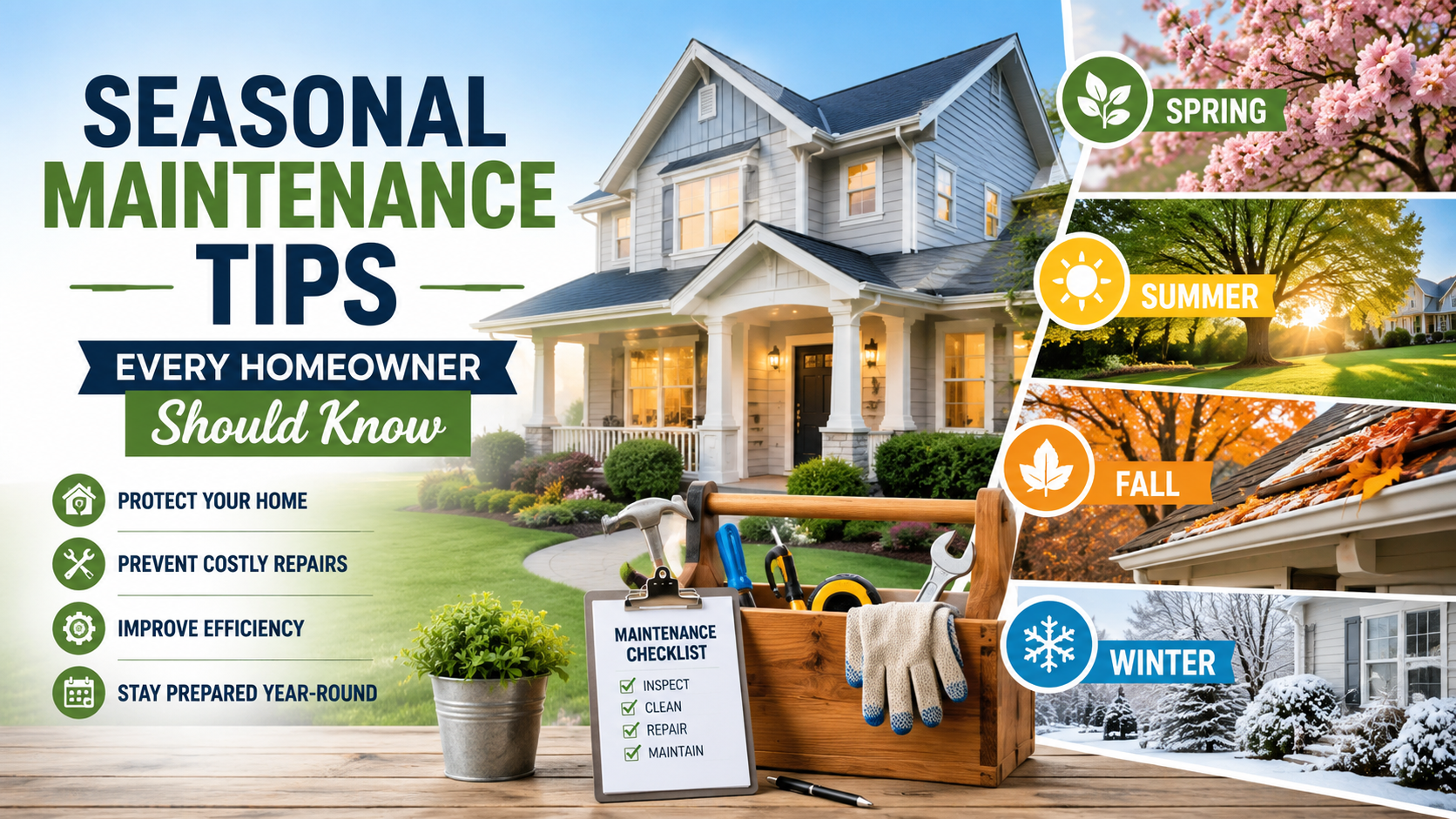

A home requires consistent care to remain safe, efficient, and visually appealing throughout the year. Seasonal maintenance helps homeowners identify small problems before they turn into expensive repairs. Roof leaks, blocked gutters, poor ventilation, and damaged seals often develop slowly, but they can affect the entire structure if ignored. By following a routine maintenance schedule, homeowners can protect their investment and improve everyday comfort.
Each season creates different challenges for a property. Heavy rain can strain drainage systems, while extreme temperatures increase pressure on heating and cooling equipment. Regular inspections also help homeowners maintain better energy efficiency and healthier indoor air quality. Many people focus only on cleaning and cosmetic improvements, yet weather protection plays an equally important role in preserving long-term structural stability and reducing future repair costs.
Maintaining Window and Door Integrity for Comfort and Efficiency
Windows and doors directly affect indoor comfort, energy efficiency, and moisture control. Over time, seals can weaken, and weatherstripping may crack or separate from the frame. These small issues allow drafts and humidity to enter the home, increasing strain on heating and cooling systems.
Seasonal inspections help homeowners identify damage early and maintain better temperature control indoors. In regions that experience strong storms, fluctuating temperatures, and heavy rainfall, professional support becomes especially valuable for preventing long-term damage. Partnering with a company that offers storm window & door services can help homeowners strengthen vulnerable entry points, improve insulation performance, and reduce the risk of moisture intrusion during severe weather conditions.
Protecting Your Home’s Exterior Envelope
Your home’s exterior acts as the first barrier against moisture, wind, and fluctuating temperatures. Seasonal inspections help identify loose shingles, damaged siding, cracked flashing, and clogged gutters before they cause serious structural problems. Water intrusion often begins with minor exterior damage that homeowners overlook during routine cleaning. Checking these areas at the start of each season can prevent mold growth, insulation damage, and costly roof repairs later in the year.
Routine exterior maintenance also helps preserve the long term durability and appearance of the property. Cleaning gutters, repairing damaged siding, and sealing exposed areas can reduce the risk of leaks and structural deterioration during harsh weather conditions. Homeowners who stay consistent with seasonal inspections often experience fewer emergency repairs and better protection against moisture related damage. A well maintained exterior also improves energy efficiency by helping the home retain stable indoor temperatures throughout the year.
Preparing HVAC Systems for Changing Temperatures
Heating and cooling systems work harder during peak summer and winter months, which makes seasonal maintenance essential for reliable performance. Dirty filters, blocked vents, and worn components can reduce airflow and force the system to consume more energy. Homeowners should inspect air filters regularly and replace them as needed to maintain efficient circulation throughout the house. Clean systems also contribute to better indoor air quality.
Professional HVAC inspections provide another layer of protection before extreme weather arrives. Technicians can check refrigerant levels, inspect electrical connections, and ensure thermostats operate correctly. Small mechanical issues often become larger and more expensive when ignored for long periods. Preventive servicing helps homeowners avoid sudden breakdowns during heat waves or freezing temperatures. A properly maintained HVAC system also supports lower monthly utility costs and more consistent indoor comfort.
Managing Landscaping and Drainage to Protect the Foundation
Proper drainage plays a major role in protecting a home’s foundation from long-term structural damage. Water that collects near the base of a house can weaken concrete, create basement leaks, and increase the risk of mold growth. Homeowners should inspect gutters and downspouts regularly to ensure water flows away from the property. Seasonal storms and snowmelt often reveal drainage issues that remain hidden during dry weather.
Landscaping also affects how water moves around the home. Overgrown trees can damage roofing materials, while compacted soil may prevent proper drainage. Trimming branches, clearing debris, and maintaining healthy grading help reduce moisture buildup around the structure. These preventative measures support foundation stability and minimize the chance of costly repairs caused by erosion or standing water.
Improving Indoor Safety and Air Quality
Seasonal maintenance should include routine indoor safety inspections to keep the household protected throughout the year. Smoke detectors and carbon monoxide alarms require regular testing to ensure they function properly during emergencies. Homeowners should also inspect fire extinguishers and replace batteries when necessary. These simple tasks improve safety and provide greater confidence during severe weather and colder months when heating systems operate more frequently.
Indoor air quality deserves equal attention because poor ventilation can affect comfort and health. Bathroom exhaust fans, attic vents, and dryer vents should remain clear to reduce humidity and improve airflow. Dust buildup and clogged filters can circulate allergens throughout the home and place extra strain on the house systems. Regular cleaning and filter replacement support cleaner indoor air and more efficient system performance.
Seasonal Plumbing and Water System Maintenance
Seasonal temperature shifts can place significant stress on plumbing systems, especially during freezing winter conditions. Exposed pipes in basements, garages, and crawlspaces require insulation to reduce the risk of bursting. Homeowners should also inspect faucets, hoses, and visible pipes for small leaks that may worsen over time. Addressing these issues early helps prevent water damage and costly emergency plumbing repairs.
Water heaters and sump pumps also require routine seasonal maintenance to operate efficiently. Flushing the water heater removes sediment buildup that can reduce performance and increase energy use. Sump pumps should be tested before heavy rain seasons to ensure they function properly during storms. Consistent plumbing maintenance improves reliability and helps homeowners avoid unexpected disruptions throughout the year.
Building a Stronger and More Efficient Home
Seasonal home maintenance helps homeowners protect every major system inside and outside the property. Regular inspections of roofing, HVAC equipment, plumbing, insulation, drainage, and ventilation reduce the risk of sudden repairs and long-term structural damage. These tasks also improve comfort, energy efficiency, and indoor safety throughout the year.
A proactive maintenance schedule supports higher property value and helps homeowners make informed decisions about repairs and upgrades. Small seasonal improvements often prevent larger expenses in the future. By staying consistent with maintenance, homeowners can create a safer, more efficient, and more reliable living environment for years to come.