


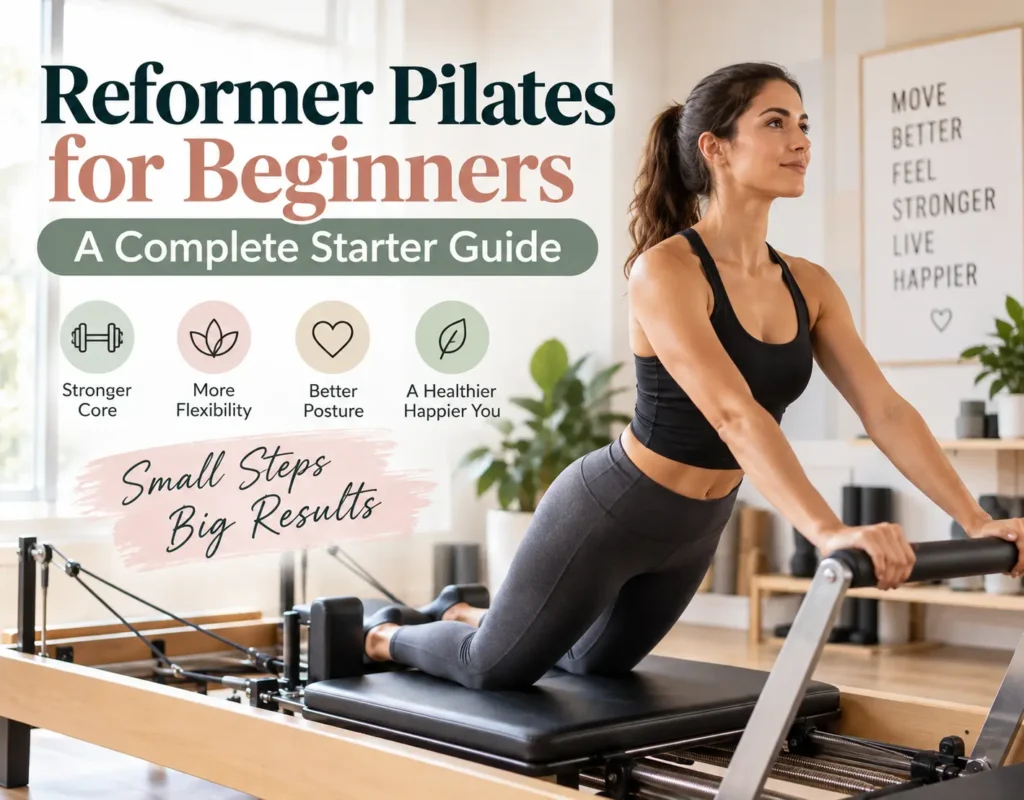

Starting a new fitness routine can feel exciting, but choosing the right type of exercise can sometimes be difficult. If you’re looking for a workout that combines strength, flexibility, balance, and controlled movement, Reformer Pilates for beginners can be a great place to start.
Unlike traditional gym workouts that often focus on lifting weights or high-intensity cardio, Reformer Pilates uses a specialised machine to create resistance while supporting controlled and precise movements. It can be adapted to different fitness levels, which makes it appealing to people who are completely new to Pilates.
In this beginner-friendly guide, we’ll explain what Reformer Pilates is, explore its potential benefits, and share practical tips to help you begin your fitness journey with confidence.
What Is Reformer Pilates?
Reformer Pilates is a form of Pilates performed using a specialised piece of equipment known as a Pilates reformer. The machine typically includes a sliding carriage, adjustable springs, straps, and bars that allow you to perform a wide variety of controlled exercises.
The reformer’s springs provide resistance while also offering support during certain movements. This allows you to work specific muscle groups while concentrating on alignment, breathing, stability, and controlled movement.
One of the reasons Reformer Pilates for beginners can be approachable is that exercises can be modified according to your current ability. You don’t necessarily need to be flexible or physically fit before attending your first class.
Potential Benefits of Reformer Pilates
Regular Reformer Pilates sessions can support several aspects of physical fitness. Your results will depend on factors such as your starting fitness level, consistency, exercise technique, and overall lifestyle.
1. Improved Core Strength
Core control is an important part of Pilates. Many reformer exercises require you to stabilise your torso while moving your arms or legs. Over time, consistent practice can help develop strength and control through the muscles around your abdomen, pelvis, and trunk.
A stronger and more stable core can also contribute to better movement mechanics and posture. Maintaining good posture is important in everyday activities as well as exercise. You can learn more about better posture and healthy posture habits through MedlinePlus.
2. Greater Flexibility and Mobility
Reformer Pilates incorporates controlled movements through different ranges of motion. With regular practice, these movements may help you become more comfortable with stretching and moving your body.
Improving mobility doesn’t mean forcing your body into difficult positions. Instead, Pilates encourages gradual progress while maintaining control and proper alignment.
3. A Low-Impact Workout
Reformer Pilates is generally considered a low-impact form of exercise because it doesn’t rely on repetitive jumping or heavy impact on the joints. This can make it an appealing option for people who prefer controlled movements rather than high-impact workouts.
However, low-impact doesn’t necessarily mean easy. A well-designed reformer session can still challenge your muscles and require considerable concentration and control.
4. Better Body Awareness
One of the unique aspects of Pilates is its focus on paying attention to how your body moves. During a reformer session, you’ll often be asked to concentrate on alignment, breathing, muscle engagement, and controlled movement.
This focus can help beginners become more aware of their posture and movement patterns, both during exercise and in everyday activities.
5. Increased Muscle Strength and Tone
The reformer uses spring resistance to make exercises more or less challenging. Depending on the exercise, you may work your legs, arms, shoulders, back, abdominal muscles, and other supporting muscles.
With consistent training, you may notice improvements in muscular strength, control, and definition. Your results will vary depending on your overall exercise routine and nutrition.
How to Start Reformer Pilates as a Beginner
If you’ve never used a reformer before, there’s no need to feel intimidated. A good beginner class should introduce you to the equipment and basic movements before progressing to more challenging exercises.
Find a Qualified Instructor
Your instructor can make a significant difference when you’re learning Reformer Pilates. Look for an instructor with appropriate Pilates training and experience working with beginners.
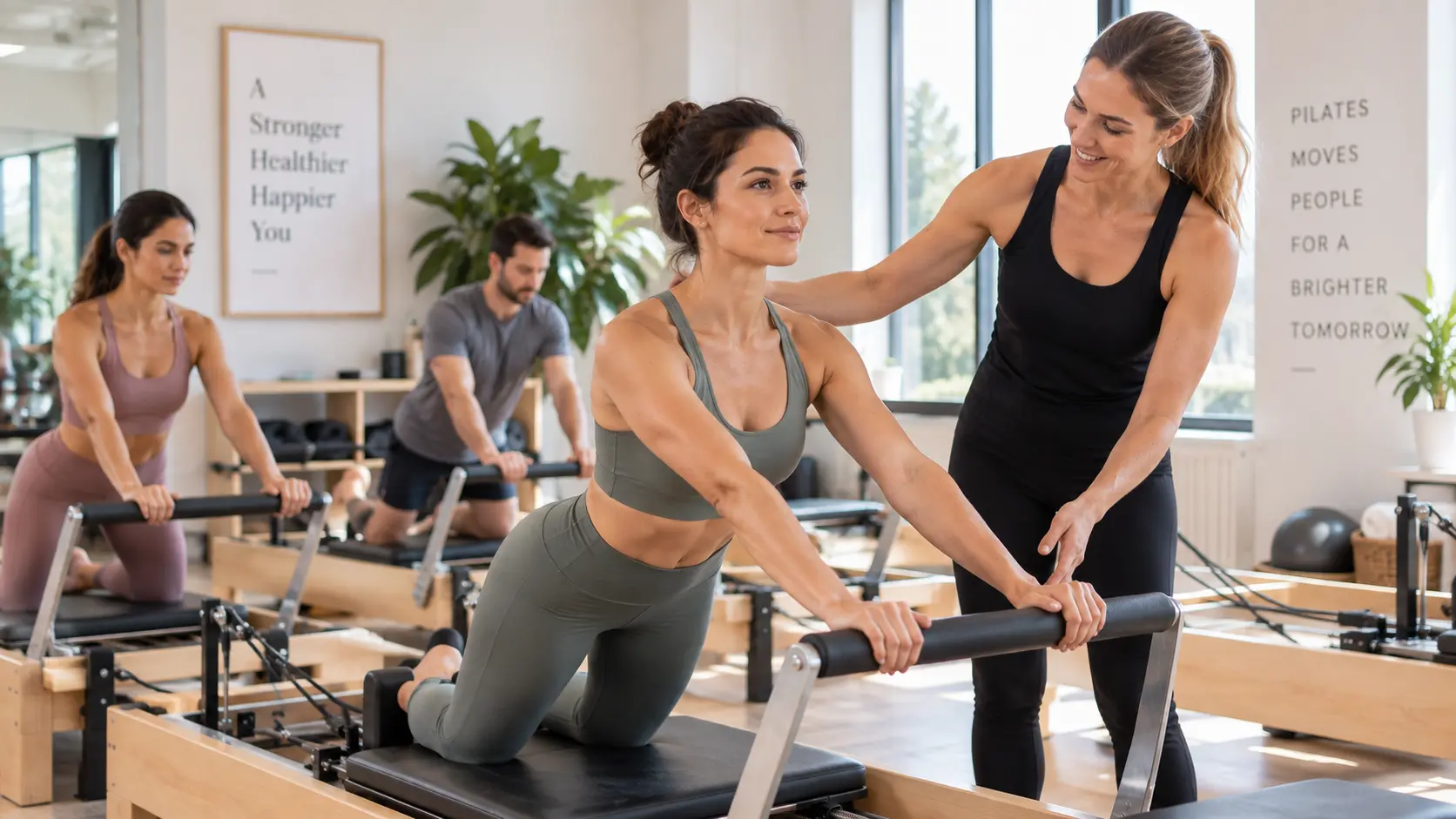
A qualified instructor should be able to explain how the reformer works, demonstrate exercises, correct your technique, and provide modifications when necessary. Good instruction can also help you become comfortable with the equipment before attempting more advanced movements.
Choose a Beginner-Friendly Pilates Studio
When choosing a Pilates studio, check whether it offers dedicated beginner classes or introductory sessions. A beginner-friendly environment can make your first few workouts much less stressful.
Before booking a class, consider asking about class size, instructor qualifications, the type of reformer equipment available, and whether modifications are offered for beginners.
Wear Comfortable Workout Clothes
Choose comfortable clothing that allows you to move freely without constantly adjusting your outfit. Stretchy, breathable workout clothes are generally practical for Pilates because you’ll be bending, stretching, and changing positions throughout the session.
It’s also helpful to avoid excessively loose clothing that could make it difficult for your instructor to observe your alignment and movement.
Start with the Fundamentals
As a beginner, don’t worry about performing complicated exercises straight away. Your first sessions should focus on learning the basics, including how to use the reformer, maintain proper alignment, control your movements, and coordinate your breathing.
Some foundational exercises may seem simple at first, but they teach important movement skills that you’ll use as you progress.
Progress Gradually
Reformer Pilates is designed around controlled progression. Once you’ve become comfortable with basic exercises, your instructor can gradually introduce more challenging movements, different spring settings, and greater levels of resistance.
There’s no need to rush the process. Building good technique and body awareness is more useful than trying to perform advanced exercises before you’re ready.
Make Consistency Part of Your Routine
Like most forms of exercise, consistency matters. Instead of attending a class occasionally and expecting immediate changes, try to create a realistic routine that fits your schedule.
Some people may choose to attend Reformer Pilates classes two or three times per week, while others may start with fewer sessions. The right frequency depends on your fitness level, schedule, recovery, and other physical activities.
Listen to Your Body
It’s normal for a new workout to challenge your muscles, particularly when you’re learning unfamiliar movements. However, you shouldn’t ignore sharp, persistent, or unusual pain.
If an exercise feels uncomfortable or you’re unsure about your technique, tell your instructor. They may be able to adjust the resistance, change your position, or provide an alternative movement.
Common Mistakes Beginners Should Avoid
Starting slowly can help you build a strong foundation. Here are some common mistakes worth avoiding:
- Trying advanced exercises too soon: Focus on mastering basic movements before progressing.
- Ignoring proper alignment: Good technique is more important than completing a movement quickly.
- Using too much resistance: More resistance isn’t always better. Use a level that allows you to maintain control.
- Holding your breath: Remember to breathe naturally and follow your instructor’s breathing cues.
- Comparing yourself with experienced participants: Everyone starts from a different fitness level.
- Ignoring discomfort: Tell your instructor if something doesn’t feel right.
What to Expect During Your First Reformer Pilates Class
Your first class may involve an introduction to the reformer and its different components. Your instructor will usually explain how to adjust the equipment and demonstrate basic movements.
You may perform exercises while lying down, sitting, kneeling, or standing, depending on the class structure. Don’t be surprised if the workout feels more challenging than expected. The controlled nature of Pilates means that even small movements can require significant concentration.
The most important thing during your first class is to learn the fundamentals rather than trying to keep up with everyone else.
Is Reformer Pilates Good for Beginners?
Yes, Reformer Pilates can be suitable for beginners when the exercises are appropriately modified and taught by a qualified instructor. The equipment can provide both resistance and support, allowing exercises to be adjusted to different ability levels.
However, people with injuries, significant medical conditions, or specific physical limitations should speak with an appropriate healthcare professional before beginning a new exercise programme and inform their instructor about relevant limitations.
Frequently Asked Questions About Reformer Pilates for Beginners
How often should a beginner do Reformer Pilates?
There isn’t one schedule that works for everyone. Many beginners start with one or two sessions per week and gradually increase their frequency as they become more comfortable. Your ideal routine should account for your fitness level, recovery, and other physical activities.
Do I need to be fit before starting Reformer Pilates?
No. You don’t need to be highly fit or flexible before starting. Beginner Reformer Pilates classes are designed to introduce fundamental movements and teach you how to use the equipment safely and effectively.
What should I wear to Reformer Pilates?
Wear comfortable, breathable clothing that allows unrestricted movement. Fitted or moderately close-fitting workout clothes can also make it easier for an instructor to observe your alignment and technique.
Can Reformer Pilates help strengthen the core?
Core control is a major part of Pilates. Many reformer exercises require the muscles around the trunk and pelvis to stabilise the body while other parts move. Consistent practice can therefore contribute to improved core strength and control.
Is Reformer Pilates a low-impact workout?
Reformer Pilates is generally considered low impact because most exercises don’t involve repeated jumping or heavy impact on the joints. However, the workout can still be physically challenging because of the resistance and controlled movements involved.
Can beginners use a Pilates reformer?
Yes. Beginners can use a reformer when they receive appropriate instruction. A qualified instructor can explain the equipment, adjust resistance, demonstrate exercises, and modify movements based on your ability.
How long does it take to see results from Reformer Pilates?
Results vary from person to person. Factors such as exercise frequency, starting fitness level, nutrition, sleep, and other physical activity can all influence progress. Rather than focusing only on visible changes, beginners can also track improvements in movement control, strength, flexibility, and confidence.
Can I do Reformer Pilates if I have an injury?
It depends on the injury and your individual circumstances. If you have an existing injury or health condition, seek appropriate professional advice before starting. Always tell your Pilates instructor about relevant limitations so exercises can be modified when appropriate.
Final Thoughts
Starting Reformer Pilates as a beginner doesn’t mean you need to master everything on your first day. The goal is to learn the fundamentals, develop good movement habits, and gradually become stronger and more confident.
With a qualified instructor, a beginner-friendly studio, comfortable clothing, and a consistent approach, Reformer Pilates can become an enjoyable part of your fitness routine. Start at a level that feels manageable, focus on technique, and give yourself time to progress.
Most importantly, remember that fitness is a journey rather than a race. Focus on consistent movement and steady progress rather than comparing your starting point with someone else’s experience.