


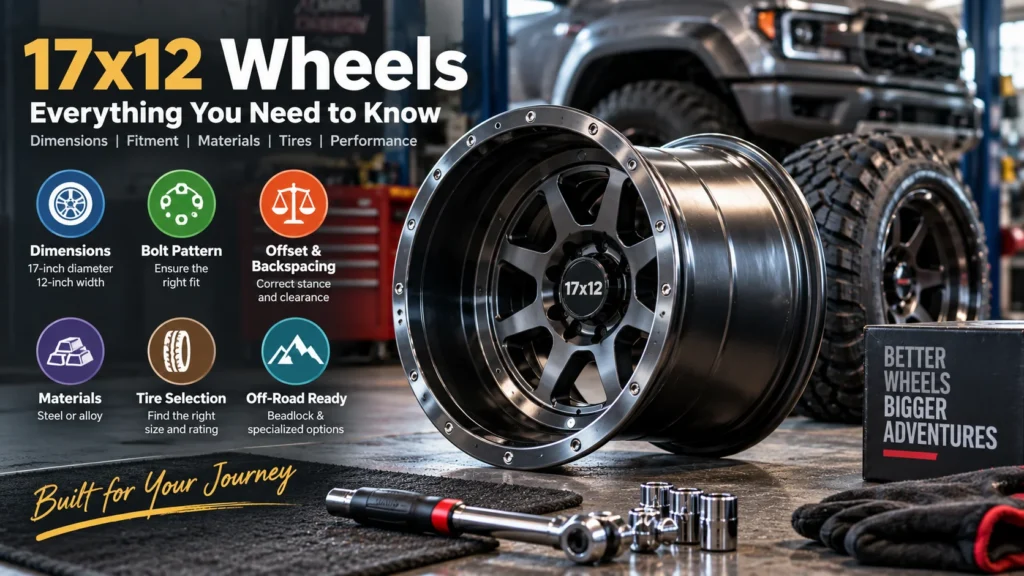

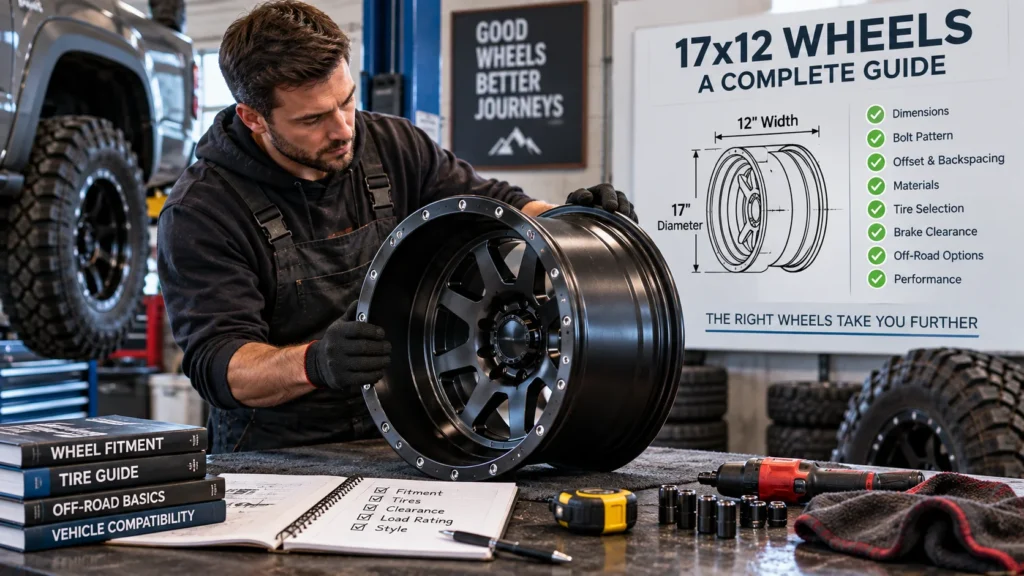
Choosing the right wheels is about much more than finding a design that looks good. Wheel diameter, width, bolt pattern, offset, backspacing, load rating, and tire compatibility all affect how a wheel fits and performs on a vehicle. This is particularly important when considering 17×12 wheels, which are significantly wider than many standard wheel options.
A 17×12 wheel can give a vehicle a wider, more aggressive stance and may be suitable for certain off-road, truck, and performance applications. However, a wider wheel is not automatically a better wheel for every vehicle. Before making a purchase, you need to confirm that the wheel specifications work with your vehicle, tires, suspension, brakes, and intended use.
What Does 17×12 Mean?
The numbers in 17×12 describe the basic dimensions of the wheel. The first number, 17, represents the wheel diameter in inches. The second number, 12, represents the wheel width in inches.
Therefore, a 17×12 wheel is 17 inches in diameter and 12 inches wide. The 12-inch width gives the wheel a substantially wider profile than many conventional wheels. This can influence tire selection, handling characteristics, appearance, and clearance around the vehicle.
It is important to remember that diameter and width are only two parts of wheel fitment. A wheel with the correct 17-inch diameter and 12-inch width can still be incompatible with a particular vehicle if other specifications do not match.
Is a 17×12 Wheel Right for Your Vehicle?
A 17×12 wheel is generally a specialized fitment rather than a universal replacement for a factory wheel. Its suitability depends on the vehicle, suspension setup, tire choice, wheel offset, backspacing, brake clearance, and intended driving conditions.
These wheels may appeal to owners of trucks, SUVs, off-road vehicles, and customized vehicles looking for a wider stance. However, fitting a wider wheel may require additional attention to fender clearance, suspension components, steering clearance, and tire dimensions.
Before purchasing, compare the wheel specifications with your vehicle manufacturer’s recommendations and, when necessary, consult a qualified wheel and tire professional.
Understanding the Bolt Pattern
The bolt pattern is one of the most important measurements when selecting a wheel. It determines whether the wheel’s mounting holes correspond correctly with the vehicle’s wheel hub.
Bolt patterns are commonly written in a format such as 8×6.5, 6×5.5, or 8×170. The first number represents the number of lug holes, while the second number represents the diameter of the bolt circle.
For example, an 8×6.5 wheel has eight lug holes positioned on a 6.5-inch bolt circle diameter. An 8×170 wheel has eight lug holes on a 170-millimeter bolt circle diameter.
Matching the bolt pattern is essential, but it does not guarantee complete compatibility. Offset, center bore, load capacity, brake clearance, and other measurements must also be checked before installation.
Why Offset Matters on 17×12 Wheels
Wheel offset describes the position of the wheel’s mounting surface relative to the centerline of the wheel. It can have a major effect on how a wide 17×12 wheel sits inside the wheel well.
A positive offset places the mounting surface toward the outside face of the wheel. A zero offset places it approximately at the wheel’s centerline, while a negative offset moves the mounting surface toward the inside of the wheel.
On a wide wheel, choosing an unsuitable offset can cause the tire or wheel to sit too close to suspension components, bodywork, or the fender. It can also push the wheel farther outward than intended.
For this reason, don’t select a 17×12 wheel based on width and diameter alone. Always check the manufacturer’s recommended offset range for your particular vehicle and setup.
Understanding Backspacing
Backspacing is another measurement that helps determine where a wheel sits in relation to the vehicle’s suspension and bodywork. It measures the distance from the wheel’s mounting surface to the rear edge of the wheel.
Backspacing and offset are related, but they are not the same measurement. When choosing a wide 17×12 wheel, understanding both can help you determine whether the wheel will provide adequate clearance on the inside and outside of the vehicle.
This becomes particularly important on modified trucks and off-road vehicles where changes to suspension height, steering components, and tire size can alter available clearance.
Check the Center Bore and Hub Compatibility
The center bore is the opening in the middle of the wheel that fits over the vehicle’s hub. The size of this opening matters because the wheel must be appropriately matched to the vehicle’s hub arrangement.
A wheel with an unsuitable center bore may create fitment or vibration concerns depending on the application. Some aftermarket wheels are designed with a larger center bore to accommodate multiple applications and may require appropriate hub-centric rings where applicable.
Before buying 17×12 wheels, compare the wheel’s center bore with your vehicle’s hub dimensions and follow the wheel manufacturer’s fitment recommendations.
Steel vs. Alloy 17×12 Wheels
The material used to manufacture a wheel affects its weight, strength characteristics, appearance, cost, and suitability for different driving conditions. Steel and alloy wheels are two common choices.
Steel Wheels
Steel wheels are often chosen for their durability, straightforward construction, and relatively affordable price. They can be particularly attractive to drivers who prioritize practical performance over a lightweight design.
One potential disadvantage is weight. A steel wheel can weigh more than a comparable alloy wheel, which may affect acceleration, braking response, ride characteristics, and overall vehicle efficiency.
Alloy Wheels
Alloy wheels are generally lighter than comparable steel wheels and are available in a wide range of designs and finishes. Their lower weight can be beneficial for applications where reducing unsprung mass is important.
However, alloy wheels can vary considerably in strength and construction. Buyers should pay attention to the wheel’s load rating and intended application rather than choosing an alloy wheel based solely on appearance.
What About Beadlock Wheels?
Beadlock wheels are particularly associated with off-road applications. A true beadlock design uses a mechanical ring to clamp the tire bead to the wheel, helping keep the tire secured to the wheel under demanding low-pressure conditions.
This can be useful in certain off-road environments where drivers deliberately reduce tire pressure to improve traction. However, true beadlock wheels should not be confused with beadlock-style wheels, which may have the appearance of a beadlock without mechanically clamping the tire bead in the same way.
If you are considering beadlock wheels for a street-driven vehicle, check the manufacturer’s instructions and the regulations that apply in your location. Installation and maintenance requirements can also differ from those of conventional wheels.
Choosing Tires for 17×12 Wheels
A 17×12 wheel needs to be paired with a tire whose approved rim-width range is compatible with a 12-inch-wide wheel. There is no single tire size that is correct for every 17×12 application.
When selecting tires, consider:
- Approved rim-width range: Check the tire manufacturer’s specifications.
- Overall tire diameter: A significant change can affect clearance and vehicle behavior.
- Load rating: Make sure the tire is appropriate for the vehicle and its intended load.
- Speed rating: Choose a rating appropriate for the vehicle and intended use.
- Terrain: Consider whether you primarily drive on highways, trails, mud, gravel, or mixed surfaces.
- Clearance: Check for potential contact with suspension components, bodywork, and fenders.
Using a tire simply because it appears to fit the wheel can create problems. Always verify the tire manufacturer’s approved specifications before installation.
Load Rating and Strength Are Important
A wheel’s appearance should never be the only consideration when selecting a 17×12 setup. The wheel must be capable of handling the weight and demands of the vehicle.
Check the manufacturer’s load rating and make sure it is appropriate for your vehicle, passengers, cargo, and intended driving conditions. This is especially important for trucks and SUVs that may regularly carry heavy loads or tow equipment.
Off-road use can also place different stresses on wheels than ordinary highway driving. If you regularly drive on rough terrain, select wheels specifically designed and rated for the conditions in which they will be used.
Don’t Forget Brake and Suspension Clearance
Wheel diameter and width do not tell the entire fitment story. The shape of the wheel’s spokes, barrel, and mounting area can affect clearance around brake calipers and other components.
Suspension components can also become an issue when installing a significantly wider wheel. Depending on the vehicle and wheel specifications, the tire may come close to control arms, struts, steering components, or other parts.
Before installation, confirm the complete wheel-and-tire combination rather than checking the wheel dimensions in isolation.
Street Use vs. Off-Road Use
The best 17×12 wheel depends heavily on how you use your vehicle. A wheel designed primarily for off-road use may have different priorities from one intended for daily highway driving.
For street driving, consider weight, ride quality, tire compatibility, brake clearance, load rating, and everyday durability.
For off-road driving, durability, bead retention, load capacity, terrain compatibility, and resistance to impacts may become more important.
For a mixed-use vehicle, look for a balanced combination of strength, weight, tire compatibility, and road manners rather than selecting a wheel based solely on its aggressive appearance.
Common 17×12 Wheel Fitment Mistakes
Choosing an unusually wide wheel without checking the complete fitment can lead to avoidable problems. Some common mistakes include:
- Checking only the bolt pattern and ignoring offset.
- Choosing a tire that is outside the manufacturer’s approved rim-width range.
- Ignoring brake or suspension clearance.
- Choosing a wheel with an inadequate load rating.
- Assuming every 17×12 wheel has the same offset or backspacing.
- Choosing wheels based entirely on appearance.
- Failing to consider how a wider wheel and tire combination affects fender clearance.
A 17×12 Wheel Buying Checklist
Before purchasing a set of 17×12 wheels, work through the following checklist:
- Confirm the 17-inch diameter.
- Confirm the 12-inch width.
- Match the correct bolt pattern.
- Check the required offset.
- Check backspacing.
- Verify the center bore.
- Confirm adequate brake and suspension clearance.
- Check the wheel’s load rating.
- Choose tires approved for the wheel’s width.
- Consider whether the wheels are designed for street, off-road, or mixed use.
- Check the manufacturer’s installation and maintenance recommendations.
How to Choose the Right 17×12 Wheel Design
Once the technical specifications have been confirmed, you can focus on appearance. A 17×12 wheel can significantly change the visual character of a vehicle because its wide profile creates a more substantial stance.
Consider the vehicle’s overall design when choosing spoke patterns, finishes, and colors. A simple steel wheel may complement a rugged truck, while a carefully designed alloy wheel may suit a customized street vehicle or SUV.
However, aesthetics should come after fitment and safety. A visually appealing wheel that does not meet the vehicle’s specifications is not a good choice.
Final Thoughts on Selecting 17×12 Wheels
17×12 wheels can give the right vehicle a distinctive appearance and, when correctly matched with the vehicle and tires, provide a setup suited to specific driving needs. Their wide 12-inch profile makes fitment considerations particularly important.
Start by confirming the wheel’s diameter and width, then check the bolt pattern, offset, backspacing, center bore, load rating, brake clearance, and tire compatibility. From there, choose a material and design that matches how you intend to use the vehicle.
The goal should not simply be to find the widest or most aggressive-looking wheel. The best 17×12 wheel is one that fits correctly, supports the vehicle’s requirements, works with the selected tires, and suits the way you actually drive.
For more information on Latest Tech News UK.