

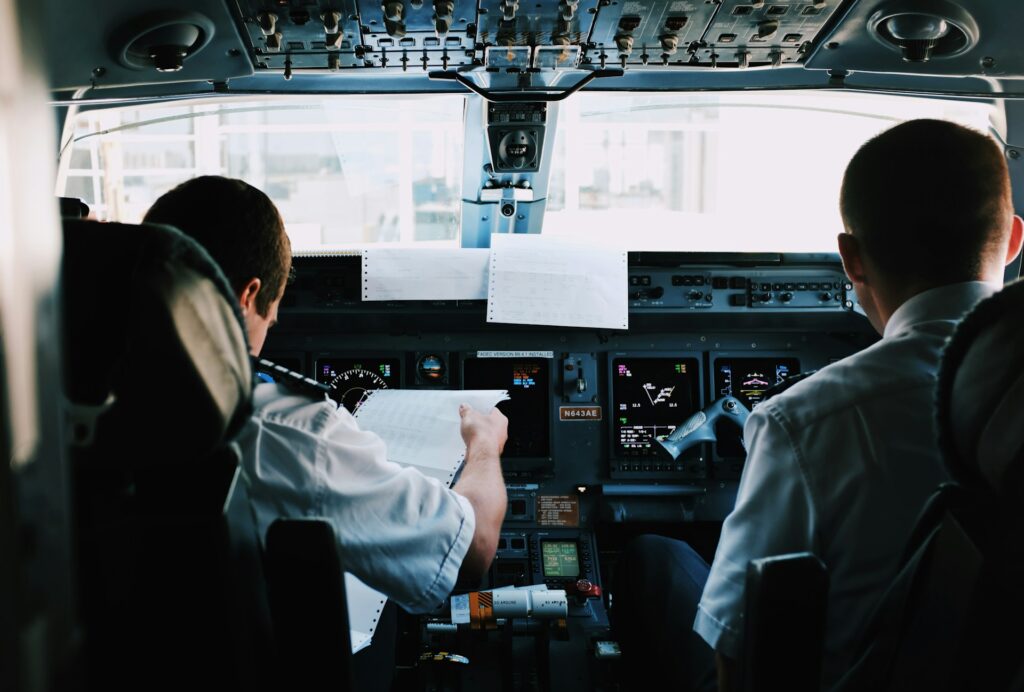
Flying an aircraft demands more than just skill and training. It also requires specialized equipment in the cockpit. Pilots use gear that enhances safety, sharpens communication, and simplifies navigation during every flight. Whether you’re preparing for an aviation career or pursuing flying as a passion, getting familiar with essential pilot equipment is fundamental.
Here are just five types of pilot equipment.
1. Aviation Headsets for Clear Communication
Aviation headsets rank among the most critical investments any pilot makes. The cockpit creates a surprisingly loud environment, where engines roar continuously, air rushes past surfaces, and systems hum at levels that can affect hearing over time. Quality aviation headsets address this challenge through active noise reduction or passive noise cancellation technology, protecting ears while keeping communication channels crystal clear. These devices incorporate boom microphones positioned near the mouth, ensuring voices come through clearly to air traffic control and passengers, even during turbulent conditions. Comfort plays a vital role, particularly during extended cross-country flights where headsets remain in place for hours. Padded ear cups transform long-duration wear from challenging to comfortable. The David Clark headset line has features like electronic noise-cancelling technology and convenient battery power. Also, modern aviation headsets now include Bluetooth connectivity. A reliable headset reduces mental fatigue, maintains situational awareness, and protects hearing throughout every phase of flight.
2. Flight Bags for Organization and Accessibility
A well-designed flight bag serves as a mobile command center, keeping all necessary documents, charts, and tools organized and within easy reach. These specialized bags incorporate multiple compartments specifically sized for aviation charts, approach plates, checklists, and electronic devices. The construction quality of flight bags matters significantly. Durable, weather-resistant materials protect valuable contents from moisture and the inevitable impacts of frequent travel. Modern flight bags feature padded sections for tablets and electronic flight bags, acknowledging how digital tools have become standard equipment in aviation. The thoughtful organization allows pilots to access critical items quickly without digging through cluttered spaces. Side pockets provide easy access to frequently needed items like flashlights and pens, while main compartments safely store larger equipment and documentation. The best flight bags balance capacity with portability, ensuring pilots can carry everything needed without becoming overly cumbersome.
3. Handheld Aviation Radios for Backup Communication
Handheld aviation radios provide essential backup communication capabilities in the cockpit. These compact devices offer peace of mind as a reliable secondary communication option if primary radio systems experience issues. Modern handheld radios feature clear audio quality, long battery life, and intuitive controls that make operation straightforward even in challenging conditions. The ability to maintain communication with air traffic control and other aircraft enhances safety and provides additional flexibility during ground operations. These portable units often include GPS functionality, adding an extra layer of navigational backup to their communication capabilities. Weather-resistant construction ensures reliability in various conditions, while backlit displays enable clear viewing in both bright sunlight and nighttime operations. Modern handheld aviation radios incorporate numerous practical features that enhance their utility in various flight conditions. The frequency memory storage capability allows quick access to commonly used channels, while dedicated weather monitoring functions provide vital meteorological updates. Backlit displays ensure clear visibility during night operations, maintaining readability in low-light conditions.
4. Kneeboards for In-Flight Reference and Note-Taking
Kneeboards serve as essential cockpit organization tools, providing stable writing surfaces and document management solutions that move naturally with pilot movements during flight operations. These practical devices maintain charts, approach plates, and notepads in optimal viewing positions while allowing unrestricted access to aircraft controls. The secure attachment systems, featuring elastic or adjustable straps, maintain steady positioning through various flight conditions, including turbulent air and dynamic maneuvering. The versatile clip arrangements accommodate diverse document sizes, ranging from standard notepads to folded sectional charts marked during preflight planning sessions.
5. Flight Computers for Navigation Calculations
Flight computers maintain their position as fundamental aviation tools, delivering accurate calculations for critical flight parameters including groundspeed, fuel consumption, wind correction angles, and estimated time calculations. Traditional mechanical E6B flight computers feature intricate rotating disk systems with specialized scales that solve complex navigation problems without requiring any power source. These analog calculation tools provide deep insights into aviation mathematics, creating clear connections between speed, time, distance, and fuel relationships rather than simply displaying digital readouts. The hands-on nature of mechanical flight computers builds a thorough understanding of aeronautical concepts and relationships. Electronic flight computers offer enhanced functionality through digital interfaces, providing rapid calculations and additional features. These modern tools maintain the core capabilities of traditional flight computers while adding convenient functions like instant unit conversions and density altitude computations. The combination of speed and accuracy makes electronic flight computers particularly valuable during time-critical operations or when conditions demand quick recalculations.
Conclusion
The careful selection of aviation equipment directly influences safety, efficiency, and overall flight experience in the cockpit. Each piece of essential pilot equipment contributes unique capabilities that work in harmony to help support flight operations from initial planning through final touchdown.