


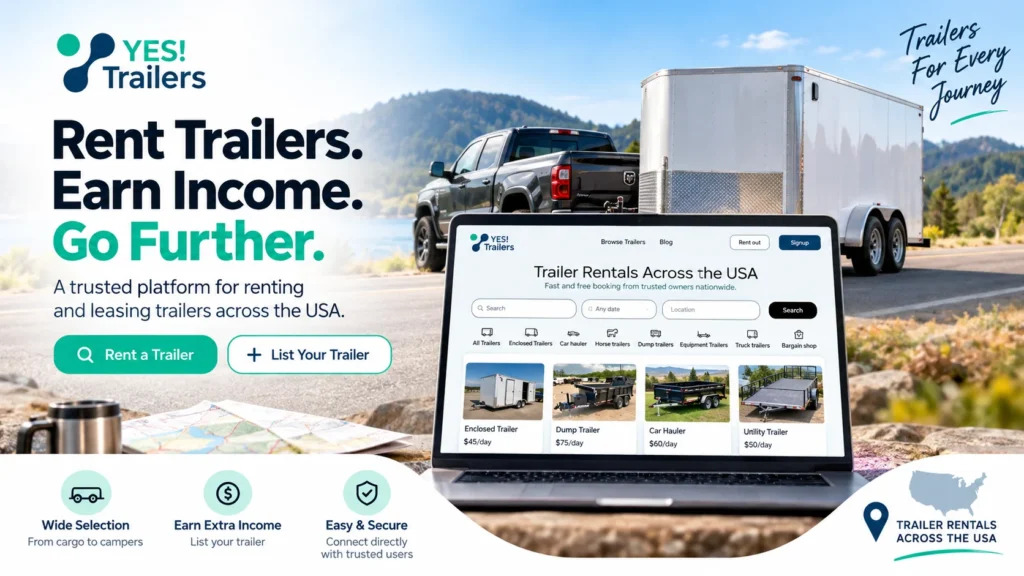
Whether you need a trailer for moving, hauling equipment, transporting a vehicle, or taking a trip, buying one is not always the most practical option. At the same time, trailer owners may have equipment that sits unused for much of the year. Yes!Trailers provides a platform designed to connect trailer owners with people looking to rent trailers in the USA.
For renters, the platform can make it easier to find trailers that match their needs and location. For owners, listing an unused trailer can provide an opportunity to generate additional income. However, as with any trailer rental arrangement, users should carefully review the rental terms, towing requirements, insurance or coverage arrangements, and applicable regulations before completing a transaction.
What Is Yes!Trailers, and Who Is It For?
Yes!Trailers is an online platform that connects trailer owners with people looking to rent trailers. Owners can list available trailers, provide information about their equipment, and establish rental terms. Renters can browse available listings and look for a trailer that fits their requirements.
The platform can be useful for several types of users, including:
- Trailer owners: People who want to make better use of a trailer that is not being used regularly.
- Individuals: Renters who need a trailer for moving, transporting large items, or completing a personal project.
- Businesses: Companies that need temporary hauling capacity without purchasing another trailer.
- Outdoor enthusiasts: People looking for trailers suited to camping, recreation, or transporting equipment.
Why Is Trailer Rental Becoming More Popular?
Purchasing a trailer can involve a significant upfront cost. It can also mean taking responsibility for storage, maintenance, registration, and other ownership expenses. If someone only needs a trailer occasionally, renting may be a more practical alternative.
Trailer rental can also give users more flexibility. Instead of purchasing one trailer and using it for every situation, renters can look for equipment that is appropriate for a particular job.
For example, someone moving furniture may need a different trailer from someone transporting a vehicle or hauling landscaping equipment. A rental marketplace can make it easier to search for options based on the type of trailer, location, price, and availability.
Potential Benefits of Using a Trailer Rental Marketplace
- More choice: Renters can compare different trailer types and listings.
- Flexible rental needs: Users can look for a trailer based on the specific job they need to complete.
- Potential income for owners: Owners may be able to generate additional income from trailers that would otherwise remain unused.
- Local options: Renters can search for trailers available in or around their area.
- Convenient comparison: Online listings can make it easier to compare available options before contacting an owner.

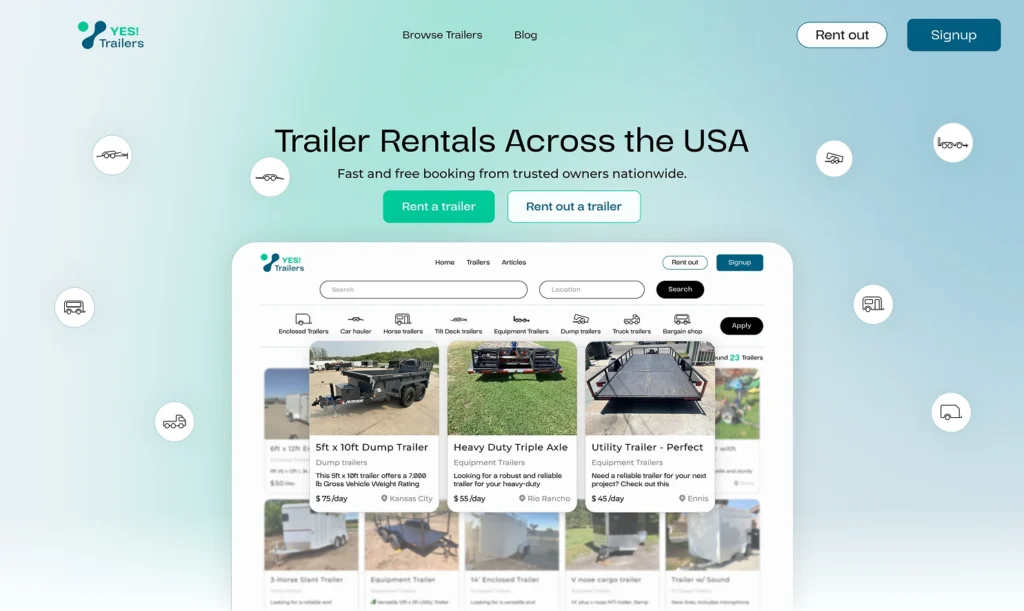
What Types of Trailers Can You Rent?
The right trailer depends on what you are transporting and the capabilities of your tow vehicle. Trailer listings can vary, but common categories may include:
- Cargo trailers: Useful for moving boxes, furniture, tools, and other goods.
- Utility trailers: Suitable for general hauling, landscaping materials, and equipment.
- Car haulers: Designed for transporting vehicles when the trailer and tow vehicle are appropriately matched.
- Camper and travel trailers: Used for camping and recreational travel.
- Equipment trailers: Designed for hauling specific types of machinery or heavier equipment.
Availability will depend on the listings in a particular area, so renters should carefully review the specifications of each trailer rather than choosing based only on appearance or price.
How Does Yes!Trailers Work?
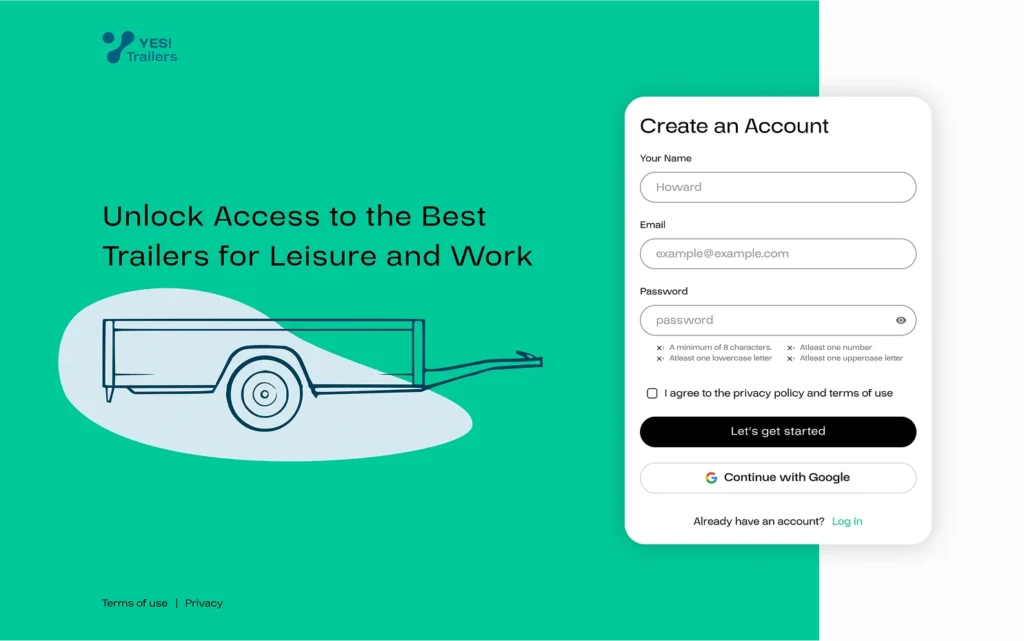
Step 1: Register and Create an Account
To get started, users create an account on the platform. Registration provides access to the features needed to browse listings or, where available, create and manage trailer listings.

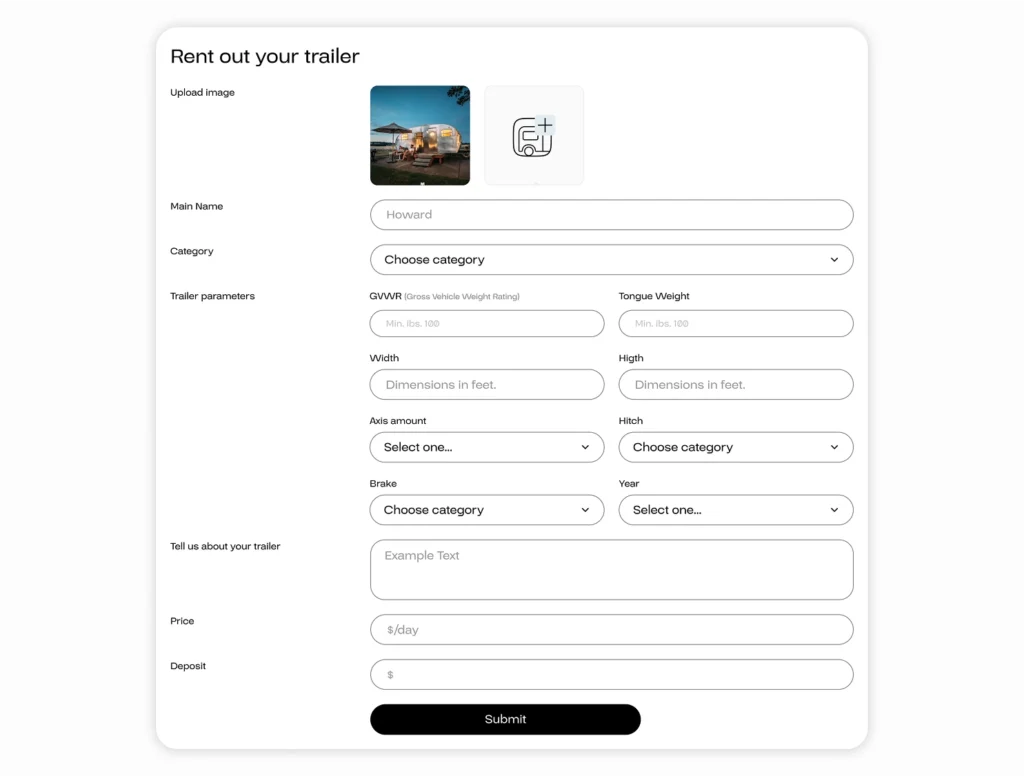
Step 2: List Your Trailer for Rent
Trailer owners who want to rent out their equipment can create a listing with important information that helps potential renters understand what they are getting.
- Upload clear, high-quality photos of the trailer.
- Provide an accurate description of the trailer.
- Include relevant specifications, dimensions, capacity, and towing requirements.
- Set the rental price and availability according to the platform’s available options.
- Clearly explain any important rental conditions or requirements.

How Does Searching and Booking a Trailer Work?
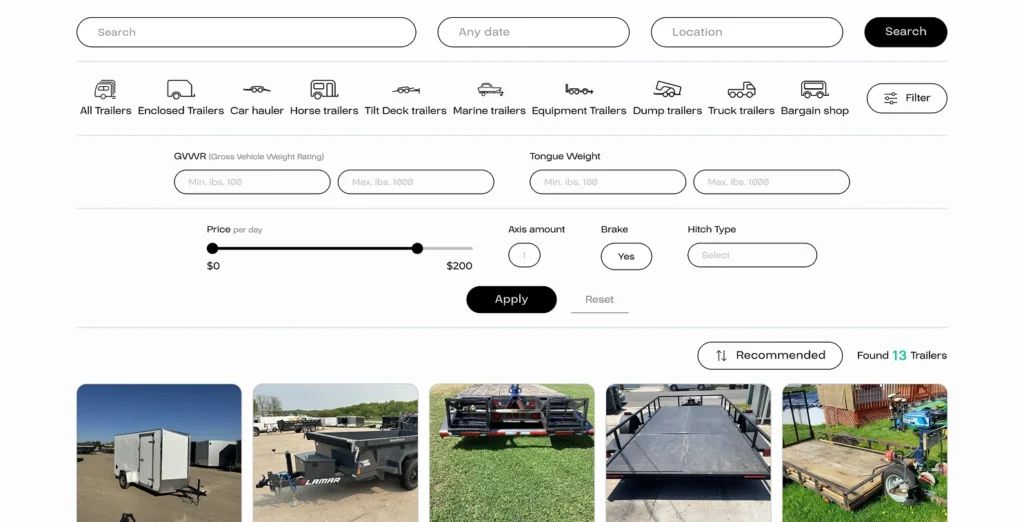
Renters can search available listings and compare trailers based on their requirements. After finding a suitable trailer, the renter can review the listing and submit a rental request according to the platform’s process.
Finding the Right Trailer
Search filters can help renters narrow down their options based on factors such as:
- Type: Look for cargo, camper, car hauler, utility, or other trailer categories.
- Location: Search for trailers available in a convenient area.
- Price: Compare rental costs against your budget.
- Availability: Check whether the trailer is available for the dates you need.

Booking a Trailer and Contacting the Owner
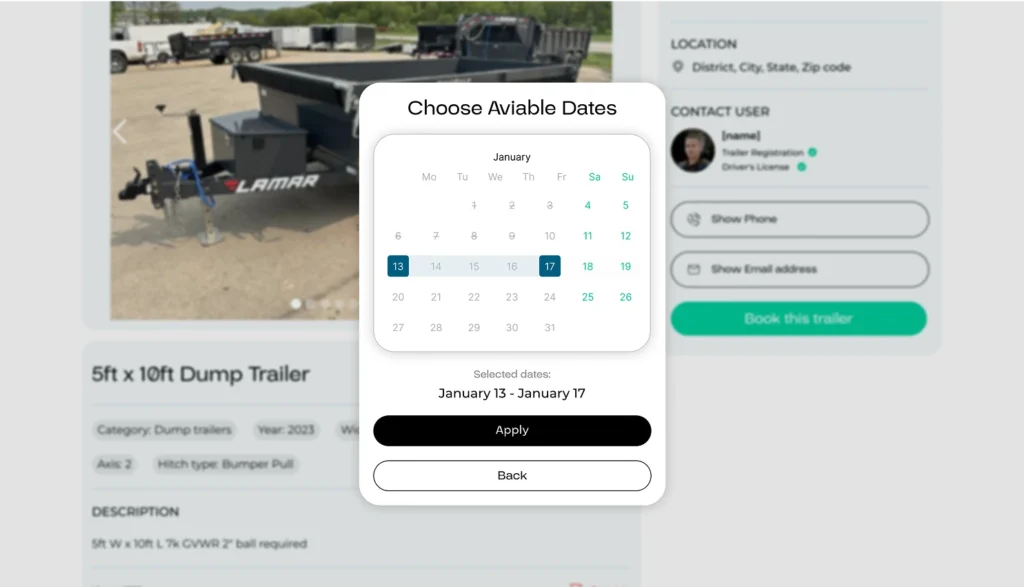
Once a renter finds a trailer that appears suitable, they can review its availability and select the dates they need. The renter can then submit a rental request using the platform’s available booking process.
Depending on the listing and platform process, renters may also receive the owner’s contact information so they can discuss important details directly. Good communication before the rental begins can help both parties understand what is expected.

Discussing Rental Details
Before the trailer changes hands, the owner and renter should make sure the important terms are understood. Depending on the listing, these may include:
- Pickup and return dates and times.
- Rental terms and conditions.
- Security deposit requirements, if applicable.
- Permitted uses of the trailer.
- Responsibility for damage or loss.
- Insurance or other applicable coverage requirements.
Important: Trailer owners may have the ability to approve or reject a rental request based on the platform’s policies, the renter’s information, ratings or reviews, and communication between the parties.
What Should Renters Check Before Renting a Trailer?
Finding an affordable trailer is only part of the process. Renters should make sure the trailer is appropriate for both the job and the vehicle that will tow it.
- Towing capacity: Confirm that your vehicle can safely tow the trailer and its expected load.
- Hitch compatibility: Make sure the trailer and tow vehicle have compatible equipment.
- Trailer weight and payload: Understand the trailer’s specifications and do not exceed applicable limits.
- Condition: Check tires, lights, brakes, hitch components, and visible damage before accepting the trailer.
- Rental terms: Read the agreement and clarify fees, deposits, cancellation conditions, and return requirements.
- Coverage: Understand what insurance or other protection applies during the rental.
- State requirements: Check the rules that apply to towing and trailer use in the relevant state.
Taking a few minutes to check these details can help prevent problems during the rental period.
Handover Process
After the rental has been agreed upon, the owner and renter can arrange a convenient pickup location and time. The handover should be treated as an important part of the rental process rather than simply exchanging keys or equipment.
Before handing over the trailer, both parties should conduct a pre-rental inspection. Taking photographs or videos of the trailer’s condition can provide a useful record of existing scratches, dents, tire condition, lights, accessories, and other visible details.
If required, the parties can complete a rental agreement, confirm the security deposit, and review any special instructions before the renter leaves with the trailer.
The renter then uses the trailer according to the agreed terms and returns it within the specified period. At return, the owner can inspect the trailer and compare its condition with the pre-rental documentation.
Tips for Trailer Owners
A well-prepared listing can make it easier for potential renters to understand exactly what they are considering. Trailer owners can improve their listings by following a few simple practices.
- Use clear photos taken from multiple angles.
- Provide accurate trailer dimensions and specifications.
- Clearly state towing and vehicle requirements.
- Keep maintenance and safety equipment in good condition.
- Be transparent about existing damage or cosmetic imperfections.
- Set clear pickup and return instructions.
- Communicate promptly with prospective renters.
- Document the trailer’s condition before and after every rental.
How Yes!Trailers Can Benefit Trailer Owners
Owning a trailer can be useful, but an unused trailer does not provide much value when it spends most of its time sitting in storage. A rental marketplace can give owners another way to make use of their equipment.
Owners can decide which trailers they want to list and establish rental terms according to the platform’s available features and their own requirements. However, owners should consider maintenance, storage, insurance, taxes, local regulations, and other costs before deciding whether renting out a trailer makes financial sense.
Trailer Rental Safety and Legal Considerations
Towing a trailer requires more than simply connecting it to a vehicle. The renter is responsible for making sure the combination of tow vehicle, trailer, and load is appropriate and used safely.
Before a rental, users should review the manufacturer’s specifications, confirm towing capacity, check the hitch and connection, inspect tires and lights, and load the trailer appropriately. Requirements for registration, brakes, lighting, insurance, and other towing matters can vary depending on the state and the type of trailer.
For that reason, renters and owners should verify the applicable requirements for their location rather than assuming that the same rules apply throughout the United States.
How Peer-to-Peer Trailer Rentals Fit Into the Market
Peer-to-peer rental models are changing the way people access equipment they only need occasionally. Instead of every user purchasing and storing their own trailer, rental platforms can connect existing owners with people who need temporary access.
If you want to learn more about this broader trend, see our guide on how peer-to-peer trailer rentals are changing the market.
Frequently Asked Questions About Yes!Trailers
What is Yes!Trailers?
Yes!Trailers is an online platform designed to connect trailer owners with people looking to rent trailers in the USA.
Can I rent out my own trailer?
If the trailer meets the platform’s requirements, owners can use the available listing features to offer their trailer for rent. Owners should review the current platform rules and requirements before creating a listing.
What types of trailers can I rent?
Available trailers depend on the listings in your area. Examples can include cargo trailers, utility trailers, car haulers, camper trailers, and equipment trailers.
How do I find a trailer near me?
Renters can use the platform’s search and filtering options to look for available trailers based on location, type, price, and availability.
Can a trailer owner reject a rental request?
Rental requests may be subject to owner approval and the platform’s current policies. Owners may consider information available about the renter and the details of the proposed rental before making a decision.
What should I check before renting a trailer?
Check the trailer’s size, weight, capacity, towing requirements, condition, rental terms, pickup and return arrangements, applicable coverage, and relevant state requirements before renting.
Why Consider Yes!Trailers?
For people who need a trailer temporarily, a rental marketplace can provide an alternative to purchasing equipment that may only be used occasionally. For owners, listing an underused trailer can create an opportunity to put that equipment to work.
- Convenience: Browse trailer listings online and look for options that match your needs.
- Flexibility: Rent a trailer for a specific project or period instead of committing to ownership.
- Choice: Compare different trailer types, locations, prices, and availability.
- Opportunity for owners: Potentially generate additional income from an otherwise underused trailer.
Final Thoughts
Yes!Trailers offers a marketplace approach to trailer rental by bringing owners and renters together in one place. Whether you need a trailer for a weekend project, a move, equipment transportation, or another temporary purpose, online listings can make it easier to explore your options.
Trailer owners can also use the platform to potentially earn from equipment that would otherwise remain unused. The key for both sides is to communicate clearly, understand the rental terms, inspect the trailer carefully, and make sure the trailer and tow vehicle are appropriate for the intended use.
If you are considering renting or listing a trailer, take the time to compare your options and review all applicable requirements before completing a rental. A well-planned transaction can make trailer sharing more convenient for both owners and renters.