


Leopard geckos are fascinating creatures that make great pets. They are known for their unique appearance, docile nature, and easy care requirements. However, there are still many questions that new leopard gecko owners may have, including whether or not their gecko can eat in the dark.
Leopard geckos are nocturnal creatures, meaning they are most active at night. This can raise questions for owners who are unsure if their gecko should be fed during the day or at night. While it is true that leopard geckos have poor eyesight, they are still able to see in the dark to some extent. This raises the question: can leopard geckos eat in the dark?
In this article, we will explore whether or not leopard geckos can eat in the dark and provide answers to other common questions about feeding these fascinating creatures. We will also provide tips on how to properly feed your leopard gecko to ensure they are healthy and happy.
Leopard Gecko Vision
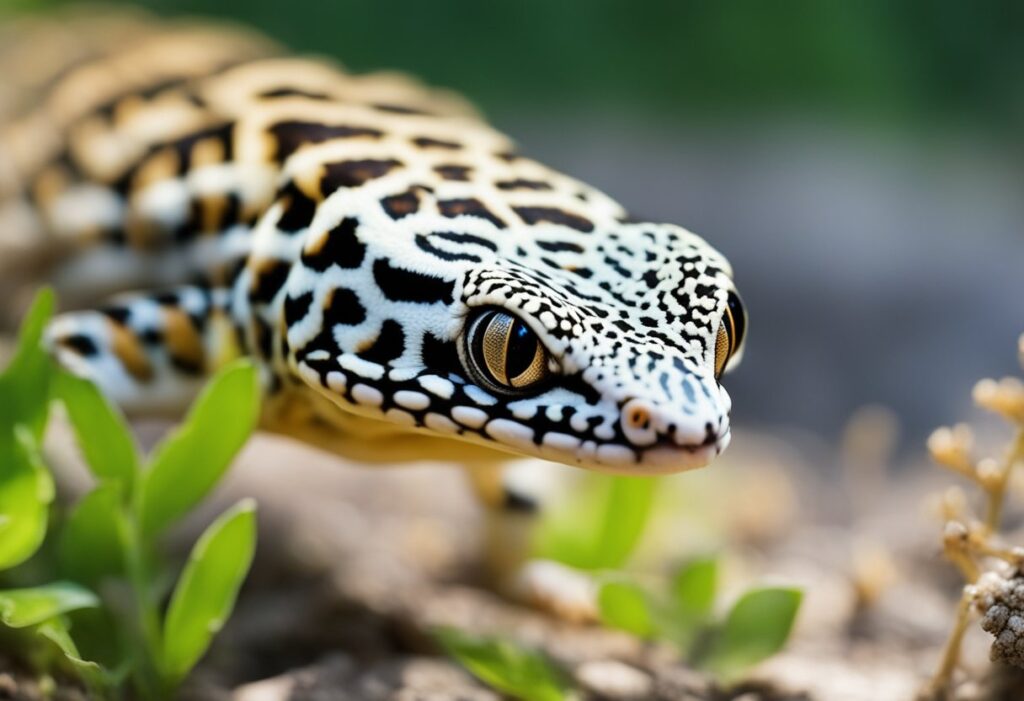
Leopard geckos are crepuscular animals, which means they are most active during dawn and dusk. They are also nocturnal, which means they are active during the night. Therefore, it is important to understand their vision and how it affects their behavior.
Night Vision Capabilities
Leopard geckos have excellent night vision capabilities due to the presence of specialized cells in their eyes called rods. These cells are highly sensitive to light and allow the gecko to see in low light conditions. The rods are responsible for detecting motion and shapes, which helps the gecko to hunt and avoid predators in the dark.
Sensitivity to Light
Leopard geckos are sensitive to bright light, which can cause discomfort and stress. They have a specialized structure in their eyes called the tapetum lucidum, which reflects light back to the retina and enhances their night vision. However, this structure also makes them sensitive to sudden changes in light intensity.
Therefore, it is important to provide a suitable light source for leopard geckos during the day and night. During the night, a low-wattage red or blue light can be used to provide dim lighting without disturbing their sleep. It is also important to avoid exposing them to bright lights, such as direct sunlight or fluorescent lights, which can cause eye damage and stress.
In summary, leopard geckos have excellent night vision capabilities due to the presence of specialized cells in their eyes. They are sensitive to bright light and require suitable lighting conditions to maintain their health and well-being.
Feeding Habits of Leopard Geckos
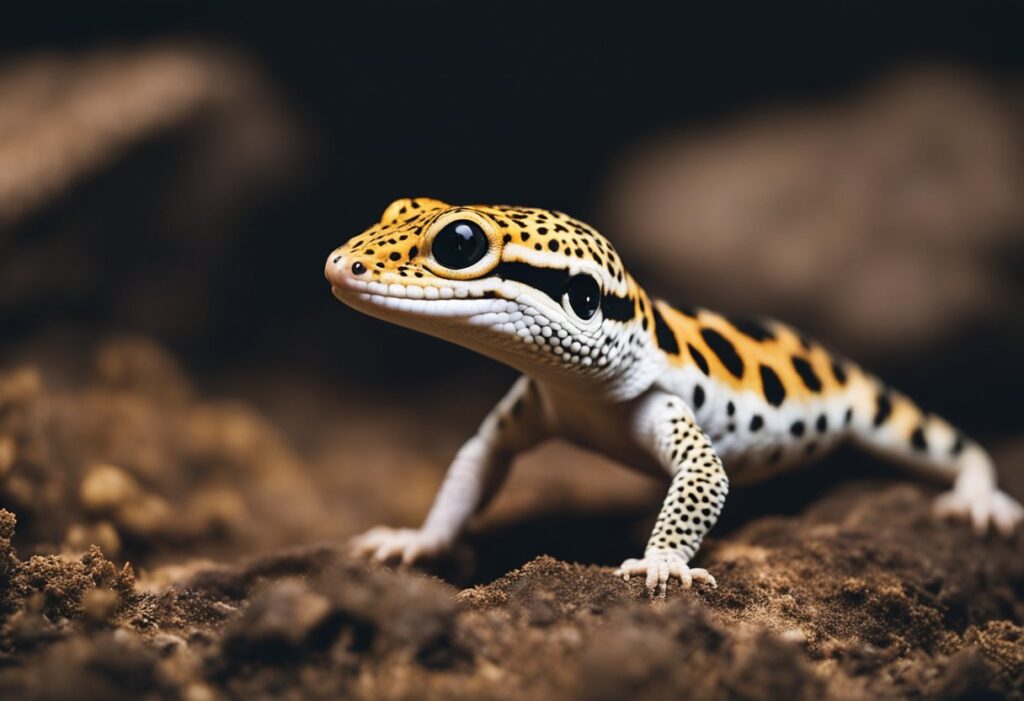
Leopard geckos are known for their unique feeding habits. As nocturnal creatures, they are most active during the night and prefer low light conditions. In this section, we will discuss the feeding habits of leopard geckos, with a focus on their ability to eat in the dark.
Feeding in Low Light Conditions
Unlike many other reptiles, leopard geckos are able to see in low light conditions. This is due to the presence of specialized cells in their eyes called rods, which are sensitive to low levels of light. As a result, they are able to hunt and eat during the night.
When feeding leopard geckos in low light conditions, it is important to provide them with food that is easily visible. This can be achieved by using brightly colored insects or by placing the food in a well-lit area. It is also important to ensure that the food is within reach of the gecko, as they may not be able to see it if it is too far away.
Dietary Preferences
Leopard geckos are insectivores, which means that they primarily eat insects. Their diet typically consists of crickets, mealworms, and waxworms. However, they may also eat other insects such as roaches and grasshoppers.
It is important to provide leopard geckos with a varied diet to ensure that they receive all of the nutrients that they need. In addition to insects, they may also eat small amounts of fruits and vegetables.
In conclusion, leopard geckos are able to eat in low light conditions due to their ability to see in the dark. When feeding them, it is important to provide them with easily visible food that is within reach. Additionally, a varied diet is important to ensure that they receive all of the nutrients that they need.
Environmental Considerations for Feeding

When it comes to feeding leopard geckos, there are several environmental factors to consider. In this section, we will discuss two important considerations: terrarium lighting and natural feeding cycles.
Terrarium Lighting
Leopard geckos are crepuscular animals, meaning they are most active during dawn and dusk. They require a light source that mimics this natural lighting cycle. A 12-hour light/dark cycle is recommended, with a low-wattage bulb providing a dim light during the day and darkness at night.
It’s important to note that leopard geckos have sensitive eyes and can be easily stressed by bright lights. Avoid using bright overhead lights or heat lamps, as these can disrupt their natural behavior and cause them to stop eating.
Natural Feeding Cycles
In the wild, leopard geckos have a natural feeding cycle that is linked to the availability of prey. They typically feed at night, when insects are most active. As a result, it’s best to feed your leopard gecko at night, when they are most active and alert.
Leopard geckos also have a strong sense of smell, and can locate prey even in complete darkness. This means that it’s possible to feed them in the dark, as long as they have a reliable food source and are comfortable in their environment.
In summary, when feeding leopard geckos, it’s important to consider their natural behavior and environment. Providing a dim lighting source and feeding them at night will help ensure that they are healthy and thriving.
Health and Nutrition
Importance of a Balanced Diet
As leopard gecko owners, it is our responsibility to provide our pets with a balanced diet that meets all of their nutritional needs. A diet that lacks essential nutrients can lead to health problems, such as metabolic bone disease, which can be fatal if left untreated.
Leopard geckos are insectivores, which means that their diet should consist primarily of insects. Crickets, mealworms, and dubia roaches are all great options for providing your leopard gecko with the protein they need. It is important to vary their diet to ensure that they are getting a wide range of nutrients.
In addition to insects, leopard geckos can also eat some fruits and vegetables, such as papaya and carrots. However, these should only be given as occasional treats and should not make up a significant portion of their diet.
Supplemental Lighting and Vitamin D3
Leopard geckos require vitamin D3 to absorb calcium and maintain healthy bones. In the wild, they obtain vitamin D3 from sunlight. However, in captivity, it can be difficult to provide them with enough natural sunlight.
Supplemental lighting, such as UVB bulbs, can help provide leopard geckos with the vitamin D3 they need. It is important to choose a bulb that is appropriate for their enclosure size and to follow the manufacturer’s instructions for use.
In addition to supplemental lighting, leopard geckos can also obtain vitamin D3 from their diet. Gut-loading insects with calcium and vitamin D3 supplements can help ensure that your leopard gecko is getting the nutrients they need.
Overall, providing your leopard gecko with a balanced diet and appropriate lighting is essential for their health and well-being. By taking these steps, we can ensure that our pets live happy and healthy lives.
Behavioral Aspects of Feeding
When it comes to feeding, leopard geckos exhibit some interesting behaviors that are worth noting. In this section, we will discuss the hunting techniques and activity patterns of leopard geckos.
Hunting Techniques
Leopard geckos are nocturnal hunters, which means they prefer to hunt at night. They have excellent night vision and can detect prey even in complete darkness. When hunting, leopard geckos use a sit-and-wait technique. They will sit in a hiding spot and wait for prey to come within striking distance. Once the prey is within range, the leopard gecko will pounce on it and use its sharp teeth to bite and hold onto the prey.
Leopard geckos are also known for their ability to swallow prey whole. They do not chew their food but instead use their strong jaw muscles to crush and swallow their prey in one piece. This means that the size of the prey they can consume is limited by the size of their mouth.
Activity Patterns
Leopard geckos are generally inactive during the day and become more active at night. They will often spend the day hiding in a cool, dark place and come out at night to hunt and explore. This means that feeding them during the day may not be as effective as feeding them at night when they are more active.
Leopard geckos are also solitary animals and prefer to hunt and eat alone. They may become aggressive towards other geckos if they are forced to share a feeding area. This is important to keep in mind if you have multiple leopard geckos and are feeding them in the same enclosure.
In conclusion, understanding the hunting techniques and activity patterns of leopard geckos can help you provide them with the best possible feeding environment. By feeding them at night and providing them with a quiet, solitary feeding area, you can ensure that your leopard gecko is getting the nutrients it needs to stay healthy and happy.
Frequently Asked Questions
Do leopard geckos have night vision capabilities for hunting?
Yes, leopard geckos have excellent night vision capabilities, which allows them to hunt and feed in low light conditions. They have a unique set of eyes that can see well in the dark, and they rely on their vision to locate prey at night.
Are leopard geckos naturally inclined to feed at night?
Yes, leopard geckos are naturally nocturnal and prefer to feed at night. In the wild, they hunt for insects and other small prey during the night when it is cooler and there is less competition for food.
How does low light affect leopard gecko feeding behavior?
Low light conditions do not affect leopard gecko feeding behavior, as they are adapted to hunting and feeding in the dark. In fact, they may be more active and alert during feeding times in low light conditions.
Should I provide light for my leopard gecko during feeding times?
It is not necessary to provide light for your leopard gecko during feeding times, as they are adapted to hunting and feeding in the dark. However, providing a low-level light source may help you monitor their feeding behavior and ensure they are eating properly.
Is it necessary to feed leopard geckos during daylight hours?
No, it is not necessary to feed leopard geckos during daylight hours. They are naturally nocturnal and prefer to feed at night, so it is best to provide food during their active hours.
What are the feeding habits of leopard geckos in their natural habitat?
In their natural habitat, leopard geckos hunt for insects and other small prey during the night. They are opportunistic feeders and will eat whatever is available, including crickets, mealworms, and other insects. They may also occasionally eat small lizards or rodents.