For generations, adjusting adult tooth alignment was considered a rigid, uncomfortable process that required metal brackets and wires. In recent decades, cellular research revealed that adult jawbones retain a continuous ability to remodel bone tissue when exposed to gentle, predictable pressure vectors.
Moving teeth safely as an adult requires balancing daily tray wear with underlying root health to avoid permanent tissue damage. If you are considering a tailored invisalign treatment in Singapore, understanding how composite attachments direct root forces keeps your progress steady and predictable. Partnering with a skilled clinician ensures your custom tray sequence protects your bone density while refining your bite.
The Cellular Science of Tooth Movement
Adult jawbones behave differently from adolescent bones because overall skeletal growth has ended. When a transparent tray fits over your teeth, it exerts light pressure on one side of the root while creating tension on the opposite side.
This mechanical signal activates specialised cells called osteoclasts to dissolve small amounts of bone tissue ahead of the root. At the same time, cells called osteoblasts build fresh bone behind the root to fill the gap. Because adult bone density is higher, this biological exchange requires light, continuous force to prevent structural damage.
The Hidden Cost of Wear Time Oscillations
Standard guides often claim that wearing aligners for eighteen hours instead of twenty-two simply delays your timeline by a few weeks. The non-obvious trade-off is that dropping wear time actively causes tooth rebound oscillation.
When you leave aligners out for extended hours, your teeth begin drifting back toward their original positions. Inserting the aligners later forces the teeth forward again, creating a back-and-forth wiggling motion that strains periodontal ligaments. This constant oscillation halts true bone remodelling and causes mid-treatment complications.
The Danger of Skipping Diagnostic Imaging
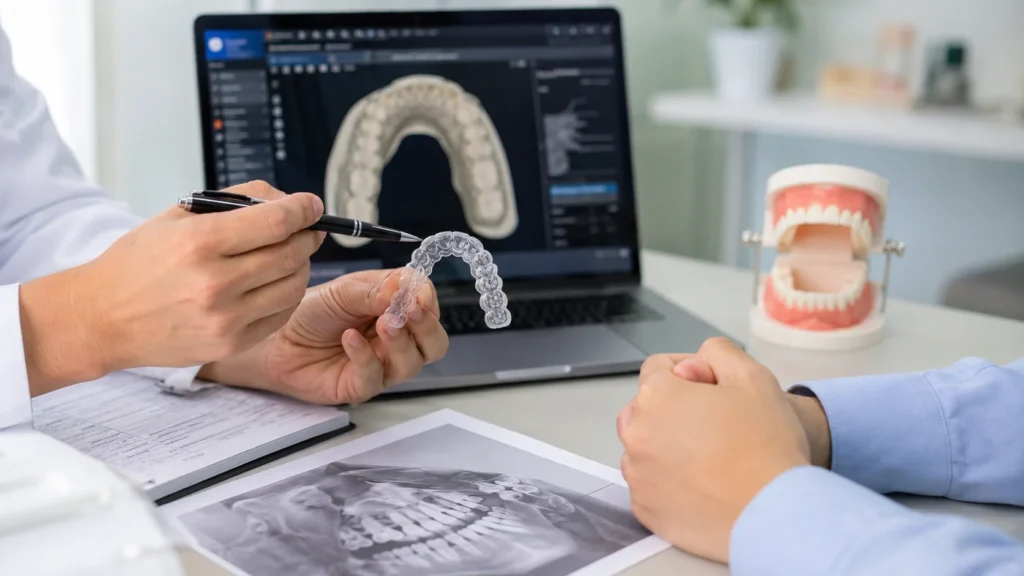
A very common and expensive mistake people make is choosing mail-order aligner services that skip in-person three-dimensional scans and clinician visits. People fall into this trap because skipping clinic consultations looks like an easy way to lower initial costs.
Without detailed root imaging, direct-to-consumer aligners cannot identify pre-existing bone loss or short root structures. Forcefully pushing teeth through compromised jawbone causes severe gum recession, exposed roots, and bite misalignments. Fixing these structural errors requires expensive specialist intervention that costs double the price of proper initial care.
Tracking Real Numbers Across Custom Trays
Let us look at a concrete worked example tracking physical tooth movement across a standard twenty-four tray alignment series. Each custom tray is engineered to move targeted teeth by precisely 0.20 millimetres over a fourteen-day wear cycle.
Across twenty-four trays, this precise sequence achieves 4.80 millimetres of total arch alignment over twelve months. If a single tray fails to seat completely and leaves a small 0.40-millimetre air gap along the edge, subsequent trays will not fit. Using alignment seaters for three minutes daily closes that air gap, keeping your treatment on schedule without requiring new scans.
Daily Operational Controls for Success
Managing aligner therapy requires establishing simple, repeatable habits during your daily routine. Keeping your trays clean and properly seated keeps your force vectors accurate.
Incorporate these core operational habits into your schedule:
- Use silicone seaters consistently: Bite down on soft seaters for three minutes twice daily to eliminate air gaps.
- Clean trays with lukewarm water: Avoid hot water that deforms custom engineered polymer shapes.
- Maintain strict wear cycles: Keep your aligners inserted for twenty-two hours daily to ensure steady bone remodelling.
A Clear Rule for Tray Transitions
You do not need orthodontic training to know whether your teeth are tracking correctly before moving to the next tray in your sequence. You can apply a straightforward decision rule on day fourteen of every tray cycle.
If your current tray snaps in with zero air gaps along the edges and your teeth feel completely comfortable when chewing, proceed to the next tray. If you notice visible gaps between the plastic and your teeth or feel active tenderness, wear your current tray for another three days while using silicone seaters daily until tracking resolves.
Achieving a straight, healthy smile as an adult is ultimately about respecting human biology rather than rushing the process. By understanding how bone tissue remodels under light pressure, keeping daily wear times consistent, and following clear tracking rules, you protect both your teeth and your financial investment. Approach your treatment plan with steady patience, rely on proven clinical guidance, and move forward with quiet confidence in your smile.