

Bearings are one of those everyday mechanical components that most of us rarely think about. We use products and machines that depend on them constantly, yet their role often goes unnoticed. From the wheels of a bicycle to the machinery inside a factory, bearings help countless devices move smoothly and efficiently.
So, what exactly is a bearing? A bearing is a machine component designed to allow controlled movement between parts while reducing friction. Depending on its design, a bearing can support rotation around a fixed axis, allow linear movement, or help control movement while supporting a load.
But where are bearings used in everyday life, and why are they so important? Let’s take a closer look at the many ways these relatively small components help keep our modern world moving and learn more.
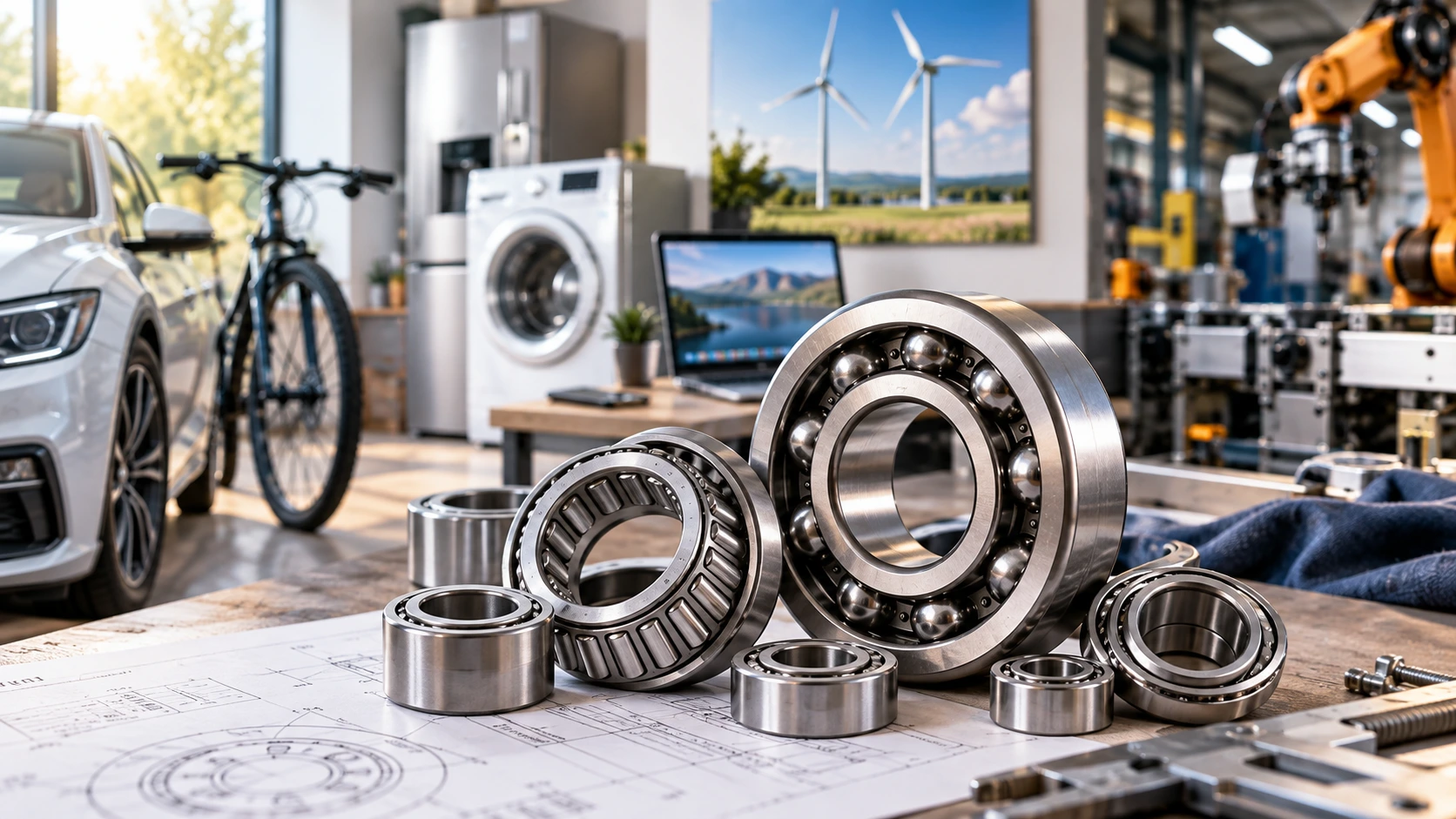
Bearings in Transportation: Keeping Wheels Moving
One of the easiest ways to understand the importance of bearings is to look at transportation. Bearings are found in everything from bicycles and skateboards to cars, trucks, trains, and aircraft. Whenever wheels or other rotating components need to move smoothly under a load, bearings can play an important role.
In a vehicle’s wheel assembly, bearings support the weight of the vehicle while allowing the wheels to rotate with relatively little friction. This helps improve smoothness, efficiency, and overall performance.
Think about riding a bicycle. The wheels need to rotate freely as you pedal, and the bearings inside the wheel hubs help make that possible. The same basic principle applies to the wheels of a car or the moving components found in much larger vehicles.
Without suitable bearings, more energy would be lost through friction, components would experience greater wear, and smooth movement would become much more difficult. In this way, bearings quietly contribute to the transportation systems we rely on every day.
Bearings in Industrial Machinery
Bearings are just as important behind the scenes in factories and industrial facilities. Modern manufacturing depends on machines that operate quickly, accurately, and often for long periods. Many of these machines contain bearings.
Robotic arms, conveyor systems, electric motors, pumps, compressors, and other industrial equipment use bearings to support rotating shafts and moving parts. By reducing friction and helping components move predictably, bearings allow machinery to operate efficiently.
Industrial bearings also have to cope with demanding conditions. Depending on the application, they may need to handle heavy loads, high rotational speeds, vibration, temperature changes, dust, moisture, and continuous operation.
When bearings are properly selected, installed, lubricated, and maintained, they can help reduce unnecessary wear and minimize equipment downtime. That makes them an important part of keeping production lines running smoothly.
Bearings Around the Home
You don’t have to visit a factory to find bearings. They are also used in many household appliances and systems that we use every day.
Washing machines, vacuum cleaners, refrigerators, fans, air-conditioning systems, and other appliances can contain bearings or similar components that support rotating parts. These components help motors, fans, drums, pumps, and other moving mechanisms operate with less friction.
Consider a washing machine. During a spin cycle, the drum rotates at high speed while carrying a significant load. Bearings help support the rotating drum and allow it to turn smoothly. If a bearing becomes worn or damaged, you may notice unusual noise, vibration, or other changes in the machine’s operation.
Bearings can also be found in HVAC equipment. Fans and motors need to rotate reliably to circulate air through a building. Well-functioning bearings help these systems operate efficiently while keeping mechanical noise and friction under control.
Bearings and Modern Electronics
Bearings have also played an important role in the development of modern electronic and computer equipment. One well-known example is the traditional computer hard disk drive.
Inside a hard disk drive, magnetic platters rotate at high speed while a read/write head accesses stored information. Precision bearings are used in the spindle motor to support smooth and stable rotation.
Although solid-state drives have largely replaced traditional hard drives in many modern devices, the example shows just how important precision mechanical components can be in electronic technology.
In applications where components rotate at high speed, even small amounts of unwanted friction, vibration, or movement can affect performance. That’s why bearing design and precision are particularly important in sensitive equipment.
The Role of Bearings in Renewable Energy
As the world continues to invest in renewable energy, bearings are helping support some of the technology behind the transition. Wind turbines are a particularly good example.
A wind turbine contains several major components that rely on bearings. These can include the main shaft, gearbox, generator, and other rotating mechanisms. The bearings must support substantial loads while allowing components to rotate reliably.
Wind turbines also operate in challenging outdoor environments. Bearings may have to withstand changing temperatures, moisture, vibration, and high mechanical loads while operating for long periods. Reliable bearing performance is therefore important for maintaining turbine efficiency and reducing unplanned maintenance.
As renewable energy systems become increasingly important, the engineering behind components such as bearings becomes equally valuable. A small mechanical component can have a significant impact on the reliability of a much larger machine.
Bearings in Watches and Clocks
Bearings aren’t always large or designed for heavy machinery. Some of the smallest and most precise examples can be found in mechanical watches and other timekeeping mechanisms.
Mechanical watches contain many small moving components that must work together accurately. Jewel bearings, commonly made from synthetic ruby or sapphire, are used at various points in watch movements to reduce friction and wear.
These jewel bearings are a great example of how bearing technology can be adapted to very different applications. Instead of supporting a heavy industrial shaft, they are designed for tiny components where precision and low friction are essential.
Why Are Bearings So Important?
Bearings may seem like simple components, but their job is fundamental: they help moving parts move in the way they are supposed to.
By reducing friction and supporting loads, bearings can help machinery operate more efficiently and reliably. They can also reduce wear on other components, improve smoothness, and contribute to longer equipment service life when they are correctly selected and maintained.
The exact type of bearing required depends on the application. Ball bearings, roller bearings, tapered roller bearings, cylindrical roller bearings, and other designs are engineered for different combinations of loads, speeds, space limitations, and operating conditions.
Small Components, Big Impact
It’s easy to overlook bearings because they are usually hidden inside the machines they support. However, their influence can be seen almost everywhere.
Every bicycle ride, car journey, factory production line, household appliance, and many forms of energy generation depend on mechanical systems that need controlled movement. Bearings help make that movement smoother and more efficient.
They may not be the most visible parts of a machine, but bearings are essential to its performance. Their ability to reduce friction, support loads, and guide movement makes them one of the most useful mechanical components in modern engineering.
So the next time you ride a bicycle, start a washing machine, drive a car, or see a wind turbine turning in the distance, remember that there are small components working behind the scenes to make that movement possible. Bearings truly help make our world turn.
Frequently Asked Questions About Bearings
What is a bearing?
A bearing is a mechanical component that supports moving parts and reduces friction between them. Bearings are commonly used to allow smooth rotation or controlled movement while carrying a load.
Where are bearings used in everyday life?
Bearings are used in many everyday products and systems, including bicycles, cars, skateboards, washing machines, vacuum cleaners, fans, air-conditioning equipment, computers, and various types of machinery.
What is the main purpose of a bearing?
The main purpose of a bearing is to reduce friction and support controlled movement between mechanical parts. In rotating applications, bearings help shafts and other components rotate smoothly while supporting the loads placed on them.
What are the most common types of bearings?
Common bearing types include ball bearings, roller bearings, tapered roller bearings, cylindrical roller bearings, and needle bearings. Different designs are suited to different loads, speeds, and operating conditions.
Why do bearings reduce friction?
Bearings are designed to reduce direct sliding contact between moving surfaces. For example, rolling elements in ball and roller bearings allow motion to occur primarily through rolling rather than sliding, which can significantly reduce friction.
What happens when a bearing wears out?
A worn bearing can produce unusual noise, vibration, heat, or resistance to movement. If the problem is ignored, a damaged bearing can also contribute to wear or failure of other machine components.
Why are bearings important in vehicles?
Vehicle bearings support rotating components such as wheels and help them turn smoothly under load. Properly functioning bearings contribute to efficient operation, smooth movement, and reduced mechanical wear.
Do household appliances use bearings?
Yes. Many household appliances contain bearings or bearing-related components. Washing machines, vacuum cleaners, refrigerators, fans, and HVAC equipment are examples of products that can use bearings to support rotating parts.
Why are bearings important in wind turbines?
Wind turbines contain several rotating components that need to operate reliably under substantial mechanical loads. Bearings support these components and help them rotate smoothly, making them an important part of turbine operation and maintenance.
How can bearing life be extended?
Proper bearing selection, correct installation, suitable lubrication, protection from contamination, and regular maintenance can all help extend bearing service life. The appropriate maintenance approach depends on the type of bearing and its operating environment.