
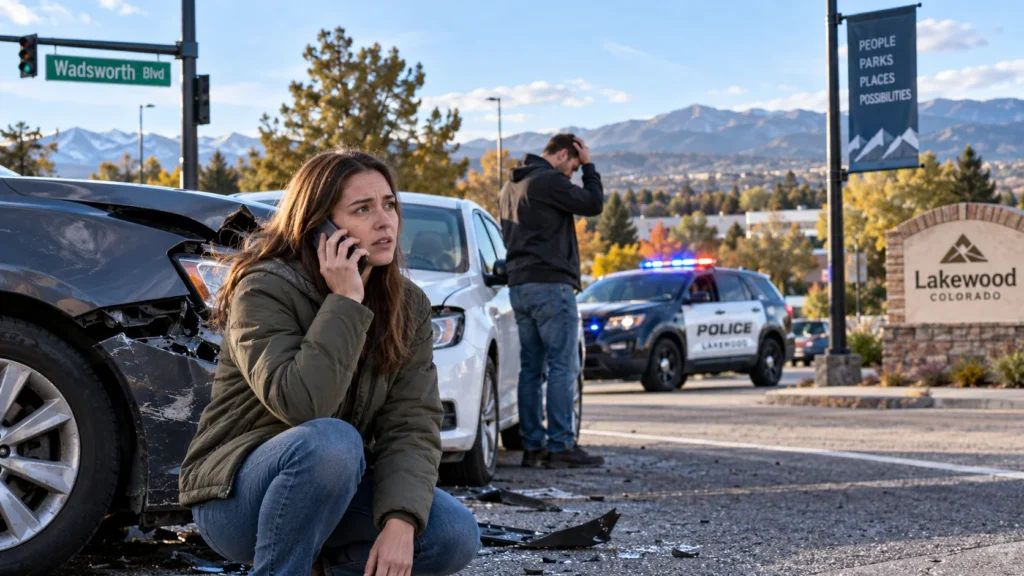
A crash on Wadsworth Boulevard, Alameda Avenue, Colfax Avenue, or a neighborhood street in Lakewood can turn an ordinary trip into a confusing few hours. Adrenaline may make a person feel clear-headed at first, even when they are injured or shaken. The goal at the scene is not to solve every insurance or legal question. It is to get safe, obtain care, and preserve the information that may matter later.
When injuries, vehicle damage, or a dispute about responsibility are involved, speaking with a Lakewood personal injury lawyer may help a person understand their options under Colorado law. Until then, a calm checklist can prevent important details from being overlooked.
Step One: Move to Safety and Call for Help
First, check yourself and others for injuries. Call 911 when someone is hurt, traffic presents a danger, a vehicle cannot be driven safely, or law enforcement assistance is needed. Do not move a person with a possible serious injury unless there is an immediate threat, such as fire or oncoming traffic.
Turn on hazard lights if possible. If no one is seriously hurt and a vehicle is drivable, moving out of active traffic may reduce the risk of another collision. Before moving, take a few quick photos of the vehicle positions if it is safe to do so. Stay at the scene, exchange identifying and insurance information, and remain respectful even if the other driver is upset.
Step Two: Seek Medical Care for New or Lingering Symptoms
Some crash-related symptoms are not obvious at the roadside. Headaches, stiffness, neck or back pain, dizziness, numbness, sleep changes, anxiety, and concentration problems may appear later. A person who feels unwell, notices new symptoms, or receives advice from emergency responders should seek appropriate medical attention.
Tell each provider that the symptoms followed a motor vehicle crash and describe when they began. Follow recommended care when possible, attend scheduled appointments, and keep copies of visit summaries, prescriptions, bills, and work restrictions. Prompt care can support recovery and create a clearer record of what changed after the collision.[1]
Step Three: Document the Scene Without Creating More Risk
Only collect evidence when it can be done safely. Useful photographs and notes may include:
- Vehicle damage, license plates, and the vehicles from several angles.
- Lane markings, traffic lights, signs, road conditions, lighting, weather, debris, and skid marks.
- Visible injuries and damaged personal items, such as a bicycle, helmet, phone, or child restraint.
- The names and contact details of witnesses, plus nearby businesses or residences that may have cameras.
A short voice memo can also be useful. Record the time, location, direction of travel, what you observed, and what each person said, while avoiding conclusions about speed, fault, or intent. Observations made while details are fresh are often more useful than guesses made days later.
Step Four: Exchange Information and Preserve Records
Collect the other driver’s name, phone number, insurance company, policy details, driver’s license information, registration details, vehicle description, and plate number. If an officer responds, write down the agency, the officer’s name, the report number, and the date. Keep towing receipts, repair estimates, rental-car records, medical bills, and proof of missed work in one folder.
If the police did not respond, or if you need a copy of an existing report, Colorado provides instructions for reporting a crash and obtaining a crash record. An online individual report is a counter report for recordkeeping purposes and is not an investigation by law enforcement, so save your own evidence as well.
Step Five: Notify Insurance Without Oversharing
Report the crash to the appropriate insurer within the period required by the policy. Provide basic facts: the date, location, vehicles involved, contact information, and known injuries. It is reasonable to say that you are still receiving medical evaluation if you do not yet know the full extent of your symptoms.
Avoid estimating speed, distance, or fault when you are unsure. Do not minimize injuries simply because they were not apparent at the scene, and do not post crash details, photos, or physical-activity updates on social media. Read any authorization, recorded-statement request, repair agreement, or settlement release carefully before signing.
Evidence That Can Help Explain What Happened
A strong crash timeline is often built from several small records rather than one decisive item. Preserve police reports, original photos and videos, medical notes, repair estimates, witness information, employment records, and a daily journal describing symptoms and activities. Back up digital files in multiple locations, and keep the originals whenever possible.
Crash data can also give communities a broader view of road safety patterns. On January 23, 2026, CDOT reported preliminary figures showing 701 traffic deaths statewide in 2025, compared with 689 in 2024. Lakewood had 16 reported traffic fatalities in 2025, according to that preliminary count.[2] The state’s Colorado crash data dashboard can be filtered to examine reported crashes by location and other factors, although current data may be updated as records are completed.
How Fault and Deadlines May Affect a Claim
Colorado uses a modified comparative negligence rule in many injury and property-damage cases. A person’s damages may be reduced by their percentage of fault. If that person’s negligence is equal to or greater than the negligence of the person they seek to hold responsible, recovery may be barred under the applicable statute.
Many tort claims for bodily injury or property damage arising from motor-vehicle use have a three-year limitations period in Colorado, but exceptions and different timelines can apply. A deadline is not the only reason to act promptly. Video footage can be overwritten, witnesses can become difficult to locate, and vehicles may be repaired before they are documented.[3]
Special Situations That Need Extra Care
Hit-and-run crashes, commercial-vehicle collisions, pedestrian and bicycle injuries, motorcycle crashes, impaired-driving allegations, and crashes involving fatalities can require additional evidence and reporting steps. Passengers may have claims even though they were not driving. For children, inspect the car seat after any crash and follow the manufacturer’s instructions. Child seats involved in a moderate or severe collision should generally not be used.
A Simple 48-Hour Checklist
- Confirm everyone is safe and call for emergency help when needed.
- Seek medical care for injuries or newly developing symptoms.
- Save photographs, videos, witness details, and insurance information.
- Write down a factual account of what happened.
- Request or report crash-record information as appropriate.
- Notify the insurer and keep communications accurate and brief.
- Organize medical, repair, towing, rental, and missed-work records.
- Review any release or settlement proposal before agreeing to it.
Questions Readers Often Ask
Do You Need a Police Report for an Injury Claim?
A police report can be helpful, but it is not the only evidence that may matter. Medical records, photographs, witness statements, vehicle damage, and insurance documents may also help establish a timeline.
What if the Other Driver Blames You?
Stay calm and avoid a roadside argument. Fault is often evaluated based on evidence, not on the first opinion expressed after a crash. Preserve the facts and let the available records speak for themselves.
What if an Insurance Company Calls First?
Confirm the caller’s identity, give basic information, and avoid speculation. You can ask for time to review paperwork before making a recorded statement or signing a release.
Final Reminder
After a Lakewood crash, focus on safety, medical care, careful communication, and timely recordkeeping. You do not need to resolve everything in one day. A clear, well-preserved account can make the next decision easier.
References
[1] Centers for Disease Control and Prevention. Symptoms of Mild TBI and Concussion. September 15, 2025. https://www.cdc.gov/traumatic-brain-injury/signs-symptoms/index.html
[2] Colorado Department of Transportation. Warm weather coincides with increase in traffic deaths in 2025. January 23, 2026. https://www.codot.gov/news/2026/january/increased-traffic-deaths-2025
[3] Colorado General Assembly. Colorado Revised Statutes, § 13-21-111, Negligence cases – comparative negligence as measure of damages; § 13-80-101, General limitation of actions – three years. https://content.leg.colorado.gov/sites/default/files/images/olls/crs2024-title-13.pdf