

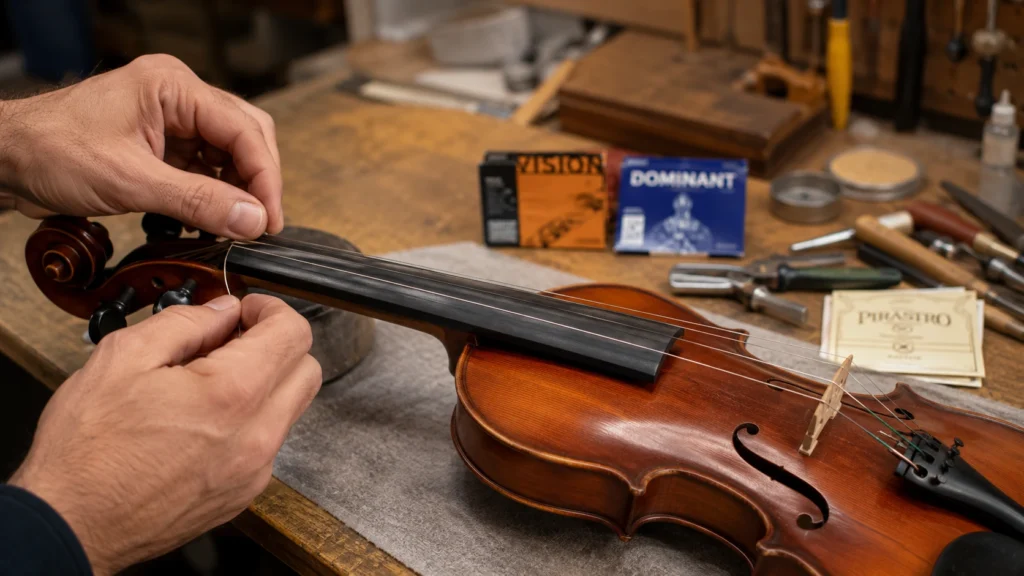
If you’re chasing a better sound, you might not need a new violin at all. Sometimes the answer is as simple as what’s strung across your instrument. Most players don’t think much about their strings until something feels off, but strings play a bigger role in your tone and playability than people give them credit for.
The right set can completely change how your violin sounds and feels under your fingers. The wrong set can make even a great instrument sound flat and lifeless.
1. Why Your Violin Strings Matter
Your violin strings matter because they shape your tone more than almost anything else you can control. Your strings are the main basis for how well your sound projects when you perform and how responsive it is in case you’re up for long practice or performance.
Note that old or mismatched violin strings can make your violin instantly feel stiff and the sound? Dull.
2. The Different Types of Violin Strings
Steel, synthetic, and gut. Those are the three types of strings.
How do you choose, though?
If you want something that’s stable, bright, and responsive, steel strings are ideal. If you’re aiming for a warmer tone and you’re a classical player, synthetic strings are for you. Lastly, if you want the quality that traditional violinists have, like rich and complex sound, gut strings are the way to go.
3. How to Tell When Your Strings Need Replacing
Strings wear out even if they look fine. If your tone starts sounding dull or unclear, or your violin won’t hold its tuning as it used to, that’s usually a sign to replace strings. Take a close look too. Fraying, discoloration, or flat spots on the string mean it’s time for a fresh set.
4. Common Mistakes When Choosing Violin Strings
Many players are into price alone. Like they pick those cheaper strings or those pricier ones (if they want to impress someone). The thing is, price alone won’t give you the best strings. You’ll just risk it. String tension should be the main concern.
Ignoring string tension is another mistake because picking the wrong one can ruin your instrument’s setup.
5. How to Match Strings to Your Playing Style
If you’re a beginner, you might do well with those strings that are easy to play and forgiving. This is because you’re mainly focused on building technique at this point.
Intermediate players might go for something with more tonal depth, like synthetic strings. Lastly, for those performing, aim for strings with more projection and a richer, more complex sound that can sound good in bigger venues.
6. Small String Changes That Make a Big Difference
Don’t be afraid to experiment. Trying different brands can help you find a tone you actually like, and working with your violin’s individual setup makes a real difference too. Learning how to choose violin strings that match your instrument and playing style can transform how your violin sounds without spending a fortune.
Conclusion
You can assume that your violin needs replacing, but it’s also important that you take a good look at your current set first. It’ll serve as your basis since you already know what tone it has and how responsive it is. However, don’t be afraid to experiment with types and brands as well. Trying different types and brands might lead you to a better sound.