
Yes, African pygmy hedgehogs can eat certain types of dog food, but that does not mean dog food is automatically a good choice for their everyday diet. Hedgehogs have specific nutritional needs, and the quality, ingredients, protein level, fat content, and portion size of any dog food all matter.
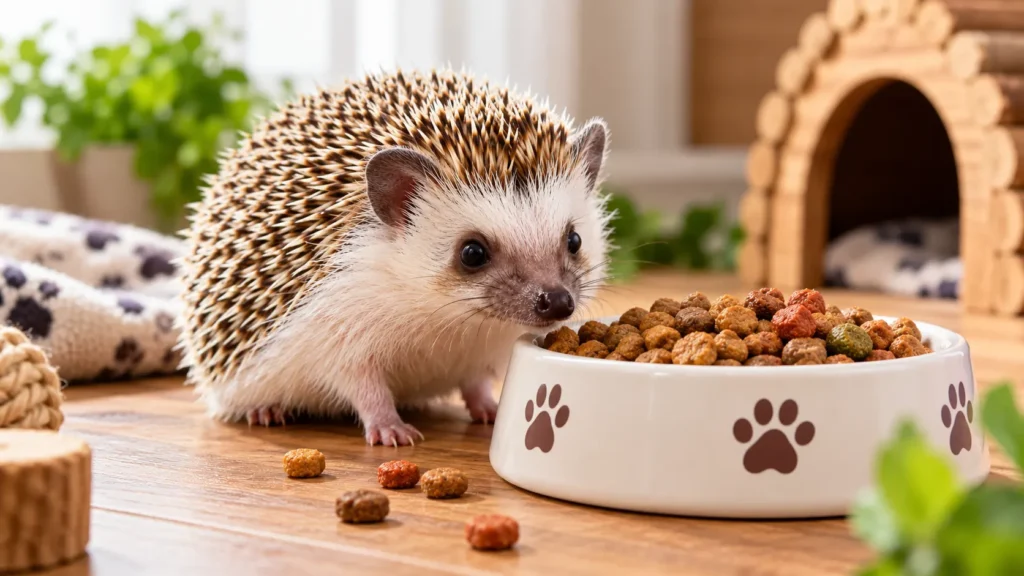
If you have an African pygmy hedgehog, it is understandable to wonder whether a food already sitting in your home can be used as an occasional meal or supplement. Some commercially prepared dog foods can provide useful animal-based protein, but dog food is formulated specifically for dogs rather than hedgehogs. Because of this, it should be selected carefully and generally should not replace a properly formulated hedgehog diet.
In this guide, we will look at whether African pygmy hedgehogs can eat dog food, what to look for on a dog-food label, potential risks, suitable alternatives, feeding tips, and foods that should be avoided. By the end, you will have a clearer idea of where dog food may fit into your hedgehog’s diet.
Understanding African Pygmy Hedgehogs
African pygmy hedgehogs are small insect-eating mammals that have become popular companion animals. Their natural diet is quite different from that of dogs, which is one reason pet owners need to pay attention to what goes into their food bowl.
In the wild, hedgehogs consume insects and other small invertebrates, along with occasional plant material and other foods available in their environment. Captive hedgehogs are usually fed a commercially prepared food designed for hedgehogs or an appropriately formulated alternative, with insects and carefully selected treats added to provide variety.
Dog food can sometimes be used as part of a hedgehog’s diet, but not every product is appropriate. Different dog foods have very different ingredient profiles, calorie densities, fat levels, and nutritional formulations. Simply choosing a food because it is labeled “high protein” is not enough.
If you are considering dog food for your African pygmy hedgehog, check the ingredient list and nutritional information carefully. When in doubt, ask an exotic-animal veterinarian who is familiar with hedgehogs before making a regular change to your pet’s diet.
What Do African Pygmy Hedgehogs Need in Their Diet?
A healthy African pygmy hedgehog needs a nutritionally balanced diet rather than simply a collection of individual foods. Protein, fat, fiber, vitamins, minerals, and appropriate calorie intake all play a role in maintaining normal growth, body condition, and overall health.
A commercially formulated hedgehog diet can make it easier to provide consistent nutrition. Some owners and veterinarians may also use appropriately selected cat or dog food as part of a feeding plan. The exact choice depends on the individual hedgehog and the nutritional profile of the food.
Insects can also be useful because they resemble foods hedgehogs naturally encounter. Mealworms and appropriately prepared crickets are common choices. Fresh foods can be offered in small quantities, but they should not replace the nutritionally complete portion of the diet.
Portion control is also important. African pygmy hedgehogs can gain excess weight when they receive too many calories or too many treats. A diet that looks healthy on paper can still cause problems if portions are consistently too large.
Can African Pygmy Hedgehogs Eat Dog Food?
Yes, some African pygmy hedgehogs can eat appropriately selected dog food, particularly as an occasional food or as part of a veterinarian-approved feeding plan. However, dog food should not automatically be considered a complete substitute for a food specifically formulated for hedgehogs.
The important thing is not simply whether the food is dog food. You need to consider its ingredients, nutritional composition, calorie density, texture, and the individual needs of your hedgehog.
What Should You Look for in Dog Food?
If your veterinarian approves the use of dog food, choose a reputable product with a clearly listed ingredient profile and appropriate nutritional composition. Avoid products with unnecessary ingredients or excessive amounts of fat and calories.
Dry food may need to be broken into smaller pieces so that a hedgehog can eat it comfortably. Your hedgehog’s age, size, activity level, weight, and existing health conditions should also be considered when determining whether the food is appropriate.
Can Dog Food Be a Main Food?
This is where caution is important. Dog food is formulated to meet canine nutritional requirements, not the nutritional requirements of African pygmy hedgehogs. Even when a particular dog food appears to have suitable ingredients, it should not automatically be assumed to be nutritionally complete for a hedgehog.
For regular feeding, a commercially prepared food formulated for hedgehogs or another diet recommended by an exotic-animal veterinarian is generally a more appropriate starting point.
Potential Risks of Feeding Dog Food to Hedgehogs
Although some dog foods may be suitable in certain circumstances, there are several reasons to avoid choosing a random dog food for your hedgehog.
1. Nutritional Imbalance
The biggest concern is that dog food is designed for dogs. A food that meets the nutritional requirements of a canine may not provide the right balance for an African pygmy hedgehog. Using an unsuitable product as the primary diet could result in nutritional deficiencies or excesses over time.
2. Excess Calories and Fat
Some dog foods are calorie-dense and relatively high in fat. Feeding too much of these foods can contribute to excessive weight gain. Maintaining a healthy body condition is particularly important for pet hedgehogs because obesity can create additional health concerns.
3. Problematic Ingredients
Always check the ingredient list before giving your hedgehog any commercial pet food. Avoid foods containing ingredients that may be unsafe for hedgehogs, including products containing onion or garlic. If you are uncertain about an ingredient, do not assume it is safe simply because it is commonly used in dog food.
4. Digestive Upset
A sudden change in diet can cause digestive problems. If a new food is introduced too quickly, your hedgehog may develop loose stools, reduced appetite, or other digestive symptoms. New foods should therefore be introduced gradually and in small quantities.
Better Alternatives to Dog Food for African Pygmy Hedgehogs
If you want to provide your African pygmy hedgehog with a varied diet, there are several options that may be more appropriate than relying on dog food.
High-Quality Hedgehog Food
A quality commercial hedgehog food is designed with hedgehogs in mind and can make it easier to provide consistent nutrition. Look for a reputable product with clearly stated ingredients and nutritional information.
Appropriate Insects
Insects can be an excellent source of enrichment and animal-based protein. Mealworms and crickets are commonly offered to pet hedgehogs. Insects should come from a reliable source rather than being collected outdoors, where they may have been exposed to pesticides or other contaminants.
Small Amounts of Fruits and Vegetables
Some hedgehogs enjoy small portions of suitable fruits and vegetables. Examples can include cooked squash, carrots, green beans, or small pieces of certain fruits. These foods should be treated as additions rather than replacements for a nutritionally complete staple diet.
Plain Cooked Meat
Small amounts of plain, fully cooked lean meat may also be suitable for some hedgehogs. Chicken and turkey are common examples. Avoid meat prepared with salt, sauces, onions, garlic, spicy seasonings, or other potentially harmful ingredients.
How to Feed an African Pygmy Hedgehog Properly
Providing a healthy diet involves more than choosing the right food. Feeding habits, portion sizes, food safety, and your hedgehog’s individual condition all matter.
- Choose a nutritionally appropriate staple food: Use a reputable hedgehog food or another diet recommended by an exotic-animal veterinarian.
- Introduce new foods slowly: Give small amounts when introducing a new ingredient and watch for digestive changes.
- Keep treats limited: Insects, fruits, and other treats should not make up most of the daily diet.
- Avoid unsafe foods: Do not offer chocolate, alcohol, caffeinated products, onions, garlic, or other foods known to be harmful to hedgehogs.
- Provide fresh water: Clean drinking water should always be available.
- Monitor body condition: Regularly observe your hedgehog’s weight and overall body condition. Sudden weight changes should be discussed with a veterinarian.
- Speak with an exotic-animal veterinarian: If your hedgehog has a medical condition, is overweight, refuses food, or develops digestive symptoms, professional veterinary advice is important.
What Foods Should Hedgehogs Avoid?
Knowing what not to feed your hedgehog is just as important as knowing what to feed them. Avoid foods that are toxic, heavily seasoned, excessively sugary, or difficult for them to digest.
- Chocolate
- Alcohol
- Caffeinated foods and drinks
- Onions and garlic
- Foods heavily seasoned with salt or spices
- Raw or spoiled meat
- Foods containing potentially harmful additives or ingredients
If you are unsure about a particular food, it is safer to leave it out until you have confirmed its suitability with a veterinarian experienced in treating hedgehogs.
Frequently Asked Questions About African Pygmy Hedgehogs and Dog Food
Can African pygmy hedgehogs eat dog food?
Yes, some African pygmy hedgehogs can eat appropriately selected dog food in moderation. However, dog food is formulated for dogs and should not automatically be used as a hedgehog’s complete diet. Choose food carefully and consult an exotic-animal veterinarian if you plan to use it regularly.
Is dog food safe for hedgehogs?
Some dog foods may be suitable for hedgehogs, but safety depends on the specific ingredients and nutritional composition. Avoid products containing potentially harmful ingredients such as onion or garlic, and avoid foods that are excessively rich or calorie-dense.
What is the best food for an African pygmy hedgehog?
A commercially prepared food formulated for hedgehogs can be a practical staple because it is designed around their nutritional needs. Insects and small amounts of appropriate fresh foods can provide variety. Your veterinarian can help you choose a diet based on your hedgehog’s age, weight, activity, and health.
Can hedgehogs eat dry dog food?
Some hedgehogs can eat appropriately selected dry dog food, particularly as part of a varied feeding plan. The pieces may need to be small enough for the hedgehog to eat comfortably. Always check the ingredients and nutritional information before offering it.
Can I feed my hedgehog dog food every day?
Dog food should not automatically become your hedgehog’s everyday staple simply because your pet enjoys it. Because dog food is formulated for canine nutritional needs, discuss regular use with an exotic-animal veterinarian before making it a major part of the diet.
What human foods can African pygmy hedgehogs eat?
Some plain, appropriately prepared foods can be offered in small amounts, including certain vegetables, fruits, and lean cooked meats. Avoid seasoned foods and ingredients that are toxic to pets. Fresh foods should complement, rather than replace, a nutritionally complete diet.
Can hedgehogs eat vegetables?
Yes, some vegetables can be offered in small portions. Carrots, green beans, and cooked squash are examples that may be suitable. Introduce new vegetables gradually and stop offering them if your hedgehog develops digestive problems.
Can hedgehogs eat meat?
Small amounts of plain, fully cooked lean meat such as chicken or turkey may be suitable for hedgehogs. The meat should be unseasoned and free from sauces, onion, garlic, and excessive fat.
How much dog food should I give my hedgehog?
There is no single portion that is appropriate for every hedgehog. The right amount depends on the food’s calorie density and your pet’s age, weight, activity level, and overall diet. If dog food is being used regularly, ask your veterinarian to help determine an appropriate portion.
What should you never feed a hedgehog?
Hedgehogs should not be given foods such as chocolate, alcohol, caffeinated products, onions, garlic, or heavily seasoned foods. It is also important to avoid spoiled or unsafe foods and anything containing an ingredient you cannot verify as safe.
Final Thoughts
So, can African pygmy hedgehogs eat dog food? In some situations, yes—but the specific product matters. A suitable dog food may provide useful nutrition as part of a carefully planned diet, but it should not automatically be treated as a complete replacement for a food formulated for hedgehogs.
The safest approach is to focus on a balanced, species-appropriate diet and use additional foods such as suitable insects, vegetables, fruits, or plain cooked meat in appropriate amounts. If you want to make dog food a regular part of your hedgehog’s meals, speak with an exotic-animal veterinarian first.
Every hedgehog is different, so pay attention to changes in appetite, weight, stool, energy, and overall behavior whenever you introduce a new food. A thoughtful diet and sensible portions can go a long way toward supporting your African pygmy hedgehog’s health and well-being.
Disclaimer: This article is for general informational purposes only and is not a substitute for veterinary advice. If your hedgehog is sick, refuses food, experiences persistent diarrhea or vomiting, or has another concerning symptom, contact a qualified exotic-animal veterinarian.