
African pygmy hedgehogs can eat strawberries, but this sweet fruit should only be offered as an occasional treat. Strawberries provide nutrients such as vitamin C and fiber, but they also contain natural sugar. Because hedgehogs need a balanced, protein-rich diet, fruit should never replace their regular food.
If you want to give your hedgehog a taste of strawberry, a small, properly prepared piece can be offered from time to time. Wash the fruit thoroughly, remove the leafy top, and cut it into a small piece that is easy for your hedgehog to eat.
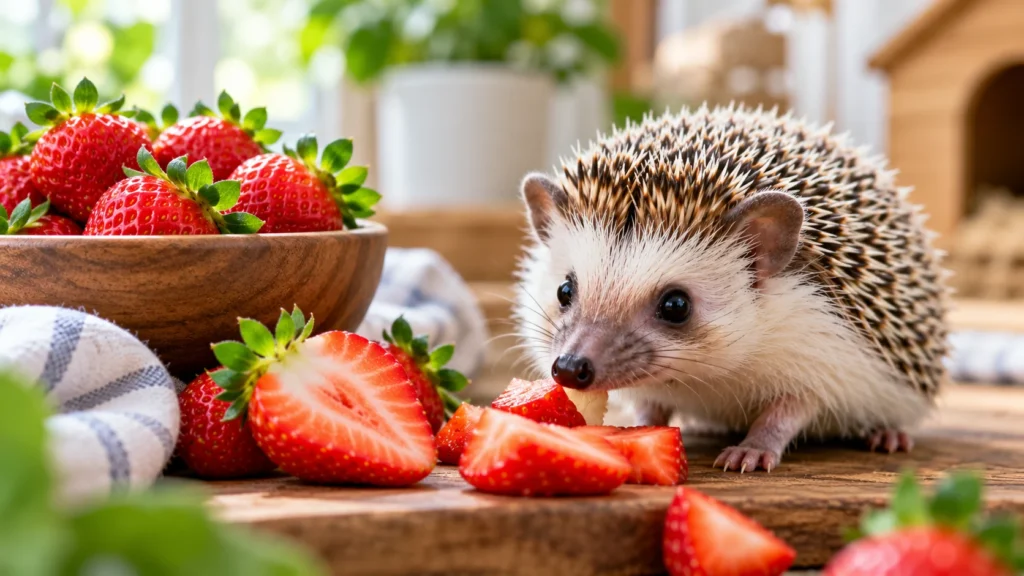
As with any new food, start with a very small amount and watch your pet afterward. Some hedgehogs tolerate certain fruits well, while others may develop loose stools or other digestive problems. If your hedgehog has a health condition, is overweight, or has a sensitive stomach, speak with an exotic-animal veterinarian before adding new treats.
African Pygmy Hedgehogs Overview
African pygmy hedgehogs are small insectivorous mammals that are commonly kept as companion animals. They are naturally active at night, so it is normal for a healthy hedgehog to spend much of the daytime sleeping and become more active during the evening and overnight.
Although they are sometimes described simply as omnivores, their natural feeding behavior is heavily associated with insects and other animal-based foods. Pet hedgehogs therefore need a nutritionally appropriate staple diet rather than large quantities of fruits and vegetables.
A suitable diet is particularly important because hedgehogs can gain excess weight when they receive too many calorie-dense foods or treats. Fruit can be included occasionally, but it should remain a small part of the overall feeding plan.
This is where strawberries can fit in. A small piece of fresh strawberry can provide variety without becoming a major part of the diet.
Strawberries and Their Nutritional Value
Strawberries are a nutrient-rich fruit that contains vitamin C, fiber, folate, potassium, and other beneficial plant compounds. They also contain natural sugar, which is one reason they are better suited to occasional treats than everyday feeding.
For reference, one cup of sliced strawberries, weighing about 166 grams, contains approximately:
- 53 calories
- 13 grams of carbohydrates
- 3 grams of fiber
- 7 grams of sugar
- 1 gram of protein
- 0.5 grams of fat
- Vitamin C: about 149% of the human Daily Value
- Folate: about 9% of the human Daily Value
- Potassium: about 5% of the human Daily Value
- Magnesium: about 3% of the human Daily Value
These nutritional figures are based on human food-label reference values, so they should not be interpreted as the specific nutritional requirements of a hedgehog.
The vitamin C and fiber found in strawberries make the fruit nutritionally interesting, but hedgehogs do not need strawberries to meet their basic nutritional requirements. Their main diet should provide the protein, fat, vitamins, and minerals they need.
Can African Pygmy Hedgehogs Eat Strawberries?
Yes, African pygmy hedgehogs can eat strawberries in small amounts. Fresh strawberry can be used as an occasional treat for a healthy hedgehog, provided it is prepared appropriately.
The key is portion control. Strawberries contain natural sugar and are not nutritionally complete enough to serve as a staple food. Giving too much fruit may also contribute to an unbalanced diet and can cause digestive upset in some hedgehogs.
When offering strawberry for the first time, start with a tiny piece rather than giving a whole berry. This makes it easier to determine whether your hedgehog tolerates the fruit.
It is also a good idea to observe your pet afterward. Changes such as diarrhea, unusually soft stools, vomiting, reduced appetite, or other signs of illness should not be ignored. If symptoms occur or persist, stop offering the food and contact a veterinarian familiar with hedgehogs or other exotic pets.
One important correction to a common misconception is that strawberry seeds need to be individually removed. The tiny seeds on the outside of a strawberry are not generally considered a special choking hazard for hedgehogs. The more important preparation steps are washing the fruit, removing the leafy stem and cutting the berry into a suitably small piece.
Health Benefits of Strawberries for African Pygmy Hedgehogs
When given occasionally, strawberries can add variety to an African pygmy hedgehog’s diet. They contain several nutrients and plant compounds that are valuable as part of a varied food selection.
Vitamin C
Strawberries are particularly well known for their vitamin C content. However, it is important not to overstate the importance of vitamin C for hedgehogs. A properly formulated diet should already provide the nutrients a healthy pet needs.
Fiber
Strawberries contain dietary fiber, which can contribute to normal digestive function. Nevertheless, too much fruit can have the opposite effect and may lead to loose stools or digestive discomfort.
Antioxidant Compounds
Strawberries contain naturally occurring antioxidant compounds, including anthocyanins and other polyphenols. These compounds are one reason strawberries are considered a nutritious food for people, although research specifically examining the health effects of strawberries in pet African pygmy hedgehogs is limited.
Dietary Variety
A tiny piece of strawberry can also provide enrichment and variety. For many pet owners, offering safe foods in moderation can make feeding time more interesting without changing the foundation of the animal’s diet.
Potential Risks and Precautions
Although strawberries are generally suitable as an occasional treat, there are several things to consider before adding them to your hedgehog’s diet.
Natural Sugar
Strawberries contain natural sugar. A small serving is unlikely to be a problem for a healthy hedgehog, but frequent or large portions can contribute unnecessary calories. This is particularly important for hedgehogs that are already overweight.
Digestive Upset
Some hedgehogs may be sensitive to new foods. Eating too much strawberry at once could result in soft stools or diarrhea. Introducing new foods gradually makes it easier to identify the cause if your pet develops digestive problems.
Food Quality
Only offer clean, fresh strawberry. Avoid strawberries covered with chocolate, whipped cream, syrup, artificial sweeteners, or other toppings. These products are not appropriate treats for hedgehogs.
Individual Tolerance
Every hedgehog is an individual. A food that one pet enjoys without problems may not agree with another. Pay attention to your hedgehog’s appetite, stool quality, activity level, and general behavior after introducing a new treat.
How to Feed Strawberries to African Pygmy Hedgehogs
1. Choose a Fresh Strawberry
Select a fresh strawberry that is free from visible mold, spoilage, or damage. Do not offer fruit that smells fermented or looks rotten.
2. Wash It Thoroughly
Wash the strawberry under clean running water to remove dirt and surface residues. Washing is especially important because the fruit is being eaten directly.
3. Remove the Green Top
Remove the leafy stem and green cap before giving the fruit to your hedgehog. The leafy portion is unnecessary and may be difficult for your pet to handle.
4. Cut a Small Piece
Cut the strawberry into a small, manageable piece. You do not need to give your hedgehog an entire berry. A small piece is enough to provide a taste while keeping the treat portion under control.
5. Introduce It Slowly
If your hedgehog has never eaten strawberry before, offer only a small amount the first time. Watch for changes in stool, appetite, or behavior over the following day.
6. Keep It as an Occasional Treat
There is no nutritional reason to make strawberries a daily food. Treats should remain a small part of the overall diet, while the primary food should provide the balanced nutrition your hedgehog requires.
How Much Strawberry Can a Hedgehog Eat?
There is no universally established strawberry serving size for every African pygmy hedgehog because appropriate portions depend on the animal’s size, age, weight, health, and overall diet.
A practical approach is to offer a very small piece rather than an entire strawberry. For a new food, start especially small and observe how your pet responds.
Rather than focusing only on a fixed weekly schedule, consider strawberries a treat that should be offered sparingly. If your hedgehog is overweight or has a medical condition, ask your veterinarian whether fruit treats are appropriate at all.
Can Hedgehogs Eat Strawberry Leaves and Stems?
It is better to remove the green leafy top and stem before offering strawberry to your hedgehog. There is little benefit in feeding these parts, and removing them makes the fruit easier to prepare and eat.
The important point is that you should not serve the whole strawberry plant or assume every part of the plant is automatically safe simply because the fruit is suitable as an occasional treat.
Fresh, Frozen, or Canned Strawberries: Which Is Best?
Fresh, plain strawberries are the simplest choice when you want to give your hedgehog this fruit.
Plain frozen strawberry can potentially be used after it has been completely thawed and does not contain added ingredients. However, fresh fruit is generally easier to portion and inspect.
Canned strawberries and strawberry products should generally be avoided because they may contain added sugar, syrups, preservatives, or other ingredients that your hedgehog does not need.
Similarly, avoid strawberry jam, strawberry yogurt with added sugar, chocolate-covered strawberries, strawberry desserts, and other processed human foods.
Alternatives to Strawberries
If your hedgehog does not seem interested in strawberries, there are other foods that can sometimes be offered as occasional treats. The same rule applies: treats should remain a small part of the overall diet.
- Blueberries: A small amount of plain blueberry can provide variety and naturally occurring antioxidants.
- Raspberries: Raspberries contain fiber and other nutrients and can be offered in small portions.
- Apple: Small pieces of apple can be offered occasionally. Remove the core and seeds before serving.
- Banana: Banana is relatively calorie- and sugar-dense, so only a very small amount should be used as an occasional treat.
Fruit should never displace the nutritionally complete staple food that forms the foundation of your hedgehog’s diet.
Foods to Avoid Giving African Pygmy Hedgehogs
Knowing what not to feed your hedgehog is just as important as knowing which treats are acceptable. Avoid offering foods that are toxic, heavily processed, excessively salty, sugary, or otherwise unsuitable for hedgehogs.
Common examples of foods and ingredients to avoid include chocolate, alcohol, caffeinated products, onions, garlic, and heavily seasoned or processed foods. Grapes and raisins are also best avoided because of their potential toxicity concerns in mammals.
If you are unsure whether a particular food is safe, check with an exotic-animal veterinarian before feeding it to your pet.
What Should an African Pygmy Hedgehog Eat?
Strawberries should never be considered a substitute for a balanced hedgehog diet. The foundation of a pet hedgehog’s nutrition should be a properly formulated staple food that meets its nutritional requirements.
Depending on veterinary guidance and the individual animal, appropriate diets may include a suitable commercial hedgehog food or other nutritionally complete food recommended for the species. Insects can also be used as treats or dietary enrichment when appropriate.
Fresh water should always be available. Portion sizes should be adjusted according to your hedgehog’s body condition, activity level, age, and health.
Frequently Asked Questions
Can African pygmy hedgehogs eat strawberries?
Yes. African pygmy hedgehogs can eat small amounts of fresh strawberry as an occasional treat. Strawberries should not replace their normal balanced diet because they contain natural sugar and do not provide complete nutrition for hedgehogs.
How much strawberry can I give my hedgehog?
Start with a very small piece, particularly if your hedgehog has never eaten strawberry before. The appropriate amount depends on the individual hedgehog, its weight, health, and overall diet. A veterinarian can provide more specific portion guidance for your pet.
Can hedgehogs eat strawberry seeds?
The tiny seeds on the outside of a strawberry do not generally need to be individually removed. Instead, focus on washing the fruit, removing the leafy top, and cutting the strawberry into a small piece.
Can African pygmy hedgehogs eat strawberry leaves?
It is best to remove the green leafy top and stem before giving strawberry to your hedgehog. These parts are unnecessary, while the prepared fruit is easier for your pet to eat.
Can hedgehogs eat strawberries every day?
Strawberries are better treated as an occasional food rather than a daily part of a hedgehog’s diet. Frequent fruit feeding can add unnecessary sugar and calories and may displace nutritionally appropriate staple food.
Can baby African pygmy hedgehogs eat strawberries?
Young hedgehogs have different nutritional needs from adults, so their diet should be based primarily on an appropriate growth diet. Ask an exotic-animal veterinarian before introducing fruit to a young hedgehog.
Can overweight hedgehogs eat strawberries?
Overweight hedgehogs may need tighter control of treats and overall calorie intake. Because strawberries contain natural sugar, speak with a veterinarian before adding them to the diet of an overweight hedgehog.
Can hedgehogs eat frozen strawberries?
Plain frozen strawberries may be offered after they have been completely thawed, provided they contain no added sugar, syrup, or other ingredients. Fresh strawberry is usually simpler to portion and serve.
Can hedgehogs eat canned strawberries?
Canned strawberries are generally not a good choice because many canned products contain added sugar, syrup, or preservatives. Fresh, plain strawberry is a better option when offering this fruit as a treat.
What should I do if my hedgehog gets diarrhea after eating strawberries?
Stop offering the strawberry and monitor your pet. If diarrhea is severe, continues, or is accompanied by lethargy, loss of appetite, dehydration, or other concerning symptoms, contact a veterinarian promptly. Hedgehogs can become unwell quickly, so persistent digestive problems should not be ignored.
What fruits are safe for African pygmy hedgehogs?
Some fruits, including small amounts of berries and certain other fresh fruits, may be suitable as occasional treats. However, individual tolerance varies and fruit should remain a minor part of the diet. Always remove unsuitable seeds, pits, cores, stems, or other parts before serving.
What common foods can African pygmy hedgehogs eat?
African pygmy hedgehogs need a nutritionally appropriate staple diet rather than a diet based primarily on human foods. Depending on veterinary advice, suitable foods may include a properly formulated hedgehog diet and appropriate insect treats. Cooked, unseasoned foods may sometimes be used as treats, but they should not replace a complete diet.
How often should an African pygmy hedgehog be fed?
Pet hedgehogs are commonly fed on a regular daily schedule, with many owners providing their main meal in the evening because hedgehogs are nocturnal. The exact amount and feeding schedule should be adjusted according to the animal’s age, weight, activity, and health.
Final Thoughts
So, can African pygmy hedgehogs eat strawberries? Yes, they can enjoy a small amount of fresh strawberry as an occasional treat.
The most important thing is moderation. Strawberries contain useful nutrients and can add variety to your hedgehog’s diet, but they should not become a regular staple. Wash the fruit, remove the leafy top, cut it into a small piece, and introduce it gradually.
Keep an eye on your hedgehog after trying any new food. If your pet develops digestive problems or other unusual symptoms, stop offering the food and seek advice from a veterinarian experienced with hedgehogs.
A balanced staple diet, appropriate portions, fresh water, regular activity, and careful monitoring of body condition are much more important to your hedgehog’s long-term health than any individual fruit treat.