

Can bearded dragons eat rapini? Yes, bearded dragons can eat rapini, also known as broccoli rabe, but it should be offered only occasionally rather than used as a staple green. Rapini provides several vitamins and minerals, but like other vegetables in the Brassica family, it contains compounds that make portion size and dietary variety important.
If you’re thinking about adding rapini to your bearded dragon’s salad, there’s no need to panic. With proper preparation and sensible portions, it can be an occasional part of a varied diet. The key is to make sure your dragon continues to receive a balanced selection of appropriate leafy greens, vegetables, and animal-based foods.
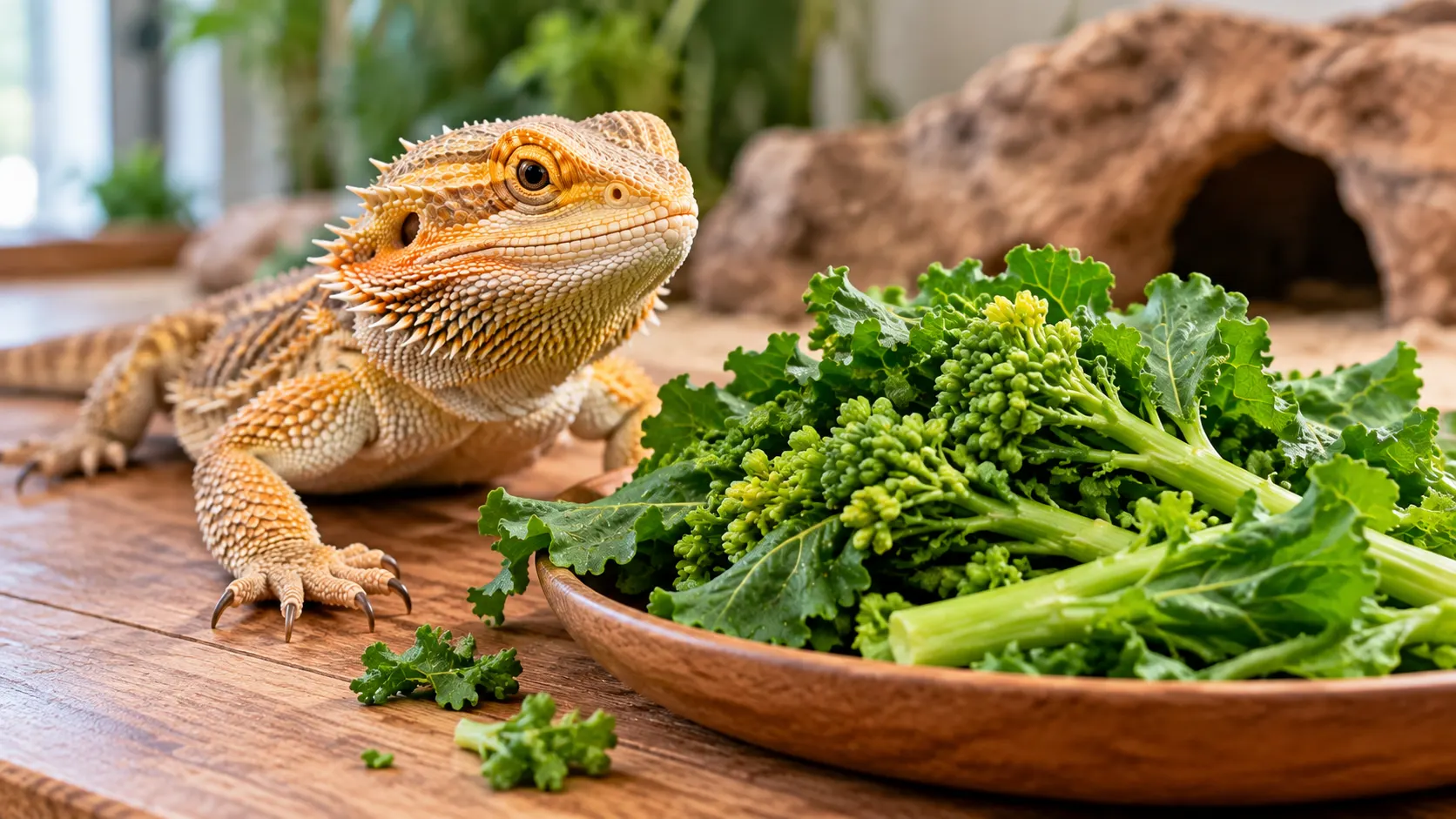
Can Bearded Dragons Eat Rapini?
Yes, bearded dragons can eat rapini in moderation. Rapini, commonly called broccoli rabe, is a leafy green vegetable from the Brassicaceae family. It contains nutrients such as vitamins A, C, and K, along with minerals including calcium, iron, and potassium.
However, rapini should not become one of the main greens in your bearded dragon’s diet. Bearded dragons benefit from dietary variety, and feeding too much of any single vegetable can make it harder to provide a balanced nutrient profile.
It’s also worth remembering that individual bearded dragons can have different preferences. Some will happily eat rapini, while others may ignore it completely. If your dragon has never tried it before, introduce a small amount and observe how they respond.
What Is Rapini?
Rapini, also known as broccoli rabe, is a green vegetable belonging to the Brassicaceae family. Despite its name, it is not simply a variety of broccoli. It has leafy greens, small broccoli-like florets, and stems, with a distinctive slightly bitter flavor.
For humans, rapini is valued for its nutritional content. It provides vitamin C, vitamin K, vitamin A precursors, folate, and several minerals. These nutrients are part of the reason it may be useful as an occasional vegetable for an omnivorous reptile such as a bearded dragon.
However, a vegetable that is nutritious for people isn’t automatically suitable as a daily food for reptiles. Bearded dragons have specific nutritional requirements, so rapini should be treated as one component of a varied diet rather than a primary food.
Is Rapini Safe for Bearded Dragons?
Rapini is generally considered a food that can be offered to bearded dragons in moderation. The main concern is not that a small serving is inherently poisonous, but that repeatedly feeding large amounts of one type of green can contribute to an unbalanced diet.
Rapini is also a member of the cruciferous vegetable group. These vegetables contain naturally occurring compounds that are worth considering when planning a reptile’s diet. Rather than relying on rapini every day, rotate it with other suitable greens and vegetables.
If your bearded dragon has an existing medical condition, a history of calcium problems, kidney disease, or another dietary concern, speak with a reptile veterinarian before introducing new foods.
Bearded Dragon Dietary Needs
Bearded dragons are omnivores, meaning they naturally consume both plant and animal foods. Their nutritional needs also change as they grow. Young dragons generally require more animal-based protein, while adults typically eat a larger proportion of plant matter.
A healthy feeding routine should provide variety rather than depending on one vegetable or insect. The exact balance can vary according to age, health, activity, and advice from a qualified reptile veterinarian.
Leafy Greens and Vegetables
Leafy greens and vegetables are an important part of an adult bearded dragon’s diet. Suitable options can include collard greens, mustard greens, dandelion greens, turnip greens, endive, escarole, and other appropriate vegetables.
Instead of serving the same green every day, rotate several suitable options. This approach helps provide a broader range of nutrients and can also prevent mealtimes from becoming repetitive.
Animal-Based Protein
Bearded dragons also need appropriate animal-based foods, particularly while they are growing. Common feeder insects include appropriately sized crickets, dubia roaches, and other suitable captive-raised insects.
Feeder insects should be appropriately sized for the dragon and properly gut-loaded before feeding. Avoid relying on wild-caught insects because they may have been exposed to pesticides or parasites.
Fruits
Fruit can be offered occasionally, but it should not replace nutritious vegetables and leafy greens. Fruits contain natural sugars, so they are generally better treated as an occasional part of a varied diet.
Appropriate options may include small amounts of berries, melon, papaya, or other suitable fruits. Always remove seeds, pits, and other parts that could pose a choking or digestive hazard.
Calcium and Other Supplements
Calcium is particularly important for bearded dragons because inadequate calcium intake can contribute to serious skeletal problems. Supplementation should be based on the dragon’s age, diet, UVB exposure, and veterinary guidance rather than following a one-size-fits-all schedule.
Proper UVB lighting is also an important part of calcium metabolism and overall health. If you are unsure whether your dragon’s lighting, diet, or supplementation routine is appropriate, a reptile veterinarian can help you establish a suitable plan.
Nutritional Benefits of Rapini for Bearded Dragons
Rapini can contribute useful nutrients when included as part of a varied diet. It contains several vitamins and minerals that support normal body functions.
- Vitamin C: Supports normal immune function and other physiological processes.
- Vitamin K: Plays an important role in normal blood clotting and bone metabolism.
- Vitamin A precursors: Plant foods can provide carotenoids that contribute to vitamin A nutrition.
- Calcium and other minerals: Rapini contributes minerals, although it should not be relied upon as the sole source of calcium.
- Fiber: The leafy structure of rapini provides dietary fiber that can be part of a suitable plant-based diet.
The important point is that these benefits do not make rapini a complete food. Your bearded dragon still needs nutritional variety and an appropriately balanced overall diet.
Potential Concerns When Feeding Rapini
Although rapini can be offered occasionally, there are several reasons to avoid making it a daily staple.
Dietary Balance
One of the biggest concerns with feeding any single vegetable too frequently is dietary imbalance. Bearded dragons need a range of foods to obtain the nutrients they require.
Oxalates
Rapini contains oxalates, naturally occurring compounds found in many plants. Oxalates can bind minerals such as calcium and may reduce calcium availability. This is one reason variety is important when selecting leafy greens for a bearded dragon.
Feeding a small amount occasionally is very different from making rapini the primary green in your dragon’s diet. If your pet already has calcium-related health problems, ask your reptile veterinarian whether rapini should be included at all.
Cruciferous Vegetable Compounds
Rapini is a cruciferous vegetable and contains naturally occurring compounds associated with this group of plants. This does not mean a small serving is automatically dangerous, but it is another reason to rotate vegetables rather than feeding large quantities of rapini repeatedly.
Pesticides and Contamination
Fresh produce can carry dirt, pesticides, or microorganisms on its surface. Always wash rapini thoroughly under running water before offering it to your bearded dragon. When possible, choose fresh produce from a reliable source and discard vegetables that are spoiled or contaminated.
How to Prepare Rapini for Bearded Dragons
If you decide to offer rapini, proper preparation is important. Follow these simple steps before putting it in your dragon’s food bowl:
- Wash it thoroughly. Rinse the rapini well under clean running water to remove dirt and surface contaminants.
- Inspect the vegetable. Remove wilted, spoiled, damaged, or discolored portions.
- Cut it into small pieces. Chop the leaves and tender stems into appropriately sized pieces that your bearded dragon can easily pick up and eat.
- Serve it plain. Do not add salt, sugar, spices, sauces, butter, oil, or other seasonings.
- Serve it fresh. Offer only a small amount alongside other appropriate foods rather than making an entire meal out of rapini.
- Monitor your dragon. When introducing any new food, watch your pet for changes in appetite, stool, or general behavior.
There is generally no need to add seasonings or other ingredients to vegetables intended for bearded dragons. Plain, appropriately prepared produce is the safer approach.
How Much Rapini Can a Bearded Dragon Eat?
There is no universal serving size that is appropriate for every bearded dragon because age, body size, overall diet, and health all matter. As a practical approach, rapini should make up only a small part of a mixed vegetable offering rather than being the dominant green.
If your bearded dragon is trying rapini for the first time, start with a small amount. If it is well tolerated, you can occasionally include it in a varied salad. The goal is variety, not quantity.
Can Baby Bearded Dragons Eat Rapini?
Baby bearded dragons can eat appropriately prepared plant foods, but their nutritional priorities are different from those of adults. Young dragons generally require more animal-based protein while they are growing, along with access to suitable greens and vegetables.
Because rapini is not necessary for a young dragon’s diet, it is usually better to focus on a broad range of established, appropriate foods. If you want to introduce rapini to a baby bearded dragon, discuss the overall diet with a reptile veterinarian first.
Alternatives to Rapini for Bearded Dragons
If your bearded dragon does not like rapini—or you simply want to provide more variety—there are plenty of other leafy greens and vegetables to consider.
Collard Greens
Collard greens are commonly included in bearded dragon diets and provide useful nutrients, including calcium. They can be chopped into manageable pieces and mixed with other suitable greens.
Mustard Greens
Mustard greens can also provide variety in a bearded dragon’s salad. Their strong flavor may appeal to some dragons that are reluctant to eat other greens.
Dandelion Greens
Dandelion greens are another popular option. If collecting dandelions yourself, make sure they come from an area that has not been treated with pesticides, herbicides, fertilizers, or other chemicals.
Turnip Greens
Turnip greens can be included as part of a varied leafy-green rotation. Wash them carefully and chop them into appropriate pieces before serving.
Endive
Endive is another leafy vegetable that can add variety to your bearded dragon’s meals. Combining different suitable greens is often more useful than relying on one vegetable alone.
Foods Bearded Dragons Should Avoid
Knowing what not to feed is just as important as knowing which foods are suitable. Some foods can be toxic, nutritionally inappropriate, or difficult for bearded dragons to digest.
- Avocado: Avoid feeding avocado to bearded dragons.
- Rhubarb: Rhubarb should not be offered.
- Onions and garlic: These are not appropriate foods for bearded dragons.
- Wild-caught insects: Avoid insects that may have been exposed to pesticides or parasites.
- Seasoned human food: Salt, sauces, spices, sugar, and processed foods should not be added to your dragon’s meals.
Tips for Introducing New Foods
Bearded dragons can be surprisingly particular about food. A dragon that loves one vegetable may completely ignore another. When introducing rapini or another unfamiliar food, try these simple strategies:
- Introduce only a small amount initially.
- Mix the new vegetable with greens your dragon already enjoys.
- Cut everything into appropriately sized pieces.
- Offer fresh food rather than wilted or spoiled produce.
- Don’t force your dragon to eat a food it consistently refuses.
- Monitor appetite, stool, and general behavior after introducing a new food.
Conclusion
So, can bearded dragons eat rapini? Yes, rapini can be offered to bearded dragons as an occasional vegetable. It contains several useful nutrients, but it should not become the primary green in their diet.
The safest approach is to provide variety. Rotate rapini with other suitable leafy greens and vegetables while maintaining an age-appropriate source of animal-based protein and proper calcium and UVB support.
Before feeding rapini, wash it thoroughly, remove damaged portions, chop it into manageable pieces, and serve it plain. If your bearded dragon has a health condition or special dietary requirements, consult a qualified reptile veterinarian before making significant changes to its diet.
Frequently Asked Questions About Bearded Dragons and Rapini
Can bearded dragons eat rapini every day?
Rapini is better treated as an occasional food rather than a daily staple. Bearded dragons benefit from a varied diet containing several appropriate greens and vegetables instead of relying heavily on one plant.
Can bearded dragons eat broccoli rabe?
Yes. Broccoli rabe is another common name for rapini, and bearded dragons can generally eat small amounts as part of a varied diet.
Should rapini be cooked before feeding a bearded dragon?
Rapini does not need to be cooked specifically for a bearded dragon. If you choose to cook it, keep it plain and allow it to cool completely before serving. Avoid oil, butter, salt, spices, sauces, and other seasonings.
Can baby bearded dragons eat rapini?
Baby bearded dragons can eat appropriate plant foods, but their diet has different nutritional priorities from that of adults. Because rapini is not essential, focus on a well-balanced diet and ask a reptile veterinarian before introducing it regularly to a young dragon.
What are the best greens for bearded dragons?
Suitable greens can include collard greens, dandelion greens, mustard greens, turnip greens, endive, and escarole. Providing several appropriate greens rather than relying on one type can help create a more varied diet.
How should I prepare rapini for my bearded dragon?
Wash the rapini thoroughly, remove spoiled or damaged portions, and chop it into small, manageable pieces. Serve it plain without salt, oil, butter, spices, or sauces.
Can rapini cause calcium problems in bearded dragons?
Rapini contains oxalates, which can bind minerals such as calcium. This is one reason it should not be the only or primary green in a bearded dragon’s diet. A varied diet and appropriate calcium and UVB management are important for maintaining healthy bones.
What leafy greens should be avoided?
Some greens are less suitable because of their nutritional composition. Spinach, for example, contains high levels of oxalates and is generally not recommended as a staple green. The overall diet matters more than simply categorizing individual foods as completely good or bad, so consult a reptile veterinarian if you are unsure about a particular vegetable.
How can I get my bearded dragon to eat more greens?
Try offering a mixture of several appropriate greens and vegetables. Chop them into manageable pieces and occasionally introduce a new food alongside something your dragon already enjoys. Be patient, because some bearded dragons need repeated exposure before accepting an unfamiliar vegetable.
When should I contact a veterinarian about my bearded dragon’s diet?
Contact a qualified reptile veterinarian if your bearded dragon consistently refuses food, develops persistent digestive problems, loses weight, becomes unusually lethargic, or has a known nutritional or metabolic condition. A veterinarian can evaluate the dragon’s overall diet, calcium intake, supplementation, and UVB setup.