

Can dogs eat pancakes? Yes, dogs can eat a small amount of plain, fully cooked pancake as an occasional treat, but pancakes should not become a regular part of your dog’s diet. Most traditional pancakes are high in carbohydrates and may contain sugar, butter, milk, or other ingredients that provide little nutritional value for dogs.
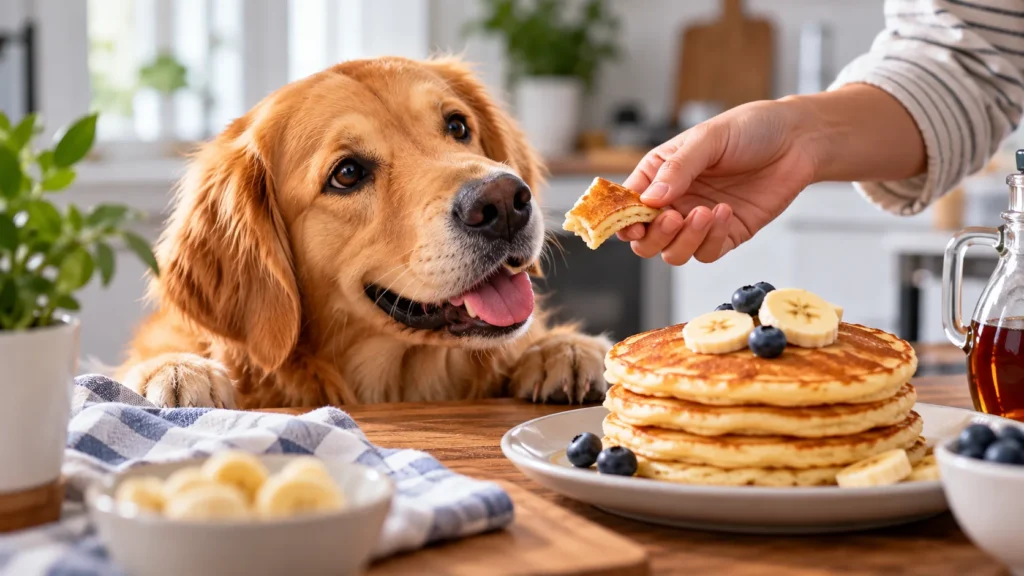
The biggest concern isn’t the plain pancake itself but what may be added to the batter or served on top. Chocolate, raisins, grapes, and xylitol-containing sweeteners can be dangerous or even toxic to dogs. Syrup and sugary toppings should also be avoided.
If your dog has eaten a small piece of plain pancake, there is usually no reason to panic. However, you should check the ingredients and watch for signs of digestive upset. If the pancake contained a potentially toxic ingredient, contact your veterinarian or a pet poison service promptly.
Can Dogs Eat Pancakes?
Yes, dogs can eat plain pancakes in moderation, provided the pancakes are fully cooked and do not contain ingredients that are harmful to dogs. A tiny piece of a plain pancake is generally more appropriate as an occasional treat than as part of a dog’s everyday meals.
However, traditional pancakes aren’t particularly nutritious for dogs. They are usually made primarily from flour and may contain sugar, butter, milk, and other ingredients. Feeding large amounts can add unnecessary calories to your dog’s diet and may contribute to weight gain.
It’s also important to remember that dogs have different nutritional needs from humans. Their regular food should provide the protein, fats, vitamins, minerals, and other nutrients they need. Human foods such as pancakes should remain occasional treats rather than replacing a balanced canine diet.
If your dog has food allergies, diabetes, obesity, pancreatitis, a sensitive stomach, or another condition affected by diet, speak with your veterinarian before offering pancakes or other human foods.
Are Plain Pancakes Safe for Dogs?
A small piece of a plain, cooked pancake is generally a safer option than pancakes containing sugary toppings or potentially toxic ingredients. The key is to check the recipe before sharing any with your dog.
- Give only a small amount.
- Make sure the pancake is completely cooked.
- Avoid chocolate, raisins, grapes, and xylitol.
- Skip sugary syrups and heavily sweetened toppings.
- Do not use pancakes as a replacement for your dog’s normal food.
For a healthy adult dog, an occasional small piece is usually a better approach than offering an entire pancake. Treats of all kinds should be given in moderation and considered alongside your dog’s overall calorie intake.
Potential Health Risks of Pancakes for Dogs
Although a plain pancake is not inherently toxic to dogs, certain ingredients and toppings can create health risks. The amount your dog eats and the ingredients used in the recipe both matter.
Digestive Upset
Some dogs may experience an upset stomach after eating foods they are not accustomed to. Pancakes can contain flour, dairy, fat, and sugar, which may cause vomiting, diarrhea, gas, or abdominal discomfort in sensitive dogs.
Extra Calories and Weight Gain
Pancakes can be calorie-dense, especially when served with butter, syrup, whipped cream, or other toppings. Regularly feeding high-calorie human foods can make it harder to maintain a healthy body weight.
Toxic Ingredients
The most serious risks often come from ingredients added to pancakes rather than from the pancake itself. Chocolate, raisins, grapes, and xylitol are examples of ingredients that should never be intentionally given to dogs.
High-Fat Toppings
Butter, whipped cream, rich sauces, and other high-fat toppings can add a significant amount of fat to a dog’s diet. Large amounts of fatty foods may cause digestive problems and can be particularly concerning for dogs prone to pancreatitis.
Ingredients in Pancakes and Their Effects on Dogs
Not every pancake recipe is the same. Before sharing a pancake with your dog, look at the ingredient list carefully. Some common ingredients are relatively harmless in small amounts, while others can be dangerous.
Flour
Plain wheat flour is not toxic to most dogs when it is used in a fully cooked food. However, some dogs may have wheat sensitivities or allergies. Flour also provides carbohydrates without offering the same nutritional value as a complete dog food.
Sugar
Small amounts of ordinary sugar are not considered poisonous to dogs, but dogs do not need added sugar in their diets. Regularly eating sugary foods can contribute unnecessary calories and may promote weight gain.
Milk
Some pancake recipes contain milk. While many dogs can tolerate small amounts of dairy, others are lactose intolerant and may develop gas, diarrhea, or other digestive problems after consuming it.
Eggs
Plain, fully cooked eggs can be a source of protein for dogs. However, the egg should be properly cooked, and the overall pancake recipe should still be checked for ingredients that may be unsafe.
Chocolate
Chocolate should never be intentionally fed to dogs. It contains compounds such as theobromine and caffeine that can be toxic to dogs. Chocolate chips, cocoa powder, and chocolate-covered toppings should therefore be kept away from your pet.
Raisins and Grapes
Raisins and grapes can cause serious kidney problems in dogs, and the amount that causes toxicity can be unpredictable. Never give your dog pancakes containing raisins, grapes, or similar dried fruit.
Xylitol and Other Sweeteners
Xylitol is particularly dangerous for dogs. It can cause a rapid drop in blood sugar and potentially lead to serious complications. Some sugar-free products, baked goods, syrups, and peanut butters may contain xylitol, so always check the label before sharing human food with your dog.
If your dog has eaten a food containing xylitol, do not wait for symptoms to appear. Contact a veterinarian or emergency animal poison service immediately.
Can Dogs Eat Pancakes With Syrup?
It is best not to give dogs pancakes with syrup. Traditional pancake syrup is usually high in added sugar and offers little nutritional benefit. More importantly, some sugar-free syrups and other sweetened products may contain xylitol or other ingredients that are unsafe for dogs.
If your dog has accidentally licked a small amount of ordinary syrup, check the product label and monitor them. If the product contains xylitol, contact a veterinarian immediately.
Can Dogs Eat Pancakes With Butter?
Butter is not a good topping for dogs. While a tiny amount is unlikely to cause poisoning, butter is high in fat and calories. A pancake with a large amount of butter can be harder for your dog to digest and may contribute to excessive calorie intake.
Can Dogs Eat Pancakes With Fruit?
Some dog-safe fruits can be offered in small quantities, but you should always check the specific fruit first. Small pieces of plain banana or blueberries may be suitable for many dogs, provided they are served without added sugar or unsafe ingredients.
Avoid grapes and raisins completely because they can be dangerous to dogs. Fruit toppings covered in chocolate, syrup, or artificial sweeteners should also be avoided.
Healthy Alternatives to Pancakes for Dogs
If you want to give your dog a special treat, there are plenty of options that may provide more nutritional value than a traditional pancake. The best choice depends on your dog’s age, size, health, and existing diet.
Plain Oatmeal
Plain, cooked oatmeal can provide fiber and may be suitable for some dogs when served in moderation. Avoid sugar, artificial sweeteners, chocolate, and flavored oatmeal products.
Cooked Sweet Potato
Plain cooked sweet potato can be an enjoyable occasional treat for many dogs. Serve it without butter, salt, sugar, spices, or other rich toppings.
Plain Cooked Egg
A plain, fully cooked egg can provide protein. If you offer egg to your dog, avoid adding salt, butter, onion, garlic, or heavy seasoning.
Banana and Xylitol-Free Peanut Butter
Small pieces of banana can be combined with a small amount of plain peanut butter for an occasional treat. Always check the peanut butter label and make sure it does not contain xylitol or other unsafe ingredients.
Even healthy human foods should be offered in moderation. Your dog’s complete and balanced food should remain the foundation of their diet.
What Should You Do If Your Dog Eats Pancakes?
If your dog eats a small piece of plain pancake, simply keep an eye on them for any unusual digestive symptoms. Most healthy dogs will tolerate a small amount without a problem.
However, the situation is different if the pancake contained chocolate, raisins, grapes, xylitol, or another potentially harmful ingredient. Check the ingredients immediately and contact your veterinarian if you suspect your dog has consumed something toxic.
Seek veterinary advice if your dog develops repeated vomiting, severe diarrhea, weakness, tremors, unusual behavior, difficulty walking, seizures, or other concerning symptoms.
Veterinary Advice on Dogs and Pancakes
Veterinary guidance generally emphasizes moderation when it comes to human foods. A plain pancake may be acceptable as an occasional treat for some dogs, but it should not replace a complete and balanced canine diet.
- Choose plain, fully cooked pancakes without toxic ingredients.
- Keep portions small and occasional.
- Avoid chocolate, raisins, grapes, and xylitol.
- Limit sugary and high-fat toppings.
- Consider your dog’s allergies, weight, age, and existing health conditions.
If your dog has a medical condition or follows a prescribed diet, ask your veterinarian before introducing pancakes or other human foods.
How Much Pancake Can a Dog Eat?
There is no single portion size that is appropriate for every dog. A small dog and a large dog have very different calorie requirements, and individual health conditions also matter.
As a general approach, a tiny piece of plain pancake is more appropriate than a full serving. Treats should fit within your dog’s overall daily calorie intake. If you’re unsure how much is appropriate for your dog, your veterinarian can help determine a suitable portion.
Can Puppies Eat Pancakes?
Puppies should generally receive a complete and balanced puppy food designed to support their growth and development. A tiny piece of plain pancake may not be harmful to a healthy puppy, but there is little nutritional reason to add pancakes to their diet.
Because puppies have specific nutritional requirements and can have sensitive digestive systems, it’s best to keep human-food treats limited and ask your veterinarian about appropriate options.
Conclusion: Can Dogs Eat Pancakes?
So, can dogs eat pancakes? Yes, most healthy dogs can eat a small amount of plain, fully cooked pancake as an occasional treat. The important part is keeping the portion small and checking the ingredients carefully.
Pancakes should never contain dangerous ingredients such as chocolate, raisins, grapes, or xylitol. Syrup, excessive sugar, butter, and other rich toppings are also best avoided.
Ultimately, pancakes are a treat rather than a nutritional necessity for dogs. Your dog’s regular complete and balanced food should provide the nutrients they need. If your dog has a health condition, food allergy, or special dietary requirements, speak with your veterinarian before introducing new foods.
Frequently Asked Questions About Dogs and Pancakes
Can dogs eat pancakes?
Yes. Healthy dogs can generally eat a small amount of plain, fully cooked pancake as an occasional treat. Pancakes should not replace a complete and balanced dog food.
Are pancakes bad for dogs?
Plain pancakes are not usually toxic to dogs, but they are not particularly nutritious for them. Pancakes containing excessive sugar, fat, chocolate, raisins, grapes, or xylitol can be much more concerning.
Can dogs eat pancakes with syrup?
It is best to avoid giving dogs pancakes with syrup. Syrup is typically high in sugar, and some sugar-free products may contain xylitol, which is highly dangerous to dogs.
Can dogs eat pancakes with chocolate?
No. Chocolate can be toxic to dogs, so pancakes containing chocolate chips, cocoa powder, chocolate sauce, or other chocolate ingredients should not be given to them.
Can dogs eat pancakes with raisins?
No. Raisins and grapes can cause serious kidney problems in dogs. Pancakes containing raisins should be kept away from your dog.
Can dogs eat pancakes with peanut butter?
Some dogs can have a small amount of plain peanut butter, but always check the ingredient label first. Avoid peanut butter containing xylitol, excessive salt, or other ingredients that may be unsafe for dogs.
Can dogs eat pancakes with bananas?
A small amount of plain banana can be suitable for many dogs. If you add banana to a pancake, keep the portion small and avoid additional sugar, syrup, chocolate, or artificial sweeteners.
Can dogs eat pancakes with cinnamon?
A small amount of ordinary cinnamon used in a plain pancake is generally not considered toxic to dogs. However, large amounts can cause irritation, so it is better not to deliberately give dogs heavily spiced pancakes.
Can dogs eat pancakes with vanilla extract?
It is better to avoid deliberately giving dogs pancakes containing large amounts of vanilla extract. Some extracts contain alcohol, and concentrated ingredients are unnecessary in a dog’s diet.
What should I do if my dog ate a pancake with xylitol?
Contact a veterinarian or emergency animal poison service immediately. Xylitol can cause a rapid and potentially dangerous drop in blood sugar in dogs, and serious effects can occur quickly.
Can dogs eat waffles as well as pancakes?
Like pancakes, plain waffles may be tolerated in small amounts by many healthy dogs, but they are not necessary for a dog’s diet. Check the ingredients carefully and avoid waffles containing chocolate, raisins, xylitol, or excessive sugar and fat.