
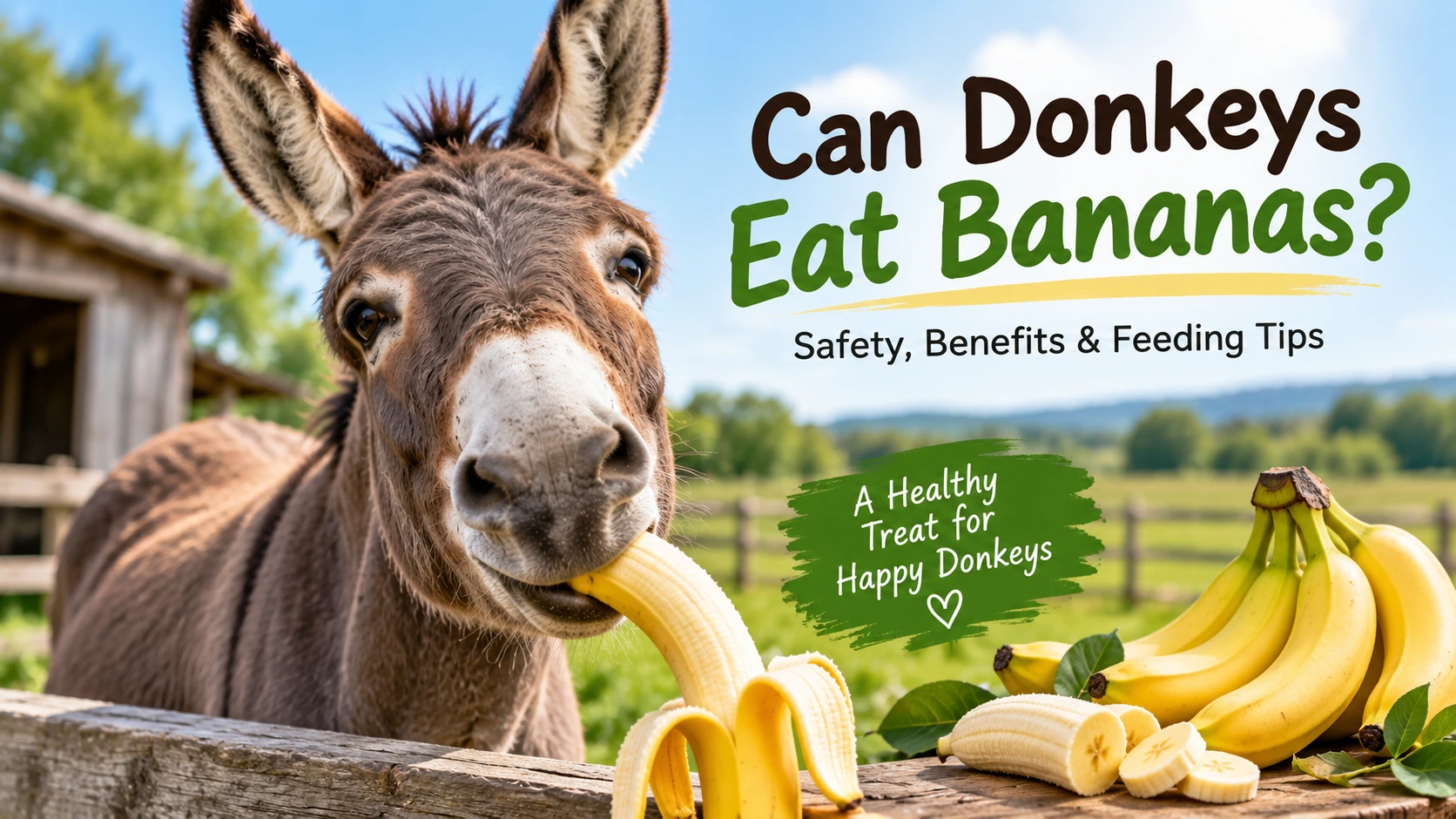

Feeding donkeys can be a rewarding experience, but it is important to make sure they receive a diet that supports their health and natural feeding habits. If you are wondering whether donkeys can eat bananas, the short answer is yes. Bananas can be offered as an occasional treat, including the skin, but they should only make up a small part of the diet.
Understanding donkey nutrition is important because donkeys have different dietary needs from horses. They are well adapted to digesting fibrous, lower-energy foods and can easily gain excess weight when they receive too much energy-rich food.
This guide explains whether donkeys can eat bananas, how bananas can be offered safely, what their normal diet should look like, and which foods are better avoided.
Key Takeaways
- Donkeys need a diet based mainly on high-fiber, lower-energy forage.
- Bananas can be given as an occasional treat in small amounts.
- Bananas should not replace forage or a properly balanced donkey diet.
- Donkeys that are overweight or prone to laminitis may need stricter control of treats and other energy-rich foods.
- Introduce new foods gradually and monitor your donkey for any digestive problems.
- A veterinarian or qualified equine nutrition professional can provide advice for donkeys with specific health or dietary needs.
Understanding Donkey Nutrition Basics
Donkeys are efficient at digesting fibrous plant material and generally have lower energy requirements than horses and ponies of a similar size. For many healthy adult donkeys, a diet based mainly on appropriate forage is sufficient.
Natural Diet of Donkeys
Donkeys are natural browsers and grazers. They can eat a variety of grasses, shrubs, leaves, and other fibrous vegetation. Their digestive system is adapted to consuming relatively low-energy, high-fiber food over long periods.
This is one reason donkeys can be prone to weight gain when they have unrestricted access to rich pasture or receive too many calorie-dense treats. Their diet should therefore be managed according to their body condition, activity level, age, and health.
Nutritional Requirements for Domestic Donkeys
A healthy adult donkey generally benefits from a diet that is high in fiber and relatively low in energy and non-structural carbohydrates such as sugars and starches. Suitable forage can include straw, appropriate hay, haylage, and controlled grazing, depending on the individual donkey and local conditions.
Fresh, clean water should always be available. Vitamin and mineral supplementation may also be appropriate depending on the forage, grazing conditions, and the donkey’s individual needs.
Donkeys that are working, pregnant, lactating, growing, underweight, or affected by dental or other health problems may require a more carefully planned diet. In these cases, feeding should be adjusted according to professional advice.
Can Donkeys Eat Bananas? The Simple Answer
Yes, donkeys can eat bananas. Bananas are considered a safe treat for donkeys when offered in small amounts. The Donkey Sanctuary lists bananas, including the skin, among foods that can be fed in moderation.
However, a banana is a treat rather than a dietary staple. Donkeys should continue to receive their normal high-fiber diet, and treats should not become a significant source of calories or sugar.
Are Bananas Safe for Donkeys?
Bananas are not considered toxic to donkeys. They can be offered as an occasional treat, but new foods should be introduced gradually. This is particularly important for donkeys with dental problems, digestive issues, obesity, or a history of laminitis.
Can Donkeys Eat Banana Peels?
Yes. Banana skin is not considered toxic to donkeys, and The Donkey Sanctuary includes bananas with the skin among suitable treats. However, bananas should still be given in moderation, and the fruit should be clean and free from mould or spoilage.
Donkeys and Horses Are Not the Same
Donkeys and horses are both equines, but their nutritional needs are not identical. Donkeys are generally more efficient at using fibrous, low-energy food and can be more susceptible to weight gain when their diet is too rich.
For this reason, feeding advice designed for horses should not automatically be applied to donkeys. A donkey’s body condition and overall diet should always be considered when deciding whether to offer treats such as bananas.
Nutritional Benefits of Bananas for Donkeys
Bananas contain carbohydrates, potassium, and other nutrients. However, their nutritional value should not be overstated. A donkey’s main nutritional needs should come from its normal forage-based diet, not from fruit.
What Bananas Provide
- Potassium: Bananas contain potassium, an essential mineral involved in normal muscle and nerve function.
- Carbohydrates: Bananas provide readily available energy, which is one reason they should be offered only in moderation.
- Moisture: Fresh bananas contain a significant amount of water.
- Fiber: Bananas provide some dietary fiber, although they should not be considered a replacement for forage.
How Bananas Fit Into a Donkey’s Diet
Bananas can add variety to a donkey’s diet and may be useful as an occasional reward. They should not replace the forage that provides most of the donkey’s daily fiber.
Because donkeys generally benefit from a high-fiber, low-energy diet, treats should remain a small part of their overall food intake. This is particularly important for donkeys that are overweight or prone to laminitis.
Potential Risks of Feeding Bananas to Donkeys
Although bananas can be safe for donkeys, giving too much fruit or introducing new foods too quickly can create problems. The main concern is not that bananas are poisonous, but that treats can add unnecessary sugar and calories to the diet.
Sugar and Calorie Concerns
Bananas contain naturally occurring sugars and should therefore be treated as a treat rather than a major part of a donkey’s diet. Excessive treats can contribute to weight gain and may be inappropriate for donkeys that need strict control of dietary sugars and calories.
Digestive Considerations
Any sudden change in a donkey’s diet can cause digestive upset. If a donkey develops diarrhea, changes in appetite, abdominal discomfort, or other unusual symptoms after eating a new food, stop offering the new food and seek veterinary advice if the problem continues or appears serious.
When to Limit or Avoid Bananas
Extra caution is appropriate for donkeys that are overweight, have a history of laminitis, or have other conditions requiring dietary management. In these situations, even seemingly healthy treats may need to be limited.
If your donkey has a medical condition or is on a restricted diet, speak with your veterinarian before adding fruit or other treats.
How to Properly Feed Bananas to Donkeys
If you choose to give your donkey bananas, keep the portions small and treat them as an occasional addition to the normal diet. The banana should be fresh and free from mould or spoilage.
Preparation Methods
Bananas can be offered whole or cut into smaller pieces depending on the donkey and the situation. If you are introducing bananas for the first time, start with a small amount and observe how your donkey responds.
- Wash the banana before feeding it.
- Offer a small amount when introducing it for the first time.
- Bananas can be offered with the skin if they are clean and fresh.
- Cut the banana into smaller pieces if your donkey has difficulty chewing.
- Do not feed fruit that is mouldy, fermented, or spoiled.
Serving Size and Frequency
There is no universal banana serving size that is suitable for every donkey. The appropriate amount depends on the donkey’s size, body condition, activity level, normal diet, and health.
As a general approach, treats should be small and occasional rather than a daily staple. The Donkey Sanctuary recommends only small amounts of fruit and vegetables as treats and emphasizes moderation.
- Start with a small piece when introducing banana.
- Watch for any changes in appetite, manure, or behavior.
- If your donkey tolerates it well, banana can remain an occasional treat.
- Reduce or avoid treats if your donkey is gaining excess weight or has a condition requiring dietary restriction.
Introducing Bananas to a Donkey’s Diet
Introduce bananas gradually rather than suddenly giving a large amount. A small piece is enough to see whether your donkey accepts the food and tolerates it well.
Key considerations include maintaining the donkey’s normal forage-based diet, keeping treats small, and watching for digestive or behavioral changes after introducing a new food.
Simple Banana Treat Ideas for Donkeys
If your donkey can safely have fruit, bananas can be offered in simple ways without turning them into a major part of the diet.
Small Banana Pieces
One simple option is to cut a small amount of banana into manageable pieces and offer it as an occasional reward. This is preferable to creating large, calorie-dense treats.
Combining Bananas with Other Safe Foods
Small amounts of banana can be combined with other suitable fruits or vegetables. However, combining several treats can increase the total amount of sugar and calories, so portions should remain modest.
| Food | How to Offer |
| Banana | Small amount as an occasional treat |
| Carrot | Chopped into manageable pieces |
| Apple | Chopped into manageable pieces |
| Pear | Small amount and introduced gradually |
Always introduce new foods gradually and avoid feeding anything that is mouldy, fermented, or spoiled.
Other Fruits and Treats Safe for Donkeys
Donkeys can enjoy small amounts of certain fruits and vegetables as occasional treats. The Donkey Sanctuary lists foods such as apples, bananas, pears, turnips, and swedes as suitable options when fed in moderation.
Recommended Fruit Options
Suitable fruits can include apples, bananas, and pears. Fruit should be given in small amounts rather than becoming a significant part of the donkey’s daily diet.
Always wash fresh produce and remove any spoiled or mouldy portions. When introducing a new food, offer a small amount first and monitor the donkey’s response.
Vegetables That Make Good Donkey Treats
Some vegetables can also be used as occasional treats. Carrots are a common choice, while other suitable options may include turnips and swedes. Treats should be chopped into manageable pieces when appropriate.
| Fruit/Vegetable | How It Can Be Used | Precautions |
| Apples | Occasional treat | Cut into manageable pieces and avoid spoiled fruit |
| Bananas | Occasional treat | Feed in small amounts |
| Pears | Occasional treat | Introduce gradually and feed in moderation |
| Carrots | Occasional treat | Cut into manageable pieces |
| Turnips and swedes | Occasional treat | Feed in small amounts |
Foods to Avoid in a Donkey’s Diet
Donkeys can be curious and may eat foods that are unsuitable for them. Owners should therefore keep potentially harmful foods, plants, and household products away from their animals.
Foods That Should Be Avoided
Some foods should not be offered to donkeys. These include potatoes, brassica vegetables, onions, leeks, garlic, stoned fruit, and anything that is old, fermented, or mouldy. Cereal grain-based feeds should also be avoided where possible because donkey-specific feeding guidance recommends high-fiber, low-energy diets and warns about the risks associated with cereal grains.
Chocolate and foods containing caffeine should also be kept away from donkeys. If you are unsure whether a food is safe, do not offer it until you have confirmed its suitability with a veterinarian or reliable donkey-feeding resource.
For more information about chocolate and another animal species, see our article on Can Canadian Geese Eat Chocolate?
Common Household Items That Pose Dangers
Medications, cleaning products, pesticides, and potentially toxic plants should be kept away from donkeys. Owners should also prevent access to rubbish and food waste, which may contain items that are unsafe to eat.
If a donkey accidentally consumes a potentially toxic substance, contact a veterinarian promptly rather than waiting for symptoms to appear.
Creating a Balanced Diet Plan for Your Donkey
A balanced diet for a donkey should be based on its individual needs rather than a fixed feeding formula. Body condition, age, activity, dental health, pregnancy, lactation, and medical conditions can all affect feeding requirements.
Daily Nutritional Requirements
For many healthy adult donkeys, the diet should be centered on appropriate high-fiber forage. The amount and type of forage should be adjusted according to body condition and the donkey’s circumstances.
| Dietary Priority | Examples | Important Consideration |
| Fiber | Straw, suitable hay, haylage, controlled grazing | Should form the foundation of the diet |
| Water | Fresh, clean drinking water | Should be available at all times |
| Vitamins and minerals | Appropriate mineral supplement or balancer when needed | Depends on the forage and individual donkey |
| Supplementary feed | High-fiber, low-sugar/starch feeds when required | More important for certain working, growing, pregnant, or underweight donkeys |
Seasonal Adjustments to Feeding
A donkey’s feeding needs can change with the season, weather, pasture quality, and workload. During periods when pasture becomes more energy-dense, grazing may need to be carefully controlled to prevent excessive weight gain.
During colder periods, the feeding plan may also need adjustment depending on body condition, shelter, forage quality, and the donkey’s individual requirements. Always make dietary changes gradually.
Special Considerations for Working, Pregnant, or Senior Donkeys
Working, pregnant, lactating, growing, underweight, and senior donkeys may have different nutritional requirements. Donkeys with poor dental function may also need softer or short-chopped fiber sources that are easier to chew.
These donkeys may require a carefully designed feeding plan rather than simply receiving more treats or high-energy food. Veterinary or professional nutritional advice can help determine the appropriate approach.
Signs of Digestive Issues in Donkeys
Any dietary change should be introduced gradually. Donkeys can develop digestive problems when their diet changes suddenly, so it is important to monitor them after introducing a new food.
Symptoms to Watch For After Introducing New Foods
Watch for unusual changes such as:
- Diarrhea or unusually loose stools
- Changes in appetite
- Abdominal discomfort
- Changes in behavior
- Lethargy or unusual weakness
These signs can have many possible causes and should not automatically be blamed on a particular food. If your donkey appears unwell, veterinary advice is important.
When to Contact a Veterinarian
Contact a veterinarian if your donkey develops significant or persistent digestive symptoms, stops eating, shows signs of severe abdominal pain, or otherwise appears seriously unwell.
| Warning Sign | What to Do |
| Persistent diarrhea | Contact a veterinarian |
| Blood in the stool | Seek veterinary attention promptly |
| Signs of colic | Contact a veterinarian immediately |
| Loss of appetite | Monitor closely and seek veterinary advice if it persists |
If you are concerned about your donkey’s health or dietary needs, a veterinarian can help identify the cause of the problem and recommend an appropriate feeding plan.
Conclusion
So, can donkeys eat bananas? Yes. Bananas can be offered as an occasional treat, and banana skin can also be eaten by donkeys. However, bananas should never replace the high-fiber forage that forms the foundation of a healthy donkey’s diet.
Donkey nutrition is different from simply feeding an animal a variety of foods. Donkeys generally do best with a diet that is high in fiber and controlled in energy and non-structural carbohydrates. Treats such as bananas should therefore be kept small and occasional.
When introducing bananas or any other new food, start with a small amount and monitor your donkey. Donkeys that are overweight, prone to laminitis, or affected by other health conditions may need stricter dietary management.
Feeding donkeys bananas can be a simple way to provide variety or an occasional reward when done responsibly. The most important thing is to keep treats secondary to a suitable forage-based diet and to adjust feeding according to the individual donkey’s needs.
A well-informed approach to donkey care, including understanding suitable foods and maintaining a balanced diet, can help support your donkey’s long-term health and well-being.
FAQ
Can donkeys eat bananas every day?
Bananas should be treated as an occasional treat rather than a daily staple. Donkeys need a diet based mainly on appropriate high-fiber forage, and frequent fruit treats may add unnecessary sugar and calories.
Are bananas toxic to donkeys?
No. Bananas are not considered toxic to donkeys and can be offered as a small treat when appropriate.
How should bananas be prepared for donkeys?
Bananas can be offered whole or cut into smaller pieces. If you are introducing them for the first time, start with a small amount. Banana skin can also be eaten, provided the banana is clean and fresh.
Can donkeys eat banana peels?
Yes. Banana skin is not considered toxic to donkeys, and it can be fed along with the fruit. As with the banana itself, it should be clean, fresh, and offered in moderation.
What other fruits are safe for donkeys to eat?
Small amounts of fruits such as apples, bananas, and pears can be suitable treats for donkeys. They should be introduced gradually and fed in moderation rather than becoming a major part of the diet.
How often can I give my donkey bananas as a treat?
There is no single frequency that is appropriate for every donkey. Bananas should be offered as an occasional treat in small amounts, with the donkey’s body condition, diet, activity level, and health taken into account.
Are there any donkeys that should not be given bananas?
Donkeys that are overweight, prone to laminitis, or have a medical condition requiring dietary restriction may need to have fruit treats limited or avoided. Ask your veterinarian for advice if your donkey has a specific health condition.
Can baby donkeys eat bananas?
Young donkeys have different nutritional requirements from mature donkeys. Their diet should be designed to support healthy growth, so bananas should not be used as a substitute for appropriate foal nutrition. Speak with a veterinarian before introducing treats to a young donkey.