
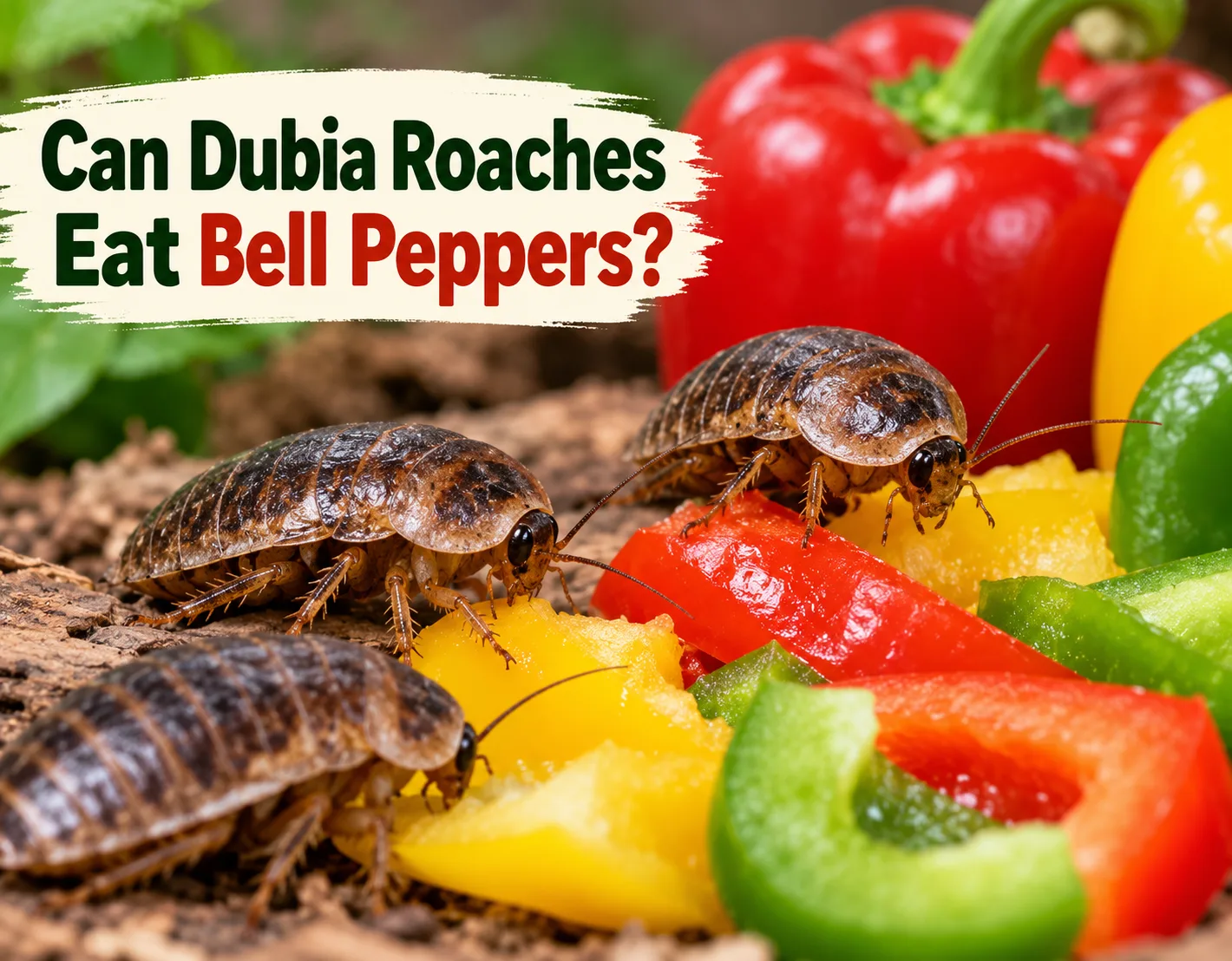
Yes, Dubia roaches can eat bell peppers. Bell peppers can be a useful addition to a Dubia roach’s diet because they provide moisture and several nutrients while adding variety to their fresh-food options. Red, yellow, orange, and green bell peppers can all be offered when they are fresh, properly washed, and prepared into appropriately sized pieces.
If you keep Dubia roaches as feeder insects for reptiles, amphibians, or other insect-eating pets, their diet matters more than you might think. What your feeder insects eat can contribute to their overall condition and the nutritional value they provide to your pet. This practice is commonly called gut loading.
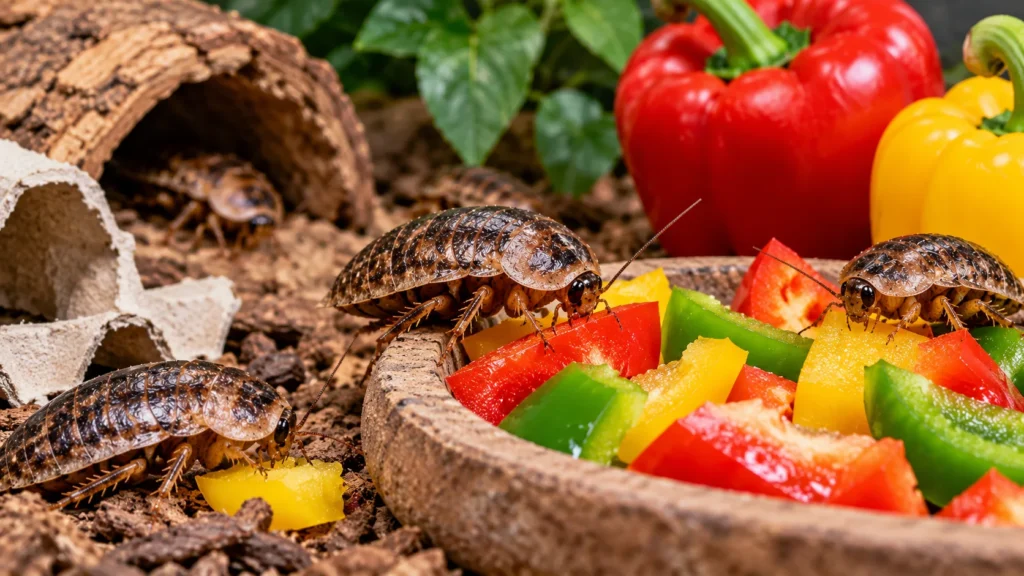
Bell peppers are particularly convenient because they contain plenty of water and can be easily chopped into small pieces. However, they should be treated as part of a varied feeding routine rather than the only food your Dubia roaches receive.
Understanding Dubia Roaches
Dubia roaches (Blaptica dubia) are widely used as feeder insects because they are relatively easy to maintain, reproduce well in suitable conditions, and provide a useful nutritional profile for many insect-eating pets.
They are native to parts of Central and South America and are adapted to warm environments. Unlike some other commonly kept feeder insects, adult Dubia roaches do not typically climb smooth surfaces easily and are generally considered manageable to keep in appropriate enclosures.
Here are some basic characteristics of Dubia roaches:
- Appearance: They are generally brown to dark brown with a somewhat shiny body. Adult males have developed wings, while females have much smaller wing structures.
- Size: Adult Dubia roaches can reach roughly 1.5 to 2 inches in length, although size varies with age, sex, and conditions.
- Lifespan: They can live considerably longer than many common feeder insects when kept under suitable conditions.
- Diet: Dubia roaches are omnivorous and can consume a mixture of plant-based foods and other organic material.
- Feeder insect value: Their nutritional composition makes them a popular feeder choice for reptiles, amphibians, arachnids, and other insect-eating animals.
Good husbandry involves more than simply keeping food available. Fresh food, suitable temperatures, adequate ventilation, cleanliness, and appropriate hydration all contribute to a healthy Dubia roach colony.
What Do Dubia Roaches Eat?
Dubia roaches are not particularly difficult to feed. They can eat a range of fresh fruits and vegetables along with an appropriate commercial roach diet or other nutritionally balanced feeder-insect food.
Fresh produce can provide moisture and variety. Depending on what is available, keepers may offer foods such as carrots, squash, zucchini, leafy greens, sweet potato, apples, or small amounts of other suitable fruits and vegetables.
A balanced approach is important. Feeding one food exclusively does not provide the nutritional variety a colony needs. If Dubia roaches are being raised specifically as feeder insects, their overall diet should be planned with the nutritional requirements of the animal eating them in mind.
Hydration is also important. Many keepers provide moisture through fresh fruits and vegetables rather than relying on an open water dish, which can create a drowning risk for small insects. Commercial hydration products designed for feeder insects may also be used according to their instructions.
Can Dubia Roaches Eat Bell Peppers?
Yes, Dubia roaches can eat bell peppers. Bell peppers are generally suitable as an occasional or regular component of a varied fresh-food diet for a Dubia roach colony.
One of the biggest advantages of bell peppers is their high water content. This makes them a convenient source of moisture, particularly when fresh produce is already part of your feeding routine.
Bell peppers also contain nutrients such as vitamin C, vitamin A-related carotenoids, and potassium. The exact nutritional profile varies depending on the pepper’s color and variety.
Are All Bell Pepper Colors Safe?
Generally, yes. Green, red, yellow, and orange bell peppers can all be offered to Dubia roaches when properly prepared.
The main difference between the colors is their stage of ripeness and nutritional composition. Red peppers, for example, are more mature than green peppers and tend to contain different concentrations of certain vitamins and carotenoids.
You do not need to feed every color at once. Rotating suitable vegetables is a simple way to add variety to your colony’s diet.
Nutritional Benefits of Bell Peppers for Dubia Roaches
Bell peppers can contribute several useful nutrients and plenty of moisture to a Dubia roach’s diet.
High Water Content
Fresh bell peppers contain a large amount of water. Offering moisture-rich vegetables can help support hydration, especially when they are consumed soon after being provided.
Vitamin C
Bell peppers are well known for their vitamin C content. While Dubia roaches do not have the same dietary requirements as humans, providing a variety of nutrient-containing foods is preferable to relying on a single ingredient.
Carotenoids and Vitamin A Precursors
Some bell peppers, particularly red and orange varieties, contain carotenoids such as beta-carotene. These plant compounds contribute to the nutritional variety of fresh produce.
Low in Fat
Bell peppers are naturally low in fat, making them a useful fresh-food option when included as part of a balanced feeder-insect diet.
How to Feed Bell Peppers to Dubia Roaches
Preparing bell peppers for Dubia roaches is straightforward. A few simple steps can make the food safer and easier for the insects to consume.
1. Wash the Pepper
Rinse the bell pepper thoroughly under clean running water before feeding it to your roaches. Washing helps remove dirt, debris, and some surface residues.
2. Remove the Stem
Cut away the stem and remove the tougher central portion. You can also remove the seeds if you prefer. Dubia roaches are more likely to consume the softer flesh.
3. Cut It Into Small Pieces
Slice or chop the pepper into small pieces. Smaller nymphs may have difficulty accessing large pieces, so adjust the size according to the age and size of your colony.
4. Offer a Small Amount
You do not need to fill the enclosure with bell pepper. Start with a modest amount and see how quickly your colony consumes it.
5. Remove Leftovers
Bell peppers contain substantial moisture, so leftover pieces can deteriorate in a warm enclosure. Remove spoiled, dried-out, or moldy food promptly and keep the enclosure clean.
How Often Can Dubia Roaches Eat Bell Peppers?
There is no need to make bell peppers the only fresh food in your Dubia roach enclosure. They can be included as part of a rotating diet alongside other suitable vegetables and a nutritionally appropriate staple food.
The amount you provide should depend on the size of your colony. A large colony may consume fresh produce much faster than a small group of nymphs.
A simple approach is to offer a small portion, monitor consumption, and adjust the amount during the next feeding. The goal is to provide enough food without leaving wet produce sitting in the enclosure for extended periods.
Potential Risks and Precautions
Bell peppers are generally a reasonable food for Dubia roaches, but good feeding practices still matter.
Watch for Mold and Spoilage
The biggest practical concern with fresh bell peppers is their moisture content. In a warm, humid roach enclosure, uneaten pieces can become soft or moldy. Remove leftovers before they begin to spoil.
Wash Fresh Produce
Always wash bell peppers before giving them to your colony. If you are concerned about pesticide residues, choosing produce from a source you trust and washing it thoroughly can help reduce exposure.
Avoid Moldy or Damaged Peppers
Never intentionally feed moldy, rotten, or heavily spoiled produce. Fresh food should look and smell normal when it is introduced into the enclosure.
Do Not Rely on One Food
Bell peppers should not replace a balanced Dubia roach diet. Variety is useful, particularly for colonies that are being raised as feeder insects.
It is also worth correcting a common misconception about bell peppers: they should not automatically be treated as a high-risk food because they belong to the nightshade family. The safety of a food for a particular animal depends on the species, the amount consumed, and the overall diet. Bell peppers are commonly used as a fresh food for feeder insect colonies.
Best Vegetables to Feed Dubia Roaches
If you want to rotate bell peppers with other fresh foods, you have plenty of options. Suitable vegetables commonly offered to Dubia roaches include:
- Carrots
- Zucchini
- Squash
- Cucumber
- Sweet potato
- Leafy greens
- Bell peppers
You can rotate these foods rather than feeding the same vegetable every time. This provides dietary variety and can make maintaining a healthy colony easier.
Can Dubia Roaches Eat Fruits?
Yes, Dubia roaches can eat several types of fruit. Apples, bananas, and mangoes are examples of fruits that may be offered in small quantities.
However, fruit is generally best used as part of a varied diet rather than as the primary food. Because many fruits contain more sugar and moisture than vegetables, leftover pieces can also spoil quickly.
Always remove uneaten fruit before it becomes moldy or fermented.
Bell Peppers and Gut Loading Dubia Roaches
If your Dubia roaches are being raised to feed a reptile or amphibian, their diet becomes especially important. This is because the nutrients and moisture present in feeder insects can contribute to the overall nutritional quality of the animal’s meal.
Offering a varied diet before the roaches are fed to your pet is commonly referred to as gut loading. Bell peppers can be one component of that feeding routine, but they should not be viewed as a complete gut-loading diet on their own.
For reptiles and amphibians with specific dietary requirements, follow the feeding recommendations appropriate for the species. A qualified exotic-animal veterinarian can also provide guidance when nutritional requirements are uncertain.
What Foods Should Dubia Roaches Avoid?
Not every human food is appropriate for feeder insects. Avoid giving Dubia roaches foods that are moldy, spoiled, heavily seasoned, salted, or contaminated with chemicals.
It is also sensible to avoid highly processed foods and foods with ingredients that are unnecessary for maintaining a feeder-insect colony. When in doubt, stick with a reputable roach chow or feeder-insect diet combined with suitable fresh produce.
Frequently Asked Questions About Dubia Roaches and Bell Peppers
Can Dubia roaches eat bell peppers?
Yes. Dubia roaches can eat bell peppers, including green, red, yellow, and orange varieties. Bell peppers can provide moisture and nutritional variety when offered fresh and in moderation.
Can Dubia roaches eat red bell peppers?
Yes. Red bell peppers can be fed to Dubia roaches. Wash the pepper, remove the stem, cut it into manageable pieces, and remove leftovers before they spoil.
Can Dubia roaches eat green bell peppers?
Yes. Green bell peppers are also suitable for Dubia roaches. They can be rotated with other vegetables as part of a varied diet.
How often should I feed bell peppers to Dubia roaches?
Bell peppers can be included regularly as part of a varied feeding routine, but they should not be the only food available. The amount and frequency should be adjusted according to colony size and how quickly the food is consumed.
Do Dubia roaches eat the skin of bell peppers?
They can consume the softer parts of the pepper, including the skin. Washing the pepper thoroughly before feeding is recommended.
Should I remove the seeds from bell peppers before feeding Dubia roaches?
Removing the seeds is not essential, but many keepers remove them along with the stem and tougher inner portion. The soft flesh is usually the easiest part for the roaches to consume.
Can Dubia roaches eat other vegetables?
Yes. Dubia roaches can eat a variety of suitable vegetables, including carrots, zucchini, squash, cucumber, sweet potato, and leafy greens. Rotating different foods can provide useful dietary variety.
Can Dubia roaches eat carrots?
Yes. Carrots are a commonly used fresh food for Dubia roaches. Cut them into appropriately sized pieces so that both adults and smaller nymphs can access them.
Can Dubia roaches eat celery?
Dubia roaches can consume celery, although it is quite fibrous and watery compared with some other vegetables. If you offer it, cut it into small pieces and provide it alongside a more varied diet.
Can Dubia roaches eat potatoes?
Potatoes are not necessary for a Dubia roach diet. If you choose to offer vegetables from this group, it is better to prioritize commonly used options such as carrots, squash, zucchini, sweet potato, and bell peppers. Avoid spoiled or green potatoes.
What fruits can Dubia roaches eat?
Dubia roaches can consume suitable fruits such as apples, bananas, and mangoes. Fruit should be offered in reasonable amounts because its high moisture and sugar content can contribute to spoilage when leftovers remain in the enclosure.
What should I do if bell pepper starts molding in the enclosure?
Remove the moldy food immediately and inspect the surrounding area for additional spoiled material. Clean the affected area as needed and avoid leaving fresh produce in the enclosure longer than necessary.
Final Thoughts
Dubia roaches can eat bell peppers, and this vegetable can be a useful part of a varied feeding routine. Bell peppers provide moisture and nutrients while giving your colony another fresh-food option to rotate with suitable vegetables and other foods.
The key is moderation and good husbandry. Wash the pepper before feeding, cut it into appropriately sized pieces, provide only what your roaches can consume, and remove spoiled leftovers promptly.
If you are keeping Dubia roaches as feeder insects, remember that bell peppers are only one part of the bigger picture. A varied, appropriate diet and proper colony care will help you maintain healthy feeder insects for your reptiles, amphibians, or other insect-eating pets.