
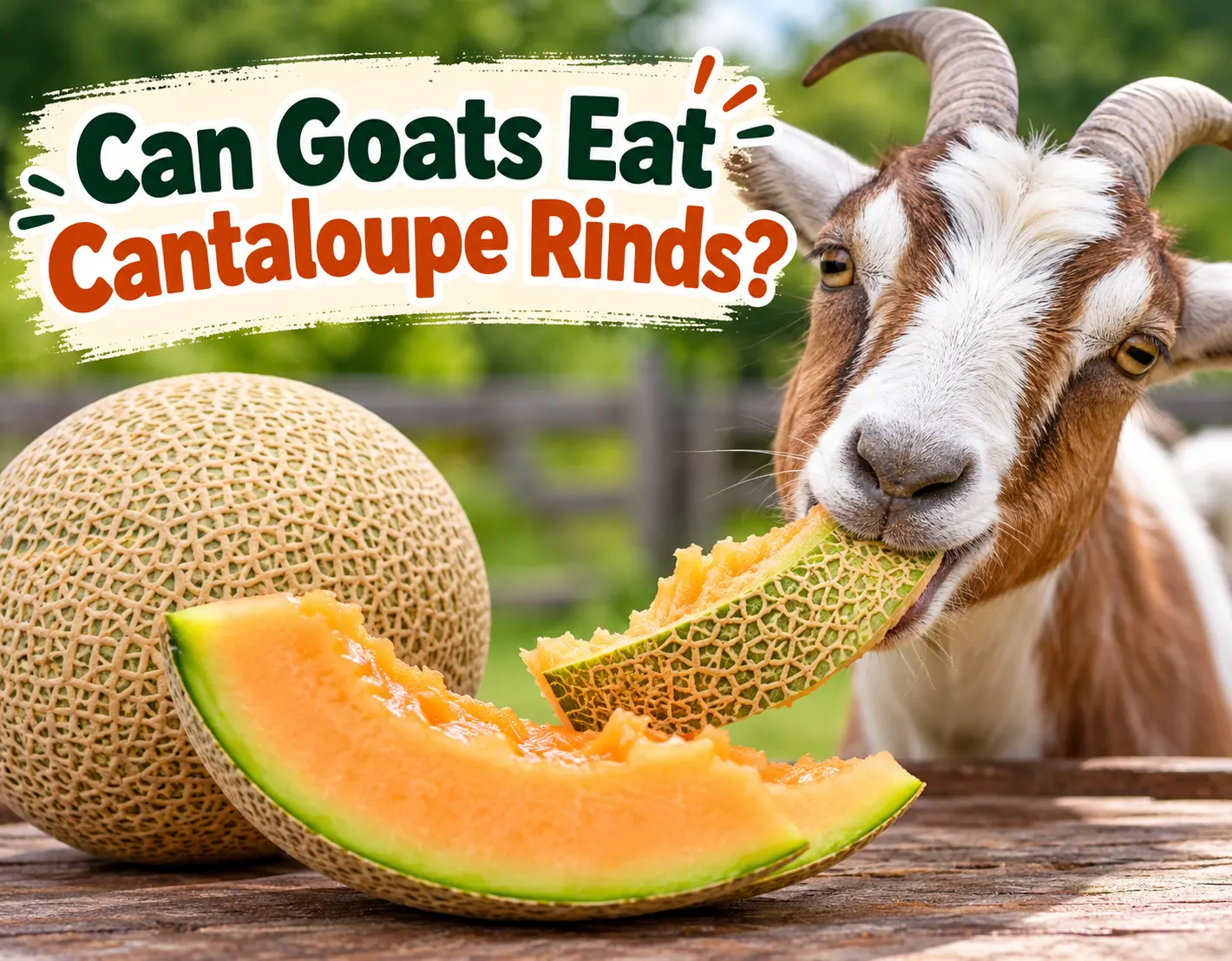
Yes, goats can eat cantaloupe rinds. Most healthy goats can safely enjoy cantaloupe, including the flesh and outer rind, as an occasional treat. Cantaloupe rind provides some fiber and can be a useful way to reduce food waste while giving your goats something different to nibble on.
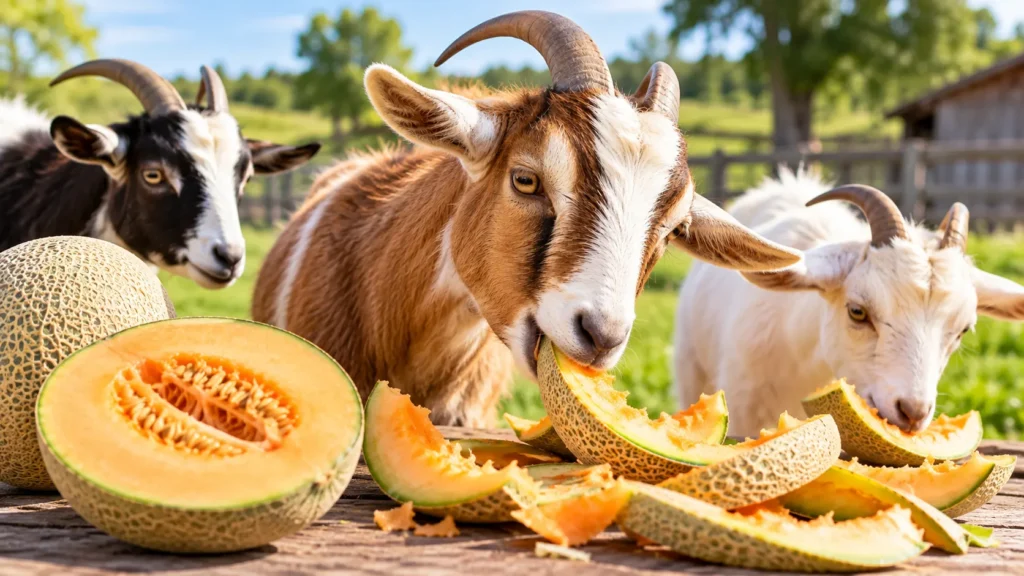
However, cantaloupe rinds should not replace a goat’s normal diet. Goats need a forage-based diet, with good-quality hay, pasture, and appropriate supplemental feed providing most of their nutrition. Fruits such as cantaloupe should be considered an occasional treat rather than a dietary staple.
If you want to give your goat cantaloupe rind, wash it thoroughly, remove any spoiled or moldy sections, and start with a small amount. Watching how your goat responds is especially important when introducing any new food.
Understanding a Goat’s Diet
Before adding treats such as cantaloupe rind to a goat’s diet, it helps to understand what goats naturally need. Goats are ruminants and are well adapted to digesting fibrous plant material. Their digestive systems depend heavily on forage and the microorganisms living in their rumen.
What Nutrients Do Goats Need?
A healthy goat diet should provide adequate fiber, protein, energy, vitamins, minerals, and water. The exact nutritional requirements can vary depending on a goat’s age, size, breed, pregnancy status, activity level, and overall health.
For most goats, forage should make up the foundation of the diet. Good-quality hay and pasture can provide the fiber necessary for normal rumen function and digestion.
Common Foods in a Goat’s Diet
Depending on the goat and its nutritional requirements, common foods can include:
- Hay: Alfalfa, Timothy, Bermuda grass, and other suitable types of hay.
- Pasture: Safe grasses, browse, and other appropriate forage plants.
- Grains: Corn, oats, barley, and formulated feeds when appropriate.
- Fruits: Apples, bananas, watermelon, berries, and cantaloupe as occasional treats.
- Vegetables: Carrots, squash, lettuce, and other suitable vegetables.
Fresh, clean water should also be available to goats at all times. Treats should complement the regular diet rather than take its place.
Cantaloupe Rinds and Goats
So, can goats eat cantaloupe rinds? In general, yes. A healthy goat can eat cantaloupe rind when it is offered as an occasional treat and prepared properly.
Goats are naturally interested in many different plant foods, and some may happily eat the rind after finishing the sweet flesh. Others may prefer the softer part of the fruit. Individual preferences can vary from one goat to another.
Are Cantaloupe Rinds Nutritious for Goats?
Cantaloupe rind contains fiber and small amounts of nutrients found in the fruit. The flesh generally contains more of the fruit’s easily available nutrients, while the rind is tougher and more fibrous.
Because goats already obtain most of their required fiber and nutrition from forage, cantaloupe rind should not be viewed as a nutritional replacement for hay or pasture. Instead, it can simply be an occasional addition to an otherwise balanced diet.
Potential Benefits of Cantaloupe Rind
When offered in small amounts, cantaloupe rind can provide variety and enrichment. It may also be a convenient way to use more of the fruit instead of throwing the rind away.
The rind also provides additional chewing material compared with the soft flesh. However, this does not mean goats should receive unlimited amounts. Treats should remain a relatively small part of the overall diet.
Potential Risks of Feeding Cantaloupe Rinds
Although cantaloupe rind is generally safe for healthy goats, there are several precautions worth taking.
Pesticide residue: Produce can have dirt or agricultural residues on its surface. Wash cantaloupe thoroughly before offering the rind to goats.
Mold and spoilage: Never feed goats moldy, rotten, or visibly spoiled cantaloupe. Spoiled foods can contain substances that may make animals sick.
Digestive upset: Introducing too much fruit or rind at once can cause digestive problems, particularly in goats that are not accustomed to it.
Choking risk: Large, tough pieces may be difficult for some goats to manage. Cutting the rind into manageable pieces can make it easier to eat.
For these reasons, start with a small amount and observe your goats after introducing cantaloupe rind.
How to Feed Cantaloupe Rinds to Goats
Knowing that goats can eat cantaloupe rinds is only part of the answer. How you prepare and offer the treat also matters.
Wash the Cantaloupe First
Before feeding the rind, rinse the cantaloupe thoroughly under clean running water. This helps remove dirt and other material from the outside surface.
If the rind is heavily damaged, rotten, or moldy, discard it rather than feeding it to your goats.
Cut the Rind Into Manageable Pieces
Instead of giving a goat a very large piece, consider cutting the cantaloupe into smaller, manageable portions. This can make it easier for the goat to eat and allows you to control how much it receives.
Start With a Small Amount
If your goat has never eaten cantaloupe rind before, introduce it slowly. Offer a small piece and observe your goat for signs of digestive upset.
If the goat tolerates it without problems, you can occasionally offer a little more. There is no need to make cantaloupe rind a daily part of the diet.
How Much Cantaloupe Rind Can Goats Eat?
There is no single portion size that is appropriate for every goat. A small amount is a better starting point than using a fixed portion for every animal because goats differ in size, age, health, and normal diet.
Think of cantaloupe rind as a treat rather than a staple food. Too many treats, even foods that are generally safe, can upset the digestive system or displace more nutritionally important foods.
Other Fruits and Vegetables Goats Can Eat
Cantaloupe is not the only fruit that goats can enjoy. Healthy goats can eat a variety of suitable fruits and vegetables when these foods are offered in moderation.
- Apples: Goats can eat apples, but large pieces should be cut into manageable portions. Remove stems and avoid giving excessive amounts of seeds.
- Carrots: Carrots are a popular goat treat and can be offered raw in appropriate portions.
- Watermelon: Goats can enjoy watermelon flesh and rind. Introduce it gradually and remove large amounts of seeds when practical.
- Cabbage: Cabbage can be offered in moderation, but excessive amounts may cause digestive upset.
- Berries: Strawberries, blueberries, and raspberries can be occasional treats for goats.
- Bananas: Small portions of banana can also be offered as an occasional treat.
Remember that fruits and vegetables should not become the main component of a goat’s diet. Hay, pasture, and other appropriate forage should remain the foundation of feeding for most goats.
If your goat has a medical condition, special nutritional needs, or a history of digestive problems, speak with a veterinarian or qualified livestock nutrition professional before making significant dietary changes.
Can Goats Eat Cantaloupe Seeds?
Goats may consume the seeds found inside a cantaloupe along with the fruit. However, seeds can be difficult for some animals to chew, so it is reasonable to remove large quantities of seeds when preparing cantaloupe for goats.
The most important concern is not whether every seed is removed but whether the overall treat is fresh, clean, appropriately portioned, and suitable for the individual goat.
Can Baby Goats Eat Cantaloupe Rinds?
Extra caution is appropriate with young goats. Kids have different nutritional needs from mature goats, and their diet should be based primarily on appropriate milk feeding and age-appropriate solid foods.
Once a young goat is old enough to eat treats, new foods should still be introduced gradually and in very small amounts. Cantaloupe rind should never replace the nutrition a growing kid needs from its normal diet.
When Should You Avoid Feeding Cantaloupe Rind?
Do not give cantaloupe rind to goats if it is moldy, rotten, fermented, contaminated, or otherwise spoiled. You should also avoid offering large quantities at once.
If a goat develops persistent diarrhea, bloating, loss of appetite, unusual behavior, or another concerning symptom after eating a new food, stop offering the food and contact a veterinarian for appropriate advice.
Final Thoughts: Can Goats Eat Cantaloupe Rinds?
So, can goats eat cantaloupe rinds? Yes, healthy goats can generally eat cantaloupe rind as an occasional treat. The rind provides some fiber and adds variety to a goat’s diet, but it should never replace the forage and balanced nutrition that goats need every day.
Before feeding cantaloupe rind, wash the fruit thoroughly and remove any moldy or spoiled portions. Cutting the rind into manageable pieces can also make it easier for goats to eat.
Most importantly, introduce new foods gradually. If your goat tolerates a small amount without digestive problems, cantaloupe rind can remain an occasional treat.
As with any animal-feeding question, individual goats can have different nutritional needs. If you are unsure whether cantaloupe or another treat is appropriate for your goat, consult a veterinarian or livestock nutrition professional.
Frequently Asked Questions
Are cantaloupe rinds safe for goats to eat?
Yes. Healthy goats can generally eat cantaloupe rinds in moderation. The rind is not considered a toxic part of the cantaloupe, but it should be clean, fresh, and free from mold or spoilage.
Can goats eat the whole cantaloupe?
Goats can generally eat the flesh and rind of a cantaloupe. Some goats may also consume the seeds. Even so, cantaloupe should be treated as an occasional food rather than a replacement for hay, pasture, or other essential parts of their normal diet.
Can goats digest cantaloupe rind?
Yes. Goats are ruminants with digestive systems designed to process fibrous plant material. However, a large amount of any unfamiliar food can still cause digestive upset, so introduce cantaloupe rind gradually.
How much cantaloupe rind can I give my goat?
Start with a small piece, particularly if your goat has never eaten cantaloupe before. The appropriate amount depends on the goat’s size, age, health, and overall diet. Treats should remain a small part of the diet rather than being fed in large quantities.
Can goats eat cantaloupe seeds?
Goats may eat the seeds that are naturally present in cantaloupe. However, when preparing the fruit, removing excess seeds can be a simple precaution, especially if you are cutting the fruit into pieces for several goats.
Should I wash cantaloupe rind before giving it to goats?
Yes. Washing the cantaloupe before feeding it helps remove dirt and other material from the surface. Never give goats rind that is visibly moldy, rotten, or spoiled.
Can baby goats eat cantaloupe rind?
Young goats have different nutritional requirements from adult goats, so treats should be introduced carefully and only when they are developmentally ready for them. Cantaloupe rind should never replace the normal nutrition required for healthy growth.
Can goats eat watermelon rind too?
Yes, healthy goats can generally eat watermelon rind as an occasional treat. As with cantaloupe rind, wash it first, avoid spoiled pieces, offer manageable portions, and do not let treats replace the goat’s normal forage-based diet.
What fruits can goats eat safely?
Depending on the individual goat, suitable fruits can include apples, bananas, berries, watermelon, and cantaloupe. Fruits should be fresh and offered in moderation. Avoid spoiled or moldy fruit and introduce unfamiliar foods gradually.
What should goats eat most of the time?
For most goats, good-quality forage such as hay and suitable pasture should form the foundation of the diet. Depending on the goat’s nutritional needs, additional feed may be necessary. Fresh, clean water should always be available.