
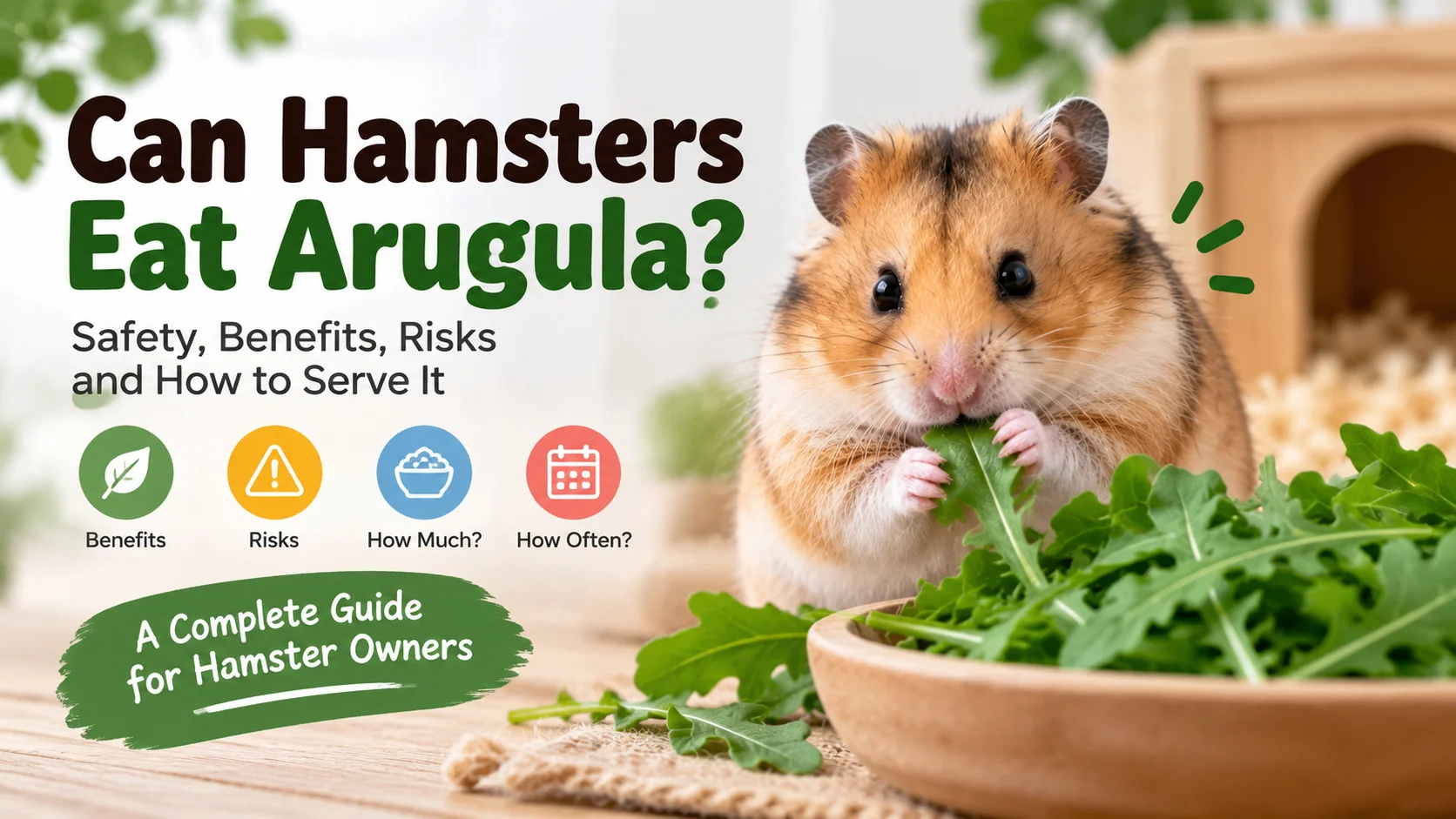

Yes, hamsters can eat a small amount of plain arugula, but it should be an occasional food rather than a regular part of their diet. If you decide to offer arugula, introduce it gradually, give only a small amount, and watch your hamster for digestive problems.
The important point is that arugula is not necessary for a hamster’s diet. Hamsters should primarily receive a complete, balanced food formulated for them, with suitable fresh foods used as additions rather than replacements. Merck Veterinary Manual recommends a complete, balanced pelleted diet specifically made for hamsters.
There is also less hamster-specific evidence about arugula than there is for some more commonly recommended vegetables. So it is better to treat arugula as an optional occasional green rather than claim that it is an essential or especially beneficial food.
Can Hamsters Eat Arugula?
Yes. A healthy hamster can generally have a small amount of plain, properly washed arugula as an occasional treat.
However, more is not better. Introducing too much of any unfamiliar fresh food at once can cause digestive problems. A veterinarian-reviewed guide similarly recommends offering arugula only occasionally and in moderation.
If your hamster has a medical condition or is following a diet prescribed by a veterinarian, ask your veterinarian before introducing arugula or another new food.
Is Arugula Safe for Hamsters?
For a healthy hamster, a small amount of plain arugula is generally considered a low-risk occasional food. However, the evidence specifically focused on hamsters and arugula is limited.
That distinction is important.
It is easy to find nutritional information about arugula for humans, but human nutrition data does not automatically tell us how a particular food affects hamsters. A responsible answer should therefore avoid making exaggerated claims about arugula preventing disease, improving immunity, or providing a particular medical benefit.
Current veterinary-oriented guidance supports occasional, moderate feeding rather than making arugula a dietary staple.
How Much Arugula Can a Hamster Eat?
Start with a very small piece the first time your hamster tries arugula.
A conservative approach is better than introducing a large serving. Veterinary-reviewed guidance suggests a small portion and notes that arugula can be offered around once or twice a week, while individual tolerance can vary.
For a hamster trying arugula for the first time:
- Wash the arugula thoroughly.
- Offer a small piece.
- Do not introduce several new foods at the same time.
- Watch your hamster for digestive changes.
- Remove uneaten fresh food before it spoils.
If your hamster develops diarrhea or other concerning symptoms, stop offering the new food and contact a veterinarian if symptoms are significant or persistent.
What About Dwarf Hamsters?
There is not enough good evidence to justify inventing a separate arugula serving schedule for dwarf hamsters.
Because dwarf hamsters are small, the sensible approach is to start with a particularly small amount and monitor how the individual hamster responds rather than relying on an arbitrary serving calculation.
If your dwarf hamster has diabetes, obesity, or another medical condition, follow the feeding advice provided by your veterinarian.
How Often Can Hamsters Eat Arugula?
Arugula should be an occasional treat, not a daily staple.
A veterinarian-reviewed source recommends a small amount once or twice a week and emphasizes monitoring the hamster’s tolerance.
Your hamster’s main diet should remain a complete food formulated for hamsters. Fresh vegetables should complement that diet rather than replace it.
What Are the Benefits of Arugula for Hamsters?
Arugula contains various vitamins and minerals, including vitamin A, vitamin C, vitamin K, calcium, magnesium, potassium, iron, and folate.
However, it is important not to overstate what those nutrients mean for a hamster.
For example, simply knowing that a vegetable contains a particular vitamin does not prove that feeding that vegetable prevents a particular disease in hamsters.
The most realistic benefit of arugula is that it can provide variety as a small fresh-food treat.
That is a much stronger and safer claim than suggesting that arugula is a nutritional treatment or that it provides special health benefits that have not been established specifically in hamsters.
What Are the Risks of Feeding Arugula?
The main concern is overfeeding.
Fresh leafy vegetables contain substantial water, and too much of a new food can contribute to digestive upset. Veterinary-reviewed guidance specifically warns that excessive arugula can cause digestive problems, including diarrhea.
Other practical risks include:
1. Introducing too much too quickly
If your hamster has never eaten arugula, start with a tiny amount rather than a large serving.
2. Spoiled leftovers
Hamsters naturally store food. Fresh vegetables left hidden in bedding can spoil, so check the enclosure and remove uneaten fresh food.
3. Pesticide or dirt residue
Wash fresh arugula thoroughly before giving it to your hamster.
4. Individual intolerance
One hamster may tolerate a food better than another. If your hamster repeatedly develops digestive symptoms after eating arugula, there is no reason to continue offering it.
5. Medical conditions
If your hamster has a diagnosed health problem or is on a restricted diet, do not assume that a food is appropriate simply because it is safe for healthy hamsters. Ask your veterinarian.
How Should You Prepare Arugula for a Hamster?
Keep preparation simple.
Step 1: Choose fresh arugula
Use fresh leaves that look clean and healthy. Avoid wilted, spoiled, or visibly contaminated leaves.
Step 2: Wash it thoroughly
Rinse the arugula to remove dirt and other residues.
Step 3: Serve it plain
Do not add:
- Salad dressing
- Salt
- Spices
- Garlic
- Onion
- Sugar
- Sauces
A hamster does not need human-style seasoning.
Step 4: Give a small amount
A small piece is enough when introducing it for the first time.
Step 5: Remove leftovers
Do not allow fresh vegetables to remain hidden in the cage long enough to spoil.
Can Hamsters Eat Cooked Arugula?
There is little reason to make cooked arugula a special food for hamsters.
If you want to offer arugula, plain, washed fresh arugula is the simpler option. Avoid arugula prepared with oil, salt, sauces, garlic, onion, or other ingredients.
The simpler the ingredient, the easier it is to know exactly what your hamster has eaten.
Can Baby Hamsters Eat Arugula?
I would not make arugula a food for very young hamsters without veterinary guidance.
Young hamsters have different nutritional needs, and there is no good reason to introduce an optional food when the animal’s basic diet should be the priority.
For an adult hamster, a tiny occasional portion is a more reasonable approach.
What Should a Hamster’s Main Diet Be?
Arugula should never replace your hamster’s normal food.
Hamsters are omnivores, and captive hamsters should receive a complete, balanced food formulated specifically for them. Merck Veterinary Manual recommends a complete, balanced pelleted hamster diet rather than relying on generic seed mixtures.
Fresh foods can provide variety, but they should remain a relatively small part of the overall feeding plan.
If you are unsure whether your hamster’s current diet is nutritionally complete, a veterinarian familiar with hamsters is the best person to ask.
What Vegetables Can Hamsters Eat Instead?
If you want to provide variety, you do not have to use arugula.
Veterinary and hamster-care sources mention vegetables such as broccoli, carrot, cabbage, kale, cucumber, peas, spinach, Brussels sprouts, cauliflower, asparagus, and coriander among possible options.
The important point is variety and moderation, rather than trying to find one “superfood” for your hamster.
If your hamster already tolerates another suitable vegetable, there may be no particular reason to switch to arugula.
What If My Hamster Already Ate Arugula?
If your hamster has eaten a small amount of plain, washed arugula, there is generally no reason to panic.
Remove any remaining excess and monitor your hamster.
Pay attention to changes such as:
- Diarrhea
- Significant digestive upset
- Unusual lethargy
- Reduced appetite
- Other obvious signs of illness
If your hamster becomes unwell, contact a veterinarian rather than trying to treat the problem yourself.
If the arugula came from a prepared salad, check the other ingredients as well. Foods such as onion, garlic, sauces, and dressings can create different safety concerns.
Should You Feed Arugula to Your Hamster?
You can, but you do not have to.
The best reason to offer arugula is simply to provide occasional variety.
There is currently limited hamster-specific evidence showing that arugula has unique advantages over other vegetables. Some veterinary-reviewed guidance considers a small occasional amount acceptable, while other hamster-care sources emphasize vegetables with more established feeding guidance.
So if your hamster enjoys a small amount and tolerates it well, occasional arugula can be reasonable.
But there is no need to force it into your hamster’s diet.
Frequently Asked Questions
Is arugula safe for hamsters?
A small amount of plain arugula is generally considered suitable for a healthy hamster as an occasional treat. Too much can cause digestive problems.
How much arugula can a hamster eat?
Start with a very small piece, especially the first time. Veterinary-reviewed guidance suggests a small portion and no more than occasional feeding.
Can hamsters eat arugula every day?
It is better not to make arugula a daily food. Your hamster’s primary diet should be a complete, balanced food formulated for hamsters.
Can dwarf hamsters eat arugula?
There is not enough evidence to establish a separate arugula feeding schedule for dwarf hamsters. If offered, use a very small amount and monitor the hamster’s response.
Can baby hamsters eat arugula?
It is better to prioritize the appropriate diet for young hamsters and ask a veterinarian before introducing optional fresh foods.
Can hamsters eat other leafy greens?
Yes. Several hamster-care sources list vegetables and leafy greens such as kale, spinach, broccoli, and coriander as possible foods, although each should be introduced appropriately and in moderation.
What should I do if my hamster gets diarrhea after eating arugula?
Stop offering arugula and monitor your hamster. Because diarrhea can lead to dehydration, seek veterinary advice if the symptoms are significant, persistent, or accompanied by other signs of illness.
Is arugula necessary for a hamster’s diet?
No. Arugula is an optional fresh food. A hamster’s nutritional foundation should be a complete, balanced diet formulated for hamsters.
Final Verdict
Yes, hamsters can eat arugula in small amounts, but it should be treated as an occasional food rather than a dietary staple.
Start with a small amount of plain, washed arugula and monitor your hamster’s response. Do not rely on arugula to provide a particular medical benefit, and do not replace your hamster’s normal complete diet with fresh vegetables.
The available hamster-specific evidence is limited, so conservative feeding is the sensible approach. If your hamster has a medical condition or you are uncertain about its diet, consult a veterinarian familiar with hamsters.