
Leopard geckos are popular pets because of their docile temperament, manageable size, and relatively simple care requirements. Providing the right diet is one of the most important parts of keeping a leopard gecko healthy. Because Repashy makes several reptile and amphibian food products, many owners wonder whether leopard geckos can eat Repashy and which formulas are appropriate.
Yes, leopard geckos can eat certain Repashy products. However, not every Repashy formula is designed for leopard geckos, and Repashy should not automatically be treated as a replacement for a varied insect-based feeding program. Leopard geckos are insectivores and primarily eat appropriately sized insects such as crickets, mealworms, roaches, and other suitable feeder insects.
Some Repashy insectivore formulas can provide a convenient supplemental or meal-replacement option. The specific product, ingredients, preparation method, and overall feeding routine matter when deciding whether it is appropriate for your gecko.
Can Leopard Geckos Eat Repashy?
Leopard geckos are insectivores, so their natural diet is centered on insects and other appropriate invertebrate prey. Common feeder insects include crickets, mealworms, dubia roaches, silkworms, and black soldier fly larvae. Veterinary care guidance recommends primarily feeding live, moving insect prey rather than relying on plant foods.
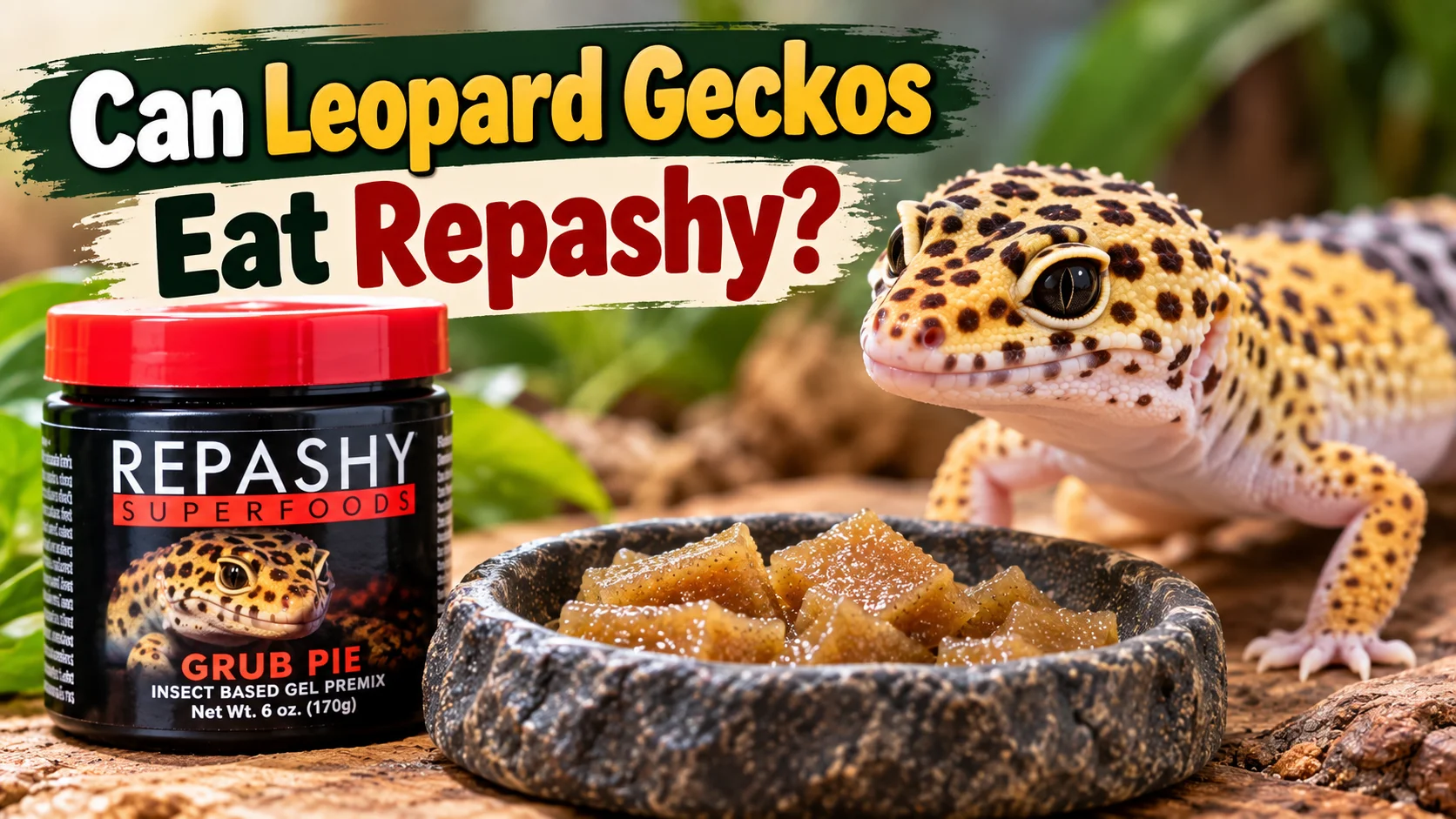
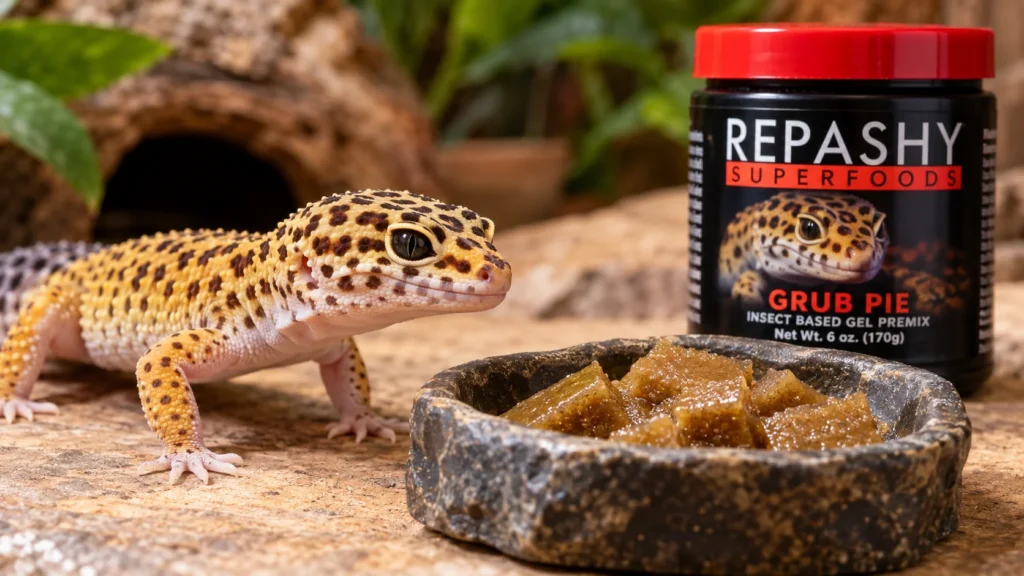
Some Repashy products are specifically made for insectivorous reptiles and amphibians. For example, Repashy Grub Pie is described by the manufacturer as an insect-based meal-replacement gel premix containing 75% insect-based ingredients.
Therefore, leopard geckos can eat an appropriate Repashy insectivore formula, provided the particular product is suitable for the species and is prepared according to its label directions.
Repashy should not be treated as a generic food where every formula is interchangeable. Products such as gecko diets intended for fruit-eating species are formulated differently from insectivore products. For example, Repashy lists Grubs ‘N’ Fruit as a formula for fruit-eating species that typically consume fruit and insects, so leopard gecko owners should not assume that every Repashy gecko product is appropriate for their pets.
For a healthy feeding program, variety remains important. Commercial Repashy food may be useful as part of the feeding routine, but owners should consider the gecko’s age, body condition, appetite, and the nutritional composition of the complete diet.
Understanding Repashy Foods
Repashy is a brand that produces powdered and gel-based foods, supplements, and other products for reptiles, amphibians, fish, and invertebrates. The formulas vary considerably, so the product name and intended animal should always be checked before feeding.
Some Repashy products are designed as insectivore formulas, while others are intended for omnivorous or fruit-eating reptiles. The manufacturer’s current product range includes reptile and amphibian gel formulas, gecko diets, all-in-one supplements, mineral supplements, and vitamin supplements.
Ingredients and Nutritional Value
The nutritional composition of Repashy depends on the specific formula. For example, the current Repashy Grub Pie formula uses black soldier fly larvae meal as its primary ingredient and contains added vitamins, minerals, calcium, and other ingredients. Its guaranteed analysis lists a minimum of 38% crude protein, 10% crude fat, and 1.4% calcium.
This is important because it means that the nutritional profile of one Repashy product cannot automatically be applied to another. Owners should read the label and choose a formula according to the animal and feeding purpose.
Types of Repashy Products for Reptiles
Repashy offers a wide range of reptile products. Examples include:
- Grub Pie
- Mealworm Pie
- Superworm Pie
- Beardie Buffet
- Crested Gecko Diet formulas
- Repashy Calcium Plus
- Other vitamin and mineral supplements
Some of these products are intended for insectivorous species, while others are formulated for different dietary requirements. Repashy Grub Pie, Mealworm Pie, and Superworm Pie are currently listed as insectivore gel premixes.
Leopard gecko owners should therefore choose a product based on its intended use rather than simply choosing any Repashy product.
Leopard Gecko Dietary Needs
Nutritional Requirements
Leopard geckos are insectivores and require a diet based primarily on suitable feeder insects. Common choices include crickets, mealworms, dubia roaches, silkworms, and other appropriately sized insects. Veterinary guidance recommends gut-loading feeder insects before offering them to the gecko and using appropriate calcium supplementation.
Variety is also important. Feeding several suitable insect species can help provide a broader nutritional profile rather than relying on a single feeder insect. ReptiFiles similarly recommends variety among feeder insects as part of leopard gecko nutrition.
Common Diet Items
Common feeder insects for leopard geckos include crickets, mealworms, dubia roaches, silkworms, black soldier fly larvae, and other appropriate prey items. Feeder insects should be appropriately sized for the gecko and properly cared for before feeding.
Waxworms and superworms can be offered in appropriate circumstances, but they are relatively rich foods and should not automatically become the foundation of the diet. A varied feeding program is generally preferable.
It is also important to correct a common misconception: leopard geckos should not be routinely fed fruits and vegetables as if they were omnivorous or herbivorous reptiles. Their natural feeding biology is insectivorous.
Feeding Repashy to Leopard Geckos
If you decide to offer an appropriate Repashy insectivore product, preparation should follow the manufacturer’s instructions for that specific formula. Different Repashy products have different preparation directions, so avoid applying instructions from one product to another.
Preparation and Serving Suggestions
For Repashy Grub Pie, the manufacturer’s current instructions call for mixing one part powder with approximately two to three parts boiling water, stirring immediately, and allowing the mixture to cool and set. The finished gel can then be cut into pieces or offered as a slurry or paste.
Prepared Repashy food should be handled as fresh food. The manufacturer states that prepared Grub Pie can be refrigerated for up to two weeks or frozen, while refrigeration helps extend freshness. Always follow the current product label for storage and handling.
Do not add ingredients simply because they are commonly fed to other reptiles. The safest approach is to prepare the formula according to the manufacturer’s directions and offer it in an appropriate manner.
Frequency and Quantity
There is no single Repashy feeding schedule that applies to every leopard gecko. Feeding frequency depends on the animal’s age, size, body condition, activity level, and the rest of its diet.
Veterinary guidance commonly recommends feeding juvenile leopard geckos every 1–2 days and adults approximately 2–3 times per week, with appropriately sized live insects forming the primary diet.
Because commercial diets can differ in nutritional density, follow the feeding directions on the specific Repashy product rather than using a universal portion rule.
Monitor your gecko’s body condition and appetite. If your leopard gecko consistently refuses food, loses weight, develops digestive problems, or shows other concerning changes, consult a reptile-experienced veterinarian.
Benefits of Repashy for Leopard Geckos
An appropriate Repashy insectivore formula can offer several practical benefits when used correctly.
- Convenience: Powdered formulas can be prepared without maintaining live feeder insects for every feeding.
- Consistent formulation: Commercial formulas are produced with specified ingredients and nutritional targets.
- Easy preparation: Products such as Grub Pie can be mixed with water and prepared as a gel or slurry according to the manufacturer’s instructions.
- Useful nutritional components: Appropriate formulas can provide protein, calcium, vitamins, minerals, and other nutrients in a controlled formulation.
- Storage flexibility: Some prepared Repashy formulas can be refrigerated or frozen according to the manufacturer’s directions.
These benefits make Repashy a potentially useful component of leopard gecko feeding, particularly when an appropriate insectivore formula is selected. However, convenience should not replace attention to the gecko’s overall diet and body condition.
Potential Risks and Considerations
Although appropriate Repashy products can be used for leopard geckos, there are several considerations owners should keep in mind.
Choosing the Wrong Formula
One of the biggest concerns is choosing a product that was formulated for a different type of reptile. Repashy makes products for insectivores, omnivores, fruit-eating species, and other animals. Always check the intended species and dietary category before feeding a product.
Overfeeding
Any food can contribute to excessive calorie intake when offered inappropriately. Monitor your leopard gecko’s body condition and adjust its overall feeding routine when necessary.
Digestive Changes
A sudden change in diet can sometimes be associated with changes in stool or appetite. Introduce unfamiliar foods carefully and monitor your gecko afterward. Persistent diarrhea, vomiting, significant appetite loss, lethargy, or unexplained weight loss warrants veterinary attention.
Supplementation
Calcium and vitamin supplementation remains an important consideration for insect-eating reptiles. Veterinary guidance recommends appropriate calcium supplementation for feeder insects, while all-in-one supplements should be used according to their product directions.
Alternatives to Repashy for Leopard Geckos
Repashy is not the only feeding option available for leopard geckos. A varied selection of suitable feeder insects is central to traditional leopard gecko feeding.
Live Insects
Live insects are the primary food source recommended in veterinary leopard gecko care guidance. Suitable choices can include crickets, mealworms, dubia roaches, silkworms, and other appropriately sized feeder insects.
Feeder insects should be properly maintained and gut-loaded before being offered. They should also be appropriately supplemented according to the gecko’s nutritional requirements.
Commercial Diets
Commercial reptile diets can provide convenience, but the formula must be appropriate for an insectivorous leopard gecko. Carefully check the ingredients, intended species, feeding instructions, and nutritional information before using a commercial diet.
Homemade Diets
Homemade diets are generally more difficult to balance correctly for leopard geckos. Because these reptiles have specialized insectivorous nutritional requirements, owners should avoid creating a homemade diet based simply on meat, fruits, vegetables, or other human foods.
If a leopard gecko requires a specialized diet because of age, illness, weight changes, or another health concern, a reptile-experienced veterinarian is the appropriate person to help develop the feeding plan.
Frequently Asked Questions
Is Repashy Grub Pie safe for leopard geckos to consume?
Repashy Grub Pie is an insect-based gel premix designed for insectivorous reptiles and amphibians. The manufacturer lists black soldier fly larvae meal as its primary ingredient and provides preparation and feeding instructions. Leopard gecko owners should use the product according to the manufacturer’s directions and consider it within the context of the gecko’s complete diet.
What are the dietary benefits of Repashy products for leopard geckos?
The benefits depend on the specific Repashy formula. Appropriate insectivore formulas can provide protein, calcium, vitamins, minerals, and other nutrients in a convenient prepared food. The nutritional profile should be checked on the individual product because Repashy makes formulas for different types of reptiles and amphibians.
How often should leopard geckos be fed with Repashy supplements?
There is no universal Repashy schedule for every leopard gecko. Feeding frequency should depend on the specific product, the gecko’s age and body condition, and the rest of its diet. Adult leopard geckos are commonly fed several times per week, while juveniles generally require more frequent feeding.
Can leopard geckos have Repashy Calcium Plus, and how does it affect their health?
Repashy Calcium Plus is an all-in-one supplement in the company’s reptile product range. It can be used as a supplement when appropriate, but supplementation should follow the product label and the needs of the individual gecko. Repashy lists Calcium Plus among its current reptile products.
Are there any toxic ingredients in Repashy products for leopard geckos?
It is not accurate to make one blanket statement about every Repashy product because the brand produces many different formulas for different animals. Always review the ingredients and intended species of the exact product you plan to feed. If your gecko develops an unusual reaction after eating a product, stop offering it and contact a reptile-experienced veterinarian.
What are the best feeding practices for leopard geckos using Repashy foods?
Choose a formula appropriate for insectivorous reptiles, follow the manufacturer’s preparation instructions, provide a varied diet, maintain appropriate calcium and vitamin supplementation, and monitor your leopard gecko’s body condition and appetite. Live appropriately sized insects remain an important part of standard leopard gecko feeding recommendations.
Final Thoughts
So, can leopard geckos eat Repashy? Yes, certain Repashy products can be used for leopard geckos, but the specific formula matters. In particular, insect-based Repashy formulas are more relevant to leopard geckos because these reptiles are insectivores.
Repashy can provide convenience and may be useful as part of a carefully planned feeding routine. However, leopard gecko owners should not assume that every Repashy product is suitable, and they should not replace appropriate insect-based nutrition with unsuitable fruit or vegetable foods.
For the best results, choose an appropriate product, follow its current label instructions, provide nutritional variety, and consult a reptile-experienced veterinarian if your leopard gecko develops persistent digestive problems, appetite changes, or weight loss.