
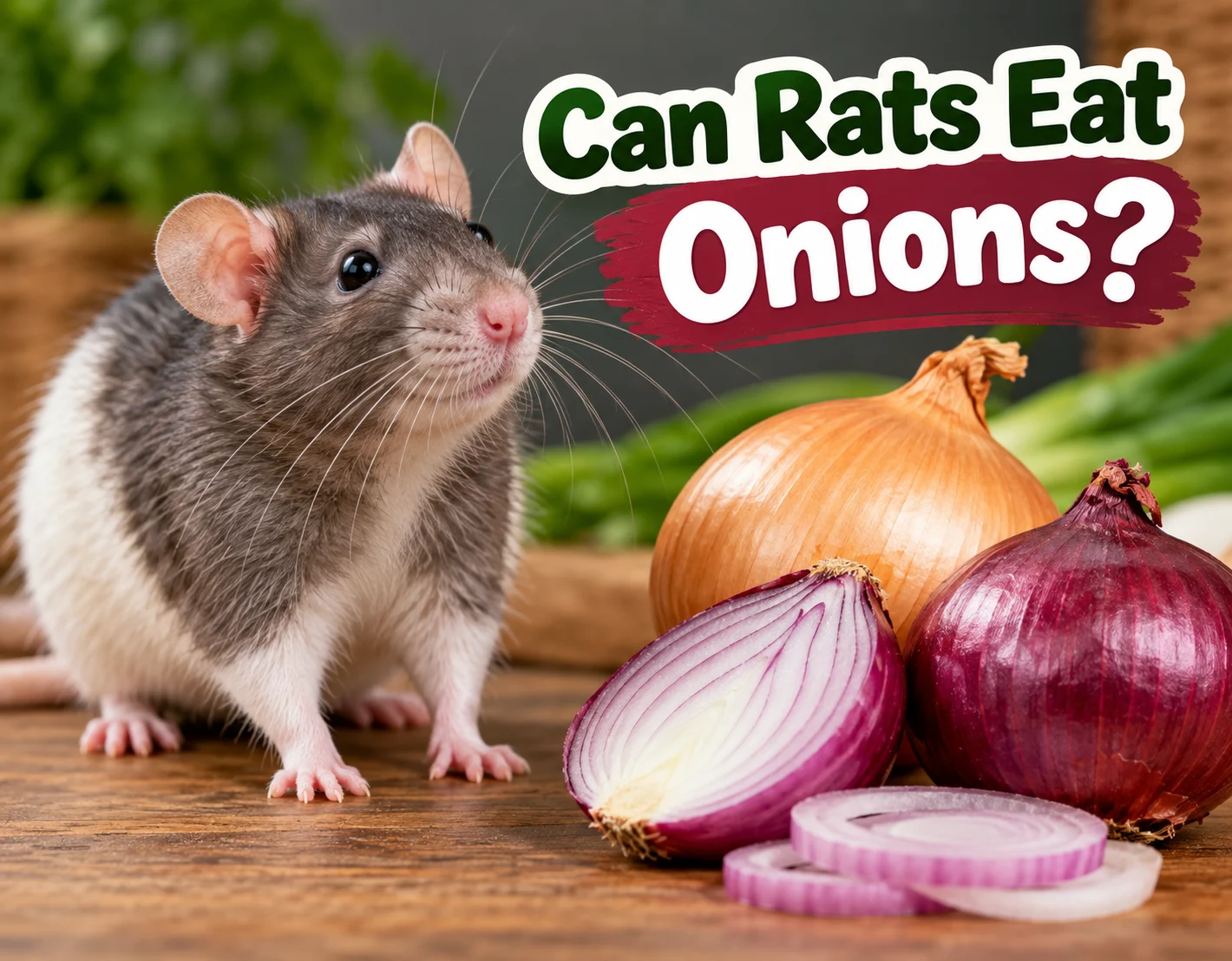
No, it is best not to feed onions to pet rats. Rats are omnivores and can enjoy many different fruits, vegetables, grains, and protein sources, but onions are not a good choice for their regular diet. Onions belong to the Allium family and contain compounds that may cause health problems when consumed in sufficient amounts.
If your rat accidentally eats a tiny piece of onion, it does not necessarily mean an emergency will occur. However, deliberately offering onions as a treat is unnecessary when there are many safer vegetables available. If your rat has eaten a significant amount of onion or develops unusual symptoms, contact an exotic-animal veterinarian for advice.
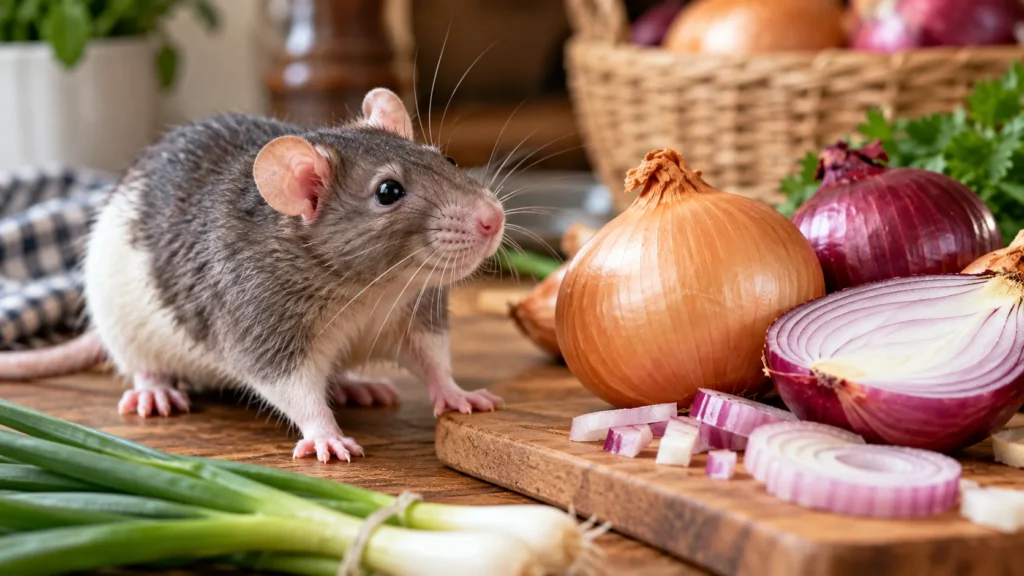
Can Rats Eat Onions?
Although rats can eat a surprisingly wide range of foods, onions should not be considered a suitable treat for pet rats. Onions contain sulfur-containing compounds that can be harmful to animals when consumed in excessive amounts, and they may also cause digestive upset.
There is no nutritional reason to add onion to a rat’s diet. A high-quality commercial rat or laboratory-formulated diet should provide the foundation of your pet’s nutrition, while small portions of appropriate fresh foods can provide variety.
If your rat has eaten onion accidentally, don’t panic. Remove any remaining onion and observe your pet. Watch for changes such as diarrhea, vomiting-like behavior, reduced appetite, unusual weakness, breathing changes, or other signs that your rat is unwell. Because rats can deteriorate quickly when sick, veterinary advice is appropriate if symptoms appear or a large amount was consumed.
Can Rats Eat Green Onions?
Green onions, also called scallions or spring onions in some regions, are best avoided by pet rats. The fact that green onions are different in appearance from regular bulb onions does not make them an ideal food for rats.
Green onions are part of the same general Allium group as other onions. Rather than taking a chance on a food that provides no essential benefit to your rat, choose a safer vegetable such as carrot, broccoli, bell pepper, or another rat-friendly option.
If your rat has accidentally consumed a small amount of green onion, monitor them closely. For a larger quantity or any concerning symptoms, speak with an exotic-pet veterinarian.
Can Rats Eat Red Onions?
Red onions should also be avoided. Their color does not make them a safer alternative to other onions. Red onions contain the same types of sulfur-containing compounds associated with the potential risks of Allium vegetables.
Some older feeding advice suggests that tiny quantities of red onion can be offered as an occasional treat. However, because safer vegetables are readily available, there is little reason to intentionally introduce red onion into a pet rat’s diet.
| Potential benefit | Potential concern |
|---|---|
| Provides some plant nutrients | Contains Allium compounds that may be harmful in sufficient amounts |
| Low in calories | May cause digestive upset |
| Easy to find | There are many safer vegetable choices for rats |
For everyday feeding, vegetables such as carrots, broccoli, peas, and bell peppers are more practical choices.
Can Rats Eat Spring Onions?
It is better to avoid feeding spring onions to pet rats. Depending on where you live, the terms spring onion, green onion, and scallion may be used for similar vegetables. Regardless of the name, these foods belong to the onion group.
Spring onions may cause digestive irritation, and the compounds found in Allium vegetables are another reason to keep them out of your rat’s diet. There is no need to use spring onion as a regular treat when rats can enjoy a much wider selection of safer fresh foods.
| Spring onion | What rat owners should know |
|---|---|
| Part of the onion family | Best avoided |
| May cause digestive upset | Choose safer vegetables instead |
| Not nutritionally necessary | There is no reason to make it part of a rat’s diet |
Can Rats Eat Cooked Onions?
Cooked onions are not a recommended food for pet rats. Cooking changes the texture and flavor of onions, but it does not turn them into a necessary or particularly suitable food for rats.
Another problem with cooked onion is that it is often included in human meals containing salt, oil, butter, sauces, spices, or other ingredients that are unsuitable for rats. For this reason, leftovers containing cooked onions should not be used as rat treats.
If your rat has accidentally eaten a small amount of cooked onion, remove the remaining food and monitor your pet. If the meal contained other potentially harmful ingredients or your rat consumed a substantial quantity, contact a veterinarian for individualized advice.
Can Rats Eat Pickled Onions?
No. Pickled onions are best kept away from pet rats. The onion itself is already a food that is better avoided, while the pickling process can add large amounts of salt, vinegar, sugar, spices, or other ingredients.
Excessive salt is inappropriate for rats and can contribute to dehydration and other health problems. Highly acidic or heavily seasoned foods may also upset a rat’s digestive system.
Instead of sharing pickled onions from your meal, offer a small portion of a fresh, rat-safe vegetable.
Why Should Rats Avoid Onions?
The main reason to avoid onions is that they contain compounds associated with oxidative damage to red blood cells in susceptible animals. Large exposures to Allium vegetables can be particularly concerning in some species.
There is also the simpler issue of digestive upset. Rats have relatively small digestive systems, so introducing unfamiliar or inappropriate foods can result in loose stools, stomach discomfort, or reduced appetite.
Because onion offers no unique nutritional advantage that your rat cannot get from safer foods, avoiding it is a straightforward way to reduce unnecessary dietary risk.
Possible Signs of a Problem
If a rat consumes onion, watch for signs that something is wrong. Depending on the amount eaten and the individual animal, concerning signs may include:
- Reduced appetite
- Diarrhea or digestive upset
- Unusual tiredness or weakness
- Changes in breathing
- Pale-looking gums or other signs of illness
- Changes in normal behavior
These symptoms can have many causes, so they should not automatically be attributed to onion consumption. If your rat appears sick, seek veterinary care rather than waiting for the symptoms to resolve.
Dietary Basics for Rats
A healthy rat diet is about balance rather than offering as many different human foods as possible. Fresh foods should complement a nutritionally complete rat diet rather than replace it.
Nutritional Needs
Pet rats need appropriate amounts of protein, carbohydrates, fats, vitamins, minerals, and fiber. A quality commercial rat food should provide the nutritional foundation, while carefully selected fresh foods can add variety.
Because nutritional requirements can vary with age, reproductive status, health, and other factors, young rats, senior rats, pregnant rats, and rats with medical conditions may need different dietary considerations.
Common Foods for Rats
Suitable foods may include:
- High-quality commercial rat pellets or blocks
- Small portions of fresh vegetables
- Small portions of appropriate fruits
- Cooked grains in moderation
- Suitable sources of protein when appropriate
Fresh foods should be introduced gradually, especially when your rat has never eaten them before. This makes it easier to identify foods that cause digestive problems.
It is also wise to limit foods that are extremely salty, sugary, greasy, heavily processed, or strongly seasoned.
The Risks of Onions for Rats
Onions are widely used in human cooking, but a food being common in our diets does not automatically make it appropriate for pet rats.
Potential Toxicity
Onions and other Allium vegetables contain sulfur-containing compounds that can contribute to oxidative damage to red blood cells when consumed in sufficient quantities. Severe exposure can potentially result in anemia and other serious health complications.
The exact risk depends on factors such as the animal, the amount consumed, and the form of the food. For that reason, it is not appropriate to give pet owners a universal “safe amount” of onion to feed their rats.
Digestive Problems
Onions can also cause digestive upset. A rat that eats an unfamiliar food may develop loose stools, abdominal discomfort, or changes in appetite.
Rather than testing your rat’s tolerance to onion, choose vegetables with a better-established role in a balanced pet-rat diet.
Safe Foods for Rats
There are plenty of healthier alternatives to onions. Fresh vegetables can provide variety and important nutrients when offered in appropriate portions.
Vegetables
Some vegetables commonly offered to pet rats include:
- Carrots
- Broccoli
- Peas
- Green beans
- Sweet potatoes
- Squash
- Bell peppers
Wash fresh produce thoroughly and cut larger pieces into manageable portions. New foods should be introduced gradually so you can see how your rat responds.
Fruits
Fruit can also be offered as an occasional treat because it contains natural sugars. Examples include:
- Apples
- Bananas
- Blueberries
- Grapes
- Mangoes
- Papayas
Because fruit is naturally higher in sugar than many vegetables, it is best used as a small treat rather than the main component of a rat’s diet.
Protein Sources
Depending on the rat’s overall diet and nutritional needs, appropriate protein sources may include:
- Cooked chicken
- Cooked turkey
- Cooked egg
- Tofu
- Small amounts of plain, suitable yogurt
Avoid heavily seasoned meats and foods containing excessive salt, sugar, oil, or sauces.
Feeding Practices for Pet Rats
Portion Control
Portion size matters because rats can easily consume calorie-dense treats even when they are not hungry. The majority of the diet should come from a nutritionally complete rat food, with fresh foods used as appropriate additions.
Rather than trying to establish a specific onion portion, the safest approach is simply not to offer onion. If your rat accidentally eats some, consider the amount consumed and monitor for symptoms.
Introducing New Foods
Introduce unfamiliar foods one at a time and in small portions. This helps you identify which food may have caused a digestive reaction if your rat develops loose stools or another problem.
Always provide access to clean, fresh drinking water. If your rat stops eating or drinking, becomes unusually lethargic, or develops significant digestive symptoms, contact a veterinarian promptly.
Better Alternatives to Onions
If you were considering onion because you wanted to give your rat a flavorful vegetable treat, there are many safer options.
- Carrots: Crunchy and easy to portion.
- Bell peppers: A colorful source of variety.
- Broccoli: A commonly used vegetable for small pets.
- Green beans: A convenient fresh-food option.
- Sweet potato: Can be offered cooked and plain.
- Squash: Another vegetable that can add variety.
Do not substitute garlic for onion. Garlic is also an Allium vegetable, so it is not a suitable “safe onion replacement” for a pet rat.
Frequently Asked Questions About Rats and Onions
Are onions safe for rats?
Onions are best avoided in a pet rat’s diet. They contain compounds that may cause health problems at sufficient exposure levels, and there are many safer vegetables that can be used as treats instead.
Can rats eat a small piece of onion?
An accidental small piece does not necessarily mean your rat will become seriously ill. However, you should not intentionally feed onion to your rat. Remove any remaining onion, observe your pet, and contact a veterinarian if a significant amount was consumed or your rat develops concerning symptoms.
Can rats eat raw onions?
Raw onions are not recommended for pet rats. They contain naturally occurring compounds that can potentially cause problems, and raw onion may also cause digestive irritation.
Can rats eat cooked onions?
Cooked onions are also best avoided. Cooking does not make onion an appropriate food for rats, and cooked onions are often combined with salt, oil, sauces, and seasonings that are unsuitable for pets.
Can rats eat red onions?
No type of onion should be deliberately included in a pet rat’s diet. Red onions are not a safer alternative simply because they differ in color from yellow or white onions.
Can rats eat green onions or spring onions?
Green onions and spring onions are best avoided. They are part of the onion group and provide no nutritional benefit that cannot be obtained from safer vegetables.
Can rats eat pickled onions?
No. Pickled onions are particularly unsuitable because they may contain high amounts of salt, vinegar, sugar, and other seasonings in addition to the onion itself.
What should I do if my rat accidentally eats onion?
Remove the remaining onion and observe your rat. If only a small accidental amount was eaten, monitor for changes in appetite, behavior, digestion, or energy. If your rat consumed a large amount or develops signs of illness, contact an exotic-animal veterinarian as soon as possible.
What vegetables can rats eat instead of onions?
Depending on your rat’s overall diet, options can include carrots, broccoli, green beans, bell peppers, peas, squash, and plain cooked sweet potato. Introduce new foods gradually and offer them in appropriate portions.
Can rats eat garlic instead of onions?
Garlic is not a good substitute for onions. It belongs to the same Allium group, so it is better to choose a different vegetable altogether.
What should make up most of a pet rat’s diet?
A nutritionally complete commercial rat food should generally form the foundation of the diet. Fresh vegetables and occasional suitable treats can provide variety without replacing the balanced nutrition supplied by the main diet.
More Reference for Can Rats Eat Onions
Final Thoughts
Can rats eat onions? The safest answer for pet owners is to avoid feeding onions to rats. This includes raw onions, cooked onions, red onions, green onions, spring onions, and pickled onions.
One accidental bite does not automatically mean your rat will become seriously ill, but onions are an unnecessary dietary risk when plenty of safer foods are available. Keep a balanced commercial rat food as the foundation of the diet and use suitable vegetables and fruits as occasional additions.
If your rat has eaten a substantial amount of onion or is showing signs such as weakness, loss of appetite, digestive problems, or other unusual behavior, speak with an exotic-animal veterinarian for personalized guidance.