
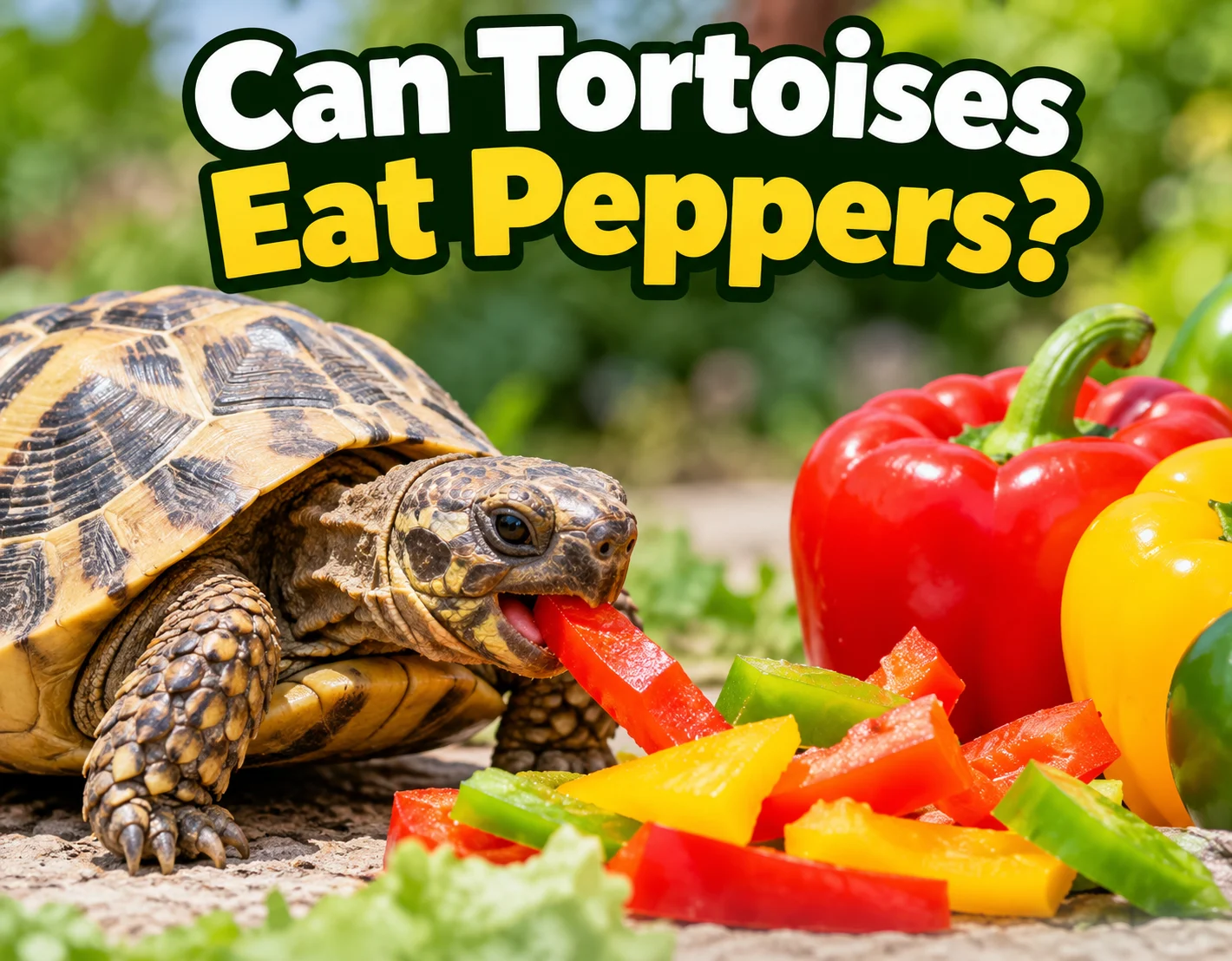
Yes, tortoises can eat certain types of peppers, but the variety of pepper and the amount you offer are important. Bell peppers, particularly mild red, green, yellow, and orange varieties, can be included occasionally as part of a varied tortoise diet. However, hot peppers such as jalapeños, habaneros, and cayenne peppers are not a suitable choice.
Tortoises are herbivores, but that does not mean every vegetable is automatically safe for them. Their diet should be based primarily on appropriate leafy greens, weeds, flowers, and other plant foods suited to their species. Treat foods and vegetables such as peppers should complement this diet rather than replace it.
So, can tortoises eat peppers safely? In most cases, mild bell peppers can be offered in small amounts. They provide nutrients such as vitamins A and C and can add variety to meals. However, peppers should not become a major part of a tortoise’s diet.
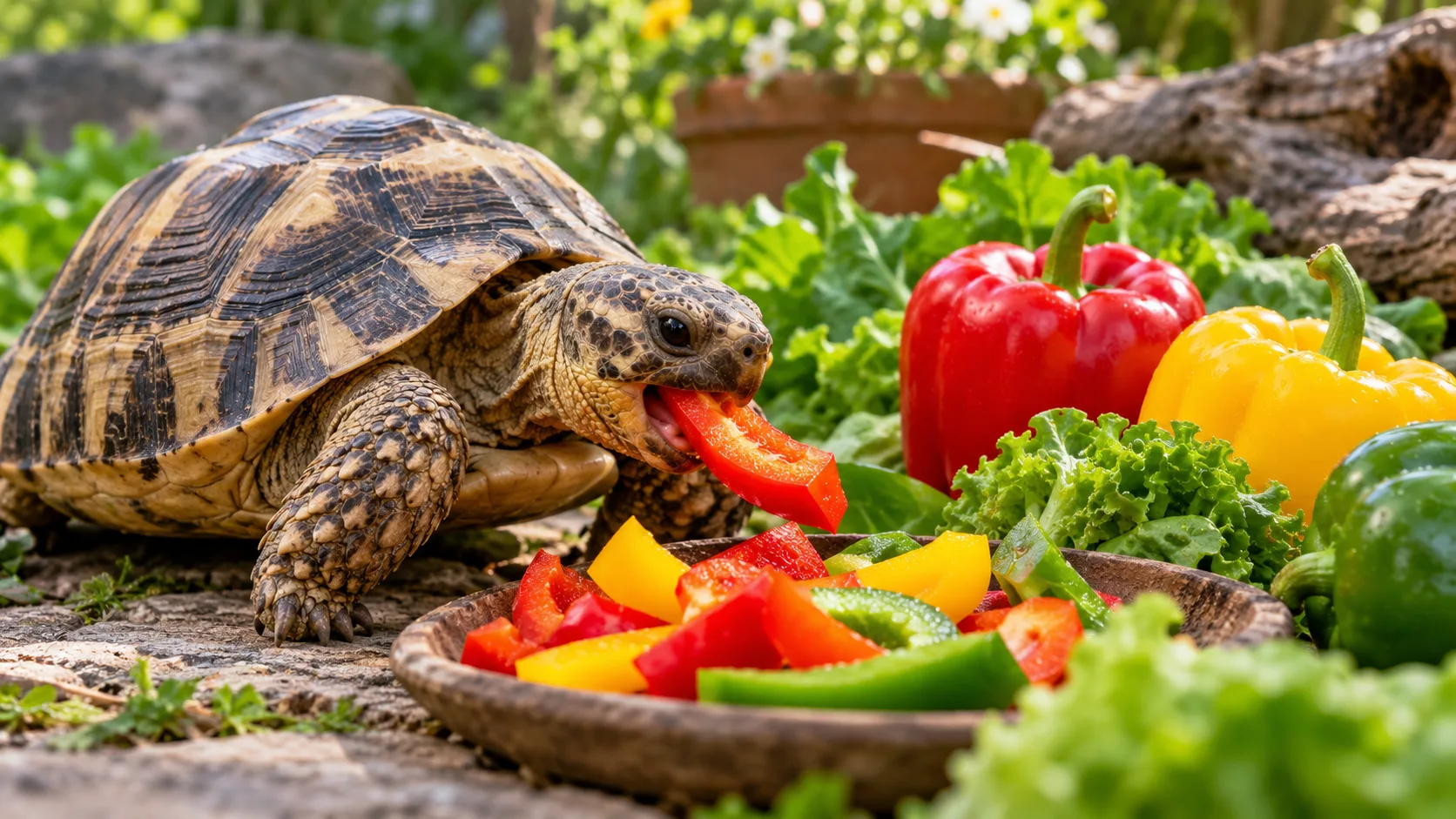
Tortoise Diet Overview
Before adding peppers to your tortoise’s meals, it is important to understand what a healthy tortoise diet should look like. Different tortoise species have different nutritional requirements, so there is no single diet that is perfect for every tortoise.
Most commonly kept herbivorous tortoises need a diet built around appropriate leafy greens, weeds, grasses, flowers, and other suitable plant foods. The exact balance depends on the species, age, environment, and individual health of the tortoise.
Calcium is especially important because tortoises need it for healthy bones and shell development. Their diet should also contain an appropriate calcium-to-phosphorus balance. A diet that consistently provides too much phosphorus relative to calcium can contribute to nutritional problems, including metabolic bone disease.
Tortoises should not be fed meat, dairy products, eggs, or heavily processed human foods. Foods containing added sugar, salt, spices, sauces, or other seasonings should also be avoided.
A varied diet can include appropriate foods such as:
- Leafy greens: dandelion greens, collard greens, mustard greens, and suitable other greens.
- Vegetables: squash, carrots, sweet potato, bell peppers, and green beans in appropriate amounts.
- Other plant foods: species-appropriate grasses, weeds, and flowers.
Some plant foods contain relatively high amounts of oxalates. Oxalates can bind calcium and reduce its availability to the body, so foods such as spinach, beet greens, and rhubarb should not be relied upon as regular staple foods.
The most important point is variety. Instead of relying heavily on one vegetable, offer a range of appropriate foods that meet your tortoise’s nutritional needs.
Understanding Peppers
Peppers are available in many different varieties, and they are not all equally suitable for tortoises. The word “pepper” can refer to mild bell peppers as well as very hot chili peppers, so it is important to distinguish between them.
Some common varieties include:
- Bell peppers: Mild and generally sweet, with green, red, yellow, and orange varieties.
- Jalapeño peppers: A much hotter variety commonly used in Mexican cuisine.
- Habanero peppers: Very hot peppers with a high level of heat.
- Cayenne peppers: Hot peppers commonly used dried or ground as a spice.
For tortoises, mild bell peppers are the more appropriate option. Their sweet flavor and crunchy texture can make them an interesting addition to an otherwise varied diet.
Peppers also contain nutrients such as vitamin C, vitamin A-related carotenoids, potassium, and fiber. However, their nutritional value does not mean they should be fed in unlimited quantities.
If you are introducing bell pepper for the first time, start with a small amount and watch your tortoise. Every animal can respond differently to a new food.
Can Tortoises Eat Peppers Safely?
Yes, tortoises can generally eat mild bell peppers in moderation. Bell peppers can provide some useful nutrients and dietary variety when they are offered alongside a species-appropriate diet.
However, there is an important distinction between bell peppers and hot chili peppers. Hot varieties contain capsaicin, the compound responsible for their characteristic burning sensation. There is little reason to offer hot peppers to a tortoise, and they are best avoided.
Bell peppers should also be treated as one component of a varied diet rather than a staple food. A tortoise that receives too much of one vegetable may not get the broad range of nutrients it needs from other plant foods.
Peppers and Tortoises: Nutritional Considerations
Vitamins and Nutrients
Bell peppers contain several nutrients that can contribute to a balanced diet. They are particularly known for their vitamin C content and also provide carotenoids, including compounds associated with vitamin A activity.
These nutrients have important roles in normal body function. However, tortoises obtain nutrients from many different plant foods, so there is no need to depend on peppers as a primary source.
Water Content
Bell peppers contain a significant amount of water. Foods with high water content can contribute to overall hydration, although fresh drinking water and appropriate hydration practices should still be provided according to the needs of the tortoise species.
Fiber
Peppers contain some dietary fiber, but they should not be considered a replacement for the high-fiber foods that form the foundation of many tortoise diets. For species that naturally consume large amounts of grasses and fibrous vegetation, appropriate high-fiber plant foods are much more important.
Are Hot Peppers Safe for Tortoises?
Hot peppers are not a good choice for tortoises. Jalapeños, habaneros, cayenne peppers, and similar chili peppers contain capsaicin and can cause irritation.
There is also no nutritional advantage that makes feeding hot peppers worthwhile. Since tortoises can obtain nutrients from many safer plant foods, it is better to choose mild vegetables such as bell peppers when you want to offer pepper as part of a varied diet.
A simple rule is: mild bell pepper may be offered occasionally, while hot chili peppers should be avoided.
How to Prepare Peppers for Tortoises
If you decide to give your tortoise bell pepper, preparation is simple. The pepper should be fresh, clean, and free from sauces, seasonings, salt, oil, or other additives.
1. Wash the Pepper Thoroughly
Wash the pepper under clean running water to remove dirt and surface residues. Choosing fresh, good-quality produce is preferable.
2. Remove the Stem
Remove the stem before feeding. The stem is tougher than the flesh and is unnecessary for your tortoise to consume.
3. Cut It Into Small Pieces
Cut the bell pepper into manageable pieces. Smaller pieces can make it easier for the tortoise to bite and eat, particularly for smaller or younger animals.
4. Serve It Raw
There is generally no need to cook bell peppers before giving them to a tortoise. Raw, freshly washed pieces are convenient and preserve the vegetable’s natural texture.
Avoid feeding peppers that have been cooked with oil, butter, salt, spices, garlic, onions, sauces, or other ingredients intended for human meals.
How Often Can Tortoises Eat Peppers?
Peppers should be offered as an occasional part of a varied diet rather than as a daily staple. The appropriate frequency depends on the tortoise’s species and overall feeding plan.
For many tortoises, a small amount of bell pepper once in a while is sufficient. Instead of making pepper a regular centerpiece of every meal, rotate it with other appropriate plant foods.
Remember that different species have different dietary requirements. A Sulcata tortoise, for example, has different nutritional priorities from a species with a more varied natural diet.
If you are unsure how often to offer a particular vegetable, a reptile veterinarian or experienced tortoise specialist can help you create a diet appropriate for your tortoise.
What Are the Potential Risks of Feeding Peppers?
Although mild bell peppers can be suitable for tortoises, there are several things to keep in mind.
Hot Pepper Irritation
Hot peppers contain capsaicin and should not be intentionally included in a tortoise’s diet. They can be irritating and provide no meaningful reason to take the risk.
Too Much of One Food
Even a suitable vegetable should not dominate a tortoise’s diet. Feeding too much pepper can reduce dietary variety and may mean the tortoise eats fewer nutritionally important foods.
Pesticide Residues
Produce should always be washed thoroughly before being offered. Some owners prefer organically grown produce to reduce concerns about pesticide residues, although washing produce remains important.
Individual Sensitivity
Any new food can potentially cause digestive changes. When introducing bell pepper, offer only a small amount initially and monitor your tortoise for changes in appetite, stool, or general behavior.
Alternatives to Peppers in a Tortoise Diet
Peppers are only one possible vegetable. A varied diet can include many other suitable plant foods, depending on the species.
- Dark leafy greens: Suitable greens such as dandelion greens and collard greens can provide important nutrients.
- Squash: Butternut squash, acorn squash, and pumpkin can provide fiber and carotenoids.
- Carrots: Carrots can be offered in appropriate amounts as part of a varied diet.
- Sweet potato: Sweet potato contains fiber and nutrients but should be offered appropriately rather than used as a staple for every species.
- Prickly pear cactus: Cactus pads can be a useful food for some tortoise species when properly prepared.
The best diet depends on the tortoise species. Before making significant dietary changes, it is worth checking reliable husbandry guidance for your particular species or consulting a reptile veterinarian.
Can Baby Tortoises Eat Peppers?
Baby tortoises can potentially eat small amounts of suitable bell pepper, but their diet requires particular attention because they are growing rapidly.
Bell pepper should not replace the high-fiber, species-appropriate foods that make up the foundation of a young tortoise’s diet. If you offer pepper, use only a small amount and continue providing the foods recommended for your tortoise’s species and age.
Can Tortoises Eat Red, Green, Yellow, and Orange Bell Peppers?
Generally, mild bell peppers of different colors can be offered in small amounts. Red, yellow, and orange bell peppers tend to be sweeter, while green bell peppers are less mature and have a slightly different flavor.
The color itself is not the main issue. What matters most is choosing a mild, fresh pepper and offering it as part of a balanced diet.
Conclusion
So, can tortoises eat peppers? Yes, most tortoises can have small amounts of mild bell pepper as part of a varied diet. Bell peppers can provide nutrients and dietary variety, making them a reasonable occasional food for many herbivorous tortoises.
However, not every type of pepper is appropriate. Hot peppers such as jalapeños, habaneros, and cayenne peppers should be avoided because they contain capsaicin and can be irritating.
When offering bell pepper, wash it thoroughly, remove the stem, cut it into manageable pieces, and serve it without seasoning or cooking oils. Most importantly, remember that pepper should complement—not replace—the species-appropriate foods that form the foundation of your tortoise’s diet.
If your tortoise has a medical condition, unusual digestive symptoms, or specific dietary requirements, speak with a reptile veterinarian before making major changes to its diet.
Frequently Asked Questions About Tortoises Eating Peppers
Can tortoises eat bell peppers?
Yes. Many tortoises can eat small amounts of mild bell pepper as part of a varied diet. Bell peppers can provide nutrients and variety, but they should not replace the main foods recommended for your tortoise’s species.
Can tortoises eat red bell peppers?
Yes, red bell peppers can generally be offered to tortoises in moderation. They are mild and contain nutrients such as vitamin C and carotenoids. Serve them fresh, washed, and free from seasoning.
Can tortoises eat green bell peppers?
Yes. Green bell peppers can be offered in small amounts to many herbivorous tortoises. As with other vegetables, they should be part of a varied diet rather than the primary food.
Can tortoises eat yellow and orange peppers?
Yes, mild yellow and orange bell peppers can generally be offered occasionally. They should be washed and cut into suitable pieces before being given to your tortoise.
Can tortoises eat hot peppers?
Hot peppers such as jalapeños, habaneros, and cayenne peppers are best avoided. They contain capsaicin, which gives them their spicy taste and can be irritating.
Can Hermann tortoises eat bell peppers?
Hermann tortoises can generally have small amounts of bell pepper as an occasional food. However, their overall diet should focus on the plant foods appropriate for Hermann tortoises rather than relying heavily on vegetables such as peppers.
Can Sulcata tortoises eat red bell peppers?
Sulcata tortoises can generally eat small amounts of red bell pepper, but it should remain an occasional food. Sulcata tortoises need a diet centered on appropriate high-fiber grasses and other suitable plant foods.
Can tortoises eat green beans?
Yes, green beans can be included in the diet of many tortoises in moderation. They should be offered as part of a varied diet rather than used as the main food.
What vegetables should tortoises avoid?
Tortoises should not be given toxic or unsuitable plants, and some vegetables should only be used sparingly because of their nutritional composition. Spinach, beet greens, and rhubarb are examples of foods that should not form a regular part of a tortoise’s diet because of their oxalate content. Always check whether a food is appropriate for your tortoise’s specific species.
How much bell pepper can a tortoise eat?
A small amount is generally enough. The exact portion depends on the tortoise’s species, size, age, and overall diet. Bell pepper should be treated as an occasional addition rather than a staple food.
Should peppers be cooked before feeding them to tortoises?
No. Fresh, washed bell pepper can generally be served raw. Avoid peppers prepared with oil, salt, spices, sauces, or other ingredients intended for human food.
Can baby tortoises eat bell peppers?
Baby tortoises may be able to eat a small amount of bell pepper, but their diet should be carefully designed around their species-specific nutritional needs. Bell pepper should never replace their appropriate high-fiber staple foods.
What should I do if my tortoise gets sick after eating pepper?
Stop offering the food and monitor your tortoise. If you notice persistent diarrhea, vomiting, loss of appetite, lethargy, or other concerning symptoms, contact a reptile veterinarian promptly. If your tortoise ate a hot pepper or an unknown plant, seek professional veterinary advice.