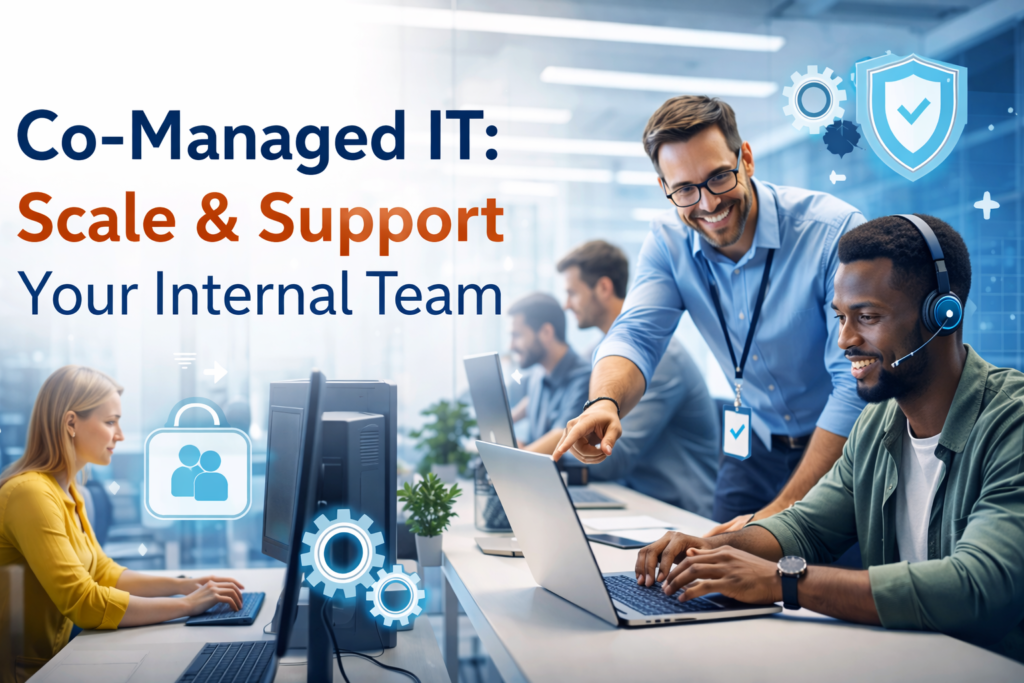
Introduction: When Your IT Team Hits Its Limit
Your internal IT team is not the problem. In most cases, they are skilled, committed, and deeply familiar with your systems. The real issue is capacity. With constant support requests, growing cybersecurity demands, and pressure to keep everything running smoothly, even the best teams can get overwhelmed.
Over time, this leads to slower response times, missed strategic opportunities, and burnout. In fact, studies show that a large percentage of IT professionals experience burnout due to heavy workloads and constant pressure. When your team is stuck handling routine issues, they lose the time and energy needed to focus on projects that actually move the business forward.
What many companies need is not a replacement, but reinforcement. A collaborative model that adds support without taking control can make a huge difference. That is where co-managed IT comes in. It allows you to extend your team’s capabilities while keeping your internal expertise at the center of operations.
This article breaks down how co-managed IT works, what you can delegate, and how it helps your team stay productive, supported, and in control.
What Co-Managed IT Really Means
Co-managed IT is a partnership model where an external provider works alongside your internal IT team. Instead of handing everything off, you share responsibilities based on your needs.
This approach is very different from fully outsourced IT. In a fully outsourced setup, an external provider takes over most or all of your systems. That can be disruptive, especially for companies that already have an established internal team.
With co-managed IT, your team stays in charge. You decide what to keep in-house and what to delegate. The external partner simply fills the gaps, whether that is after-hours monitoring, specialized expertise, or extra help with daily tasks.
Clearing Up a Common Concern
Some IT leaders worry that bringing in outside support could threaten their team’s role. In reality, the opposite is true.
A good co-managed partner depends on your internal team’s knowledge. They do not replace your staff. Instead, they support them by handling repetitive work, offering specialized skills, and providing additional resources when needed.
This creates a more balanced environment where your team can focus on meaningful work instead of constantly reacting to issues.
What You Can Offload (and What You Should Keep)
One of the biggest advantages of co-managed IT is flexibility. You are not locked into a rigid package. You can choose exactly what to offload based on your current challenges.
Here is a simple way to look at it:
| Internal Team Focus | Co-Managed Partner Focus |
| Strategic IT planning | Patch management and updates |
| Employee training and support | 24/7 system monitoring |
| Managing core business apps | Helpdesk ticket overflow |
| Vendor and budget decisions | Backup and disaster recovery |
| Aligning IT with business goals | Cybersecurity monitoring and compliance |
This setup allows your internal team to shift from reactive work to proactive planning. Instead of constantly fixing issues, they can focus on improving systems and supporting business growth.
Cybersecurity is a major area where external support becomes especially valuable. Threats are becoming more complex, and keeping up requires advanced tools and dedicated expertise. A co-managed partner can provide continuous monitoring and faster response times, helping reduce risk without overloading your internal team.
How Co-Managed IT Works in Practice
Understanding the concept is one thing. Seeing how it actually works is another. A smooth integration process is key to making this partnership successful.
Step 1: Discovery and Alignment
The process starts with understanding your current setup. The external partner works closely with your IT team to identify gaps, challenges, and priorities. This is not about replacing what works, but improving what does not.
Step 2: Defined Responsibilities
Next, roles are clearly outlined. You decide what stays internal and what gets delegated. This avoids confusion and ensures accountability on both sides.
Step 3: Ongoing Collaboration
Once everything is in place, both teams work together using shared tools and dashboards. Your internal team maintains visibility and control at all times. Regular updates keep everyone aligned on performance, security, and upcoming needs.
This structured approach ensures that adding support does not create chaos. Instead, it brings clarity and efficiency.
Bridging Skill Gaps Without Hiring More Staff
Hiring specialized IT talent is expensive and time-consuming. Roles like cybersecurity analysts or cloud architects are in high demand, and not every company has the budget to build a full in-house team.
Co-managed IT solves this by giving you access to a wider pool of expertise. When a complex issue comes up, your team can rely on specialists without needing to hire them full-time.
This not only improves problem-solving speed but also reduces stress on your existing team. They no longer have to figure everything out on their own, which leads to better performance and higher job satisfaction.
A Practical Path Forward for Growing Teams
As businesses grow, IT demands become more complex. Systems expand, security risks increase, and expectations rise. Trying to handle everything internally can slow you down.
This is why many organizations are turning to co-managed IT services in Calgary to create a more balanced and scalable support structure. By combining internal knowledge with external resources, companies can maintain control while gaining the flexibility they need to grow.
Conclusion: Supporting Your Team Without Replacing Them
Co-managed IT is not about handing over control. It is about giving your team the support they need to succeed.
By sharing responsibilities, you reduce burnout, improve efficiency, and strengthen your overall cybersecurity posture. Your internal team can focus on strategy and innovation, while routine tasks and complex challenges are handled with additional support.
In the end, this model is about working smarter. When your IT team is properly supported, your entire business benefits.